
סוללות CNHL ליפו
CNHL שואפת לספק סוללות Li-Po באיכות גבוהה ומוצרי RC לכל חובבי התחביב עם שירות לקוחות מצוין ומחירים תחרותיים
Short answer: a combat robot battery should never be chosen by capacity alone. In robot combat, the right LiPo pack has to work with the whole power system: drive motors, weapon motor, ESCs, connectors, wiring, charger, weight class, and internal protection. A pack that works well in another RC model may still be wrong for a battle bot-style build if it is too large, too weak under current spikes, difficult to mount safely, or paired with the wrong connector.

For builders comparing LiPo batteries for combat robots, the best starting point is not simply “which battery has the biggest mAh number?” A better question is: what voltage does the robot need, how much current can the motors demand, how long is the match, how much weight can the battery use, and can the pack be protected inside the chassis?
This guide looks at combat robot power systems from a practical RC builder’s point of view. It covers LiPo battery selection, 2S/3S/4S/6S voltage choices, C rating, motors, ESCs, connectors, charging routines, battery mounting, and common mistakes that can turn a promising robot into an unreliable one.
Combat robots are remotely controlled machines designed to fight in controlled competitions. Some are simple wedges built to push and control the opponent. Others use spinning discs, drums, vertical spinners, horizontal bars, lifters, hammers, flippers, saws, or heavily armored drive systems. Compared with a normal RC car, plane, or boat, a combat robot faces a much harsher electrical environment.

A normal RC model usually sees predictable throttle changes. A combat robot does not. The drive motors may be pushing hard against another robot, a weapon motor may be spinning up under heavy load, the robot may get pinned, the weapon may strike something solid, and the whole chassis may take an impact while the battery is still delivering current.
That is why battery selection in combat robotics is not only about runtime. The battery must deliver current quickly, hold voltage well enough for the ESCs and receiver system, stay within the weight limit, fit into a protected space, and survive the normal abuse of a match without becoming a safety risk.
In simple terms, the battery is not just a power source. It is part of the robot’s weapon system, drive system, and safety system at the same time.
Before choosing a battery, the robot’s weight class needs to be understood. A tiny 150g robot and a 3lb beetleweight do not use the same battery logic. A 12lb or 30lb robot has even more room for power, but also more serious current, wiring, and safety requirements.
| Weight Class | Common Search Terms | Battery Direction |
|---|---|---|
| Fairyweight / 150g-style bots | fairyweight robot, 150g combat robot | Very small 1S–2S packs with extreme space and connector limits |
| Antweight / 1lb-style bots | antweight robot, 1lb combat robot, antweight battle bot | Usually compact 2S–3S LiPo packs, depending on motor and ESC choice |
| Beetleweight / 3lb-style bots | beetleweight robot, 3lb combat robot, beetleweight battle bot | Often compact 3S–4S high-discharge LiPo packs |
| Hobbyweight / 12lb-style bots | 12lb combat robot, hobbyweight robot | Usually larger 4S–6S packs, depending on drive and weapon power |
| Featherweight / 30lb-style bots | 30lb combat robot, featherweight combat robot | Higher-current LiPo setups with stronger connectors, wiring, and protection |

These are not fixed rules. Event rules, robot design, motor choice, ESC limits, weapon type, and available chassis space all matter. Still, the weight class gives the first clue. Small combat robots usually care most about size and weight. Bigger bots care more about current handling, wire gauge, connector strength, and battery protection.
A combat robot power system is not just a battery connected to a motor. It is a chain of components. If one part is undersized, the whole robot can become unreliable.
| Part | Role | Why It Matters for the Battery |
|---|---|---|
| LiPo battery | Supplies power | Determines voltage, current delivery, runtime, weight, and fitment |
| Drive motors | Move the robot | Can draw high current when pushing, turning, or stalled |
| Weapon motor | Powers spinner, drum, bar, hammer, lifter, or flipper | Often creates the largest current spikes in the robot |
| ESC | Controls motor speed and power | Must support the battery voltage and expected current draw |
| Receiver and radio system | Receives control signal | Needs stable power through BEC or a separate supply |
| Connector | Transfers current between battery and electronics | An undersized connector can heat up or limit current delivery |
| Wiring | Carries current inside the robot | Wire gauge, soldering quality, and routing affect reliability |
| Charger | Recharges and balances the pack | Critical for LiPo safety, cell health, and tournament routine |

When a robot loses power in the arena, the battery is not always the only reason. The issue may be an ESC hitting its limit, a connector heating up, a solder joint failing, a weapon motor pulling more current than expected, or a damaged pack that should not have been reused. Good battery selection starts with the whole system.
The best battery for a combat robot is the pack that matches the robot’s voltage, current demand, match duration, weight limit, and physical layout. A bigger battery is not always better. A high-C battery is not automatically better if it does not fit. A compact pack with the wrong connector can still become a weak point.
Before buying a pack, check these items:

For small antweight and beetleweight-style robots, the battery may be one of the hardest parts to place. It needs to be powerful enough, but also thin enough, light enough, and easy enough to remove or inspect between fights. For larger builds, the question shifts toward current handling, connector strength, wire gauge, pack protection, and safe charging workflow.
The “S” number tells you how many cells are wired in series inside the battery. A normal LiPo cell has a nominal voltage of 3.7V, so a 2S pack is 7.4V, a 3S pack is 11.1V, a 4S pack is 14.8V, and a 6S pack is 22.2V. In combat robotics, voltage affects motor speed, ESC choice, current behavior, and how aggressive the robot feels.
| Voltage Setup | Common Combat Robot Direction | What to Check |
|---|---|---|
| 2S LiPo batteries | Tiny robots, antweight-style builds, light drive setups | Motor KV, ESC support, connector current, and runtime |
| 3S LiPo batteries | Common small-robot voltage range with a balance of power and control | Drive control, weapon spin-up, heat, and battery size |
| 4S LiPo batteries | More aggressive small-to-mid builds that need stronger weapon speed or drive punch | ESC voltage rating, current spikes, connector choice, and chassis space |
| 6S LiPo batteries | Larger combat robots and high-power systems | ESC rating, wire gauge, connector strength, mounting, and event rules |

Voltage should never be chosen just because a higher number sounds stronger. A 4S or 6S setup can be powerful, but it also increases stress on motors, ESCs, wiring, and the robot’s mechanical design. A well-matched 3S setup may outperform a poorly planned 4S setup that overheats or loses control.
Battery capacity is usually listed in mAh. A 1000mAh pack stores 1.0Ah of capacity, while a 5000mAh pack stores 5.0Ah. In many RC applications, higher capacity is associated with longer runtime. In combat robotics, that logic needs more care.
A combat robot match is usually short, but the load can be violent. The robot may spend part of the match driving gently, then suddenly ask for heavy current during a weapon spin-up, pushing match, or impact recovery. That means capacity should be chosen with enough buffer for real fight conditions, not just a calm bench test.
At the same time, extra capacity adds weight. In a small antweight or beetleweight-style robot, that weight may be better used for armor, weapon structure, wheels, or a stronger frame. The right pack is usually not the largest pack that can physically fit. It is the smallest pack that can safely provide the needed current and complete the match with a reasonable margin.
For small robots, compact packs in the few-hundred to low-thousand mAh range can make more sense than a physically larger RC pack. For bigger robots, 3000mAh, 5000mAh, or higher-capacity packs may become realistic, but only if the chassis has the space and the weight class allows it.
C rating matters in combat robotics because a robot can demand current suddenly. Drive motors can spike when pushing. Weapon motors can spike during spin-up. A robot that gets pinned or jammed can put extra load on the system. If the battery cannot supply the current, the result may be voltage sag, heat, weak weapon recovery, ESC resets, puffing, or battery damage.
The basic calculation is simple:
Maximum continuous current = battery capacity in Ah × C rating
For example, a 1500mAh battery is 1.5Ah. If it is rated at 70C, the theoretical continuous current rating is 1.5 × 70 = 105A. In real use, battery quality, temperature, connector choice, wire gauge, and installation all affect performance, so the number should be treated as a guide rather than a guarantee.
For a deeper explanation of discharge rating, voltage sag, and how C rating affects RC performance, read our LiPo C rating and battery performance guide. For this combat robot guide, the key point is simple: C rating must be considered together with capacity, voltage, connector, ESC, motor load, and fitment.
A strong LiPo battery cannot fix a badly matched motor and ESC setup. In a combat robot, the battery, drive motors, weapon motor, and ESCs have to be planned together.
Drive motors are responsible for pushing, turning, escaping pins, and controlling position. Their current draw can rise sharply when the robot is pushing against another machine or when the wheels are stalled. Weapon motors can be even more demanding. A horizontal bar, drum, disc, or vertical spinner may pull heavy current while accelerating up to speed, especially after a hard hit or restart.
The ESC must support both the battery voltage and the expected current. If the ESC is rated for 3S and the robot is built around 4S, the power system is already unsafe. If the ESC current margin is too small, the robot may cut out, overheat, or fail under the stress of a match. Brushed and brushless systems also behave differently, so the battery cannot be chosen without checking the ESC and motor specifications.
A practical way to think about it is this: the battery supplies the energy, the ESC controls the delivery, and the motors convert that energy into motion or weapon speed. If any part of that chain is too weak, the robot will show it in the arena.
Battery connectors are often treated as a small detail, but in combat robotics they can be a real reliability point. A connector that works for a tiny low-current robot may be a poor choice for a heavier weapon robot. A connector mismatch can also create extra adapters, extra resistance, and more failure points inside a tight chassis.
| Connector | Typical Combat Robot Use | Notes |
|---|---|---|
| JST / JST-RCY | Tiny robots and low-current setups | Not ideal for higher-current weapon systems |
| XT30 | Compact high-current builds and many small combat robots | A common step up from tiny connectors when current demand rises |
| XT60 | Mid-size RC and robot power systems | More current headroom than XT30, but larger and heavier |
| XT90 | Larger high-current builds | Better suited for bigger systems where space and weight allow it |
| JST-XH balance plug | Charging and cell balancing | Not used for main power output |

If a battery has the wrong connector, changing the connector is possible for experienced builders, but it must be done carefully. Poor soldering, exposed wire, reversed polarity, weak adapters, or undersized wire can create heat and failure points. For a deeper look at plug types and compatibility, see our RC battery connectors guide.
Battery mounting is part of battery selection. A good pack installed badly can still become the failure point.
Most hobby LiPo batteries are soft pouch packs. They are light and powerful, but they are not structural parts. In a combat robot, the battery may be exposed to vibration, shock, compression, sharp edges, loose hardware, or impact energy that travels through the chassis. A narrow zip tie pulled tightly over a soft pack can create a pressure point. A screw tip, carbon edge, metal bracket, or weapon fragment can damage the outer wrap. A battery that looks fine before the match may need inspection after a hard hit.
A safer combat robot layout should give the battery a protected location inside the chassis. Builders often think about foam padding, a rigid battery bay, smooth surfaces, strain relief for wires, and enough clearance so the pack is not crushed when the chassis flexes. The goal is not to make the battery “weapon proof.” The goal is to reduce avoidable damage from poor installation.
Pay special attention to the wire exit area. Even if the battery body is well protected, a lead that rubs against a sharp frame edge or moving weapon component can become dangerous. Battery wires should be routed cleanly, kept away from spinning parts, and checked after every serious impact.
A combat robot battery routine should be simple, repeatable, and safe. Tournament days can be busy. A robot may need repairs between matches, and builders may be tempted to rush charging or skip inspection. That is usually when battery mistakes happen.
Use a proper LiPo balance charger, not an old NiMH or NiCad charger. Balance charging helps keep individual cells in the pack at the correct voltage. Charging at around 1C is a steady and battery-friendly approach for most hobby LiPo packs, unless the battery manufacturer specifies otherwise. Fast charging can be useful in some situations, but spare packs are usually a better solution than forcing one pack through aggressive charging all day.
For more charger selection details, read our guide on how to choose a LiPo charger. If you need charging equipment for RC batteries, you can also browse CNHL LiPo battery chargers.
A simple event routine may look like this:

Good battery routine is not only about protecting the pack. It helps protect the robot, the pit area, and the event.
LiPo batteries are popular in combat robotics because they offer high energy density and strong current delivery in a compact package. That same energy is why they must be treated carefully. A damaged LiPo can puff, vent, smoke, or catch fire, especially if it is charged or used after physical damage.
After a fight, do not only check whether the robot still turns on. Remove or inspect the battery area if the robot took a hard hit. Look for swelling, cuts, crushed corners, torn shrink wrap, damaged wires, loose connectors, or signs of heat. A puffy LiPo battery should not be used again. A pack with a nick, puncture, or crushed section should not be charged just because the voltage still looks acceptable.
Over-discharge is another common problem. A robot fight can be distracting, and some builders prefer not to use automatic cutoffs that might shut down the robot during a match. That makes proper capacity planning and post-match voltage checking even more important.
For broader battery care, storage, and inspection advice, see our LiPo battery maintenance and safety guide.
Yes, a normal RC LiPo battery can be used in a combat robot if it matches the robot’s requirements. The important word is “if.” The pack must match the voltage, current demand, size, weight, connector, and mounting needs of the robot.
A battery designed for a normal RC car or aircraft may be too large, too heavy, or shaped poorly for a compact combat robot chassis. A pack that fits physically may still have the wrong connector or wire direction. A low-discharge pack may work for a mild drive-only wedge but struggle with a weapon motor. A hardcase pack may offer extra outer protection, but it may also be too bulky for a small robot.
For combat robotics, the question is not whether the battery is an “RC battery.” The question is whether it is the right battery for that robot’s power system and installation.
The following table is a general planning reference, not a fixed rule. Always check your event rules, motor specifications, ESC ratings, battery dimensions, and actual chassis layout before choosing a pack.
| Build Type | Battery Direction | What to Check |
|---|---|---|
| Tiny wedge robot | Small 1S–2S pack | Connector size, space, and low current draw |
| 1lb antweight-style robot | Compact 2S–3S LiPo | Weight, JST/XT30, ESC voltage, and battery bay protection |
| 3lb beetleweight-style robot | Compact 3S–4S high-discharge LiPo | Weapon current, XT30/XT60, wire routing, and secure mounting |
| 12lb hobbyweight-style robot | 4S–6S LiPo | ESC current, wire gauge, pack protection, and charger capacity |
| Larger custom combat robot | 6S or multi-pack setup | Event rules, isolation, charging workflow, connector rating, and fire safety |
If you are still comparing battery options across voltage, capacity, size, and connector type, the broader CNHL LiPo batteries collection can help you compare different pack formats before narrowing down the final robot setup.
Many first combat robot builds fail in small, avoidable ways. The battery may be powerful enough on paper, but the final installation creates problems. These are some of the mistakes worth avoiding:
The safest and most reliable robot is usually not the one with the biggest battery. It is the one where the battery, ESC, motors, wiring, connector, and chassis protection all make sense together.
Most modern RC combat robots use LiPo batteries because they offer strong power delivery in a compact and lightweight package. The exact voltage and capacity depend on the robot’s weight class, motors, ESCs, and available battery space.
Yes. LiPo batteries are very common in combat robotics because they provide the energy density and discharge capability needed for high-load drive and weapon systems. They require proper charging, storage, mounting, and safety inspection.
Neither is automatically better. A 3S setup can be easier to control and easier on components, while a 4S setup can provide stronger speed and power when the motors and ESCs are designed for it. The right choice depends on the robot’s design.
It depends on match length, motor current, weapon use, and how much safety margin the builder wants. Small robots may use compact packs in the few-hundred mAh range, while larger robots may need several thousand mAh. The pack must also fit the weight class.
Small low-current robots may use JST-style connectors, compact high-current robots often use XT30, and larger setups may use XT60 or XT90. The connector should match the expected current, wire gauge, and available space.
Sometimes, but only if the voltage, size, weight, connector, discharge capability, and mounting layout are suitable. Many RC car batteries are too large or too heavy for small combat robots, even if the electrical rating looks useful.
Phone-style Li-ion batteries usually have low discharge capability compared with hobby LiPo packs. They may power small electronics, but they are usually not a good choice for combat robot drive and weapon systems that need high current.
Yes. A LiPo pouch pack should be mounted in a protected area, away from sharp edges, moving parts, direct weapon contact, and crushing loads. Foam padding, smooth battery trays, rigid compartments, and careful wire routing can all help.
Some builders design charging access into the robot, but charging outside the robot is usually safer and makes inspection easier. Some events may also have their own rules for in-bot charging, so always check the event requirements.
No. A puffy LiPo battery should be removed from service and disposed of properly. Puffing can indicate internal damage or gas buildup, and charging or using the pack again can be dangerous.
LiPo batteries usually offer better current delivery and energy density, which is why they are common in performance combat robots. LiFe batteries are more stable and may be useful in some safer or rules-limited applications, but they generally have lower discharge performance.
Check for swelling, cuts, crushed corners, damaged leads, loose connectors, heat, and any sign that the battery was squeezed or struck. If the pack looks questionable, do not charge it or run it again.
A good combat robot power system is not built around one impressive battery number. It is built around balance. The battery must match the motors, ESCs, connector, wiring, weight class, chassis space, charging routine, and safety layout.
For a simple wedge, that may mean a small, clean, easy-to-mount LiPo pack. For a beetleweight spinner, it may mean a compact high-discharge 3S or 4S pack with careful connector and wire planning. For a larger robot, it may mean stronger 4S or 6S packs, higher-current connectors, better battery isolation, and a more disciplined charging setup.
The best battery is the one that helps the robot finish the match, protects the electronics, stays within the rules, and can be inspected and serviced safely between fights. In combat robotics, power matters, but controlled power matters more.
CNHL שואפת לספק סוללות Li-Po באיכות גבוהה ומוצרי RC לכל חובבי התחביב עם שירות לקוחות מצוין ומחירים תחרותיים
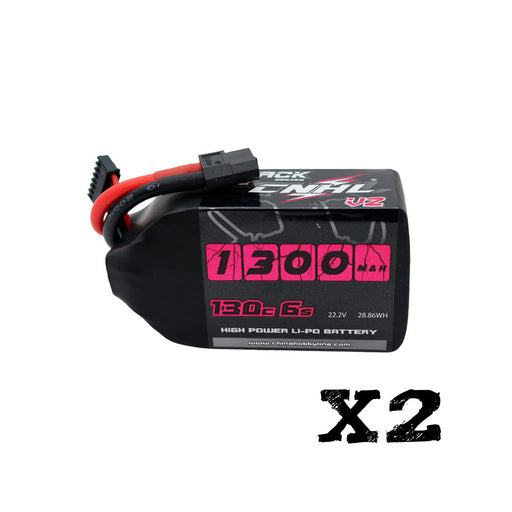
מפרטים מספר מלאי: 1301306BK קיבולת: 1300mAh מתח: 22.2V / 6 תאים / 6S1P קצב פריקה: 130C רציף / 260C פיצוץ קצב טעינה: 5C מקסימום גודל (הבדל של 1-5 מ...
הצג פרטים מלאים

Hstar D43-01Q 911 Style היא מכונית דריפט RC מיני בקנה מידה 1/43 עשויה סגסוגת, המיועדת לכיף שולחני פנימי ודריפטינג ריאליסטי. היא כוללת מצערת והיגו...
הצג פרטים מלאים

מטוס קרב CNHL PNF Super Tucano 1600 מ"מ RC Warbird מספק מראה בקנה מידה, ביצועים אמינים ועיצוב חזק – מה שהופך אותו לאחד, אם לא הטוב ביותר, מדג...
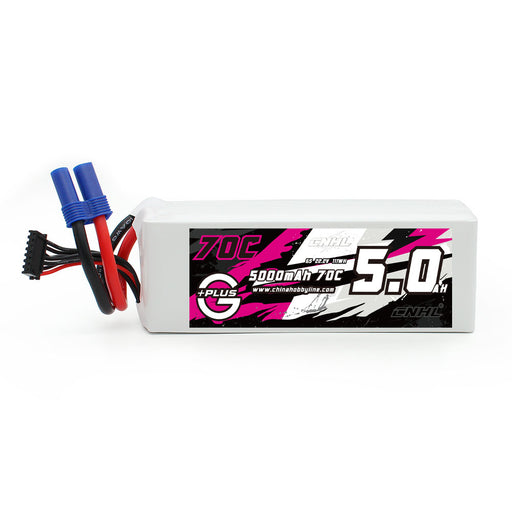
הצג פרטים מלאיםמפרטים: מספר מלאי: 500706EC5 קיבולת: 5000mAh מתח: 22.2V / 6 תאים / 6S1P קצב פריקה: 70C רציף / 140C פיצוץ קצב טעינה: 5C מקסימום גודל (הבדל של 1-5 ...
הצג פרטים מלאים
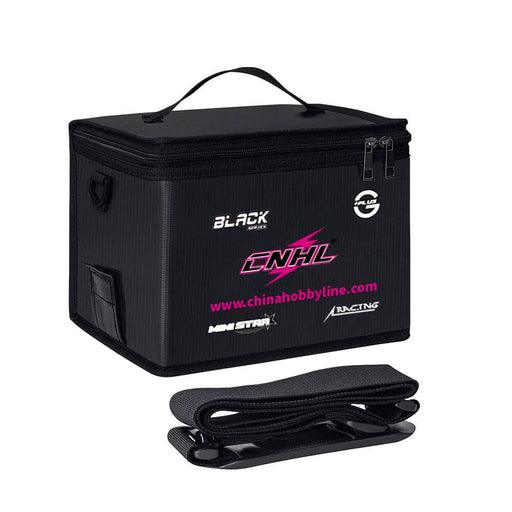
מספר מלאי CB001 צבע שחור גודל (הבדל של 1-5 מ"מ) 215*165*145 מ"מ/ 8.46*6.5*5.71 אינץ' משקל משוער (±5g) 230.5g


CNHL is the first to bring AviNationRC’s debut aircraft, the Horten Ho-229, to market — a compact EDF that combines a rare scale flying-wing desig...
הצג פרטים מלאים

The CNHL KAVAN Pulse 2200 V2 PNP Glider in orange is not a basic powered glider for casual first flights. It is a 2206mm full-house electric sport...
הצג פרטים מלאים

CNHL Bison XT STOL 1750mm PNP RC Airplane (Orange) CNHL Bison XT STOL V2 is a large high-wing bush-style aircraft built for slow, confident flyin...
הצג פרטים מלאים

Quick Fit Check The CNHL Lightning LiHV 7800mAh 4S 120C battery is designed for high-performance RC platforms that require strong burst power, stab...
הצג פרטים מלאים

Quick Fit Check The CNHL Lightning LiHV 6700mAh 6S battery is designed for RC pilots who need strong burst power with stable voltage delivery. ...
הצג פרטים מלאים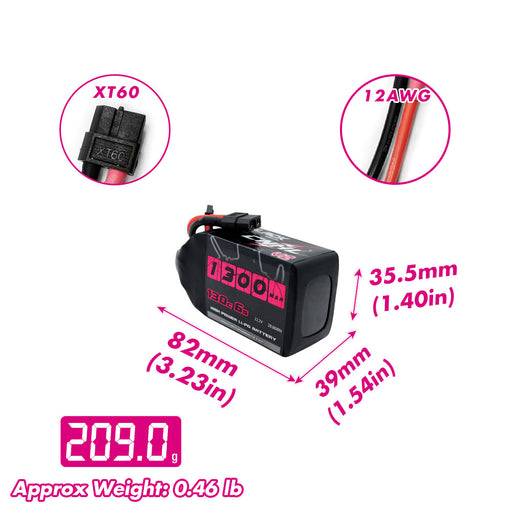

Leave a comment