
סוללות CNHL ליפו
CNHL שואפת לספק סוללות Li-Po באיכות גבוהה ומוצרי RC לכל חובבי התחביב עם שירות לקוחות מצוין ומחירים תחרותיים

Short answer: Deans / T Plug is still good enough for many moderate-power RC setups, especially older vehicles, smaller airplanes, and users who already have a fleet built around it. But in many modern higher-current setups, XT60, XT90, EC5, or IC5 are often the cleaner long-term choice because they are easier to standardize, easier to solder, and usually feel more comfortable in heavier power systems.
The Deans connector has been around long enough that many RC hobbyists still trust it by habit. And for good reason. It was one of the classic standards in electric RC for years. But the question today is not whether T-Plug ever worked. The real question is whether it still makes sense now, in a hobby where battery sizes, current demand, and connector options have all widened.
This guide looks at Deans / T Plug from that practical angle. It explains what it still does well, where it starts falling behind, and how to decide whether you should keep it, adapt it, or move to a newer connector standard. If you want the broader overview first, start with Which RC Battery Connector Is Best for Your Car, Boat, or Plane?.
The Deans connector, often called the T-Plug, is a compact two-pole battery connector long used in RC cars, RC airplanes, and other electric hobby systems. It gets the “T-Plug” nickname from its shape, where the two flat metal terminals sit in a T-like layout inside the housing.
For years, T Plug was one of the default answers for hobbyists who wanted a compact connector with decent current handling. Many older RC vehicles, brushed setups, sport planes, and moderate-power electric systems still use it today.
That history matters, because a lot of the current Deans question is really a fleet question. If you already own many T Plug batteries, chargers, and ESC leads, then the connector is not just a plug. It is part of your whole battery ecosystem.

Deans did not survive this long by accident. For many years, it offered a very practical middle ground: smaller than some larger high-current plugs, stronger than many entry-level connectors, and common enough that users could standardize around it.
There are still a few reasons hobbyists keep using it:
If your setup is not especially current-hungry and your whole battery inventory is already on T-Plug, keeping it can still be perfectly reasonable.
Deans / T Plug still makes sense when the setup is moderate, compact, and already built around it. It is usually most comfortable in setups where you do not need unusually high current headroom and where the convenience of staying on one existing standard matters more than switching to something newer.
Typical places where T Plug can still make sense include:
The key is honesty about the power level. T Plug is usually not a problem in a setup that is well inside its comfort zone. It becomes more questionable when users keep scaling power upward while trying to keep an older connector standard that no longer feels like the best fit.
The main reason T-Plug feels outdated in some modern RC setups is not because it suddenly stopped working. It is because the rest of the hobby moved toward connectors that are often easier to solder, easier to grip, and easier to standardize at higher current levels.
T-Plug usually starts feeling less attractive when:
In that sense, the real issue is not “Is T-Plug bad?” It is “Is T-Plug still the cleanest standard for the direction your fleet is going?”
If your bigger question is connector families in general, continue into RC Battery Connector Types Explained: XT30, XT60, XT90, EC3, EC5, IC3, IC5, TRX, QS8 and More.
For many RC users, the real comparison is not T Plug versus every connector on earth. It is T Plug versus XT60. That is where many older fleets and newer battery inventories collide.
| Connector | Best fit | Main strength | Main tradeoff |
|---|---|---|---|
| Deans / T Plug | Older moderate-power fleets | Compact and familiar | Less convenient for modern fleet standardization |
| XT60 | Modern mainstream RC use | Very common, practical, broadly supported | Not always enough for the biggest high-current setups |
For many hobbyists, XT60 is not better because it is trendy. It is better because it fits the current mainstream of batteries, chargers, ESC leads, and mixed-brand fleets more naturally. That is why many users eventually move from T Plug to XT60 even if their old T Plug setups still function.
If you want the broader XT comparison, the next step is XT30 vs XT60 vs XT90: Pick the LiPo Plug.

Keeping T Plug is often the smarter choice when all or most of these are true:
In that case, replacing the connector just because it feels old can create work without solving a real problem.
Many RC users hit a transition phase where the vehicle still runs T Plug, but the newer batteries they want are XT60, EC5, or something else. That is where an adapter can be the most practical answer.
An adapter often makes the most sense when:
Adapters are especially useful during transition. They let the old connector world and the new connector world coexist for a while. But they are usually best when they stay short, tight, and intentional.
If your core question is fit and adapter logic, continue into RC Battery Connector Compatibility Guide: What Fits, What Doesn’t, and When You Need an Adapter.
If you keep reaching for the same adapter every time, that usually means the fleet has already made its decision and the wiring just has not caught up yet. At that point, rewiring may be cleaner than living on permanent transition hardware.
Rewiring starts making more sense when:
That does not mean every old T Plug model needs immediate surgery. It just means adapters are best for transition, while rewiring is often the cleaner answer once the long-term standard is obvious.
The problem is usually not that T Plug exists. The problem starts when users keep increasing power demand while refusing to reevaluate whether the connector still matches the job.
Common mistakes include:
If the real issue is connector heat, resistance, or power loss rather than connector identity alone, the next stop is Why RC Battery Connectors Get Hot: Resistance, Loose Fit, Adapters, and Common Mistakes.

| Question | Keep T Plug if... | Move on if... |
|---|---|---|
| Fleet status | Most batteries and ESCs already use T Plug | New batteries are mostly XT60, XT90, or EC5 |
| Power demand | Moderate and realistic | Higher-current or more demanding setups |
| Practical goal | Avoid unnecessary rewiring | Standardize a more modern mixed-brand fleet |
| Current problems | No heat, fit, or performance complaints | Adapters everywhere, newer batteries don’t match, or the setup keeps getting stronger |
Yes, for many moderate RC setups it still is. But that is not the same as saying it is still the best long-term standard for every modern RC fleet. T Plug is still usable where it fits honestly. It just stops feeling ideal once the fleet becomes mixed, the battery market shifts away from it, or the current demand keeps climbing.
The right answer is simple: keep it if it still fits your real use cleanly. Adapt it if you are in transition. Replace it when the rest of your fleet has clearly moved beyond it.
If you want the main overview first, continue into Which RC Battery Connector Is Best for Your Car, Boat, or Plane?. If your question is really about connector families, read RC Battery Connector Types Explained: XT30, XT60, XT90, EC3, EC5, IC3, IC5, TRX, QS8 and More. If you are deciding whether T-Plug should give way to XT standards, the next stop is XT30 vs XT60 vs XT90: Pick the LiPo Plug. If the main issue is adapters and fit, continue into RC Battery Connector Compatibility Guide: What Fits, What Doesn’t, and When You Need an Adapter.
Is Deans / T Plug still good enough for RC?
Yes, in many moderate-power RC setups it still works perfectly well, especially if the existing fleet is already built around it.
Is T-Plug outdated?
It is older, but not automatically obsolete. It becomes less attractive when the rest of the fleet, battery inventory, or power demand has clearly moved toward newer connector standards.
Should I replace T Plug with XT60?
Only if XT60 better matches where your fleet is going. If T Plug still fits your real usage cleanly, there is no need to replace it just for fashion.
Can I use a T-Plug adapter safely?
Yes, if it is short, well-made, and matched to the load. Adapters are practical during transition, but they are not always the cleanest permanent answer.
When should I stop using T Plug?
Usually when current demand rises, adapters become constant, or the rest of your battery inventory has clearly moved to another standard like XT60 or EC5.
Is Deans / T Plug better than XT60?
Not universally. T Plug can still work very well in existing moderate-power fleets, while XT60 usually makes more sense for broader modern battery compatibility and easier long-term standardization.
CNHL שואפת לספק סוללות Li-Po באיכות גבוהה ומוצרי RC לכל חובבי התחביב עם שירות לקוחות מצוין ומחירים תחרותיים

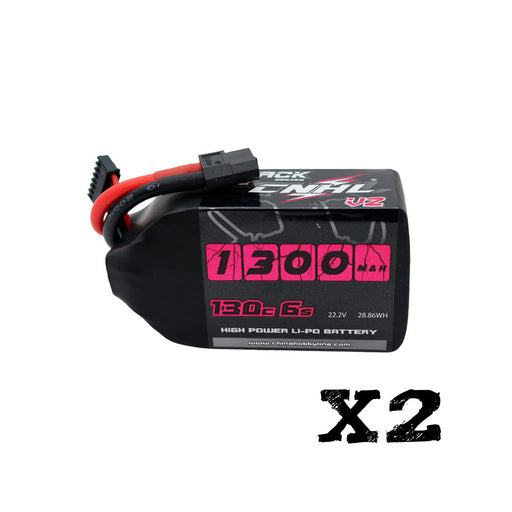
בדיקת התאמה מהירה ה2 Packs CNHL Black Series V2.0 1300mAh 22.2V 6S 130C LiPo Battery with XT60 Plug מתאים היטב למטיסי FPV שרוצים סוללת 6S 1300mAh X...
הצג פרטים מלאיםחלקי חילוף ותמיכה לטווח ארוך אנו יודעים שעבור טייסי RC, תמיכה אמינה בחלקי חילוף היא חלק חשוב בשמירה על מטוס כשיר לטיסה במשך שנים. לכן CNHL מת...
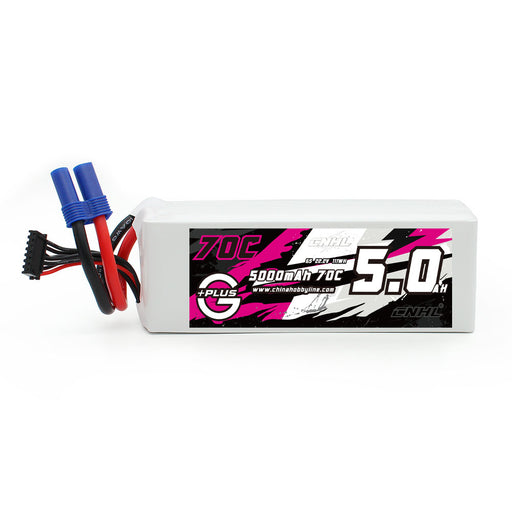
הצג פרטים מלאיםמפרטים: מספר מלאי: 500706EC5 קיבולת: 5000mAh מתח: 22.2V / 6 תאים / 6S1P קצב פריקה: 70C רציף / 140C פיצוץ קצב טעינה: 5C מקסימום גודל (הבדל של 1-5 ...
הצג פרטים מלאים
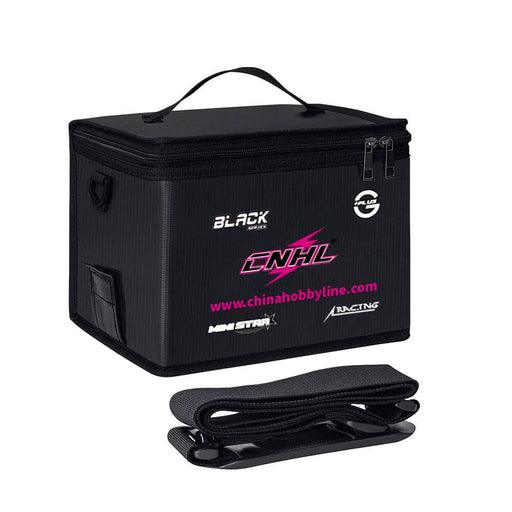
תיק סוללות LiPo של CNHL מיועד לטעינה, הובלה ואחסון בטוחים יותר של סוללות LiPo בבית או בשדה. הוא מוסיף שכבת הגנה פרקטית על ידי סיוע במניעת התפשטות ח...
הצג פרטים מלאים

בדיקת התאמה מהירה חבילת 2 CNHL Speedy Pizza Series Pro 1350mAh 6S 150C LiPo עם תקע XT60 מיועדת לטייסי FPV בגודל 5 אינץ' שרוצים מערכת 6S חופשית ...
הצג פרטים מלאים

Quick Fit Check The CNHL Speedy Pizza Series 2200mAh 22.2V 6S 120C LiPo Battery with XT60 Plug combines the familiar 2200mAh 6S format with a ligh...
הצג פרטים מלאים

Quick Fit Check The CNHL Speedy Pizza Series 2200mAh 14.8V 4S 120C LiPo Battery with XT60 Plug combines a widely used 2200mAh 4S format with a sli...
הצג פרטים מלאים

Quick Fit Check The CNHL Speedy Pizza Series 2200mAh 11.1V 3S 120C LiPo Battery with XT60 Plug takes the familiar 3S 2200mAh aircraft battery form...
הצג פרטים מלאיםThe CNHL Long Range Series BAK 65E 6350mAh 21700 Li-ion battery cell is built around one clear priority: maximum stored energy from a lightweight c...
הצג פרטים מלאים

The CNHL Long Range Series BAK 50D 5000mAh 21700 Li-ion battery cell is designed for custom high-energy battery packs that need a strong balance be...
הצג פרטים מלאים




Leave a comment