
CNHL Lipo Batteries
CNHL aim at providing high-quality Li-Po batteries and RC products to all hobby enthusiasts with excellent customer services and competitive prices

Short answer: use XT30 for smaller low-current RC setups, XT60 for the mainstream middle of the hobby, and XT90 for larger or higher-current systems where a bigger connector makes more sense. The right answer is not just about the biggest number. It is about matching connector size to the actual current demand, battery size, and type of model you run.
XT30, XT60, and XT90 are some of the most common LiPo connector standards in modern RC. They all belong to the same general connector family, which is why the decision can feel simple at first: small, medium, or large. But in real RC use, the choice affects more than just plug size. It affects battery compatibility, fleet standardization, cable bulk, fit in smaller bays, and how cleanly the power path matches the job.
This guide explains where each XT connector fits best, why XT60 became the mainstream default for so many hobbyists, and when XT30 or XT90 are clearly the better answer. If you want the broader connector overview first, start with Which RC Battery Connector Is Best for Your Car, Boat, or Plane?.
XT30, XT60, and XT90 are three common battery connector sizes used across RC cars, FPV drones, RC airplanes, EDF jets, and boats. They follow the same basic connector style, but they are sized for different levels of current demand and different kinds of models.
In simple terms:
The question is not which one is “best” in the abstract. The question is which one fits the job honestly without being unnecessarily small or unnecessarily oversized.
| Connector | General position | Typical fit |
|---|---|---|
| XT30 | Small and light | Micro to smaller setups |
| XT60 | Middle mainstream standard | General RC cars, drones, airplanes |
| XT90 | Larger high-current standard | Bigger or more power-hungry setups |

XT60 is probably the most common answer in the hobby because it lands in the practical middle. It is not so small that it feels out of place in mainstream setups, and not so large that it becomes awkward in everyday battery bays. For many RC users, XT60 is simply the easiest connector to standardize around.
That is why XT60 shows up so often in:
If someone only wants one connector standard across a mixed but moderate fleet, XT60 is often the first connector that makes practical sense. It is the connector many hobbyists end up with not because it is perfect for everything, but because it is good enough for a very large part of the hobby.
XT30 makes more sense when size, weight, and compact routing matter more than high current headroom. In smaller models, a connector that is too large can be just as awkward as a connector that is too small. That is why XT30 exists. It is not a weaker XT60 for the sake of being cheaper. It is a better physical fit for smaller systems.
XT30 often makes the most sense in:
If the model is small and the current demand is realistic, XT30 usually feels cleaner than forcing XT60 into a setup that never needed that much connector bulk in the first place.
XT90 makes more sense when the setup is clearly heavier, larger, or more demanding than what the average XT60 setup looks like. In those cases, the issue is not fashion. The issue is that the whole power path starts feeling more comfortable when the connector matches the scale of the system.
XT90 is commonly the better fit in:
In those applications, XT90 often feels less like “overkill” and more like the connector that actually belongs there.
If your question is starting to overlap with EC and IC high-power standards, the next step is EC5 vs IC5 vs XT90: Which Connector Makes Sense for High-Power RC Setups.

The easiest way to understand the XT family is to stop thinking of it as pure connector theory and start thinking of it by model category. Different RC types naturally pull the answer in different directions.
| RC type | XT30 | XT60 | XT90 |
|---|---|---|---|
| Micro / small FPV | Often yes | Sometimes too large | Usually no |
| 5-inch FPV / mainstream quads | Usually too small | Very common | Sometimes overkill |
| 1/10 RC cars | Usually too small | Often the sweet spot | Only in bigger demand cases |
| 1/8 surface and larger | No | Sometimes | Often yes |
| Sport / trainer airplanes | Sometimes | Very common | For bigger airframes |
The most obvious difference is current handling, but that is not the only thing that changes as you move from XT30 to XT60 to XT90. The connector decision also affects wire size, routing, battery bay space, and how bulky the whole battery lead feels in the model.
That means the wrong connector can feel wrong in two opposite ways:
A connector that is bigger than necessary is not always a disaster, but it can make smaller setups messier and heavier than they need to be. A connector that is too small is usually the more serious mistake, because then the physical and electrical fit both start to feel questionable.
This is where a lot of connector decisions become practical rather than technical. Many hobbyists do not pick XT60 because it is the absolute best connector for every single model. They pick it because it is the best compromise for the largest number of models they actually own.
That is why fleet standardization matters so much. A connector that is slightly less perfect in one vehicle may still be the better overall choice if it keeps the rest of your batteries, chargers, and adapters simpler.
In practice, a common pattern looks like this:
If your main question is how to choose a connector standard for the whole fleet rather than one model, the next read is How to Choose the Right RC Battery Connector for Your Setup.
The most common mistake is assuming that bigger must always be better. It is not. Bigger only makes sense when the connector actually matches the current level and physical scale of the setup.
Other common mistakes include:
If your real issue is not which XT plug to pick, but why a connector is heating up or feeling lossy in practice, continue into Why RC Battery Connectors Get Hot: Resistance, Loose Fit, Adapters, and Common Mistakes.
| Question | XT30 if... | XT60 if... | XT90 if... |
|---|---|---|---|
| Model size | Small and compact | Mainstream moderate size | Larger and heavier |
| Current demand | Low to modest | Moderate mainstream | Higher-demand |
| Physical priority | Lightweight and compact | Balanced all-around fit | More connector headroom matters |
| Fleet logic | Small branch only | Best general standard | High-power branch |
Pick XT30 when the setup is genuinely small and compact. Pick XT60 when you want the most practical mainstream answer for general RC use. Pick XT90 when the model is bigger, heavier, or clearly more current-hungry than what the average XT60 setup looks like.
The cleanest answer is not “always go bigger.” It is “match the connector to the real system.” In modern RC, XT60 is the most common middle ground for a reason. But XT30 and XT90 still matter because the hobby itself still has smaller and larger branches that do not live comfortably in the middle.
If you want the wider connector overview, continue into Which RC Battery Connector Is Best for Your Car, Boat, or Plane?. If you want the full connector family map, read RC Battery Connector Types Explained: XT30, XT60, XT90, EC3, EC5, IC3, IC5, TRX, QS8 and More. If you are comparing XT plugs against larger alternatives, continue into XT60 vs XT90 vs EC5 Connector Comparison. If your bigger question is connector choice across the fleet, read How to Choose the Right RC Battery Connector for Your Setup.
Is XT30 enough for RC?
Yes, for smaller lower-current setups it often is. It makes the most sense where compact size and low cable bulk matter.
Is XT60 the most common RC connector?
For a large part of mainstream RC use, yes. XT60 is one of the most common all-around connector standards because it balances size and capability well.
When should I use XT90 instead of XT60?
Usually when the setup is larger, heavier, or more current-hungry than what a typical XT60 system looks like.
Is bigger always better when choosing an XT connector?
No. A larger connector only helps when the system actually needs it. Otherwise it can just add bulk without solving a real problem.
Can I standardize my whole fleet on XT60?
Many hobbyists do exactly that for the mainstream middle of the fleet. But smaller and larger branches may still make more sense on XT30 or XT90.
What is the biggest mistake when choosing XT30, XT60, or XT90?
The biggest mistake is choosing by size alone without thinking about current demand, physical fit, and how the connector decision affects the rest of the battery fleet.
CNHL aim at providing high-quality Li-Po batteries and RC products to all hobby enthusiasts with excellent customer services and competitive prices

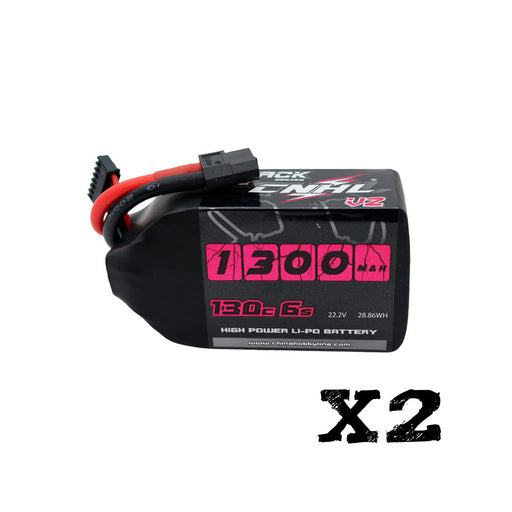
Quick Fit Check The 2 Packs CNHL Black Series V2.0 1300mAh 22.2V 6S 130C LiPo Battery with XT60 Plug is a strong fit for FPV pilots who want a prov...
View full detailsSpare Parts & Long-Term Support We know that for RC pilots, reliable spare parts support is an important part of keeping an aircraft fl...
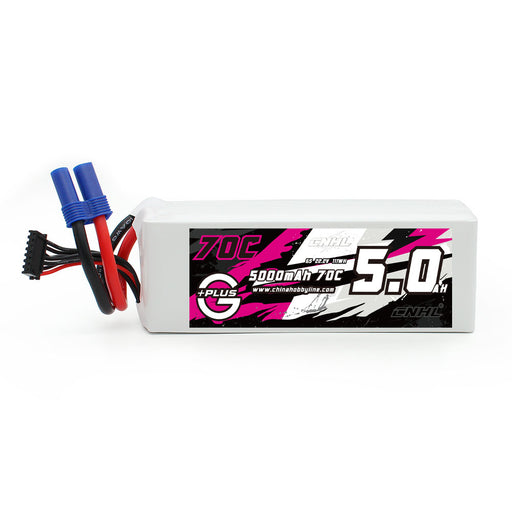
View full detailsSpecifications: Stock Number: 500706EC5 Capacity: 5000mAh Voltage: 22.2V / 6-Cell / 6S1P Discharge Rate: 70C Continual / 140C Burst Charge Rate: ...
View full details
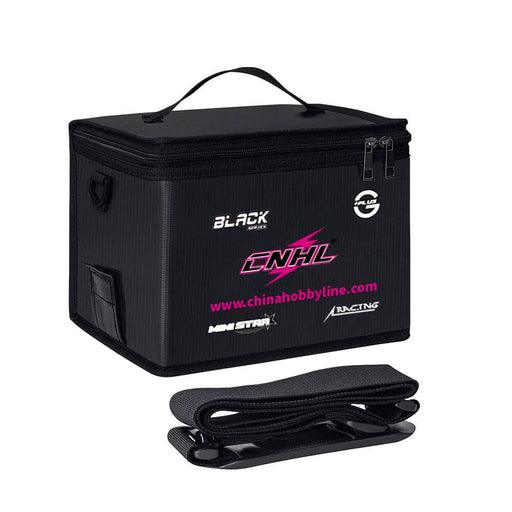
The CNHL LiPo Battery Bag is designed for safer LiPo charging, transport, and storage at home or at the field. It adds a practical layer of protect...
View full details

Quick Fit Check The 2 Packs CNHL Speedy Pizza Series Pro 1350mAh 6S 150C LiPo Battery with XT60 Plug is built for 5-inch FPV pilots who want a ...
View full details

Quick Fit Check The CNHL Speedy Pizza Series 2200mAh 22.2V 6S 120C LiPo Battery with XT60 Plug combines the familiar 2200mAh 6S format with a ligh...
View full details

Quick Fit Check The CNHL Speedy Pizza Series 2200mAh 14.8V 4S 120C LiPo Battery with XT60 Plug combines a widely used 2200mAh 4S format with a sli...
View full details

Quick Fit Check The CNHL Speedy Pizza Series 2200mAh 11.1V 3S 120C LiPo Battery with XT60 Plug takes the familiar 3S 2200mAh aircraft battery form...
View full detailsThe CNHL Long Range Series BAK 65E 6350mAh 21700 Li-ion battery cell is built around one clear priority: maximum stored energy from a lightweight c...
View full details

The CNHL Long Range Series BAK 50D 5000mAh 21700 Li-ion battery cell is designed for custom high-energy battery packs that need a strong balance be...
View full details




Leave a comment