
סוללות CNHL ליפו
CNHL שואפת לספק סוללות Li-Po באיכות גבוהה ומוצרי RC לכל חובבי התחביב עם שירות לקוחות מצוין ומחירים תחרותיים
Quick answer: RC battery connector types are not all meant for the same jobs. XT30 and micro plugs suit smaller, lighter setups. XT60 is the most common general-purpose standard. XT90, EC5, IC5, and QS8 belong in higher-current or larger-scale systems. TRX is tied to the Traxxas ecosystem, while Deans / T-Plug still survives in many older or moderate-power setups. The best connector type depends on current demand, vehicle size, ecosystem, and whether you want easy cross-fleet standardization.
RC hobbyists often spend a lot of time comparing voltage, capacity, and C rating, then treat the connector like an afterthought. In real use, that is a mistake. The battery connector is the last physical link in the power path between the pack and the ESC. If the connector is undersized, worn, poorly matched, or simply awkward for the setup, the whole system can feel worse than it should.
This page is the main connector-type overview. It is not only here to name the common plugs. It is here to show where each one usually belongs, which types are most relevant for cars, boats, airplanes, FPV drones, and micro models, and which deeper guide you should read next if your real question is about compatibility, adapters, heat, or choosing one connector standard for your whole fleet.
If your main question is what fits what, go next to RC Battery Connector Compatibility Guide: What Fits, What Doesn’t, and When You Need an Adapter. If your question is which one should I standardize on, read How to Choose the Right RC Battery Connector for Your Setup. If the real-world problem is heat, looseness, or power loss, continue into Why RC Battery Connectors Get Hot: Resistance, Loose Fit, Adapters, and Common Mistakes.

Most connector confusion starts because hobbyists are usually asking one of four different questions without separating them clearly:
This page mainly answers the first question and gives you the framework for the other three. Think of it as the type map. Once you know what family a connector belongs to, the next decision becomes much easier.
| Connector family | Typical role | Most common RC use | General current class |
|---|---|---|---|
| PH2.0 / BT2.0 / A30 | Micro power plugs | 1S micro FPV drones | Very low |
| XT30 | Small main plug | Micro quads, small planes, lighter builds | Low to moderate |
| XT60 | General-purpose standard | FPV, RC cars, airplanes | Moderate |
| XT90 | Larger XT plug | High-power surface and aircraft setups | High |
| EC3 / IC3 | Mid-size bullet-style ecosystem | Many Horizon / Spektrum-oriented 2S–3S systems | Moderate |
| EC5 / IC5 | Large bullet-style ecosystem | 1/8 RC cars, large aircraft, larger power systems | High |
| TRX | Brand-specific connector | Traxxas vehicles | Moderate to high |
| Deans / T-Plug | Older legacy standard | Older RC cars and aircraft, moderate-power setups | Moderate |
| QS8 | Very high-current anti-spark class | Very large-scale high-power builds | Very high |
Micro FPV uses its own branch of connector logic because tiny drones live in a world where every gram and every bit of resistance matters. That is why a PH2.0 conversation has very little in common with a 1/8 scale basher conversation using EC5 or XT90.
PH2.0 was the old familiar default for many 1S whoops and micro drones. It still exists everywhere, which is why many beginners encounter it first. The problem is that it becomes a bottleneck sooner than modern pilots want.
BT2.0 became popular because it improved power delivery and reduced the “why does this tiny quad suddenly feel flat?” problem that many whoop pilots know too well.
A30 belongs in the same micro branch, but it aims even more at stronger current delivery for more demanding small builds.
If your setup is specifically in this 1S micro world, do not try to solve it with general XT or EC logic. Go straight to PH2.0, BT2.0, or A30? Choosing the Right Battery Plug for Your Micro FPV Drone.
The XT family is one of the cleanest connector families in RC because the logic is easy to understand. As you move upward in size, you are generally moving toward higher-current applications.
XT30 fits lighter, smaller setups where full-size XT60 would be unnecessary bulk. XT60 is the broad everyday standard across huge parts of the hobby. XT90 belongs where current demand is clearly higher and the setup is no longer small or casual.
XT60 became so common because it sits in a comfortable middle. It is compact enough for many planes, FPV quads, and cars, but large enough that hobbyists do not immediately feel like they need to replace it. That is why many people standardize around XT60 until their fleet becomes obviously more power-hungry.
For the direct family comparison, continue into XT30 vs XT60 vs XT90: Pick the LiPo Plug.

The EC and IC families sit in a slightly different branch from XT plugs. These are the bullet-style housing systems that many Horizon- and Spektrum-adjacent setups use or encounter. In real hobby conversations, people often discuss EC3 and IC3 together, and EC5 and IC5 together, because they belong to closely related equipment ecosystems.
For practical buying and fleet planning, the most useful mental split is:
Where people get into trouble is assuming that “related” automatically means “I do not need to think about actual fit.” That is exactly why compatibility needs its own page. This guide is about connector types, not permission to assume every similar-looking housing should be mixed without checking.
If your question is the mid-size compatibility branch, go to EC3 vs IC3 vs XT60: What Actually Fits and What Doesn’t. If your question is the higher-current branch, go to EC5 vs IC5 vs XT90: Which Connector Makes Sense for High-Power RC Setups.

TRX is different because it is not mainly a “best generic connector” conversation. It is an ecosystem conversation. If you are inside Traxxas vehicles, chargers, and batteries, TRX makes immediate sense because it keeps the whole experience straightforward. If you run mixed fleets, TRX quickly becomes a decision point: stay inside the ecosystem, use adapters, or convert.
That is why TRX should be understood as a connector type, but judged as a system choice. It is less about abstract current capability and more about how much you want to stay inside the Traxxas path.
The dedicated branch for that decision is TRX Connector Guide: Should You Stay in the Traxxas Ecosystem or Use an Adapter?.
Deans, also called T-Plug, still shows up in enough older RC gear that it deserves its own place in the connector map. It is no longer the obvious “future-proof default” it once seemed to be, but it also has not disappeared. Plenty of hobbyists still have aircraft, cars, chargers, and spare batteries built around it.
The real Deans question today is not “what is it?” It is “is it still worth keeping in my own fleet?” That is why its dedicated page matters.
For that decision, continue into Deans / T-Plug Connector Guide: Is It Still Good Enough for Modern RC Setups?.
QS8 belongs well above the “I just need a general connector” tier. It is not the sort of plug most hobbyists need on ordinary cars, FPV quads, or sport planes. It enters the conversation when the setup is truly large, current-hungry, and no longer pretending to be moderate.
If XT90, EC5, or IC5 already sound large to someone, QS8 is usually not their first problem. But for genuinely high-power large-scale systems, it absolutely belongs in the connector map.
That is exactly why the dedicated page exists: QS8 Connector Guide: What It Is, When to Use It, and How It Compares.
| RC category | Most common connector types | Why they show up there |
|---|---|---|
| Micro FPV | PH2.0, BT2.0, A30 | Tiny size and ultra-light builds |
| 5-inch FPV and many general quads | XT60 | Balanced size and current handling |
| Small fixed-wing / lighter RC | XT30, XT60, sometimes Deans | Moderate power, familiar standards |
| 1/10 and many mainstream RC cars | XT60, Deans, TRX, EC3 / IC3 | Wide mix of legacy and modern ecosystems |
| 1/8 scale and higher-power setups | XT90, EC5, IC5 | Higher current and larger packs |
| Very large-scale extreme systems | QS8 | Very high current class |
This is where many pages go wrong. Naming connector families is not the same thing as explaining what plugs into what. A connector-type article should help readers identify the category. A compatibility article should explain physical fit, cross-ecosystem reality, and when adapters are reasonable.
So if your real question sounds like any of these, you are already leaving the scope of this page:
Those belong in RC Battery Connector Compatibility Guide: What Fits, What Doesn’t, and When You Need an Adapter.
The second trap is thinking that once you know the names, the decision is finished. It is not. Many hobbyists know what XT60, XT90, EC5, or TRX are, but still do not know which standard they should commit to in their own fleet. That is a different question. It includes current demand, ecosystem lock-in, adapter dependence, future expansion, and how much soldering or conversion they are actually willing to do.
That full decision framework belongs in How to Choose the Right RC Battery Connector for Your Setup.
Many hobbyists arrive here thinking they need help identifying connector families, but the real problem is a connector that gets warm, feels loose, shows discoloration, or seems to cost the system punch under load. That is not mainly a type-identification issue anymore. That is a real-world resistance and power-path problem.
If that sounds closer to what is happening, skip straight to Why RC Battery Connectors Get Hot: Resistance, Loose Fit, Adapters, and Common Mistakes.
If you want to keep going from this connector-type overview, use the path that matches your actual question:
What are the most common RC battery connector types?
The most common connector types include XT30, XT60, XT90, EC3, EC5, IC3, IC5, TRX, Deans / T-Plug, and micro FPV plug types such as PH2.0, BT2.0, and A30.
What is the most common connector in general RC use?
XT60 is one of the most common general-purpose standards because it balances size, convenience, and current capability well across many RC cars, FPV drones, and airplanes.
What connector type is most common on micro FPV drones?
That depends on the generation and performance level of the whoop or micro build, but PH2.0, BT2.0, and A30 are the main micro-drone connector families worth knowing.
What connector types are common in Traxxas vehicles?
Traxxas vehicles typically use the TRX connector as part of the Traxxas battery ecosystem.
Are EC5 and IC5 the same connector type?
They are closely related large bullet-style connector families often discussed together in RC, but physical-fit and ecosystem questions should still be checked carefully in real setups rather than assumed from naming alone.
Is Deans / T-Plug outdated?
It is older than XT and EC/IC standards in many parts of the hobby, but it is still common enough in existing fleets that it remains relevant.
When does QS8 matter?
QS8 matters when the setup moves into genuinely very high-current large-scale territory where ordinary mainstream plugs are no longer the natural fit.
Where should I go next after this page?
If your next question is about fit, adapters, and actual plug matching, go to RC Battery Connector Compatibility Guide. If it is about choosing one connector standard for your own fleet, go to How to Choose the Right RC Battery Connector for Your Setup.
Connector names are easy to memorize, but real connector decisions get much better once you stop asking only “what is this plug called?” and start asking “what job is this plug actually meant to do?” That one shift usually makes the whole RC connector topic feel much less messy.
XT30, XT60, XT90, EC3, EC5, IC3, IC5, TRX, Deans, QS8, and micro FPV plugs all belong in the hobby, but they do not belong in the same situations. Once you understand the connector families, the next decision becomes much easier: compatibility, choice, adapters, or real-world resistance problems.
CNHL שואפת לספק סוללות Li-Po באיכות גבוהה ומוצרי RC לכל חובבי התחביב עם שירות לקוחות מצוין ומחירים תחרותיים

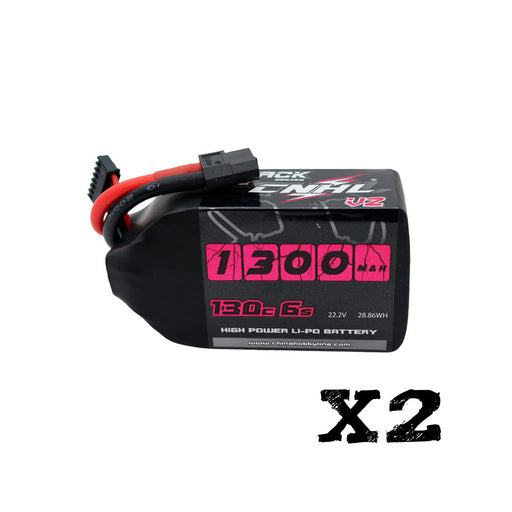
בדיקת התאמה מהירה ה2 Packs CNHL Black Series V2.0 1300mAh 22.2V 6S 130C LiPo Battery with XT60 Plug מתאים היטב למטיסי FPV שרוצים סוללת 6S 1300mAh X...
הצג פרטים מלאיםחלקי חילוף ותמיכה לטווח ארוך אנו יודעים שעבור טייסי RC, תמיכה אמינה בחלקי חילוף היא חלק חשוב בשמירה על מטוס כשיר לטיסה במשך שנים. לכן CNHL מת...
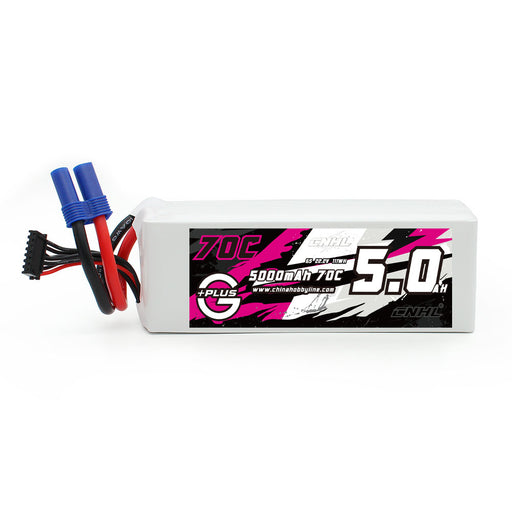
הצג פרטים מלאיםמפרטים: מספר מלאי: 500706EC5 קיבולת: 5000mAh מתח: 22.2V / 6 תאים / 6S1P קצב פריקה: 70C רציף / 140C פיצוץ קצב טעינה: 5C מקסימום גודל (הבדל של 1-5 ...
הצג פרטים מלאים
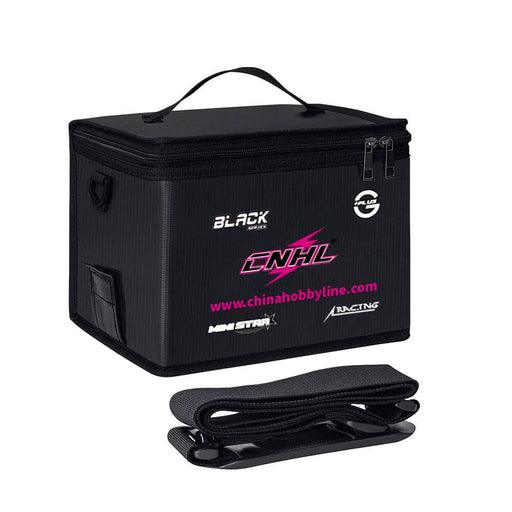
תיק סוללות LiPo של CNHL מיועד לטעינה, הובלה ואחסון בטוחים יותר של סוללות LiPo בבית או בשדה. הוא מוסיף שכבת הגנה פרקטית על ידי סיוע במניעת התפשטות ח...
הצג פרטים מלאים

בדיקת התאמה מהירה חבילת 2 CNHL Speedy Pizza Series Pro 1350mAh 6S 150C LiPo עם תקע XT60 מיועדת לטייסי FPV בגודל 5 אינץ' שרוצים מערכת 6S חופשית ...
הצג פרטים מלאים

Quick Fit Check The CNHL Speedy Pizza Series 2200mAh 22.2V 6S 120C LiPo Battery with XT60 Plug combines the familiar 2200mAh 6S format with a ligh...
הצג פרטים מלאים

Quick Fit Check The CNHL Speedy Pizza Series 2200mAh 14.8V 4S 120C LiPo Battery with XT60 Plug combines a widely used 2200mAh 4S format with a sli...
הצג פרטים מלאים

Quick Fit Check The CNHL Speedy Pizza Series 2200mAh 11.1V 3S 120C LiPo Battery with XT60 Plug takes the familiar 3S 2200mAh aircraft battery form...
הצג פרטים מלאיםThe CNHL Long Range Series BAK 65E 6350mAh 21700 Li-ion battery cell is built around one clear priority: maximum stored energy from a lightweight c...
הצג פרטים מלאים

The CNHL Long Range Series BAK 50D 5000mAh 21700 Li-ion battery cell is designed for custom high-energy battery packs that need a strong balance be...
הצג פרטים מלאים




Leave a comment