
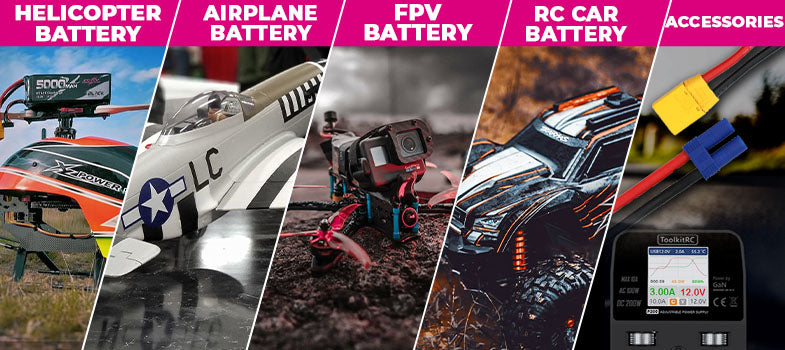
CNHL Lipo Batteries
CNHL aim at providing high-quality Li-Po batteries and RC products to all hobby enthusiasts with excellent customer services and competitive prices

Answer first: the Freewing F22 Raptor V2 90mm EDF does not feel like a completely new airplane, but it does feel like a more practical and better-resolved version of a platform that was already easy to like. The biggest difference is not that it suddenly became a different jet in the air. The biggest difference is that the V2 package makes the airplane easier to live with, easier to carry, easier to set up, and easier to build around the battery personality you actually want. For most pilots, 6S is still the cleanest and smartest starting point. If the goal is a more aggressive setup, 8S is the harder-edged route. If the goal is to reach that 8S result in a way that feels more practical from a battery standpoint, dual 4S is preferred solution.
That is the right way to look at this airplane. Not as three different models, and not as a spec-sheet argument, but as one large 90mm F22 platform with three realistic power personalities. Once that is clear, the battery choice becomes much easier, and the whole airplane starts to make more sense.
The V2 package brings in the upgrades that matter most during real ownership. The official current listings show the same big-airframe basics people expect from this platform: a 1060mm wingspan, 1500mm overall length, a 90mm 12-blade EDF, a 120A ESC with reverse thrust, retracts, lights, and the V2 hardware package built around quick-release wings, reinforced structure, and updated landing gear details. The 6S version uses a 3668-1960Kv inrunner, while the 8S version moves to a 4075-1350Kv inrunner.

The most meaningful upgrade is not the one that sounds the flashiest in a product title. It is the combination of quick-release wings, improved lighting presence, and a more ownership-friendly overall package. On a big EDF, quick-release wings are not a throwaway feature. They directly affect how often the airplane actually gets taken to the field. A jet that is easier to transport and assemble usually ends up being flown more. The upgraded lighting matters too, not because lights automatically make a jet better, but because this is exactly the kind of model where ground presence and flightline presence are part of the appeal.
That is also why this V2 works best when judged by how it feels in real use. If someone wanted a fully retooled, all-new mold with every scale detail redone from zero, that is a different conversation. What we see here is a strong-flying F22 platform that now feels more convenient, more current, and easier to match with the right LiPo path.

The best thing about this F22 is that it does not behave like a one-note speed tool. Yes, it looks right doing fast passes, and yes, a big Raptor should have presence. But the more useful conclusion is that the airplane does not need to be flown at one mood all the time. On a sensible setup, it can feel planted, composed, and surprisingly cooperative for a large EDF of this size. It is not just a “keep it screaming and hope for the best” kind of jet.
The F22 V2 point is that the airframe gives back different things depending on how you power it. A balanced 6S setup gives the model a cleaner everyday personality. A more aggressive route pushes it harder and makes the whole flight feel more urgent. The airplane can support both ideas, but they are not the same ownership experience.
This is still a jet people buy for the full package: the look on the runway, the shape in the air, the big-pass presence, the angle-of-attack attitude, and the sense that it is still manageable enough to bring back down without drama when the setup is right. That is why battery matching matters so much here.
The 6S version remains the easiest route to recommend with a straight face. Officially, the current 6S package is built around a single 6S 5000mAh EC5 battery requirement. That alone makes ownership cleaner. One pack. One charging rhythm. Less battery juggling. Less complexity at the field. And because the 6S version is already designed as the high-performance route, it is not a compromise setup pretending to be enough. It is enough.
This is the setup path that preserves what makes the airplane easy to like. It keeps the battery side simple without draining the big-jet character out of the model. The result feels more balanced than stripped down. That is why 6S makes so much sense for pilots who want the big F22 experience without turning every flying session into a battery-management project.
There is another reason 6S deserves more respect than people sometimes give it. This airframe already has enough visual and flight presence on 6S. It can still look fast, still feel satisfying on the climbout, and still carry the identity people want from a 90mm F22. In other words, 6S is not the “entry-level excuse” version of the experience. It is the cleanest version of the experience.

We also likes 6S here because it keeps the airplane in a more natural long-term ownership zone. If the goal is to fly often, keep the charging habits straightforward, and still enjoy a large EDF that does what an F22 should do, 6S keeps the whole project healthier.
The official baseline points squarely at 5000mAh 6S, and that remains the most logical center of gravity for the recommendation. But from battery-fit perspective, this platform also makes sense as a broader 6S 5000 to 6200mAh conversation, not just a single-spec airplane. The reason is simple: this jet is large enough that the pack does not only determine runtime. It influences balance feel, pitch character, and how the model settles on approach.
That is why the cleanest recommendation is to start around 5000–5200mAh if the goal is a straightforward setup with the fewest questions. A heavier 6200mAh route can still make sense, but it is the kind of setup that deserves more attention to placement and balance rather than being treated as a casual substitute for the baseline pack. The point is not that bigger is automatically better. The point is that heavier setups should feel intentional.
From a testing mindset, that is the difference between a battery that simply fits and a battery that truly suits the airplane. The best setup on this jet is not the one with the most impressive number on paper. It is the one that makes the airplane feel the way you want it to feel.
The 8S route is real, and it should be taken seriously, but it should not be treated as the automatic answer just because it sounds more extreme. Officially, the current 8S package uses the same 90mm EDF layout with a different motor pairing and is positioned as the more aggressive route on the same V2 platform. The official requirement is either two 4S 5000mAh EC5 packs or one 6S 5000mAh EC5 plus one 2S 5000mAh EC5. That tells you a lot. This is not just “throw in more cells and win.” The 8S version is meant to push the airplane harder and give the pilot a sharper, stronger, more performance-led version of the same jet. That makes sense when the pilot already knows what the airplane is about and wants more urgency, more aggressive fast-pass character, and a setup with a harder push through the power band.
What 8S is not, in our view, is the default answer for every buyer. If someone is already asking whether the airplane should be kept simple or turned into a more serious performance project, that question almost answers itself. 8S is for the second type of owner, not the first.

If we are recommending an 8S direction on this airplane, the preferred route is dual 4S. The reason is not because the alternative is impossible. The reason is because dual 4S is easier to live with. It is easier to charge, easier to manage as a pair, easier to replace later, and easier to keep mentally organized over a season of real use. Since the official 8S setup already supports 2x 4S 5000mAh EC5, that becomes the most natural battery strategy for the 8S pilot. The 6S + 2S path is still a valid official route, but it feels more specialized. It makes sense if a pilot already has a reason to build that way. It does not feel like the cleanest recommendation for most people starting from zero. Dual 4S is simpler, clearer, and more repeatable. That matters on a model like this because the airplane is already big enough to demand a bit of planning. The battery plan should not make ownership harder than it needs to be.
That is really the heart of our battery view on the F22 V2. 6S is the clean all-around route. 8S is the more aggressive route. Dual 4S is the most practical way to build that 8S route.
| Setup | Best for | CNHL view | Bottom line |
| 6S single pack | Most pilots, most days, easiest ownership path | Best balance of performance, simplicity, and long-term usability | CNHL’s default recommendation |
| 8S route | Pilots chasing a harder-edged performance feel | More deliberate, more aggressive, less casual | Worth it when stronger punch is the real goal |
| Dual 4S for 8S | Pilots who want 8S without a messy battery strategy | The cleanest way to build the 8S personality | CNHL’s favorite 8S battery solution |
Honest answer is yes, but for the right reason. The value of the F22 V2 is not that it turns into a completely different airplane from the one pilots already knew. The value is that it takes a jet with a strong base reputation and makes it more practical to own, more practical to transport, and easier to build around a setup strategy that fits the pilot. That is why the airplane still works.
If someone already has an older 90mm F22 in excellent condition and loves it exactly as it is, the decision may not be automatic. But if the goal is to buy into this platform now, or to come back into it with a cleaner, easier, more current package, the V2 logic is easier to defend. The biggest reason to take it seriously is that it supports real battery choice without turning the airframe into a confused project.
That is the difference between a jet that only looks exciting online and a jet that still makes sense when you start choosing the packs you will actually own, charge, transport, and fly every weekend.
The Freewing F22 Raptor V2 90mm EDF makes the most sense when it is treated as one airframe with three realistic battery personalities. For most pilots, the smartest answer is still 6S. For pilots who want more aggression, 8S is valid. For pilots who want that 8S result in the most practical battery format, dual 4S is the route CNHL would point to first.
That is the full read on this airplane: not a fake choice, not an overcomplicated choice, and not a one-answer jet. Just a very recognizable F22 platform that becomes much easier to understand once the battery logic is handled properly.
If you want to go straight to the battery options that match those routes, see our companion collection here: Best LiPo Battery for Freewing F22 Raptor V2 90mm EDF Jet.
Is 6S enough for the Freewing F22 Raptor V2?
Yes. 6S as the cleanest all-around route for this airplane. It keeps the battery side simpler while still delivering the kind of large-jet presence most pilots want.
Should I buy the 6S version or the 8S version?
Choose 6S if you want the easiest all-around ownership experience. Choose 8S if your real goal is a more aggressive performance route rather than a simpler daily setup.
Is dual 4S better than running a single 8S pack?
For this airplane, We prefer dual 4S as the most practical 8S battery strategy. It is easier to manage, easier to charge, and easier to replace as a matched pair over time.
Does the official 8S setup really use dual 4S or 6S plus 2S?
Yes. The current official 8S listings specify either 2x 4S 5000mAh EC5 or 1x 6S 5000mAh EC5 plus 1x 2S 5000mAh EC5.
What battery size makes the most sense for everyday flying?
Start the conversation at 6S 5000–5200mAh for the cleanest all-around use, then move upward only if there is a clear reason to do so.
Does this airplane need reverse thrust to land well?
The airplane includes reverse thrust in the official setup, but the more important point is that the overall setup, flap use, and balance feel should be right first. Reverse thrust is a useful tool, not the whole landing strategy.
Is this still one of the more recognizable large EDF F22 options?
Yes. The current V2 product line keeps the big 90mm Raptor layout with updated hardware, lights, retracts, and official Lockheed Martin licensing on both the 6S and 8S versions.
CNHL aim at providing high-quality Li-Po batteries and RC products to all hobby enthusiasts with excellent customer services and competitive prices
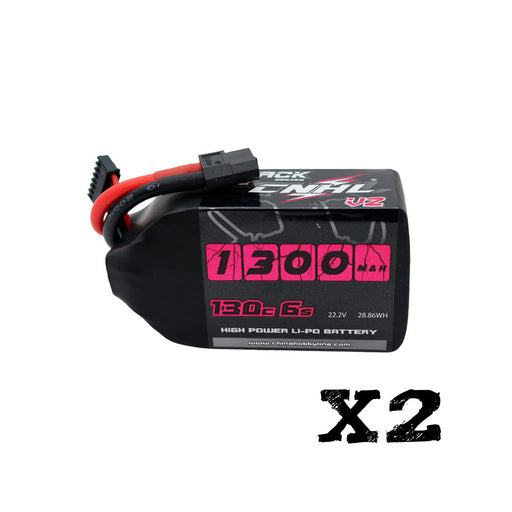
Quick Fit Check The 2 Packs CNHL Black Series V2.0 1300mAh 22.2V 6S 130C LiPo Battery with XT60 Plug is a strong fit for FPV pilots who want a prov...
View full detailsSpare Parts & Long-Term Support We know that for RC pilots, reliable spare parts support is an important part of keeping an aircraft fl...
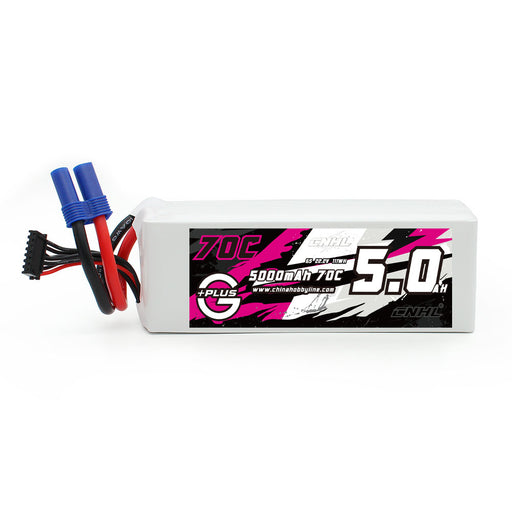
View full detailsSpecifications: Stock Number: 500706EC5 Capacity: 5000mAh Voltage: 22.2V / 6-Cell / 6S1P Discharge Rate: 70C Continual / 140C Burst Charge Rate: ...
View full details
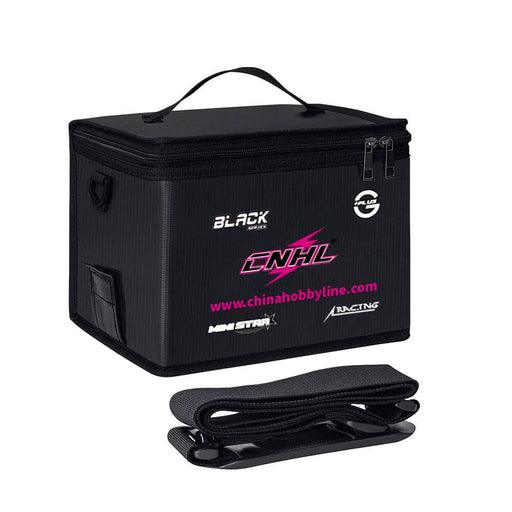
The CNHL LiPo Battery Bag is designed for safer LiPo charging, transport, and storage at home or at the field. It adds a practical layer of protect...
View full detailsQuick Fit Check The 2 Packs CNHL Speedy Pizza Series Pro 1350mAh 6S 150C LiPo Battery with XT60 Plug is built for 5-inch FPV pilots who want a ...
View full details

The CNHL Long Range Series BAK 65E 6350mAh 21700 Li-ion battery cell is built around one clear priority: maximum stored energy from a lightweight c...
View full details

The CNHL Long Range Series BAK 50D 5000mAh 21700 Li-ion battery cell is designed for custom high-energy battery packs that need a strong balance be...
View full details

The ISDT C4 EVO is a versatile smart battery charger built for AA, AAA and cylindrical rechargeable cells from compact 10440 batteries all the way ...
View full details

The CNHL Long Range Series 6350mAh 21.6V 6S1P 21700 Li-ion battery combines six BAK 65E high-energy cells into a 137.16Wh pack designed for ultra-e...
View full details

The CNHL Long Range Series 5000mAh 21.6V 6S1P 21700 Li-ion battery combines six BAK 50D cells into a compact 108Wh pack designed around long-range ...
View full details




Leave a comment