
CNHL Lipo Batteries
CNHL aim at providing high-quality Li-Po batteries and RC products to all hobby enthusiasts with excellent customer services and competitive prices
Every few years there is a car that quietly shows up and, before you know it, everyone in the RC scene is talking about it. The Kyosho Fazer D2 / FZD2 is exactly that kind of release. It is not a full-blown competition chassis, but the mix of a licensed Toyota body, rear-wheel drive layout, built-in gyro, and a realistic price has made it the “first proper RWD drift car” for a lot of people. If you grew up with Initial D or just like classic Japanese coupes, this platform is very hard to ignore.

For most people the Fazer D2 does not sell itself with specs. It sells itself the moment you see the body. The AE86 version comes as an officially licensed Toyota Sprinter Trueno, using a Lexan base with a lot of hard plastic detail parts. The mirrors, front and rear wipers, grille, rear bumper area and light buckets are all separate pieces. The headlights and tail lights are not flat decals – you get proper lenses and buckets that are ready for an LED kit if you want to light the car up.
From the side, the “panda” two-tone, the thin belt-line stripe and the old-school rear lamp shape all hit the nostalgia button. A lot of drivers openly admit they bought this car less for the electronics and more because a clean, real AE86 is either impossible to find or wildly expensive. For many people this is the closest they will get to owning one, and that feeling definitely comes through in the comments.

If the classic look is not your thing, the same Fazer D2 / FZD2 chassis is also sold with a Lightning Red Toyota 86 GT Tuned Version body. Underneath it is still the same rear-wheel drive platform, but the body goes in a different direction: modern wide-body lines, aero parts and a more aggressive street style. Functionally they share the same core, but in terms of vibe you are choosing between “’80s hero car” and “modern tuned 86”.
One of the small but meaningful upgrades on the Fazer D2 is the clipless body mounting system. A lot of people asked for this on the four-wheel drive Fazer platform; now the rear-wheel drive chassis finally gets it. The front of the body hooks in with a tongue, while the rear locks into hidden tabs. From the outside you do not see any body posts or pins, which makes the car look much more like a scaled down real car in photos and videos.
The trade-off is that it is not quite as “slam and go” as traditional posts. To really make sure the body is seated, you usually have to press the tabs in slightly and then push the shell down. Once you learn the motion it becomes natural, but the first few times feel more like fitting a model kit than dropping a shell onto posts. Most people seem to feel the clean look is worth that extra second.
Then there are the pop-up headlights. Using the optional micro servo and linkage kit, you can wire the headlights to a spare channel and make them flip up and down from the transmitter. For anyone with Initial D memories, that alone is dangerous for the wallet. In practice, the installation takes a bit of patience. The lens edges sometimes rub the body and need a light trim; after a lot of use the mechanism may need re-adjusting to avoid the “lazy eye” look. But once it works, watching a little AE86 pop its headlights up on the grid or mid-drift is just fun in a way that does not show up on spec sheets.

With the body off, the Fazer D2 chassis is more interesting than the price tag suggests. The main chassis is split into a front and rear section, and they slide relative to each other to change the wheelbase. Out of the box the car is set up for the AE86 / 86 GT shells, but the slider allows you to move from roughly 240 mm up into the long touring range. That means it can be adapted to certain Tamiya M-class shells on the short side, and to longer sedan bodies on the other end. It also opens a door for 3D-printed custom bodies that would normally be awkward to fit.
Drive-wise, the car uses a four-gear transmission and a locked spool in the rear. The motor sits quite high over the battery tray, deliberately biasing weight towards the rear. For pure grip racing that would look wrong on paper; for RWD drifting, it helps the car break traction more easily and stay sideways without needing insane power. The front suspension is a double wishbone setup with room to tune caster, roll center and Ackermann. Out of the box the geometry is conservative and friendly, which is exactly what most first-time RWD drivers need.

The electronics package in the Fazer D2 is clearly built around the idea of “make it easy to start drifting.” It runs a brushed 540-size G22 motor and a 60A brushed ESC with a T-style connector. The ESC is designed primarily for 2S LiPo use. The receiver is the KRG-331D, which has built-in gyro control for both steering and throttle, with small pots on top so you can fine-tune the gain.
If you have never driven a rear-wheel drive drift car before, this combination makes the first steps much less intimidating. The steering gyro helps catch the car as the rear steps out; the throttle gyro smooths out your trigger input so you are less likely to spin just by twitching your finger. Many people in the community mention that, thanks to this, Fazer D2 was the first RWD they actually felt comfortable driving for more than a few minutes.
On the flip side, experienced drifters quickly notice the limits. The stock throttle response can feel a little “soft,” and in certain conditions the throttle gyro can overprotect the car, cutting power and making it feel like it hesitates or “cuts out” as you initiate a slide. Turning the throttle gain down – or off – helps a lot. Quite a few owners eventually replace the electronics with their favorite drift ESC and motor setup, using the RTR combo mainly as a stepping stone to get familiar with the chassis.
One thing the Fazer D2 shows quickly is how much the surface matters. On smooth concrete the stock plastic drift tires can feel very loose, forcing you to think ahead, initiate early and accept a more “floaty” style of driving. On carpet, the same tires suddenly find a lot of grip; you can lean on the car more, but you might feel the transitions are a bit snappy if you are heavy on the trigger.

On purpose-built P-tile drift tracks, most drivers agree the first upgrade should be tires. The chassis will go sideways on the stock tires, but the rhythm is off compared with a true drift compound. Once you bolt on a set of proper drift tires, like a P-tile friendly compound from a dedicated drift brand, the Fazer D2 starts to make a lot more sense. You can feel when the rear is about to break loose, catch it with the wheel, and start linking corners the way a RWD drift car should.
Scrolling through SNS comments and RCforum threads, some themes show up over and over again. A lot of people call it their “first RWD drift car.” Others go straight to the nostalgia: this is the AE86 they grew up watching on screen, now in RC form, and finally within reach. There are also very practical takes – people who say the body alone would be worth a big portion of the price, and everything else is a bonus.
More experienced drift drivers tend to look at it as a realistic RTR that sits between toy-like “drift” models and high-end kits. It will not replace an MST RMX or Yokomo RD as a top-level competition car, but for the price, the amount of scale detail, the adjustable wheelbase, and the gyro-equipped electronics package make a strong argument. It is the kind of car you can hand to a friend to try RWD drifting without worrying about a complex setup sheet.
Out of the box, the Fazer D2 is built around a 2S LiPo power system. You can technically run basic packs or even NiMH, but once you start practicing RWD drifting on a regular basis, the battery becomes a big part of how the car feels. Too small of a pack and the voltage drop near the end of the run makes throttle feel inconsistent. Go too large and the car turns into more of a heavy cruiser than a nimble drifter.
For most Fazer D2 owners, the sweet spot is a 2S hard case pack in the 4900–5600mAh range. That gives enough runtime to actually practice, without making the chassis feel like it is dragging a brick around. If you want to see a focused list of 2S packs that match the tray and plug layout, you can check the Kyosho Fazer D2 Drift Car Batteries collection.
If you are using the Fazer D2 as your first RWD drift platform, a slightly lighter pack usually makes the learning process easier. A battery like the CNHL Racing Series 4900mAh 7.4V 2S 120C Hard Case LiPo with T plug keeps the rear of the car from feeling too heavy, while still providing enough capacity for a decent session. The high discharge rating is less about raw power and more about maintaining a consistent throttle feel from the first minute to the last lap of the pack.
If your local track has a lot of grip or you prefer a slightly more stable rear end, adding a little battery weight can help. A pack like the CNHL Racing Series 5600mAh 7.4V 2S 120C Hard Case LiPo with T plug pushes the car towards a smoother, more predictable rhythm in long, linked drifts. With the right tire choice, it can make it easier to hold angle without constantly correcting every tiny movement.
In both cases, the hard case adds a layer of protection when the chassis taps barriers or slides into track edges, which is bound to happen when you are learning RWD. It also makes it easier to strap the pack down firmly in the Fazer D2 tray so the battery is not shifting around as the car transitions.
Part of the appeal of the Fazer D2 is that it works as a complete RTR, but it does not lock you out of upgrades. Tire swaps are usually first on the list. After that, many drivers start looking at metal steering components, different suspension arms, and eventually new electronics. A dedicated drift ESC with fine throttle control, a sensored brushless motor and a more adjustable gyro can transform the feel of the chassis without touching the core layout.
Body-wise, the adjustable wheelbase and clipless mount design make it tempting to experiment. Some people keep the AE86 shell safe for display or light use, then run a “practice” body day to day. Others grab different Fazer-series shells or 3D-printed designs to take advantage of the slider chassis. The platform does not pretend to be a pro-level drift kit, but it is far more flexible than many entry-level RTRs.
If you are completely new to RWD drifting, the answer is almost certainly yes. The Fazer D2 offers a forgiving chassis, a helpful gyro system, and a body that makes you want to take it out of the box and actually drive it. You do not need to build a kit or choose every component from scratch, and you can upgrade it gradually as your skills and preferences evolve.
If you already own a high-end drift chassis, the Fazer D2 is more of a fun side project or a way to enjoy a scale AE86/86 GT shell without committing to a full custom build. It is not going to replace a competition car that you carefully tuned over months, but it can absolutely be the car you grab for casual sessions, indoor tracks, or to let a friend try RWD drifting for the first time.
And if you are mainly here for the scale looks and Initial D nostalgia, the combination of the AE86 shell, pop-up headlight option and the way the car behaves sideways is probably enough to justify the purchase on its own.
Mechanically they share the same Fazer D2 / FZD2 rear-wheel drive chassis. The differences are mainly in the bodies, wheels and how each version is styled. If you swap the shells and match the wheelbase, the driving experience is very similar.
Yes, within reason. The adjustable wheelbase lets you move between short M-style shells and longer touring-style bodies. You still need to choose bodies with compatible width and wheel arch placement, but the slider design makes it much easier than a fixed-wheelbase chassis.
For most beginners, the stock KRG-331D receiver and its gyro functions are more than enough to get started. As you improve, you may want finer control from a dedicated drift gyro and ESC, but the RTR electronics are designed to flatten the early learning curve.
RWD drift cars spend a lot of time sideways and close to barriers. A hard case battery offers better protection against side impacts and makes it easier to clamp the pack tightly in the tray. For the Kyosho Fazer D2 specifically, a 2S hard case in the 4900–5600mAh range keeps the balance between runtime and responsive handling.
If you are running other drift chassis alongside the Fazer D2, you can explore the broader RC Drift Car Batteries collection. For bashers, touring cars and mixed-use setups, you can browse the main CNHL RC Car Batteries collection to find different voltages, capacities and plug options.
CNHL aim at providing high-quality Li-Po batteries and RC products to all hobby enthusiasts with excellent customer services and competitive prices

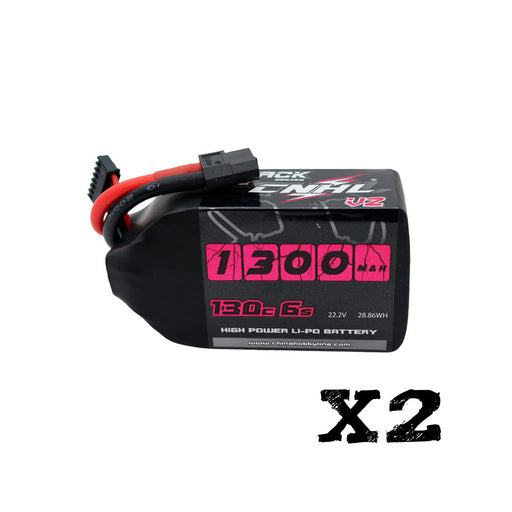
Quick Fit Check The 2 Packs CNHL Black Series V2.0 1300mAh 22.2V 6S 130C LiPo Battery with XT60 Plug is a strong fit for FPV pilots who want a prov...
View full detailsSpare Parts & Long-Term Support We know that for RC pilots, reliable spare parts support is an important part of keeping an aircraft fl...
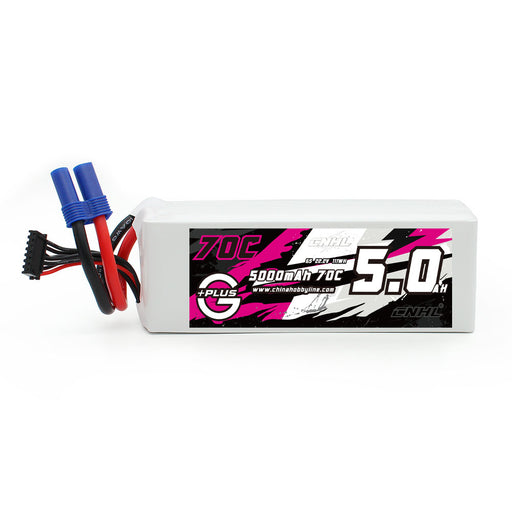
View full detailsSpecifications: Stock Number: 500706EC5 Capacity: 5000mAh Voltage: 22.2V / 6-Cell / 6S1P Discharge Rate: 70C Continual / 140C Burst Charge Rate: ...
View full details
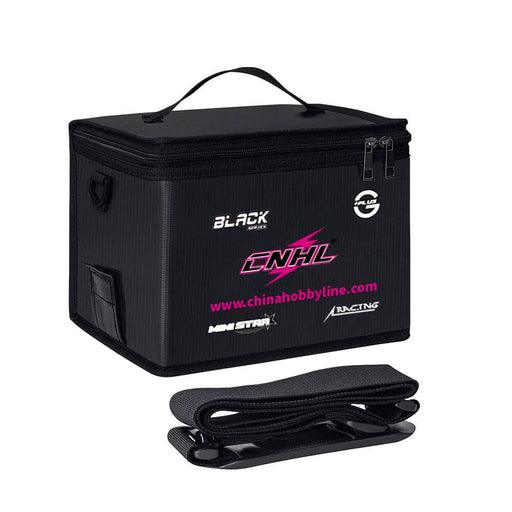
The CNHL LiPo Battery Bag is designed for safer LiPo charging, transport, and storage at home or at the field. It adds a practical layer of protect...
View full details

Quick Fit Check The 2 Packs CNHL Speedy Pizza Series Pro 1350mAh 6S 150C LiPo Battery with XT60 Plug is built for 5-inch FPV pilots who want a ...
View full details

Quick Fit Check The CNHL Speedy Pizza Series 2200mAh 22.2V 6S 120C LiPo Battery with XT60 Plug combines the familiar 2200mAh 6S format with a ligh...
View full details

Quick Fit Check The CNHL Speedy Pizza Series 2200mAh 14.8V 4S 120C LiPo Battery with XT60 Plug combines a widely used 2200mAh 4S format with a sli...
View full details

Quick Fit Check The CNHL Speedy Pizza Series 2200mAh 11.1V 3S 120C LiPo Battery with XT60 Plug takes the familiar 3S 2200mAh aircraft battery form...
View full details

The CNHL Long Range Series BAK 50D 5000mAh 21700 Li-ion battery cell is designed for custom high-energy battery packs that need a strong balance be...
View full details

The ISDT C4 EVO is a versatile smart battery charger built for AA, AAA and cylindrical rechargeable cells from compact 10440 batteries all the way ...
View full details


Leave a comment