
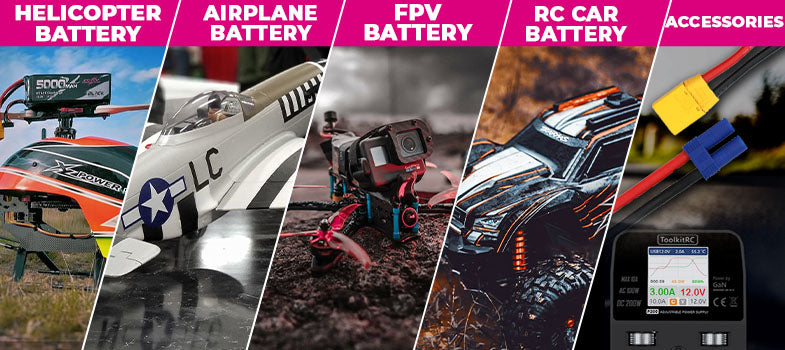
CNHL Lipo Batteries
CNHL aim at providing high-quality Li-Po batteries and RC products to all hobby enthusiasts with excellent customer services and competitive prices

LiPo vs lithium ion (Li-ion) looks like a small choice on paper, but it changes how your build feels. One is built for instant punch. The other is built to keep going.
If you’re here because you typed “lipo vs li ion”, “li ion vs lipo”, or even “lipo vs lion” by accident—you’re in the right place. Let’s make it simple and practical.
Quick pick (no fluff):

LiPo batteries are the default choice for racing drones and performance-focused RC because they can deliver a lot of current quickly. That “snap” you feel when you hit throttle is exactly what LiPo does best.

If your build is clearly a “LiPo type” setup (FPV, RC cars, general hobby use), this is the most direct path: CNHL LiPo Batteries.
Li-ion batteries are usually cylindrical cells (like 18650 or 21700) inside a rigid metal shell. The whole design philosophy is different: store more energy per weight and run efficiently for longer.


If you searched “lipo vs 18650”, here’s the key: 18650 is a Li-ion cell format, not a different “third type.” So that query is really LiPo vs Li-ion—just phrased the way builders talk.
In practice, 18650/21700 packs shine when your setup is tuned for efficiency (cruise throttle, lower peak current, longer sessions). If your setup demands repeated hard bursts (racing, aggressive bashing, punch-outs), LiPo usually feels better immediately.
Don’t pick based on hype. Pick based on what your build asks for.
If your project is FPV-focused and you want to stay on the “LiPo side” while maximizing runtime, browse here: FPV Drone Batteries.
Often, yes—mainly because the metal can protects the cell and many Li-ion packs are used in lower-burst, efficiency-focused builds. But “safer” doesn’t mean “care-free.” Bad charging, physical damage, or overheating can still cause serious problems.
It’s usually voltage sag under load. Li-ion cells are great at storing energy, but many packs don’t love high burst current. LiPo is built to deliver current fast, so it feels sharper when you slam throttle.
Sometimes—but only if the pack’s continuous current rating matches what your setup actually draws. If your build spikes hard amps, LiPo is usually the safer choice for performance and heat control.
Many hobby chargers support both LiPo and Li-ion modes, but you must choose the correct chemistry setting. If you’re shopping for a charger or upgrading, start here: LiPo Battery Chargers.

CNHL aim at providing high-quality Li-Po batteries and RC products to all hobby enthusiasts with excellent customer services and competitive prices
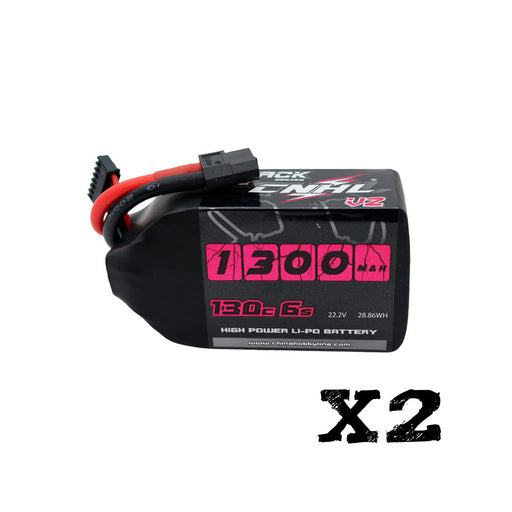
Quick Fit Check The 2 Packs CNHL Black Series V2.0 1300mAh 22.2V 6S 130C LiPo Battery with XT60 Plug is a strong fit for FPV pilots who want a prov...
View full detailsSpare Parts & Long-Term Support We know that for RC pilots, reliable spare parts support is an important part of keeping an aircraft fl...
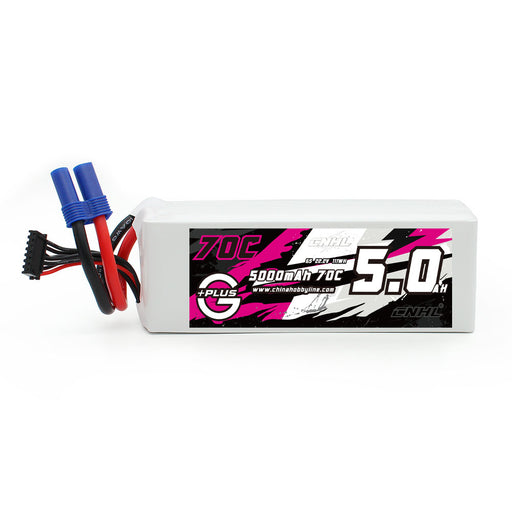
View full detailsSpecifications: Stock Number: 500706EC5 Capacity: 5000mAh Voltage: 22.2V / 6-Cell / 6S1P Discharge Rate: 70C Continual / 140C Burst Charge Rate: ...
View full details
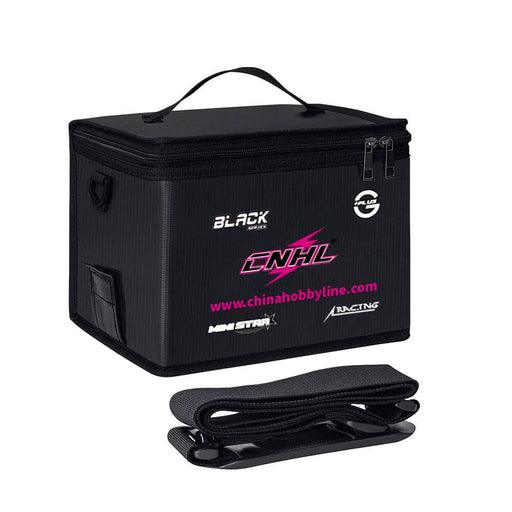
The CNHL LiPo Battery Bag is designed for safer LiPo charging, transport, and storage at home or at the field. It adds a practical layer of protect...
View full detailsQuick Fit Check The 2 Packs CNHL Speedy Pizza Series Pro 1350mAh 6S 150C LiPo Battery with XT60 Plug is built for 5-inch FPV pilots who want a ...
View full details

The CNHL Long Range Series BAK 65E 6350mAh 21700 Li-ion battery cell is built around one clear priority: maximum stored energy from a lightweight c...
View full details

The CNHL Long Range Series BAK 50D 5000mAh 21700 Li-ion battery cell is designed for custom high-energy battery packs that need a strong balance be...
View full details

The ISDT C4 EVO is a versatile smart battery charger built for AA, AAA and cylindrical rechargeable cells from compact 10440 batteries all the way ...
View full details

The CNHL Long Range Series 6350mAh 21.6V 6S1P 21700 Li-ion battery combines six BAK 65E high-energy cells into a 137.16Wh pack designed for ultra-e...
View full details

The CNHL Long Range Series 5000mAh 21.6V 6S1P 21700 Li-ion battery combines six BAK 50D cells into a compact 108Wh pack designed around long-range ...
View full details




Leave a comment