
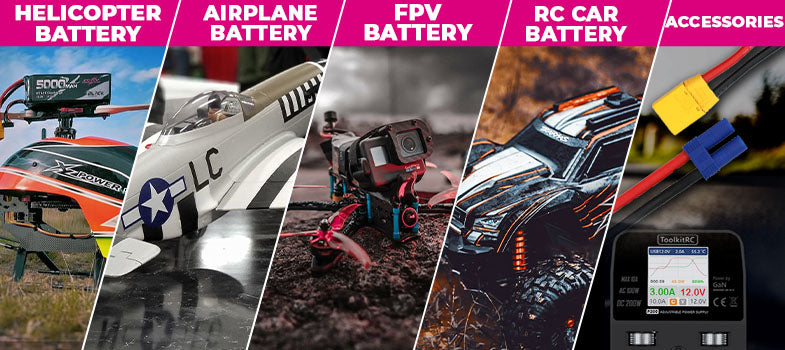
CNHL Lipo Batteries
CNHL aim at providing high-quality Li-Po batteries and RC products to all hobby enthusiasts with excellent customer services and competitive prices
Drone batteries are easy to overlook until they start causing real problems. A weak pack shortens flight time, hurts performance, and can quietly become a safety issue long before it fully fails. Whether you are flying a stabilized camera drone or an FPV quad, battery care plays a direct role in how well the aircraft performs and how safely it can be used.
Quick answer: proper drone battery maintenance comes down to a few core habits: store batteries at the right voltage, avoid leaving LiPos fully charged for too long, let packs cool before recharging, do not over-discharge in flight, and take warning signs like swelling, heat, or sudden runtime loss seriously. Smart batteries make some of this easier, but neither smart packs nor traditional LiPos are maintenance-free.
If you want the broader framework behind warning signs, battery lifespan, safer storage, and end-of-life handling, start with the LiPo Battery Maintenance and Safety Guide.
Every experienced pilot has seen the results of poor battery care: bloated packs, reduced flight times, unstable voltage, or batteries that simply refuse to charge. Drone batteries are one of the most important parts of the whole setup, yet they are often treated like accessories instead of consumable high-stress components.
Battery care is not just about getting a few extra flights. It is about reliability, safety, and avoiding preventable battery loss. A neglected LiPo or mishandled smart battery does not just shorten runtime. It can turn a normal flight day into a damaged aircraft, an unexpected auto-land, or a battery that is no longer safe to trust.
Before talking about maintenance habits, it helps to separate the two main battery types used in drones.
Smart batteries are common in consumer drones such as DJI models. They usually include built-in electronics that monitor voltage, temperature, health, and discharge behavior. In many cases, they also auto-discharge after sitting unused for a few days. That makes them easier to live with, but not immune to bad storage, heat, or aging.
Traditional LiPo packs are most common in FPV drones and many RC aircraft. They are lighter, more flexible, and better suited to high current demand, but they do not protect themselves. Storage voltage, charge method, balance charging, discharge limits, and general handling are all on the user. That is why poor habits damage LiPos much faster.
For the broader habit-side picture beyond drone-specific use, see Common LiPo Battery Mistakes That Kill Performance Early.
Storage is one of the easiest places to damage batteries quietly. This is especially true when packs are left fully charged for too long or forgotten at a low voltage after a session.
Smart batteries should not be stored fully empty. Most better systems reduce charge to a safer level automatically, usually somewhere around 60–65 percent, but you still should not assume that all storage conditions are fine. Heat, long inactivity, and neglect still shorten life.
LiPo batteries should generally be stored at around 3.75V to 3.85V per cell. Leaving a LiPo fully charged for days or weeks increases stress and accelerates swelling and aging. Leaving it too low can push it toward unrecoverable voltage loss. A charger with a proper storage mode makes this much easier.

Always store drone batteries in a cooler, dry place and away from direct sunlight, hot cars, clutter, or flammable materials. Fire-resistant containers or LiPo-safe bags are a practical extra layer, especially for traditional LiPos.
Charging is where many batteries are slowly worn down. The mistakes are usually not dramatic. They are repetitive: charging too early after a hot flight, charging too far ahead of actual use, charging carelessly, or relying on bad habits because “nothing has gone wrong yet.”
A simple rule is to charge as close to actual use as practical. LiPo packs especially do not like sitting full for long periods. When charging traditional LiPos, use a balance charger so all cells finish evenly. Uneven cell voltage does not just reduce efficiency. It also increases long-term risk.
Never leave packs unattended while charging. Charge on a non-flammable surface, monitor heat, and avoid aggressive fast charging unless both the battery and charger are clearly designed for it. In most real-world drone use, slower and cleaner charging is better for long-term battery health.
One of the fastest ways to damage a drone battery is to keep flying after the useful voltage window is already gone. That “one last minute” habit is one of the most common battery killers in FPV and general RC use.
For traditional LiPos, regularly draining packs too deeply can permanently reduce capacity and make weak-cell problems show up much sooner. In practical use, many pilots aim to land around 3.5V per cell under load rather than trying to squeeze every last second out of the pack.
Smart batteries are easier to manage because many systems give warnings or enforce landing behavior, but even then, good habits still matter. Repeatedly forcing packs very low is still a form of wear, even when the system tries to protect itself.
Battery maintenance starts before the first charge. A battery that is badly matched to the drone is harder to maintain well because it is constantly being asked to do the wrong job.
For FPV drones, good battery choice means matching voltage, capacity, discharge capability, and weight to the aircraft. A pack that is too heavy can reduce agility and even shorten practical flight time. A pack that is too weak for the setup will sag harder, heat up faster, and age more quickly.
That is why battery choice and battery care are connected. A well-matched pack is easier to keep healthy. A badly matched one often feels like a maintenance problem even when the real problem started with poor selection.
Two of the most common battery issues drone pilots notice are swelling and shorter flight time. Both can happen gradually, which makes them easy to underestimate.
Swelling often comes from leaving LiPos full too long, charging carelessly, overcharging, or exposing the pack to too much heat. Smart batteries reduce some of that risk through auto-discharge and built-in monitoring, but they do not eliminate it entirely.
If a drone pack has already started to puff, treat it as a safety issue first and read Swollen LiPo Battery: Why It Happens and What to Do.
Reduced flight time is often the first sign of general battery aging, repeated deep discharge, poor storage habits, or growing cell imbalance. If runtime falls noticeably after only a short period of use, the battery is usually telling you that something about the charging or storage routine needs attention.
If you want the bigger picture behind battery aging, reduced runtime, and when performance decline becomes a replacement issue, read How Long Can an RC Battery Last?.
Most drone battery care can be reduced to a small set of repeatable habits:
None of this is complicated, but consistency matters. Most battery problems come from repeated casual mistakes, not one dramatic event.
Battery maintenance is not the flashy side of drone flying, but it is one of the most important. It protects your investment, improves consistency, and lowers the chance that a weak or damaged pack turns into a larger problem.
Your drone may have excellent stabilization, HD video, and carefully tuned settings, but none of that matters if the battery is neglected. Good battery habits are what keep flights safer, cleaner, and more predictable over time.
For the broader habit-side breakdown beyond drone-specific use, see Common LiPo Battery Mistakes That Kill Performance Early.

How should I store drone LiPo batteries?
Store them at about 3.75V to 3.85V per cell if they will not be used soon, and keep them in a cooler, dry place away from heat and flammable materials.
Is it bad to leave a drone battery fully charged?
For LiPo packs, yes. Leaving them fully charged for too long increases stress and can accelerate swelling and aging.
How low should I fly a drone battery?
For many LiPo setups, landing around 3.5V per cell under load is a practical target rather than pushing the pack to the absolute edge.
What causes drone batteries to swell?
Common causes include overcharging, poor storage habits, repeated heat exposure, and leaving LiPo packs fully charged too long.
How do I know when a drone battery is going bad?
Warning signs include shorter flight time, swelling, unusual heat, imbalance, or a battery that no longer feels stable or reliable in normal use.
Check out the full video here.
CNHL aim at providing high-quality Li-Po batteries and RC products to all hobby enthusiasts with excellent customer services and competitive prices
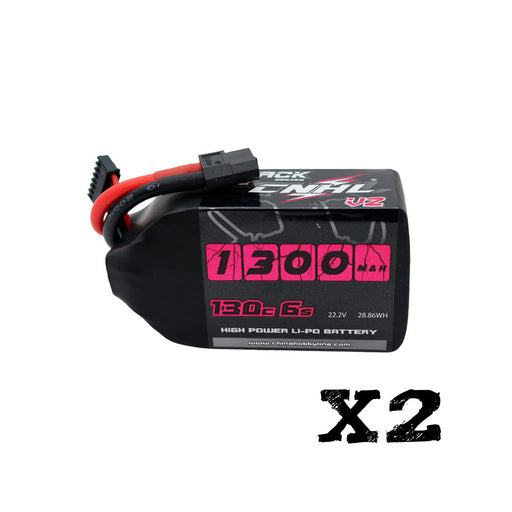
Quick Fit Check The 2 Packs CNHL Black Series V2.0 1300mAh 22.2V 6S 130C LiPo Battery with XT60 Plug is a strong fit for FPV pilots who want a prov...
View full details

Hstar D43-01Q 911 Style is a mini 1/43 alloy drift RC car designed for indoor tabletop fun and realistic drifting. It features full proportional ...
View full details

Spare Parts Availability We know that for RC pilots, reliable spare parts support often determines how long an aircraft can actually sta...
View full details
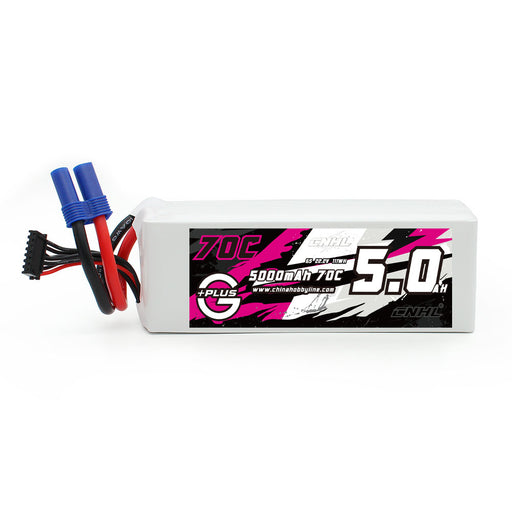
Specifications: Stock Number: 500706EC5 Capacity: 5000mAh Voltage: 22.2V / 6-Cell / 6S1P Discharge Rate: 70C Continual / 140C Burst Charge Rate: ...
View full details
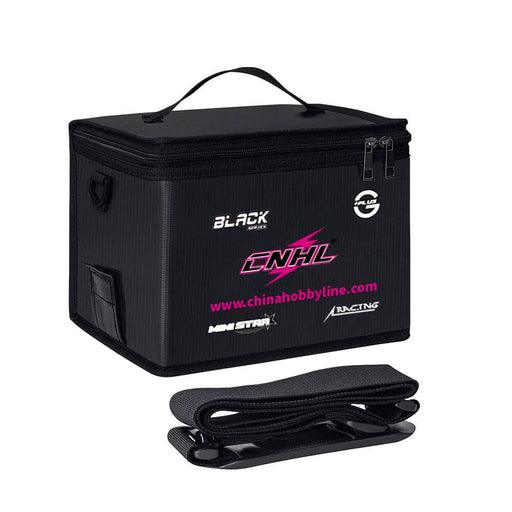
The CNHL LiPo Battery Bag is designed for safer LiPo charging, transport, and storage at home or at the field. It adds a practical layer of protect...
View full details

Quick Fit Check The CNHL Lightning LiHV 8500mAh 6S 120C battery is designed for high-power RC systems that need strong current delivery, stable vol...
View full details

Quick Fit Check The CNHL Lightning LiHV 6700mAh 8S battery is designed for high-voltage RC systems that demand strong burst power and stable voltag...
View full details

Quick Fit Check Before choosing a 4S LiHV battery for your RC model, confirm these basic fit points. This helps you judge whether the pack suits yo...
View full details

Quick Fit Check If you are selecting a 4S LiHV battery for an RC aircraft, FPV drone, or RC vehicle, confirm these points before ordering: Chec...
View full details

Quick Fit Check If you are selecting a 3S LiHV shorty battery for your RC vehicle or lightweight aircraft, confirm these points before ordering: ...
View full details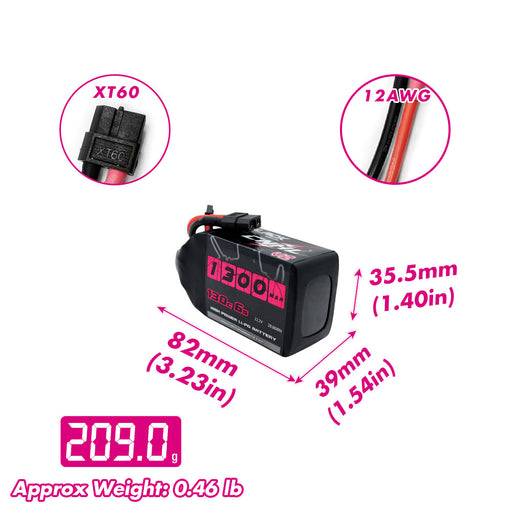
Leave a comment