
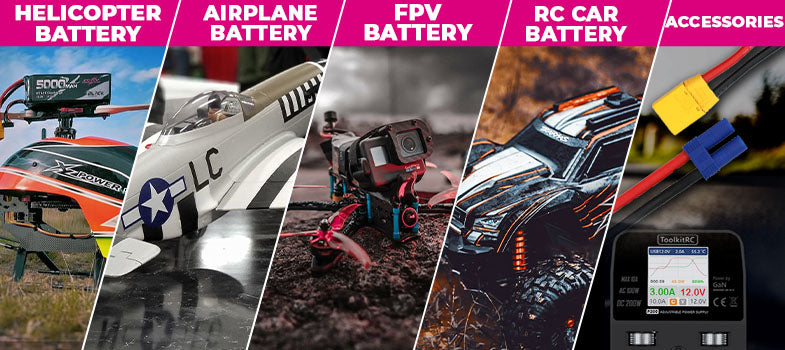
CNHL Lipo Batteries
CNHL aim at providing high-quality Li-Po batteries and RC products to all hobby enthusiasts with excellent customer services and competitive prices

The Pro4 SC10 is a ready-to-run (RTR) electric short course truck built around a practical feature set: brushless power, a protected electronics layout, oil-filled shocks, and a drivetrain designed for 4WD traction and predictable corner behavior. The platform includes sealed gear differentials front/center/rear and a suspension package that can be tuned without turning the truck into a high-maintenance project.
In real SCT driving, this combination matters because short course trucks are uniquely demanding. The body acts like a parachute, the tires are large relative to vehicle weight, and weight transfer can be abrupt when braking or changing direction. The Pro4 SC10’s defining trait is how it reduces “surprises” and makes consistent laps easier than expected for an RTR short course truck.
On track, the Pro4 SC10 is best described as stable and smooth. Steering builds progressively rather than snapping, and the chassis tends to settle quickly after transitions. This helps the truck feel “planted” even when the surface grip is not perfect. The suspension movement is visible—body roll is part of the short course look—but the roll is generally controlled instead of tipping into constant traction rolls.
That driving character is most noticeable on tighter layouts where the goal is not maximum top speed, but maintaining momentum through corners. When throttle is applied mid-corner, the truck typically rotates in a controllable way rather than stepping out unpredictably. This makes it a strong match for drivers who want a truck that can be driven hard without feeling like it needs constant rescue inputs.

Short course trucks are tire-sensitive by nature, and the Pro4 SC10 is no exception. In loose dirt or low-grip conditions, a tire that looks realistic can still be the wrong tool for consistent lap driving. When traction is too low, the truck will feel vague and push wide; when traction spikes unpredictably, the truck can feel twitchy and harder to place.
In practical use, the most meaningful “upgrade” for the Pro4 SC10 is often choosing tires that match the surface. Once that match is correct, the same chassis frequently feels like a different vehicle: corner exit traction improves, steering becomes more repeatable, and the suspension works as intended instead of compensating for grip inconsistency. For most drivers, tire selection changes lap-to-lap confidence more than gearing changes or higher battery voltage.
The Pro4 SC10 supports both 2S and 3S LiPo. Voltage choice changes the behavior of the truck more than its identity. On 2S, throttle modulation is calmer and easier to manage, which suits tighter tracks and drivers who prioritize control and consistency. On 3S, the truck gains meaningful straight-line speed and acceleration, which can be ideal for open areas, larger tracks, or bashing.
However, higher voltage also amplifies the consequences of poor tire choice, heat buildup, and body airflow issues. If the truck is being driven in a low-grip environment with the wrong tires, 3S can make the truck feel more “busy” and less predictable. When the surface and tires are right, 3S becomes a fun option that still keeps the truck stable—especially for drivers who prefer a faster SCT that remains composed.
| Setup | Where it fits best | Driving feel | What to watch |
|---|---|---|---|
| 2S LiPo | Indoor clay, compact tracks, controlled driving, learning lines | Smoother throttle response, easier corner control, more repeatable laps | Lower top speed in large open areas |
| 3S LiPo | Open fields, BMX tracks, larger layouts, higher-speed bashing | Stronger acceleration and higher straight-line speed | More heat and more sensitivity to tires, airflow, and setup |
For batteries specifically selected and physically matched for the Team Associated Pro4 SC10, see our dedicated collection: LiPo Batteries for Team Associated Pro4 SC10 (2S & 3S) . This collection focuses on compatible voltage ranges, pack formats, and real SCT use cases for this platform.
For broader comparison across different RC car platforms, including connector types, capacities, and pack formats, refer to the main overview here: CNHL RC Car LiPo Batteries Collection . This is useful when comparing setups across multiple vehicles rather than a single model.
In real driving, the Pro4 SC10’s top speed is best treated as “fast enough” rather than the main headline. A common 3S setup delivers roughly mid-40 mph performance in typical conditions, which is already plenty for a short course platform. The truck’s appeal is that it can be driven quickly without feeling unstable, and that stability often produces more usable speed on a track than an extra few mph on a straight line.
For drivers who want more speed, gearing changes exist, but the smarter approach is to stabilize the platform first: tire match, body airflow, and baseline alignment. Once the truck is consistent, “more speed” becomes a controlled choice instead of an unpredictable one.

Short course bodies trap air. At speed, trapped air can reduce steering precision and alter jump attitude, often pushing the nose up or making the truck float longer than expected. In practical SCT use, adding rear body venting is a straightforward way to reduce parachuting effects and improve how the truck behaves over jumps and during high-speed transitions.
This is not a cosmetic change. It directly improves control, especially on 3S or on windy days when a full short course body can act like a sail. Once airflow is managed, jumps tend to feel more repeatable, and the truck becomes easier to place on landings.
In dusty or rocky environments, debris management matters. The Pro4 SC10 uses protective elements (such as an upper debris guard) that reduce contamination. Still, short course trucks can collect dirt in places that are easy to ignore until something binds. A real example: access points around the center drivetrain area can allow small rocks to reach critical components if they are left open or loosen over time. A quick pre-run check prevents problems that feel “mysterious” on the driver stand.
These are not design flaws so much as normal SCT realities. Short course trucks are built to run in dirty conditions; maintaining a few protection points is part of keeping the truck consistent session after session.
The Pro4 SC10 is widely treated as a durable RTR short course platform, but durability has a realistic shape. In hard use—big jumps, repeated crashes, and lots of packs—wear parts still wear. Bearings can become gritty, spur gears can strip if debris gets involved, and bumpers or suspension arms can take the brunt of heavy impacts. None of this is unusual for SCT driving; the key point is that the truck typically keeps running even when it absorbs serious hits.
In long-term use, a practical maintenance approach keeps the truck reliable: check driveline smoothness, inspect bearings periodically, and keep the drivetrain area clean after dusty sessions. When a truck stays smooth, it stays easy to drive—especially on a tight track where a small bind can show up as unpredictable behavior.
Short course trucks respond well to simple setup discipline. Baseline alignment (toe and camber) makes the truck more predictable, especially in high-grip corners where traction roll can appear. Differential fluids also shape how the truck rotates and how it puts power down; a balanced diff oil approach can make the truck feel steadier and less “spiky” when transitioning on and off throttle.
Drivers who focus on track use frequently treat the Pro4 SC10 as a platform that becomes noticeably better with modest tuning: tires for the surface, a calm alignment, and drivetrain fluids that support predictable rotation. This is why the truck can feel “budget beginner racer” friendly while still being satisfying for experienced drivers.
| Area | What to do | Why it matters | When to check |
|---|---|---|---|
| Tires | Match tread/compound to surface | Largest impact on steering, grip, and lap consistency | Any time the surface changes |
| Body airflow | Add rear venting if needed | Reduces parachuting and improves jump attitude | Before track sessions with jumps |
| Drivetrain debris points | Ensure covers/guards stay secured | Prevents rocks from binding drivetrain components | Before and after dusty runs |
| Bearings & spur | Inspect for grit or wear | Keeps the truck smooth and predictable | After heavy sessions or wet dirt |
Battery tray dimensions are not always published in a consistent way across listings and regions, and fitment can vary depending on foam blocks, strap routing, and connector orientation. For the Pro4 SC10, the practical approach is to select packs that follow common 1/10 SCT sizing conventions and confirm physical fit before hard running.
As a general fitment guideline, standard 2S and 3S hardcase or softcase packs in typical capacities (including 2S packs commonly used for track driving and 3S packs often used for bashing) are the normal starting point. For buyers who want to optimize weight distribution and handling balance, pack dimensions and secure mounting matter as much as capacity.
Best practice: measure the inside tray space (length, width, height) and compare it to the pack’s published dimensions. This prevents purchasing a pack that fits electrically but conflicts physically with the tray or strap system.

Within the 1/10 short course category, the Pro4 SC10 is best viewed as a control-first truck. It is not trying to be the loudest or the most extreme. Instead, it delivers a driving feel that makes it easy to run clean laps and easy to have fun—even when conditions are not perfect. That balance is why the platform works as a “first real SCT” for many drivers and remains enjoyable for experienced drivers who want a durable, stable short course truck.
The Team Associated Pro4 SC10 is a short course truck that feels refined in the areas that actually matter on a track: stability, smoothness, predictable rotation, and adaptability. With the right tires and basic airflow management, it performs like a cohesive system rather than an RTR full of compromises. For drivers who value control, repeatable laps, and long-term durability, this platform remains a strong reference point in the SCT category.
Both work, but they serve different goals. 2S is ideal for controlled track driving and consistent laps. 3S increases straight-line speed and acceleration for open areas and bashing, but it also increases heat and makes tire choice and airflow management more important.
The most common reason is tire-to-surface mismatch. On loose dirt, a tire that works on street or compacted soil can feel “horrible” because it cannot generate stable bite. Once tires are matched to the track surface, the chassis usually becomes predictable and smooth again.
Short course bodies can trap air, especially at higher speeds. A practical fix is rear body venting, which helps air escape and improves jump attitude. This becomes more noticeable on 3S or on windy days.
In long-term use, it typically holds up well for an RTR SCT. Common wear or damage points under hard running include bumpers, occasional suspension parts, spur gears if debris gets involved, and bearings after many dusty sessions. Routine inspections keep the truck smooth and consistent.
In practical maintenance, access points near the center drivetrain can help with visual alignment during reassembly. However, if an opening is left unsecured in rocky conditions, small stones can reach drivetrain components and temporarily bind the system. Keeping protective points secured is a simple reliability step.
Exact tray dimensions are not always published consistently. The most reliable method is to measure the inside tray space and match it to a pack’s published dimensions. Standard 2S/3S packs used in 1/10 SCT applications are the typical baseline, but physical fit depends on pack length, height, and strap routing.
3S is usable and can be a lot of fun. The key is to manage the system as a whole: tires that fit the surface, airflow management for the body, and attention to temperature during repeated high-speed runs. If the goal is track consistency, many drivers still prefer 2S.
Yes. The truck’s stable baseline, predictable steering, and tuneable suspension make it suitable for drivers entering SCT track use. With the right tires and basic setup discipline, it can deliver consistent laps without requiring immediate major upgrades.
CNHL aim at providing high-quality Li-Po batteries and RC products to all hobby enthusiasts with excellent customer services and competitive prices

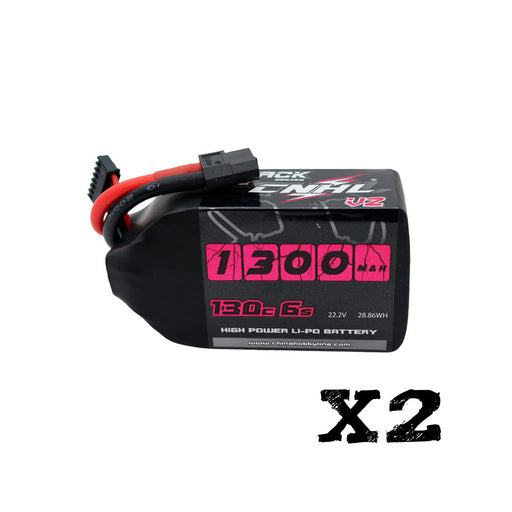
Quick Fit Check The 2 Packs CNHL Black Series V2.0 1300mAh 22.2V 6S 130C LiPo Battery with XT60 Plug is a strong fit for FPV pilots who want a prov...
View full detailsSpare Parts & Long-Term Support We know that for RC pilots, reliable spare parts support is an important part of keeping an aircraft fl...
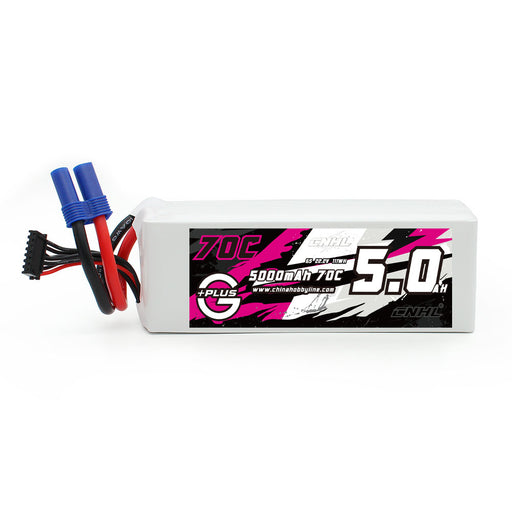
View full detailsSpecifications: Stock Number: 500706EC5 Capacity: 5000mAh Voltage: 22.2V / 6-Cell / 6S1P Discharge Rate: 70C Continual / 140C Burst Charge Rate: ...
View full details
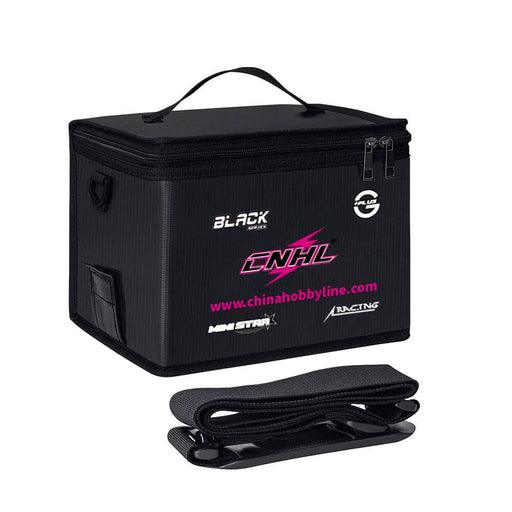
The CNHL LiPo Battery Bag is designed for safer LiPo charging, transport, and storage at home or at the field. It adds a practical layer of protect...
View full detailsQuick Fit Check The 2 Packs CNHL Speedy Pizza Series Pro 1350mAh 6S 150C LiPo Battery with XT60 Plug is built for 5-inch FPV pilots who want a ...
View full details

The CNHL Long Range Series BAK 65E 6350mAh 21700 Li-ion battery cell is built around one clear priority: maximum stored energy from a lightweight c...
View full details

The CNHL Long Range Series BAK 50D 5000mAh 21700 Li-ion battery cell is designed for custom high-energy battery packs that need a strong balance be...
View full details

The CNHL Long Range Series 6350mAh 21.6V 6S1P 21700 Li-ion battery combines six BAK 65E high-energy cells into a 137.16Wh pack designed for ultra-e...
View full details

The CNHL Long Range Series 5000mAh 21.6V 6S1P 21700 Li-ion battery combines six BAK 50D cells into a compact 108Wh pack designed around long-range ...
View full details

The CNHL Long Range Series 12700mAh 21.6V 6S2P 21700 Li-ion battery combines twelve BAK 65E high-energy cells into a 274.32Wh battery pack for larg...
View full details




Leave a comment