
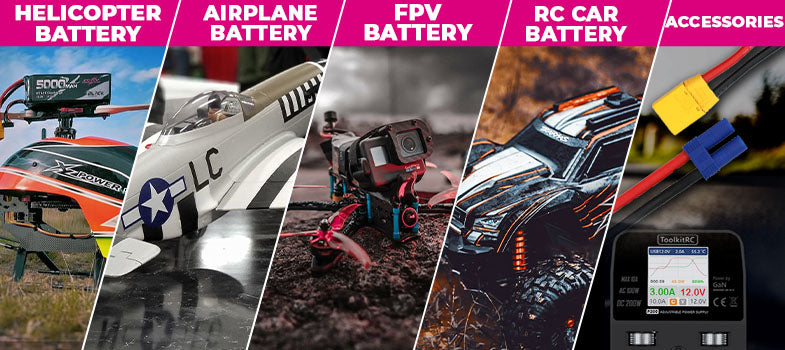
CNHL Lipo akut
CNHL pyrkii tarjoamaan korkealaatuisia Li-Po-akkuja ja RC-tuotteita kaikille harrastajille erinomaisella asiakaspalvelulla ja kilpailukykyisillä hinnoilla
Some RC airplanes launch with hype. Others launch with horsepower. The Eflite Beechcraft D18 / RC-45J 1.5m launched with something rarer — recognition.
Within hours of its return announcement, the tone across the community wasn’t analytical. It was personal. “Still one of my favorite Eflite releases.” “This is a must-have.” “Take my money.” Those aren’t casual comments. They’re signals. This airframe already earned its place before this Navy trim ever showed up.

The Beechcraft D18 has always stood apart visually. It isn’t a high-wing bush plane. It isn’t a sleek warbird. It’s a 1930s twin that somehow looks both elegant and purposeful. And when Eflite brought it back in the RC-45J (SNB-5P) Navy navigation and photo reconnaissance scheme, it didn’t feel like a cosmetic refresh. It felt intentional.
The real Beechcraft D18 flew for more than three decades — from 1937 to 1969 — across civilian transport, mail routes, military training, and reconnaissance roles. Over 9,000 were produced in more than 30 variants. It wasn’t flashy. It was dependable.
That context matters. One pilot shared that his grandfather flew D18 missions in Panama during WWII, searching for submarines along the canal. Another remembered sitting right seat in a Beech 18 hauling mail in the mid-1970s. These aren’t isolated anecdotes. They’re reminders that the silhouette carries legacy.
When you line up the Eflite Beechcraft D18 / RC-45J on the runway, you’re not just launching foam. You’re launching a scaled echo of something that once moved real people and real cargo across real skies.

A surprisingly common question after release was simple: is it painted, or is it bare foam?
Painted.
That distinction matters more than it sounds. Early generation foam aircraft relied heavily on molded color. This version is fully painted white with orange Navy trim. The surface finish catches light differently. The molded panel lines and hatches feel integrated rather than stamped in.
One comment summed it up perfectly: “We’ve come a long way from the early Carbon-Z days.” That isn’t nostalgia — it’s progress.
If you’ve never flown a twin in this size class, the first impression isn’t speed — it’s composure.
The counter-rotating propellers cancel torque bias during takeoff. Advance the throttle and the airplane tracks straight without that single-motor yaw correction dance. Taxiing feels controlled. Differential thrust, driven by the Spektrum Avian Dual Smart Lite ESC, adds subtle authority on rollout.
In the air, the enhanced AS3X+ system works quietly in the background. It doesn’t override the pilot. It smooths turbulence and micro-corrections. The result? The 1.5m airframe feels larger than it is. It tracks like something closer to 1.8m.
There’s also a psychological difference between flying a single-engine aircraft and flying a twin like the Eflite D18. With a single motor, throttle changes feel binary — you either have power or you don’t. With a twin, especially one with well-balanced counter-rotating props, throttle inputs feel layered. Small adjustments don’t just change speed; they subtly change presence.
On approach, you feel this most clearly. Reducing throttle doesn’t drop the nose abruptly. Instead, the aircraft settles. The twin motors create a smoother transition between powered flight and glide, which makes energy management more intuitive once you understand the airframe. That’s part of why experienced pilots describe this model as “bigger than it looks.” It isn’t weight — it’s stability perception.
In crosswinds, that stability becomes even more noticeable. The Eflite Beechcraft D18 / RC-45J 1.5m tracks confidently without constant rudder correction, and coordinated turns feel natural rather than forced. It doesn’t demand constant input. It rewards anticipation.

SAFE Select remains optional. With it off, the D18 rewards coordinated inputs and smooth throttle management. With it on, envelope protection reduces stress for pilots transitioning from single-engine platforms.
This balance is part of why the Eflite D18 has always been considered approachable without being beginner-level.
The aircraft officially supports 3S and 4S 3200–5000mAh packs. In real-world flying, that flexibility changes the personality more than the numbers suggest.
| Setup | Takeoff Feel | Climb Margin | Grass Performance | Overall Character |
|---|---|---|---|---|
| 3S | Longer, scale-like roll | Authentic twin power | Better on paved fields | Classic cruiser |
| 4S | Shorter, more assertive | Strong vertical reserve | More forgiving on grass | Confident and modern |
Grass operation was one of the most discussed points in early feedback. “Does it need golf-course grass?” Not necessarily. Technique matters. Flap management matters. Energy control matters. But 4S unquestionably adds margin for thicker turf.
Not every comment was glowing. Some pilots wished the mains had added shock absorption. That’s a valid point. Scale twins demand smoother touchdowns than sport trainers.
If you approach hot with a heavy pack, physics will win. If you manage descent rate and flare properly, the retract system holds up well. The key isn’t reinforcement — it’s discipline.

When the earlier BNF version debuted, MSRP hovered around $449.99 before later adjustments. Seeing the Navy RC-45J return in a similar bracket reinforces its positioning. This isn’t entry-level foam. It’s a fully equipped scale twin with retracts, flaps, LEDs, dual motors, and telemetry-ready electronics.
It sits in a niche that very few manufacturers fill — the mid-size scale twin that is both manageable and detailed.
It’s also worth noting that the D18 occupies a niche that hasn’t been heavily crowded in recent years. Many releases in the 1.4–1.6m class lean toward high-wing utility aircraft or aggressive warbirds. A mid-size, fully detailed scale twin with retracts and functional flaps is comparatively rare.
That rarity contributes to its continued demand. Several pilots commented that they already owned the earlier D18 and were considering buying this one as well — not because the old one failed, but because the platform still feels relevant. Very few foam aircraft maintain that kind of repeat appeal.
The RC community reaction to the Eflite Beechcraft D18 / RC-45J 1.5m has been unusually consistent. Enthusiasts repeatedly describe it as one of the most visually striking foam twins released in recent years — particularly praising the high-visibility Navy scheme for practical orientation benefits in mixed light and near tree lines.
| Recurring theme | What it means for buyers | Realistic expectation |
|---|---|---|
| Navy trim improves visibility vs silver scheme | Orientation remains strong in sunset and busy backgrounds | Paint scheme acts as functional upgrade, not just cosmetic change |
| Differential + reverse thrust praised repeatedly | Taxi and rollout control feel unusually manageable for a twin | Ground handling is a highlight of this platform |
| Landing gear stiffness still mentioned | Some advanced pilots experiment with shock-absorbing upgrades | Not a flaw, but the most common nitpick |
| Outer wing panels remove easily | Transport convenience directly affects how often it gets flown | Measure trunk/storage space before ordering |
| Battery bay feels spacious | CG tuning and pack swaps are easier than expected | Setup flexibility improves daily usability |
| Strong demand for UMX or ~850mm version | Pilots want a smaller, more accessible twin experience | 1.5m remains the full-scale feel version |
The battery compartment is spacious and top-accessible. 3200–5000mAh packs fit comfortably. XT60-equipped batteries can be used via a short XT60-to-EC3 adapter without modifying the airframe wiring.
For specific fit and compatibility options, see: LiPo batteries for Eflite Beechcraft D18 / RC-45J 1.5m .
Many pilots report 4S 4000mAh as the practical balance point between performance and landing weight, though the aircraft remains flexible across its supported range.
Repeatedly, pilots asked for a UMX version. Or an 850mm variant. Or even a micro twin inspired by this shape. That pattern isn’t accidental.
It suggests that the Beechcraft D18 profile resonates deeply enough that people want it scaled down, not just refreshed.
The E-flite Beechcraft D18 / RC-45J 1.5m proves something important: when an airframe has heritage, it doesn’t need gimmicks. It needs faithful execution.
And when both motors spool down together on final approach, the airplane doesn’t feel like foam. It feels deliberate.
That’s why it endures.
Interestingly, the call for a UMX or 850mm version isn’t about cost reduction — it’s about accessibility. A smaller twin would allow more pilots to experience multi-engine flight without needing a large field or transport space. That level of community interest often signals strong design DNA rather than short-term hype.
Is this different from the discontinued silver D18?
The platform remains fundamentally the same. Most pilots describe the biggest difference as the Navy trim scheme and its improved visibility in real flying conditions.
Does differential thrust really make a difference?
Yes. Taxi turns, lineup corrections, and rollout control feel more manageable compared to many twin foam models that rely solely on rudder.
Is the white painted or bare foam?
Multiple reviewers confirm it is painted, not bare foam, contributing to a more finished appearance.
Can it operate from grass?
Pilots report successful takeoffs and landings from fairly thick grass when using 4S power and disciplined throttle technique. Field condition still matters.
What is the most common drawback mentioned?
The main landing gear stiffness is the most frequent nitpick among advanced users.
Will there be a UMX version?
Community demand is strong, but until officially announced, the 1.5m version remains the complete twin experience.
Is this a good first twin?
It can be for pilots comfortable with coordinated flight, flap management, and disciplined throttle control.
CNHL pyrkii tarjoamaan korkealaatuisia Li-Po-akkuja ja RC-tuotteita kaikille harrastajille erinomaisella asiakaspalvelulla ja kilpailukykyisillä hinnoilla
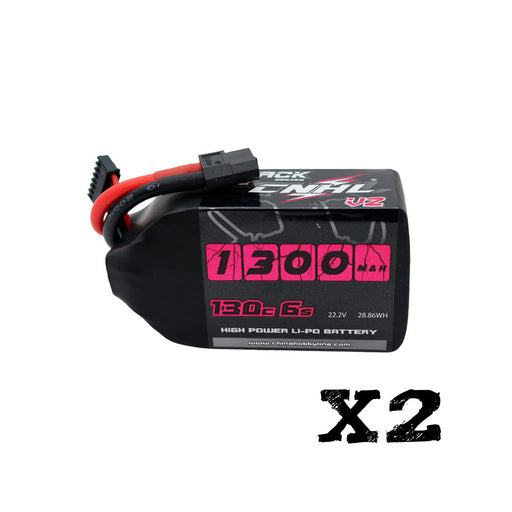
Nopea sovitustarkistus 2 Packs CNHL Black Series V2.0 1300mAh 22.2V 6S 130C LiPo-akku XT60-liittimellä sopii erinomaisesti FPV-lentäjille, jotka ha...
Näytä täydet tiedotVaraosat ja pitkäaikainen tuki Tiedämme, että RC-piloteille luotettava varaosatuki on tärkeä osa sitä, että lentokone pysyy lentokunnossa vuo...
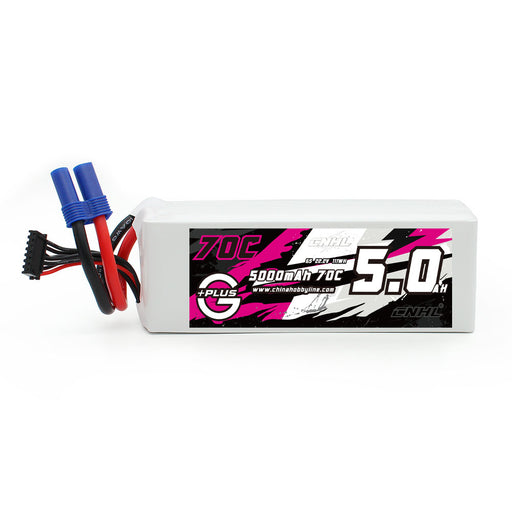
Näytä täydet tiedotTekniset tiedot: Varastonumero: 500706EC5 Kapasiteetti: 5000mAh Jännite: 22,2V / 6-kennoa / 6S1P Purkunopeus: 70C jatkuva / 140C hetkellinen Lata...
Näytä täydet tiedot
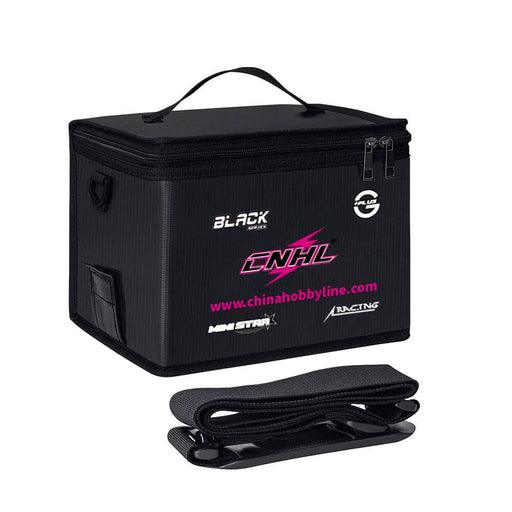
CNHL LiPo Battery Bag on suunniteltu turvallisempaan LiPo-lataukseen, kuljetukseen ja säilytykseen kotona tai kentällä. Se lisää käytännöllisen suo...
Näytä täydet tiedotNopea sovitustarkistus 2 paketin CNHL Speedy Pizza Series Pro 1350mAh 6S 150C LiPo -akku XT60-liittimellä on suunniteltu 5-tuuman FPV-piloteill...
Näytä täydet tiedot

The CNHL Long Range Series BAK 65E 6350mAh 21700 Li-ion battery cell is built around one clear priority: maximum stored energy from a lightweight c...
Näytä täydet tiedot

The CNHL Long Range Series BAK 50D 5000mAh 21700 Li-ion battery cell is designed for custom high-energy battery packs that need a strong balance be...
Näytä täydet tiedot

The ISDT C4 EVO is a versatile smart battery charger built for AA, AAA and cylindrical rechargeable cells from compact 10440 batteries all the way ...
Näytä täydet tiedot

The CNHL Long Range Series 6350mAh 21.6V 6S1P 21700 Li-ion battery combines six BAK 65E high-energy cells into a 137.16Wh pack designed for ultra-e...
Näytä täydet tiedot

The CNHL Long Range Series 5000mAh 21.6V 6S1P 21700 Li-ion battery combines six BAK 50D cells into a compact 108Wh pack designed around long-range ...
Näytä täydet tiedot




Jätä kommentti