
CNHL Lipo akut
CNHL pyrkii tarjoamaan korkealaatuisia Li-Po-akkuja ja RC-tuotteita kaikille harrastajille erinomaisella asiakaspalvelulla ja kilpailukykyisillä hinnoilla
The Maverick QByte XB Pro is not just another small RC buggy chasing a big speed number. Its real appeal is that it puts 3S brushless power, 4WD traction, a 60A ESC, XT60 battery support, and a surprisingly planted chassis into a compact 1/12 platform that feels more serious than its size suggests.
Small brushless bashers are having a moment. The ARRMA Grom lineup made a lot of drivers take mini-size RC cars seriously again, while UDI-style 1/12 platforms have been pulling attention from drivers who want speed without dragging a full-size 1/8 truck to the park. The Maverick QByte XB Pro enters that same conversation, but with a buggy body, bright fluoro green styling, a longer-looking stance, and a Pro-level setup that feels aimed at drivers who want something a little sharper than a basic entry-level mini.
This is still a small off-road buggy, so it should not be judged like a full 1/8 race buggy or a heavy-duty 6S basher. The better question is simpler: does the QByte XB Pro make 3S power fun, usable, and worth the extra money over a calmer mini platform? For many drivers, the answer will be yes, as long as they understand that setup matters. Throttle percentage, ESC punch, gyro adjustment, battery weight, and driving surface all change the personality of this car.

The Maverick QByte XB Pro is a 1/12 scale 4WD brushless RTR electric off-road buggy from Maverick, a brand under the HPI Racing family. It comes ready to run with a 2.4GHz radio system, a 60A brushless ESC, a 2845 brushless motor rated at 4700KV, all-terrain tires, aluminum oil-filled shocks, metal shock towers, and an XT60 connector for 3S LiPo power.
This is not a toy-grade backyard buggy. It is built for drivers who want a compact RC car that can rip across dirt, gravel, asphalt, short grass, skate-park concrete, and small jump spots without needing the space of a larger basher.
The Pro version is especially important because it moves the QByte XB idea closer to a serious mini basher. Compared with a calmer brushless version, the Pro setup adds more aggressive electronics, stronger-looking running gear, aluminum shock hardware, and the kind of 3S personality that makes the car feel properly awake. That extra performance is fun, but it also means the car needs to be driven with a little respect.
| Item | Maverick QByte XB Pro Detail | Why It Matters |
|---|---|---|
| Scale | 1/12 | Small enough to carry easily, but larger and more stable than many micro bashers |
| Drivetrain | 4WD | Helps put brushless power down on loose or mixed surfaces |
| ESC | MSC-6016-BL 60A brushless ESC | Gives the car a stronger 3S performance window than mild mini brushless setups |
| Motor | 2845 brushless motor, 4700KV | High RPM character, fast acceleration, and plenty of wheel speed for jumps |
| Connector | XT60 | A sensible connector choice for compact 3S brushless power |
| Battery Direction | 3S LiPo or compatible 3S LiHV setup | Makes battery choice a major part of how the car feels |
The fluoro green version does exactly what a small basher should do visually: it stands out. Small RC cars can disappear quickly in grass, dusty surfaces, and low light, so a bright body is more than just a styling choice. It helps orientation, especially when the car is moving quickly toward or away from the driver.
The body is a modern cab-forward buggy shape rather than an old-school rounded cockpit design. That styling will divide people. Some drivers like the aggressive look because it feels closer to a modern race buggy. Others prefer classic buggy shells with smoother lines. Either way, the QByte XB Pro looks purposeful, and the stance helps it avoid the toy-like appearance that some compact RTR models have.
The suspension package also gives a good first impression. Aluminum oil-filled shocks, thick metal shock towers, double wishbone suspension, and chunky driveshafts all make the car feel more substantial than the scale number suggests. It is not indestructible, and no open-wheel buggy is, but the Pro version has enough hardware on display to make the price feel more understandable.
The QByte XB Pro is at its best when you stop thinking of it as a speed-run toy and start treating it as a compact 3S basher. On 3S, it has enough punch to lift the front, clear jumps, rotate in the air, and slide across loose surfaces. It feels lively right away, but the longer wheelbase helps it stay more controlled than some shorter mini platforms.
Full throttle is not always the fastest way to drive it. On small skate-park areas, damp concrete, loose dirt, or slick asphalt, 100 percent throttle can make the car feel wild. That is part of the fun, but it also means mistakes happen quickly. Many drivers will find the 75 percent throttle setting much easier to live with, especially while learning the car. It still feels fast, still jumps well, and still has enough punch to feel exciting, but it becomes easier to place the car where you want it.
This is one of the most important takeaways from the QByte XB Pro: the car has more personality than the spec sheet suggests. It can be a quick, controlled mini buggy, or it can become a tiny animal when the throttle is opened fully. The best setup depends on where you drive and how much room you have.

The box headline is part of the appeal, but the real-world experience matters more than the printed speed number. A small 1/12 buggy that claims around 50mph sounds dramatic, but actual speed will always depend on battery condition, surface, wind, gearing, tire growth, ESC settings, and how straight the car can track at full throttle.
The QByte XB Pro still feels very quick for its size even if the real-world number does not always match the most optimistic claim. In fact, for normal driving, the exact top speed is not the main reason to buy it. A compact buggy at 40mph already feels intense when it is close to your feet, bouncing over rough ground, and changing direction quickly. The fun comes from the punch, wheel speed, and control window, not just the last few miles per hour.
This is also why the 75 percent throttle mode feels so useful. It lets the car keep its quick character without turning every run into a survival test. Full power is there when you want it, but the car becomes more enjoyable when the driver chooses the right mode for the space.
The 60A brushless ESC is one of the biggest reasons the Pro version feels so alive. On a car this size, 60A is not just a number on a spec sheet. It affects how quickly the car responds, how hard it launches, and how much control the driver has when the surface is not perfect.
Power delivery is the part many new drivers underestimate. A strong 3S battery can make the buggy feel sharper, but if the ESC punch is too aggressive, the same setup can also become twitchy. Smoother punch settings can make the car easier to drive, easier to jump, and less likely to spin or snap sideways on loose ground. When supported by the ESC system, a programming card can be a useful tuning tool for drivers who want to calm the car down without giving up 3S power.
The separate ESC and receiver layout is another positive detail. Some small RTR vehicles use tightly integrated 2-in-1 electronics that are convenient but less flexible. A separate ESC and receiver arrangement generally gives the car a more hobby-grade feel and may make future maintenance or electronics work easier. The motor fan and ESC fan also make sense here because 3S power in a compact chassis creates heat quickly, especially during repeated full-throttle pulls or grass running.
From a power-system perspective, the QByte XB Pro teaches a useful lesson: battery choice, ESC punch, throttle percentage, and gearing all work together. A better battery does not automatically mean a better drive if the rest of the setup is too aggressive for the surface.
The Pro version does not include a battery, so choosing the right pack is part of the buying decision. The car is designed around 3S LiPo power with an XT60 connector, which makes the direction clear. What matters is choosing a pack that fits the driving style of a small, fast, open-wheel buggy.
For most drivers, a compact 2200mAh or 2400mAh 3S XT60 pack is the most natural starting point. It keeps the car light, responsive, and easy to rotate. It also makes sense for short, high-energy sessions where handling matters as much as runtime. A battery like the CNHL Black Series 2200mAh 11.1V 3S Shorty LiPo Battery with XT60 Plug gives the car a simple standard 3S setup, while the CNHL Lightning LiHV 2400mAh 11.4V 3S 120C HV Shorty LiPo Battery with XT60 Plug is a more performance-focused direction for drivers who want sharper output from a compact pack.
The 3200mAh and 3500mAh CNHL Lightning LiHV options are better suited to drivers who want more runtime and a harder HV feel. These packs can make sense when the goal is a more aggressive session, but they will also add more battery mass than the smaller shorty packs. On a 1/12 buggy, that extra weight can change how the car turns, jumps, and lands. That does not make larger packs wrong. It simply means they serve a different style of driving.
For the full battery list, see the Maverick QByte XB Pro batteries collection.
| Driving Goal | Best Battery Direction | Why It Works |
|---|---|---|
| Everyday 3S bashing | 2200mAh 11.1V 3S XT60 | Simple, light, predictable, and easy to manage |
| Sharper performance | 2400mAh 11.4V 3S LiHV shorty XT60 | Strong output while keeping the pack compact |
| Longer runtime | 3200mAh or 3500mAh 3S LiHV XT60 | More capacity and harder HV feel for longer sessions |
| Practice sessions | 2-pack 2200mAh 3S XT60 setup | Keeps handling consistent across multiple runs |
LiHV packs require the correct charger mode and proper setup knowledge. They should not be treated exactly like standard 11.1V 3S LiPo packs. For newer users, standard 3S LiPo is the easier starting point. For experienced drivers, LiHV gives the QByte XB Pro a more energetic feel, especially when paired with sensible ESC settings.
The QByte XB Pro feels like it benefits from its longer wheelbase compared with some smaller mini bashers. A short-wheelbase car can be hilarious, but it can also become nervous when the power comes in hard. The Maverick still gets lively on 3S, but it has enough length to feel more settled under acceleration and easier to recover when the rear starts moving around.
The gyro also plays a useful role. A small amount of gyro assistance can help the car track straighter on slick surfaces without making it feel numb. Too much gyro can feel artificial, but a moderate setting helps the buggy stay pointed in the right direction when running on dusty asphalt, damp concrete, or loose park surfaces.
This is where the car starts to make a real case for itself against other compact bashers. It may not win every spec-sheet argument, and it may not be the top-speed king, but the combination of wheelbase, 4WD, gyro support, and 3S punch makes it genuinely fun to drive.
The QByte XB Pro feels solid for its size, especially with its metal shock towers, aluminum shocks, heavy-duty drivetrain parts, and chunky suspension layout. It can take rough driving better than many small cars that feel light and hollow. That said, it is still an open-wheel buggy. The wheels and suspension arms sit exposed at all four corners, so a direct hit into a post, curb, fence, or skate-park edge can punish the front or rear arms quickly.
This is not a weakness unique to the Maverick. It is part of the buggy format. A short course truck body can hide and protect the wheels more easily. A buggy gives sharper steering, less body bulk, and a cleaner jump feel, but the exposed corners are always more vulnerable.
The smart way to drive this car is to send it hard, but not blindly. It jumps nicely, carries enough wheel speed for mid-air correction, and has enough power to clear small gaps. It just should not be treated like a heavy 1/8 basher that can smash into fixed objects all day without consequence.

The Pro version makes the most sense for drivers who already know they want the stronger setup. It brings a hotter brushless feel, more serious hardware, and a more aggressive 3S personality. It is the version to buy if the appeal of the QByte platform is speed, punch, and a more capable mini buggy experience.
The standard Flux version may still be the better choice for some drivers. If the goal is a calmer car, lower entry cost, or a more relaxed backyard experience, the non-Pro version is likely easier to live with. Not every driver needs the wildest version of a 1/12 buggy. In fact, for younger drivers, smaller spaces, or first-time brushless users, less punch can be a good thing.
The Pro is worth it when you want the car to feel exciting. The standard Flux version is worth considering when you want the same general idea with less intensity. That distinction matters because the Pro version is not just faster on paper. It changes how alert the driver needs to be.
The obvious comparison is the ARRMA Typhon Grom BLX or Mojave Grom BLX. ARRMA has a strong parts ecosystem, a loyal user base, and a platform many drivers already trust. For some buyers, that alone is enough reason to stay with ARRMA. The QByte XB Pro does not need to convince every Grom owner to sell their car. That would be the wrong way to frame it.
A more honest comparison is that the Maverick gives buyers another compact 3S buggy option. It has a bright body, a longer stance, XT60 battery support, a separate ESC and receiver layout, and a lively Pro-level brushless setup. For drivers who want something a little different from the common Grom path, that is enough to make it interesting.
UDI-style 1/12 platforms are another part of the discussion. Some drivers care deeply about center differential layout, upgrade compatibility, and whether similar chassis designs are being sold under different names. That is a fair conversation in this category because compact RC platforms often share design roots, manufacturing sources, or similar component layouts. The practical buyer question is still more basic: can the car put 3S power down cleanly, are spare parts available in your region, and does the buggy shape suit your driving style?
| Option | Why Drivers Like It | What to Consider |
|---|---|---|
| Maverick QByte XB Pro | Strong 3S brushless feel, buggy stance, XT60 setup, separate ESC and receiver | Pro power can feel wild, and parts support depends on region |
| ARRMA Typhon Grom BLX | Known platform, strong brand following, wide upgrade interest | Some drivers may prefer a longer wheelbase or different battery layout |
| ARRMA Mojave Grom BLX | Short course body protection, fun basher feel, popular mini platform | Different driving style from an open-wheel buggy |
| UDI-Style 1/12 Platforms | Often strong value, active comparison interest, possible drivetrain feature advantages | Brand support, parts access, and exact specifications vary by market |
The QByte XB Pro makes the most sense for drivers who want a compact RC car that still feels fast, aggressive, and hobby-grade. It is small enough to throw in a backpack, but quick enough to make an open space feel exciting. It suits drivers who like skate-park sessions, loose dirt areas, short grass, asphalt slides, and small jump spots.
It is also a good fit for someone who wants a mini buggy rather than another mini truck. A buggy feels different. It is more exposed, more direct, and often more satisfying in the air. If you like seeing the wheels work and enjoy a car that reacts quickly, the QByte XB Pro has the right personality.
It is less ideal for a driver who wants maximum parts availability in every hobby shop, a protected short course body, or a calm beginner car. The Pro version can be dialed down, but it is still a spicy little buggy. If you are buying for a very new driver, a milder setup may be easier.
Before buying the QByte XB Pro, check three things. First, look at parts support in your region. Suspension arms, driveshafts, wheels, body parts, and shock components matter on any small basher that will see real use. Second, decide whether you really want the Pro power system or whether the calmer Flux version makes more sense. Third, plan your battery setup properly from the beginning.
The battery decision is especially important because the Pro version does not include one. A compact 3S XT60 pack should be treated as part of the car’s setup, not an afterthought. If you already run XT60 batteries in other small RC cars, that is convenient. If not, it is worth choosing a pack that matches the QByte’s size and power style rather than forcing in a battery that was meant for a larger vehicle.
For broader RC car battery options, browse the CNHL RC car battery collection. For high-output HV packs, the CNHL Lightning LiHV battery series is the more performance-focused route.
The Maverick QByte XB Pro is a strong entry in the compact 3S brushless buggy category. It is not perfect, and it does not need to be. The top-speed claim will get attention, but the better reason to care about this car is the way it combines 3S punch, a longer-feeling chassis, 4WD grip, XT60 battery support, and a bright buggy personality in a size that is genuinely easy to take anywhere.
It is not a car that every ARRMA owner needs to sell their Grom for. It is also not just a generic mini buggy to ignore. The QByte XB Pro sits somewhere more interesting: a small, fast, slightly wild 1/12 basher that rewards setup. With the right battery, sensible ESC punch, and a little throttle discipline, it can be more fun than the spec sheet suggests.
For drivers who want the most balanced starting point, a compact 2200mAh or 2400mAh 3S XT60 pack is the right direction. For those who want more runtime and a harder performance feel, the larger CNHL Lightning LiHV options can push the setup further. Either way, the QByte XB Pro is at its best when the battery and ESC are chosen to match the surface, not just the headline speed number.
It can work for a careful beginner, but the Pro version is quite powerful on 3S. New drivers should start with reduced throttle, mild ESC punch, and open space before running the car at full power.
The Pro version is commonly sold without a battery, so drivers need a suitable 3S LiPo battery with an XT60 connector and a compatible charger. A compact 2200mAh or 2400mAh 3S XT60 pack is the most natural starting point.
3S is the power setup that makes the car exciting, but full throttle can be aggressive on small or slippery surfaces. Many drivers will find 75 percent throttle or a smoother ESC punch setting more enjoyable for normal bashing.
It depends on what you value. The ARRMA Grom platform has strong brand loyalty and parts interest, while the QByte XB Pro offers a different buggy feel, XT60 setup, and a lively 3S Pro package. It is better viewed as an alternative, not a direct replacement for every Grom owner.
The best starting point is a compact 3S XT60 LiPo pack. For everyday use, a 2200mAh 11.1V 3S pack is simple and predictable. For a sharper performance feel, a 2400mAh 3S LiHV shorty pack is a strong option. See the Maverick QByte XB Pro batteries collection for matched CNHL options.
CNHL pyrkii tarjoamaan korkealaatuisia Li-Po-akkuja ja RC-tuotteita kaikille harrastajille erinomaisella asiakaspalvelulla ja kilpailukykyisillä hinnoilla
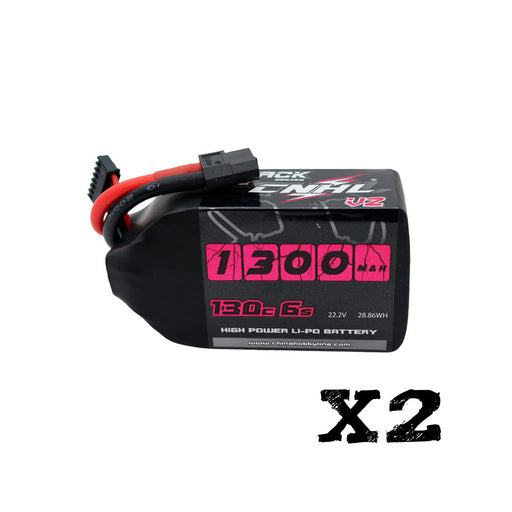
Nopea sovitustarkistus 2 Packs CNHL Black Series V2.0 1300mAh 22.2V 6S 130C LiPo-akku XT60-liittimellä sopii erinomaisesti FPV-lentäjille, jotka ha...
Näytä täydet tiedotVaraosat ja pitkäaikainen tuki Tiedämme, että RC-piloteille luotettava varaosatuki on tärkeä osa sitä, että lentokone pysyy lentokunnossa vuo...
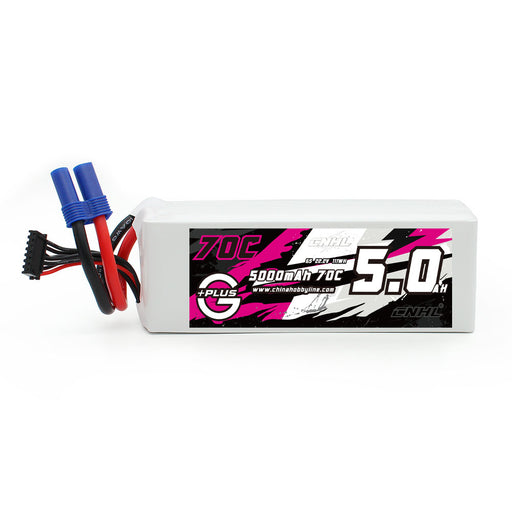
Näytä täydet tiedotTekniset tiedot: Varastonumero: 500706EC5 Kapasiteetti: 5000mAh Jännite: 22,2V / 6-kennoa / 6S1P Purkunopeus: 70C jatkuva / 140C hetkellinen Lata...
Näytä täydet tiedot
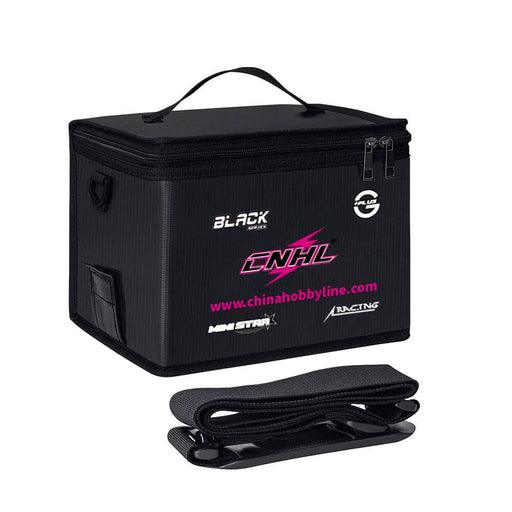
CNHL LiPo Battery Bag on suunniteltu turvallisempaan LiPo-lataukseen, kuljetukseen ja säilytykseen kotona tai kentällä. Se lisää käytännöllisen suo...
Näytä täydet tiedotNopea sovitustarkistus 2 paketin CNHL Speedy Pizza Series Pro 1350mAh 6S 150C LiPo -akku XT60-liittimellä on suunniteltu 5-tuuman FPV-piloteill...
Näytä täydet tiedot

The CNHL Long Range Series BAK 65E 6350mAh 21700 Li-ion battery cell is built around one clear priority: maximum stored energy from a lightweight c...
Näytä täydet tiedot

The CNHL Long Range Series BAK 50D 5000mAh 21700 Li-ion battery cell is designed for custom high-energy battery packs that need a strong balance be...
Näytä täydet tiedot

The ISDT C4 EVO is a versatile smart battery charger built for AA, AAA and cylindrical rechargeable cells from compact 10440 batteries all the way ...
Näytä täydet tiedot

The CNHL Long Range Series 6350mAh 21.6V 6S1P 21700 Li-ion battery combines six BAK 65E high-energy cells into a 137.16Wh pack designed for ultra-e...
Näytä täydet tiedot

The CNHL Long Range Series 5000mAh 21.6V 6S1P 21700 Li-ion battery combines six BAK 50D cells into a compact 108Wh pack designed around long-range ...
Näytä täydet tiedot




Jätä kommentti