
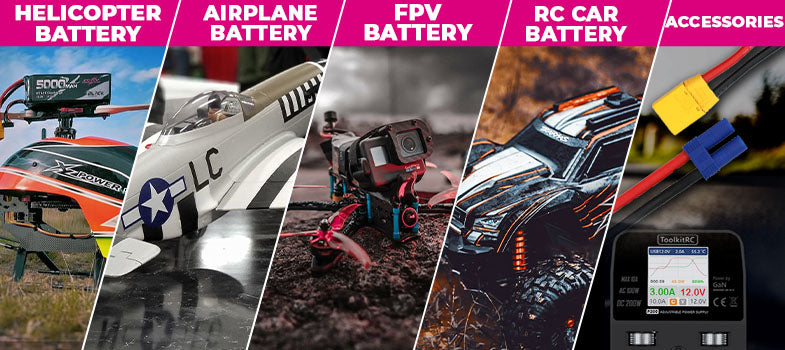
סוללות CNHL ליפו
CNHL שואפת לספק סוללות Li-Po באיכות גבוהה ומוצרי RC לכל חובבי התחביב עם שירות לקוחות מצוין ומחירים תחרותיים
The Team Associated RC8B4.2e is best understood as a serious race buggy evolution, not a casual 1/8 electric buggy refresh. It keeps the RC8B4e electric platform direction, but pushes harder into setup range, drivetrain feel, suspension geometry, and chassis balance. For racers who already understand that lap time comes from small setup choices, this is exactly where the RC8B4.2e starts to make sense.
The bigger story around the Team Associated RC8B4.2e is not simply that Associated released another RC8 buggy. The RC8 name already carries plenty of weight in 1/8 off-road racing, and the B4e electric platform had already moved the car toward a shorty-style, weight-bias-aware layout. What the RC8B4.2e does is refine that direction for racers who move between different surfaces, different grip levels, and different track speeds.
This is not the kind of kit that should be judged only by how aggressive it looks on a product page. The RC8B4.2e is a car for drivers who care about how the front end loads under power, how the rear rotates through rough sections, how the center differential changes corner exit feel, and how battery placement changes the way the car jumps and lands. That is why it deserves a deeper look.

The Team Associated RC8B4.2e Team Kit is a 1/8 scale 4WD electric off-road buggy kit. It comes as a competition-focused kit, not a ready-to-run basher. That means the builder still needs to choose the motor, ESC, batteries, steering servo, receiver, wheels, tires, and radio system. Assembly and painting are also part of the process.
That matters because the RC8B4.2e is not designed around the same buyer as a casual RTR 1/8 buggy. It is aimed at racers who want control over the final build. The electronics package, gearing, tire choice, battery format, and setup sheet all become part of the car’s personality. For some drivers that is extra work. For the right driver, that is exactly the point.
In plain language, the RC8B4.2e is a race platform first. It has the weight, speed, and strength expected from a modern 1/8 eBuggy, but its real appeal sits in the setup window. This is the kind of car where a small change in battery position, diff setup, shock package, or steering geometry can make the buggy feel noticeably different on track.
The keyword Team Associated RC8 covers a wide family of 1/8 off-road platforms. That can include nitro buggies, electric buggies, older RC8e generations, and newer RC8B4e-generation race kits. For SEO and for real-world fitment, it is important not to treat every RC8 model as the same car.
The “B” in RC8B points to Buggy, while the “e” identifies the electric version. So RC8B4.2e can be read as part of the RC8 buggy family, fourth-generation B4 platform direction, 4.2 iteration, electric version. The RC8B4e and RC8B4.1e set the direction for the current electric layout, while the RC8B4.2e brings the latest round of geometry, drivetrain, and tuning updates.
That is also why battery fitment needs to be discussed carefully. Older RC8e layouts should not automatically be treated as the same as RC8B4e, RC8B4.1e, or RC8B4.2e. The newer B4e-generation electric cars are much more tied to shorty-style battery positioning and weight-bias tuning.
For racers building one of these newer Associated electric buggy platforms, CNHL has organized a dedicated Team Associated RC8B4e Series Batteries collection covering RC8B4e, RC8B4.1e, and RC8B4.2e battery directions.
One of the easiest mistakes with the RC8B4.2e is to look at the feature list as a pile of upgraded parts. New molded height-adjustable gearboxes, offset hubs, updated rear suspension arms, a high-volume center differential, a high-downforce wing, adjustable weight bias, 19mm and 20mm HTC internal differential gear sets, and a centralized electric layout all sound impressive on their own. But the better way to understand them is as one system.
The RC8B4.2e is about giving racers more useful setup range. Not random adjustment for the sake of adjustment, but meaningful changes that can help the car work on different surfaces. A smooth, high-grip European-style track does not ask the same thing from a buggy as a blown-out, bumpy, lower-grip outdoor track. The RC8B4.2e tries to give the driver enough tools to make the car useful across that range.
That is especially important in 1/8 electric buggy racing. These cars are fast, heavy enough to punish mistakes, and powerful enough that a poor setup can turn into inconsistent driving quickly. A car that is easy to adjust but still predictable is valuable because it lets the driver chase lap time without constantly fighting the platform.

One of the most interesting RC8B4.2e changes is the molded height-adjustable gearbox system. This lets racers change the front differential height and driveshaft angle at ride height. On paper, that sounds like a small geometry detail. On track, it can change how the car feels under throttle.
When driveshaft angles are cleaner, the front end can feel less bound up under power. That can help the buggy carry more speed and hold a cleaner line when accelerating out of corners. On high-grip tracks, this type of change can be especially useful because the car has enough traction for small geometry changes to show up in lap time.
This is where the RC8B4.2e feels like a proper race kit. It is not just giving the driver more steering throw or a more aggressive front end. It is giving the driver a way to tune how the front of the car behaves when power, steering input, suspension load, and track grip all meet at the same time.
The rear of the RC8B4.2e also gets meaningful attention. The new offset rear hub direction and updated rear suspension geometry are aimed at making the car easier to tune across lower-grip and rougher conditions. Instead of only chasing stability on fast, sweeping, high-speed tracks, the rear of the car is designed to rotate more naturally when the track gets loose, broken, or busy.
This matters because many 1/8 buggy tracks are not clean for the whole day. A track can start smooth, gain grip, break apart, develop ruts, and then punish a setup that felt fine during early practice. A rear end with a wider setup window gives the driver more room to adapt before the car becomes nervous or lazy.
The goal is a more neutral balance between front and rear. When the rear suspension works closer to the front, the car can change direction without feeling like one end is always trying to dominate the other. For experienced drivers, that can make the buggy easier to place. For newer 1/8 racers, it can make the car less intimidating once a solid baseline setup is found.
Differentials are one of those areas where serious racers listen closely and casual drivers often tune out. On the RC8B4.2e, both 19mm and 20mm HTC internal differential gear sets are included. That is not a small detail, because gear diameter changes how the diff works with oil and how locked or free the car can feel through a corner.

A larger internal gear set tends to shear more oil and can create more of a locking effect. A smaller gear set can free the diff up and let the car rotate differently. Neither is automatically better. It depends on grip, surface, driving style, and how the rest of the setup is built.
For an electric buggy, having both options in the box makes sense. The electronics layout limits how freely some mass can be moved compared with nitro, so the setup tools that do exist become more valuable. Diff gear choice, shock package, battery position, and center drivetrain location all become part of the same tuning conversation.
The RC8B4.2e should not be treated as a completely unrelated car from the RC8B4e and RC8B4.1e. It is better seen as the newest step in the same electric buggy family. That matters for racers comparing old setup notes, battery layouts, and upgrade paths.
| Platform | Main Role | Battery Layout Direction | Best Way to Understand It |
|---|---|---|---|
| RC8B4e | Start of the newer B4e electric buggy direction | Single 4S shorty-style or dual 2S shorty saddle setup | The foundation for the newer electric RC8 layout |
| RC8B4.1e | Refined race platform with strong existing search interest | Shorty and saddle-style battery setup remains important | A proven reference point for many racers |
| RC8B4.2e | Newest evolution with added setup and geometry updates | Shorty-style battery layout with adjustable placement logic | The latest choice for racers wanting the newest setup range |
This is why a broader RC8B4e-generation battery collection makes sense. The RC8B4.2e is the new headline model, but the battery logic did not appear from nowhere. It continues the platform direction that started with the RC8B4e and developed through the RC8B4.1e.
The RC8B4.2e uses a centralized drivetrain and chassis layout optimized around shorty-style batteries. That is a major detail. In a race buggy, the battery is not just a runtime part. It is one of the heaviest components in the car, and where that mass sits can affect steering, rear grip, jumping balance, and how planted the buggy feels under power.
Moving battery mass forward can add more front-end bite and make the car more willing to pull into a corner. Moving battery mass rearward can add rear stability, which can help on rough sections, corner exit, and jump landings. The correct choice depends on the track and driving style.
This is why RC8B4.2e battery selection should not be reduced to “highest capacity wins.” A battery that is too bulky, too heavy, awkward to wire, or poorly positioned can make the car harder to drive. For this platform, the smarter approach is to choose around fit, weight, discharge performance, and tray placement together.
For compatible shorty-style options, racers can browse the dedicated Team Associated RC8B4e Series Batteries page. For other AE vehicles beyond the RC8B4e platform, the broader Team Associated RC car battery collection is the better starting point.

The RC8B4.2e is not the easiest possible first 1/8 buggy kit. That does not mean a determined builder cannot start here, but it does mean this car rewards patience. There are more setup choices than a simple RTR platform. Differential gear options, shock configuration, pillow ball setup, electronics layout, battery placement, and racing tires all matter.
The ideal RC8B4.2e owner is someone who enjoys the tuning process. This could be an experienced 1/10 racer moving into 1/8 eBuggy, a current RC8B4.1e driver looking at the newer platform, or a racer who wants an Associated buggy with more setup range for changing track conditions.
It also suits drivers who prefer a car that feels sharp and race-focused rather than overly heavy and dull. Some 1/8 platforms lean into brute durability and forgiving behavior. The RC8B4.2e feels more like a tool for lap time. It is still an 1/8 buggy, so strength matters, but the personality is more race bench than backyard bash session.
Drivers who want a simple box-to-track experience may be happier with an RTR or a more beginner-friendly platform. The RC8B4.2e requires electronics selection, careful assembly, tuning knowledge, and track testing. If someone wants to install a battery and drive without thinking about setup, this probably is not the cleanest path.
It may also be overkill for casual off-road driving. A competition buggy like this comes alive when there is a real track, proper tires, setup work, and enough driving time to feel small changes. Without that environment, much of what makes the RC8B4.2e special can be wasted.
That is not a criticism. It is just the honest nature of a proper race kit. The RC8B4.2e is built for drivers who want the car to respond to tuning decisions. If that sounds exciting rather than annoying, the platform makes a lot more sense.
For a new RC8B4.2e build, the best approach is not to change everything immediately. Start from a known baseline, make sure the car is built cleanly, and then adjust one area at a time. The platform has enough tuning range that random changes can quickly make the car confusing.
| Setup Area | Why It Matters | Practical Starting Point |
|---|---|---|
| Battery position | Changes weight bias, steering bite, and rear stability | Start from baseline tray placement before chasing extremes |
| Diff setup | Controls drive, rotation, and corner exit behavior | Use known track setups before experimenting with gear sets |
| Shock package | Affects bump handling, landing feel, and chassis support | Match bladder or emulsion direction to track speed and roughness |
| Front gearbox height | Can change on-power steering and drivetrain bind | Test only after the rest of the car feels consistent |
| Rear hub geometry | Changes rotation and rear-end confidence | Useful when the track is loose, rough, or changing quickly |
The RC8B4.2e gives enough tools to chase a very specific feel. The challenge is knowing when to stop changing parts and start driving. A good race kit should not need constant panic adjustments. It should let the driver find a base, build confidence, then make small changes with purpose.
Because the RC8B4.2e is a kit, the battery connector is not fixed by the chassis itself. Connector choice depends on the ESC and wiring layout chosen by the builder. Some racers may run EC5, IC5-style, XT90, bullet, or other high-current wiring standards depending on their electronics and local race habits. The important point is to match the battery plug, ESC leads, and series harness correctly.
Capacity is also not a single fixed number. The better question is whether the battery fits the tray cleanly, provides enough race runtime, holds voltage consistently, and does not make the buggy feel overweight. For RC8B4e-generation cars, shorty-style fitment and weight distribution matter more than simply chasing the largest mAh rating.
For dual 2S setups, matched packs and proper series wiring are important. For single 4S shorty-style setups, physical dimensions, wire exit direction, and ESC lead routing become the main concerns. A clean installation helps the car feel like a race buggy rather than a fast car with messy wiring trapped under the body.
The current 1/8 eBuggy market is not short on good cars. Tekno, TLR, XRAY, Mugen, Kyosho, Sworkz, and Team Associated all have racers who swear by their platforms. The RC8B4.2e does not need to win by pretending every other buggy is weak. Its argument is more specific: it gives Associated racers a newer, more adjustable evolution of a platform already known for serious race use.
Compared with some heavier, more forgiving platforms, the RC8B4.2e feels more focused on race response and setup control. That can be a strength for a driver who wants to tune and drive cleanly. It can also feel like extra responsibility for a newer racer who just wants an easy first 1/8 build.
That balance is what makes the car interesting. It is not the obvious answer for everyone. But for the driver who wants an AE buggy with strong parts support, modern electric layout logic, and serious track-tuning depth, the RC8B4.2e is one of the more important 1/8 electric buggy releases to watch.
From a power-system and setup perspective, the RC8B4.2e is interesting because it treats the electric buggy layout as part of the handling package. Battery placement, center mass, drivetrain location, and suspension geometry are all connected. That is exactly the kind of platform where choosing the right battery format matters.
A casual driver may only notice that the car is fast. A racer will notice whether the car rotates cleanly, stays calm through ruts, lands flat enough to get back on throttle, and keeps consistent power late in a run. Those details are where the RC8B4.2e is trying to separate itself.
The best version of this car will not come from throwing random high-output parts into the chassis. It will come from a clean build, the right electronics, suitable tires, a correctly sized LiPo setup, and enough track time to understand what each change is doing. That is why this buggy feels less like a simple new release and more like a platform for drivers who enjoy the work behind fast laps.
The Team Associated RC8B4.2e is a 1/8 scale 4WD electric off-road buggy Team Kit. It is designed for racing and requires additional electronics, batteries, tires, wheels, radio gear, assembly, and painting before it is ready to run.
The “e” means electric. The RC8B4.2e is the electric buggy version of the RC8B4.2 platform direction, while non-e RC8B models are typically nitro buggy versions.
It can be built by a careful new racer, but it is not the easiest first RC kit. The RC8B4.2e has real setup depth, and it rewards builders who are willing to learn differential setup, shock tuning, electronics layout, and battery placement.
Not automatically. The RC8 name covers several generations and layouts. The RC8B4.2e belongs to the newer RC8B4e-generation electric buggy direction, where shorty-style battery fitment and adjustable placement are important. Older RC8e platforms should be checked separately.
The RC8B4e-generation electric layout can support a single 4S shorty-style direction or a dual 2S shorty saddle-style setup, depending on the build configuration. Always check tray setup, pack dimensions, ESC location, and wire routing before choosing a battery.
Yes. Battery position changes weight bias. Moving battery mass forward can increase steering bite, while moving it rearward can improve rear stability and planted feel. The best position depends on grip level, track roughness, jump layout, and driving style.
The RC8B4.2e is the newer iteration with updated setup and geometry features such as height-adjustable gearbox direction, updated rear suspension geometry, high-volume center differential direction, and included tuning options. The RC8B4.1e remains an important reference point because it shares the broader RC8B4e-generation electric platform logic.
For RC8B4e, RC8B4.1e, and RC8B4.2e builds, start with the Team Associated RC8B4e Series Batteries collection. For other Associated vehicles, browse the broader Team Associated RC car battery collection.
The Team Associated RC8B4.2e is not a lazy update. It is a race-focused electric buggy that builds on the RC8B4e platform direction and gives drivers more meaningful setup tools. The height-adjustable gearbox direction, rear offset hub logic, included diff gear options, shock setup range, and shorty-style electric layout all point toward one thing: a buggy built for racers who want to tune.
For the right driver, that is the appeal. The RC8B4.2e is not trying to be the simplest car in the pits. It is trying to be a sharper one. If your idea of a good RC buggy includes setup sheets, tire testing, battery placement, diff oils, and small changes that show up on the stopwatch, this is exactly the kind of platform worth paying attention to.
CNHL שואפת לספק סוללות Li-Po באיכות גבוהה ומוצרי RC לכל חובבי התחביב עם שירות לקוחות מצוין ומחירים תחרותיים
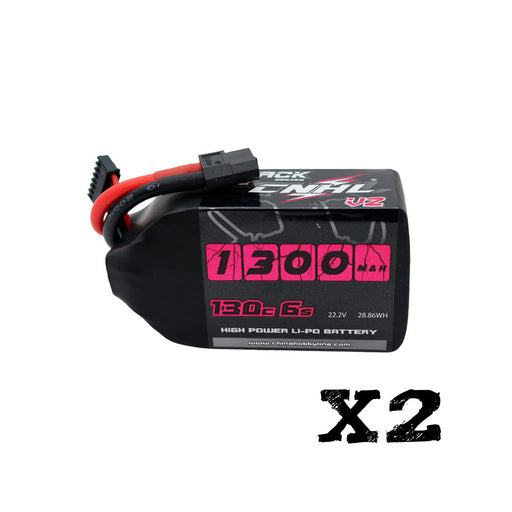
בדיקת התאמה מהירה ה2 Packs CNHL Black Series V2.0 1300mAh 22.2V 6S 130C LiPo Battery with XT60 Plug מתאים היטב למטיסי FPV שרוצים סוללת 6S 1300mAh X...
הצג פרטים מלאיםחלקי חילוף ותמיכה לטווח ארוך אנו יודעים שעבור טייסי RC, תמיכה אמינה בחלקי חילוף היא חלק חשוב בשמירה על מטוס כשיר לטיסה במשך שנים. לכן CNHL מת...
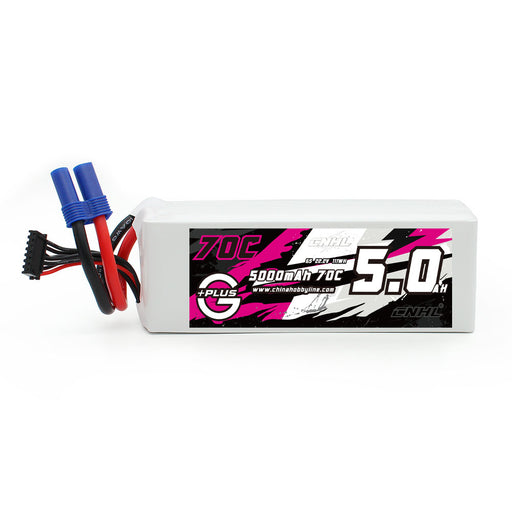
הצג פרטים מלאיםמפרטים: מספר מלאי: 500706EC5 קיבולת: 5000mAh מתח: 22.2V / 6 תאים / 6S1P קצב פריקה: 70C רציף / 140C פיצוץ קצב טעינה: 5C מקסימום גודל (הבדל של 1-5 ...
הצג פרטים מלאים
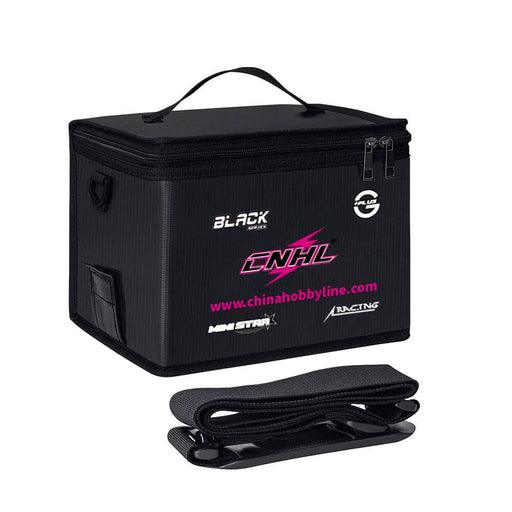
תיק סוללות LiPo של CNHL מיועד לטעינה, הובלה ואחסון בטוחים יותר של סוללות LiPo בבית או בשדה. הוא מוסיף שכבת הגנה פרקטית על ידי סיוע במניעת התפשטות ח...
הצג פרטים מלאיםבדיקת התאמה מהירה חבילת 2 CNHL Speedy Pizza Series Pro 1350mAh 6S 150C LiPo עם תקע XT60 מיועדת לטייסי FPV בגודל 5 אינץ' שרוצים מערכת 6S חופשית ...
הצג פרטים מלאים

The CNHL Long Range Series BAK 65E 6350mAh 21700 Li-ion battery cell is built around one clear priority: maximum stored energy from a lightweight c...
הצג פרטים מלאים

The CNHL Long Range Series BAK 50D 5000mAh 21700 Li-ion battery cell is designed for custom high-energy battery packs that need a strong balance be...
הצג פרטים מלאים

The ISDT C4 EVO is a versatile smart battery charger built for AA, AAA and cylindrical rechargeable cells from compact 10440 batteries all the way ...
הצג פרטים מלאים

The CNHL Long Range Series 6350mAh 21.6V 6S1P 21700 Li-ion battery combines six BAK 65E high-energy cells into a 137.16Wh pack designed for ultra-e...
הצג פרטים מלאים

The CNHL Long Range Series 5000mAh 21.6V 6S1P 21700 Li-ion battery combines six BAK 50D cells into a compact 108Wh pack designed around long-range ...
הצג פרטים מלאים




Leave a comment