
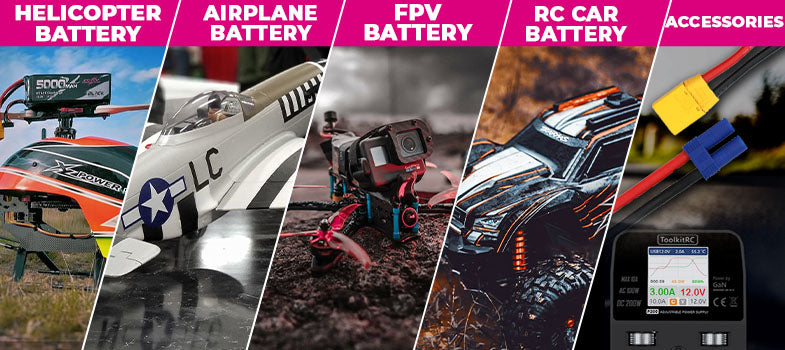
CNHL Lipo Batteries
CNHL aim at providing high-quality Li-Po batteries and RC products to all hobby enthusiasts with excellent customer services and competitive prices

LiPo C rating is one of the most misunderstood battery specs in RC. Many hobbyists see numbers like 30C, 50C, 100C, or 130C and assume the highest number must always be the best choice. In real use, it is not that simple. C rating tells you how quickly a LiPo battery is supposed to deliver its power, but the right rating still depends on the model, the power system, and how the battery behaves under load.
That is why the better question is not just “Is 130C better than 30C?” but “What does this C rating actually mean for my RC car, FPV drone, airplane, or boat?” A good battery match is about honest performance, not just impressive numbers printed on the label.
This page focuses on what LiPo C rating means at the battery level. If you want the broader picture of how C rating, voltage sag, internal resistance, and real-world discharge behavior fit together, start with the LiPo C Rating and Battery Performance Guide.
Quick answer: LiPo C rating describes the battery’s theoretical discharge capability. A 30C battery is usually enough for lower-demand or longer-runtime setups, 100C often sits in the practical high-performance sweet spot, and 130C is usually aimed at more demanding use where stronger punch and reduced sag matter. But real-world performance still depends on cell quality, internal resistance, battery age, temperature, and the honesty of the manufacturer’s rating.
If you want the wider battery voltage picture first, the best companion read is LiPo Battery Voltage Guide: 1S to 8S Explained for RC Models.
The “C” on a LiPo battery stands for discharge rate. It tells you how quickly the battery is supposed to be able to deliver its stored energy relative to its capacity. In simple terms, it is a multiplier. The bigger the C number, the more current the battery is theoretically able to provide.
That does not mean a high-C battery always feels better in every RC model. It only means the battery is rated to deliver more current. Whether that matters depends on the actual demands of the motor, ESC, prop or fan load, drivetrain, and the way the model is used.
For example, if a battery already provides enough current for the setup, moving to a much higher C rating may bring little real benefit. But if the battery is being pushed hard and starts sagging badly, then a stronger pack can absolutely make a difference.
The basic formula is straightforward:
Capacity (Ah) × C Rating = Theoretical Maximum Continuous Current
A 2200mAh battery is 2.2Ah. If it is rated at 30C, then the math is:
2.2Ah × 30C = 66A
That means the battery is theoretically rated to deliver 66 amps continuously. A 1500mAh battery is 1.5Ah, so a 100C version would be:
1.5Ah × 100C = 150A
This is the basic reason higher C ratings attract attention. They suggest the battery can provide more current. But that still does not guarantee that the real-world performance will match the label exactly.

| Battery | Capacity | C Rating | Theoretical Max Continuous Current |
|---|---|---|---|
| Example A | 2200mAh (2.2Ah) | 30C | 66A |
| Example B | 1500mAh (1.5Ah) | 100C | 150A |
| Example C | 5000mAh (5.0Ah) | 50C | 250A |
These numbers are different levels of discharge capability. A 30C LiPo is usually viewed as a more moderate, lower-demand, or longer-runtime style battery. A 100C LiPo is often seen as the practical high-performance middle ground. A 130C LiPo usually targets users who want more aggressive output and are willing to pay for a more performance-focused pack.
In real RC use, that translates roughly like this:
But the important part is this: these numbers only help when they are honest and when the setup can actually use that capability.

One reason LiPo C rating can be confusing is that many batteries show two numbers: a continuous C rating and a burst C rating. The continuous rating is the one that matters most for real use. It refers to the current the battery is supposed to handle on an ongoing basis. The burst rating is meant for very short spikes, such as sudden throttle punches or brief hard acceleration.
That means burst C should never be treated like the normal working number of the pack. It is more of a short-duration ceiling. Many hobbyists make the mistake of reading the biggest number on the label and assuming that is the meaningful one. Usually it is not.
When comparing batteries, the continuous rating is the more useful figure. Burst rating matters, but it should be treated as a short-term capability, not the main definition of the pack.
No. A higher C rating does not automatically mean a better battery in real use. It only means the battery is labeled to provide more current. Whether that translates into better performance depends on the quality of the cells, internal resistance, voltage stability, thermal behavior, and how honestly the pack was rated in the first place.
A poorly made 130C pack can still feel weaker than a genuinely strong 100C pack. A battery with a flashy label but poor real-world discharge behavior may still sag hard under throttle. This is why experienced hobbyists care about more than just the number printed on the wrapper.
If you want to look deeper into real-world discharge behavior rather than label claims alone, a useful next read is Real LiPo Battery C-Rating Test and Performance Comparison.
This is where battery performance starts becoming more interesting than simple label math. Two batteries can both say 100C and still feel very different in actual use. That difference usually comes from factors such as cell quality, internal resistance, pack age, temperature, and the overall honesty of the brand’s discharge claims.
Voltage sag is one of the clearest real-world signs. A battery with weaker actual discharge performance tends to feel softer under load. Throttle response becomes less crisp, punch-outs feel weaker, and the model may lose confidence earlier in the run or flight. This is one reason C rating should be treated as a starting point, not the final answer.
Internal resistance matters too. A battery with higher IR often struggles more under load and loses its sharpness more easily. If you want to understand that side better, this topic connects naturally to How to Measure the Internal Resistance of a LiPo Battery.
The correct C rating depends on the model and what you actually expect from it. A trainer airplane, a casual RC car, or a trail-focused crawler usually does not need the same kind of battery as a freestyle FPV quad or a high-performance race setup.
| RC model type | Common C rating range | Why it often makes sense |
|---|---|---|
| Trainer plane / beginner fixed-wing | 30C | Enough power, lower stress, often better value |
| Rock crawler / trail truck | 30C | Smooth control and runtime matter more than huge punch |
| FPV freestyle / racing drone | 100C and above | Strong punch and reduced sag matter much more |
| High-performance RC car | 100C to 130C | Hard acceleration and load handling matter more |
| Extreme performance / competition use | 130C | Useful when every bit of punch and consistency matters |
That does not mean everyone should chase the highest number. If the setup does not need it, a high-C pack may simply cost more and add weight without giving meaningful benefit. On the other hand, if the C rating is too low, the battery may run hotter, sag harder, or feel weak under load.


The smartest approach is not to buy the highest-C battery you can find. It is to buy the battery that gives your setup enough honest performance without paying for capability you will never use. If your model flies or drives well on a moderate C rating, going much higher may add cost without improving the experience very much.
At the same time, buying too little C rating can create real problems. The battery may run hotter, puff more easily, and feel weak when the system asks for hard output. In other words, the goal is not “highest number wins.” The goal is “right number for the actual job.”
C rating is only one part of the battery decision. Capacity, voltage, connector type, size, and real-world pack quality still matter. A battery can have an impressive C number and still be the wrong choice if it is too heavy, too large, or poorly matched to the platform.
That is why the best battery decisions usually happen in layers: first choose the right voltage, then choose the right capacity, then judge C rating honestly in the context of the model and the quality of the pack itself. If you want the wider voltage context, continue into LiPo Battery Voltage Guide: 1S to 8S Explained for RC Models.
If you want the bigger picture first, start with the LiPo C Rating and Battery Performance Guide. For deeper real-world testing, continue into Real LiPo Battery C-Rating Test and Performance Comparison. If you want to understand how battery connectors affect real setups, see RC Battery Connectors Guide. If your next question is more about voltage than discharge rate, the best starting point is 4S vs 6S LiPo Battery.
What does 30C mean on a LiPo battery?
It means the battery is labeled to deliver current at a rate equal to 30 times its capacity. A 2200mAh 30C battery, for example, is theoretically rated for 66A continuous output.
Is 100C always better than 50C?
Not automatically. A higher C rating can help if the setup truly needs more current and the pack is honestly rated, but a higher number alone does not guarantee better real-world performance.
What C rating do I need for an RC car?
That depends on the car and how you use it. Casual or lower-demand setups may work well on lower C ratings, while high-performance cars often benefit from stronger discharge capability.
What C rating do I need for FPV?
FPV drones, especially freestyle and racing setups, often benefit from higher C ratings because punch and sag control matter more. But the right answer still depends on the exact setup and battery quality.
What is the difference between continuous and burst C rating?
Continuous C rating refers to the battery’s supposed normal ongoing discharge ability, while burst C rating refers to short-duration peaks. Continuous rating is usually the more useful number for comparison.
Why can a high-C battery still feel weak?
Because label C rating is not the whole story. Internal resistance, voltage sag, cell quality, battery age, temperature, and how honestly the pack was rated all affect real performance.
Can a C rating that is too low damage a battery?
It can contribute to overheating, excessive sag, puffing, and shorter battery life if the system repeatedly demands more than the pack can comfortably provide.
CNHL aim at providing high-quality Li-Po batteries and RC products to all hobby enthusiasts with excellent customer services and competitive prices
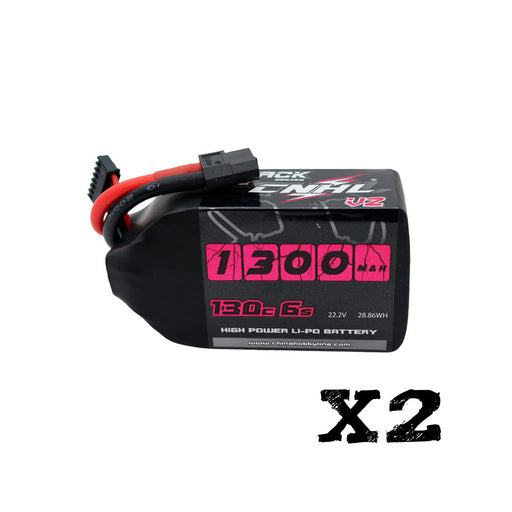
Quick Fit Check The 2 Packs CNHL Black Series V2.0 1300mAh 22.2V 6S 130C LiPo Battery with XT60 Plug is a strong fit for FPV pilots who want a prov...
View full details

Hstar D43-01Q 911 Style is a mini 1/43 alloy drift RC car designed for indoor tabletop fun and realistic drifting. It features full proportional ...
View full details

Spare Parts Availability We know that for RC pilots, reliable spare parts support often determines how long an aircraft can actually sta...
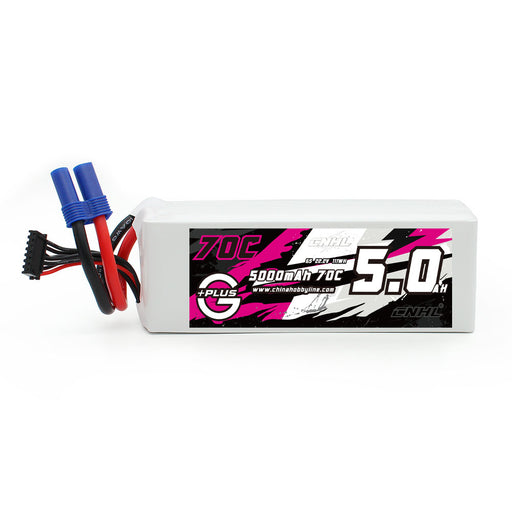
View full detailsSpecifications: Stock Number: 500706EC5 Capacity: 5000mAh Voltage: 22.2V / 6-Cell / 6S1P Discharge Rate: 70C Continual / 140C Burst Charge Rate: ...
View full details
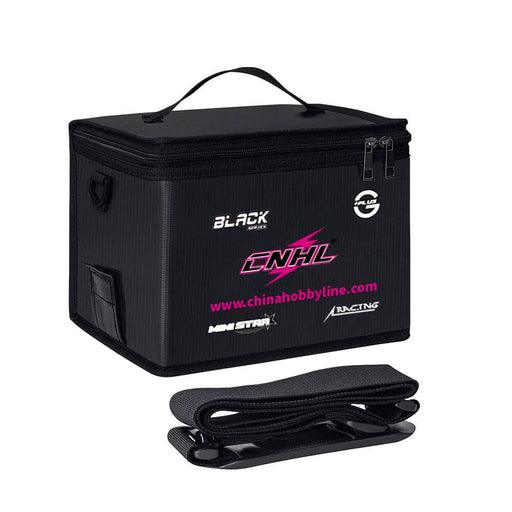
The CNHL LiPo Battery Bag is designed for safer LiPo charging, transport, and storage at home or at the field. It adds a practical layer of protect...
View full details

CNHL Havok 1000mm 4S Sport Racer Plane – Built on a Proven 1m Havok Airframe The CNHL Havok 1000mm 4S Sport Racer RC Plane PNP is a 1-meter foam...
View full detailsQuick Fit Check Voltage: 2S (7.4V)Capacity: 350mAhConnector: PH (UMX) High-Current 3-PinSize (L × W × H): 43 × 19 × 14 mm (±1–5 mm)Weight: Approx. ...
View full details

Quick Fit Check If you are buying a replacement battery for an FMS FCX18 or FCX24, confirm these three points before ordering: Check Item Your V...
View full detailsQuick Fit Check The CNHL Speedy Pizza 1550mAh 14.8V 4S LiPo Battery 120C with XT60 Plug is a compact 4S FPV battery built for pilots who want a liv...
View full detailsSpecifications: Stock Number: S220402BKT Capacity: 2200mAh Voltage: 7.4V / 2-Cell / 2S1P Discharge Rate: 40C Continual / 80C Burst Charge Rate: 5...
View full details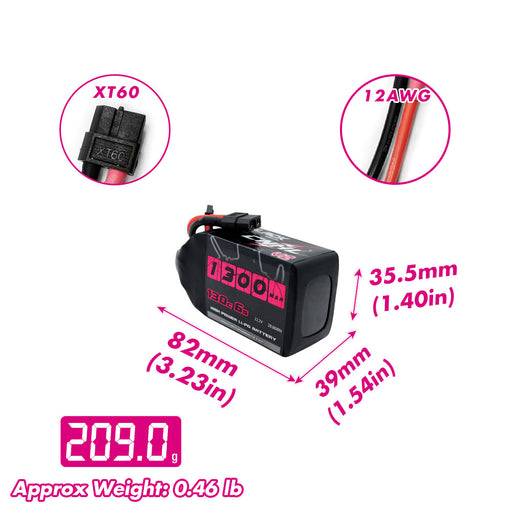



Comments
Leave a comment