
CNHL Lipo Batteries
CNHL aim at providing high-quality Li-Po batteries and RC products to all hobby enthusiasts with excellent customer services and competitive prices

4S vs 6S LiPo battery is one of the most common comparison questions in RC, and the honest answer is that neither one is automatically better in every situation. 4S often makes more sense where lower pack weight, easier fit, and strong all-around performance matter most. 6S usually becomes the smarter choice when the model is larger, heavier, or more demanding, and needs more voltage headroom to make power cleanly without feeling strained.
This is why the best answer is rarely just “pick the bigger number.” In many RC setups, 4S already feels fast, responsive, and properly matched. In other setups, especially larger RC cars, EDF jets, and heavier fixed-wing aircraft, 6S often feels less stressed and more natural because the system no longer has to work as hard to reach the same kind of output.
This article compares 4S and 6S the way hobbyists actually experience them: not just by voltage numbers, but by weight, current demand, heat, throttle feel, fit, and real use case. If you want the broader picture first, the main companion page is LiPo Battery Voltage Guide: 1S to 8S Explained for RC Models.
Quick answer: 4S usually makes more sense for mainstream RC setups that want strong performance without extra battery weight or system complexity, while 6S usually makes more sense when the platform is heavy, power-hungry, or benefits from more efficient high-voltage output. The better choice is the one that matches the model honestly, not the one with the more impressive number on paper.
A 4S LiPo battery has a nominal voltage of 14.8V. A 6S LiPo battery has a nominal voltage of 22.2V. That is the basic difference, but the real effect is more important than the number itself. The extra voltage in a 6S setup usually allows the system to reach the target performance with less current than a 4S setup trying to do the same work.
That is one reason 6S can feel more effortless in the right platform. But higher voltage also brings tradeoffs. The batteries are usually larger, the setup is often less forgiving, and fit becomes more important. This is why 6S can feel like the perfect answer in one model and a completely unnecessary complication in another.
| Feature | 4S LiPo | 6S LiPo |
|---|---|---|
| Nominal voltage | 14.8V | 22.2V |
| Typical battery feel | Lighter, simpler, broadly versatile | More authoritative, more serious |
| System demand | Moderate | Higher overall setup sensitivity |
| Current demand for same output | Usually higher | Usually lower |
| Weight and fit | Usually easier to manage | Usually more demanding |
| Best fit | Mainstream high-performance setups | Larger or more demanding platforms |

No. It usually means more voltage headroom, but not necessarily a better overall setup. A platform designed around 4S can feel excellent on 4S and only become heavier, more awkward, or less balanced if someone tries to force a 6S mindset onto it. In that case, 6S is not an upgrade. It is just a mismatch wearing a bigger number.
The better way to think about it is this: 6S helps when the platform genuinely needs more voltage to make power cleanly. 4S makes more sense when the model already performs properly there and the added battery size, weight, and complexity of 6S would not solve a real problem.
In RC cars, the 4S vs 6S decision usually comes down to chassis class, weight, intended driving style, and how hard the system has to work. 4S often feels like the sweet spot for strong performance without making the vehicle feel overworked or too difficult to control. Many RC cars already feel fast, aggressive, and satisfying on 4S without needing the added weight or seriousness of 6S.
6S becomes more attractive when the car is larger, heavier, or clearly designed for a higher platform class. That often includes 1/8 buggies, truggies, larger bashers, desert trucks, and some monster truck setups where the extra voltage helps the system make power more comfortably. In those vehicles, 6S often feels less like excess and more like proper headroom.
The more useful question is not whether 6S looks more powerful on paper, but whether the car actually benefits from the extra voltage. Many RC cars already feel properly matched on 4S, while larger and more demanding platforms often start to feel more natural on 6S. If your focus is specifically on higher-voltage surface setups, the best next step is 6S LiPo Battery for RC Cars.
FPV is one of the clearest places where both voltages can be right for different reasons. 4S remains popular because it often gives a lighter battery feel and a very direct, easy-to-read response in the air. Many pilots like the way a 4S quad feels simpler and less burdened by battery mass, especially when flight character matters as much as outright voltage.
6S has become a favorite for many freestyle and higher-performance FPV setups because it can feel more composed under load. Pilots often notice smoother punch recovery, less dramatic sag, and a more relaxed power system when the quad is actually designed around 6S correctly. But that does not mean every pilot should switch. Some still prefer the lighter, more immediate feel of 4S.
In other words, FPV is one of the few areas in RC where both 4S and 6S can be the right answer without one fully replacing the other. The better choice depends on how much the pilot values lower battery weight and a more direct feel versus smoother high-load behavior and a more relaxed power system. If you want to compare actual battery options on the drone side, you can continue into 4S LiPo Batteries for FPV Drones, 6S LiPo Batteries for FPV Drones, or the more specific guide Best Battery for 5 Inch Quad.

In airplanes, the difference often shows up in how comfortably the power system carries the aircraft. 4S is common in many sport and performance planes because it gives a very strong balance between power, battery size, and aircraft weight. For a lot of fixed-wing models, 4S feels energetic without becoming too battery-heavy or difficult to balance.
6S becomes more attractive as the aircraft gets larger, heavier, or more demanding. That is especially true in EDF jets, where the power system often places a stronger sustained load on the battery than many prop-driven airplanes do. This is one reason so many EDF jets naturally sit in the 6S range rather than 4S.
That is why fixed-wing aircraft and EDF jets often make the 4S vs 6S difference feel very obvious in real use. If you want to explore actual battery options next, see 6S LiPo Battery for RC Airplanes and 6S LiPo Battery for EDF Jets.
The most useful way to compare 4S and 6S is not by asking which one sounds more powerful. It is by asking what the system has to do in order to reach the performance you want. In many cases, 6S can make the system feel more efficient under load because it can reach the target output without needing as much current. That can mean cleaner behavior and a more relaxed feel in the right application.
At the same time, 6S usually means more battery seriousness. The packs are often heavier, fit becomes more critical, and the system has less room for bad assumptions. This is why 4S continues to make sense for so many mainstream setups. It often gives excellent performance without dragging the whole platform into unnecessary complication.
| Question | 4S usually makes more sense if... | 6S usually makes more sense if... |
|---|---|---|
| Platform size | The model is mainstream in size and demand | The model is larger, heavier, or more demanding |
| Battery weight | Lower pack weight matters a lot | The platform can carry the extra battery seriousness |
| System stress | The setup already feels properly matched | The setup needs more voltage headroom |
| Use case | Strong mainstream performance | Heavier-duty or more demanding performance |
| Practical priority | Simplicity, weight control, easy fit | Cleaner high-load output, more headroom |
Choose 4S when the platform already feels properly matched there and the benefits of lower battery weight, simpler fit, and easier day-to-day usability matter more than climbing higher on the voltage ladder. Choose 6S when the platform clearly benefits from more voltage headroom, whether because of aircraft size, vehicle weight, EDF demand, or the way the system behaves under sustained load.
That is the real answer. Do not choose 6S because it sounds more serious. Do not stay on 4S just because it feels safer. Choose the voltage that makes the platform feel honest. If 4S already does that, 6S is not automatically an upgrade. If 6S is what the model really wants, then 4S can start to feel like the compromise instead.
If 6S already looks like the better match for your platform, the next useful step is 6S LiPo Battery Selection Guide.
For direct battery browsing, readers can also compare 4S LiPo Batteries and 6S LiPo Batteries.
If you want the full voltage picture first, start with LiPo Battery Voltage Guide: 1S to 8S Explained for RC Models. If your question is specifically about 6S as a voltage class, the next best read is What Is a 6S LiPo Battery. Readers comparing lower mid-range voltage choices can also continue into 2S vs 3S LiPo Battery or 3S or 4S LiPo Battery Guide.
Is 6S always better than 4S?
No. 6S is only better when the platform genuinely benefits from the extra voltage. Many RC models feel excellent on 4S and do not need the added battery size or setup seriousness of 6S.
Does 6S run cooler than 4S?
It can, in the right system, because higher voltage can reduce the amount of current needed to make the same general output. But that only helps if the whole setup is actually designed around 6S sensibly.
Is 4S or 6S better for FPV?
Both can be correct. 4S often feels lighter and more direct, while 6S often feels more composed under load. The better choice depends on flying style, setup, and what the pilot wants the quad to feel like.
Why do so many EDF jets use 6S?
Because EDF systems often place a strong sustained load on the battery, and 6S gives many jets the voltage headroom needed to produce cleaner, stronger thrust without relying on as much current as a lower-voltage setup.
Can I upgrade a 4S setup to 6S?
Only if the entire power system is designed to support it. Motor KV, ESC rating, prop or fan load, connector choice, drivetrain strength, and battery fit all need to be checked before moving from 4S to 6S.
Is 4S enough for an RC car?
Very often, yes. Many RC cars feel excellent on 4S. The question is not whether 4S is “enough” in the abstract, but whether the specific platform is already properly matched there or clearly benefits from stepping up to 6S.
CNHL aim at providing high-quality Li-Po batteries and RC products to all hobby enthusiasts with excellent customer services and competitive prices
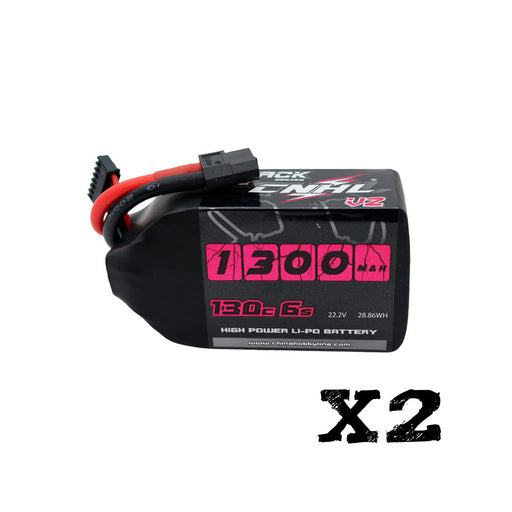
Quick Fit Check The 2 Packs CNHL Black Series V2.0 1300mAh 22.2V 6S 130C LiPo Battery with XT60 Plug is a strong fit for FPV pilots who want a prov...
View full details

Spare Parts & Long-Term Support We know that for RC pilots, reliable spare parts support is an important part of keeping an aircraft fl...
View full details
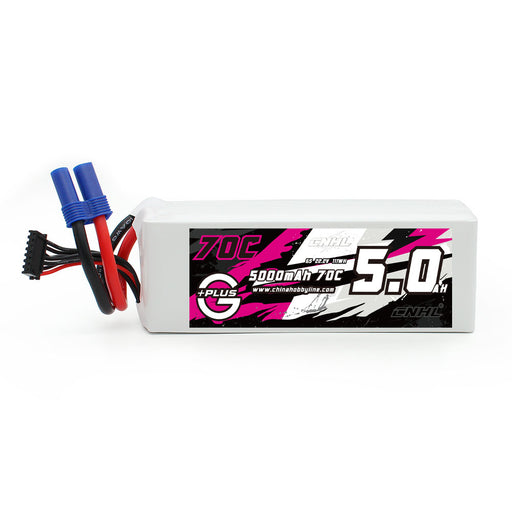
Specifications: Stock Number: 500706EC5 Capacity: 5000mAh Voltage: 22.2V / 6-Cell / 6S1P Discharge Rate: 70C Continual / 140C Burst Charge Rate: ...
View full details
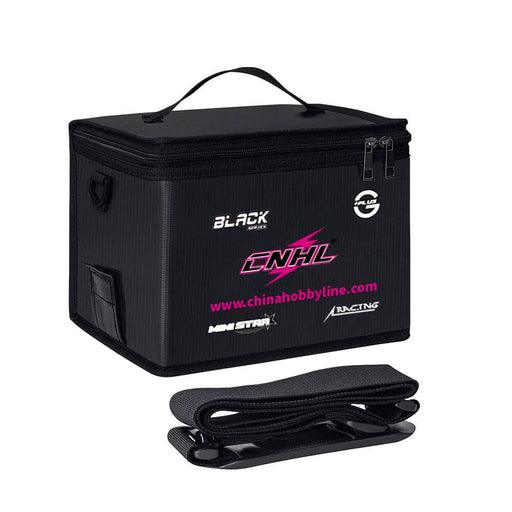
The CNHL LiPo Battery Bag is designed for safer LiPo charging, transport, and storage at home or at the field. It adds a practical layer of protect...
View full detailsQuick Fit Check The 2 Packs CNHL Speedy Pizza Series Pro 1350mAh 6S 150C LiPo Battery with XT60 Plug is built for 5-inch FPV pilots who want a ...
View full details

The WNF Mitsubishi Lancer Evolution IX is an officially licensed Mitsubishi Motors 1:64 RC drift car that combines detailed Evo IX styling with rea...
View full details

The ISDT K4 is a high-power 8S LiPo smart dual charger built for demanding RC battery setups. It combines two independently controlled charging cha...
View full details

The ISDT PC-4860S is a compact four-port XT60 parallel charging board designed for experienced RC and FPV users who want to connect multiple co...
View full details

Quick Take: This officially licensed WNF 1:43 Land Rover Defender 110 Pick-Up RC crawler combines the proportions and detailing of the 1993 ...
View full details

Quick Fit Check Continuous / Peak Current: 20A / 30A peak Battery: 3-4S LiPo BEC: No Motor Connectors: 3.5mm gold female ...
View full details


Leave a comment