
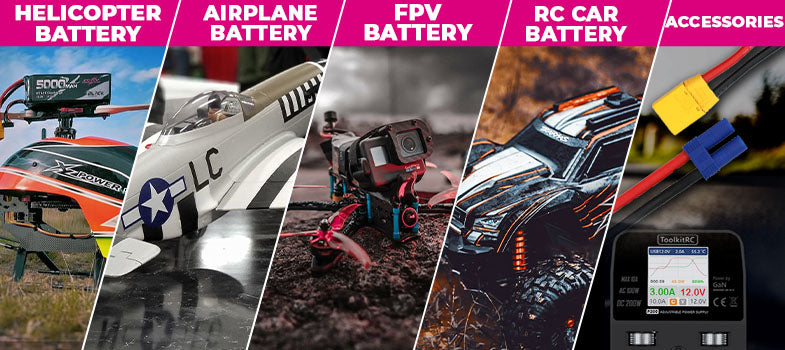
CNHL Lipo Batteries
CNHL aim at providing high-quality Li-Po batteries and RC products to all hobby enthusiasts with excellent customer services and competitive prices

2S vs 3S LiPo battery is one of the most common upgrade questions in RC, especially for beginners and mid-level hobbyists trying to decide whether moving up in voltage is actually worth it. The honest answer is that neither one is automatically better in every situation. 2S often makes more sense where smooth control, manageable heat, and easy everyday use matter most. 3S becomes more attractive when the platform is ready for stronger punch, more speed, and a more energetic overall feel.
In many RC models, 2S already feels properly matched. It keeps the setup more forgiving and often makes battery fit easier, especially in smaller cars, crawlers, and lighter aircraft. 3S can absolutely wake a model up, but it also adds more system stress and can expose weak drivetrains, marginal ESC limits, or cooling problems that were less obvious before.
This guide compares 2S and 3S in the ways that actually matter: voltage, power delivery, battery weight, heat, fit, and real-world use cases in RC cars, crawlers, and airplanes. If you want the broader voltage picture first, the best companion page is LiPo Battery Voltage Guide: 1S to 8S Explained for RC Models.
Quick answer: 2S usually makes more sense for smoother, easier-to-manage RC setups and many beginner-friendly models, while 3S makes more sense when the platform can genuinely use the extra punch and higher voltage without becoming stressed or awkward to control.
A 2S LiPo battery has a nominal voltage of 7.4V. A 3S LiPo battery has a nominal voltage of 11.1V. That voltage difference matters because a 3S setup usually gives the system more headroom and stronger performance potential than a 2S setup in the same platform.
But the difference is not just about speed. Moving from 2S to 3S usually changes throttle feel, current demand, motor temperature, drivetrain stress, and sometimes even the way the model balances or behaves over a full run or flight. This is why 3S can feel like a great upgrade in one model and an unnecessary complication in another.
| Feature | 2S LiPo | 3S LiPo |
|---|---|---|
| Nominal voltage | 7.4V | 11.1V |
| Typical feel | Smooth, manageable, forgiving | More energetic, stronger punch, faster response |
| Battery weight | Usually lighter | Usually heavier |
| System stress | Lower | Higher |
| Best fit | Beginner or moderate-demand setups | Platforms ready for more aggressive output |

No. 3S usually means more voltage and stronger output potential, but not automatically a better overall setup. A platform designed around 2S can feel balanced, reliable, and fun on 2S, then become hotter, more fragile, or harder to manage if 3S is added without the rest of the system being ready for it.
The better way to compare them is not by asking which one sounds more powerful. It is by asking whether the model genuinely benefits from the extra voltage. If 2S already gives the vehicle or airplane the behavior you want, then 3S may only add complication. If the platform clearly feels flat or underpowered on 2S, 3S may become the cleaner and more satisfying answer.
In RC cars, 2S is often the easier and more forgiving setup. It usually gives enough speed and punch for casual driving, beginner-friendly use, and many small to mid-size vehicles without making the chassis feel nervous or overworked. That is one reason 2S remains so common in everyday RC cars and lower-stress setups.
3S becomes more attractive when the vehicle is built to handle more aggressive output and the user actually wants stronger acceleration, more top speed, or a more energetic feel. But 3S also reveals weak points faster. If the drivetrain, ESC, gearing, or cooling is only just surviving on 2S, moving to 3S may not feel like an upgrade for very long.
In other words, 2S is often the better answer when control, reliability, and easy handling matter more than raw voltage. 3S makes more sense when the vehicle is ready for it and the extra power can actually be used well.
Crawlers are one of the clearest examples of why more voltage is not always better. Many crawler drivers prefer 2S because it gives smooth throttle modulation, more predictable low-speed behavior, and an easier time keeping the truck controllable on technical terrain. In that kind of driving, smoothness often matters more than headline speed.
3S can still make sense in crawlers when the setup is built around it or when the driver wants more wheel speed, stronger burst power, or a livelier overall character. But it also makes the truck easier to overdrive. For many trail and technical setups, 2S remains the cleaner and more honest fit.
In airplanes, the 2S vs 3S decision usually shows up in how the model climbs, how it handles wind, and how comfortably it carries the airframe. A 2S pack may be the right choice for smaller, lighter, or more beginner-friendly aircraft where battery weight matters a lot and the goal is simply smooth, stable flight.
3S becomes more attractive when the airplane is larger, more demanding, or expected to feel more lively in the air. Trainers often feel more confident on 3S when conditions are less forgiving, and sport planes can feel much more properly awake. But the usual rule still applies: the right battery is not the bigger one, but the one that makes the airframe feel honestly matched.
If your focus is specifically fixed-wing selection, the next useful step is How to Choose LiPo Battery for RC Plane.

The real difference between 2S and 3S often shows up in the way the model feels over time, not just in the first burst of speed. 2S usually keeps the setup calmer, lighter, and easier to manage. 3S often makes the model feel more alive, but also more demanding. That extra energy can be exciting, but it can also create more heat, more wear, and more sensitivity if the platform is not designed for it.
This is why 2S continues to make sense in so many RC models. It does not always win on raw output, but it often wins on balance. 3S is usually the better answer when the platform clearly wants more voltage and can handle the extra aggression without becoming messy.
| Question | 2S usually makes more sense if... | 3S usually makes more sense if... |
|---|---|---|
| Vehicle or airframe size | The platform is small, light, or moderate in demand | The platform is ready for more output |
| Driving or flying style | Smoothness and control matter most | More punch and energy are genuinely useful |
| System stress | You want lower heat and less strain | The electronics and drivetrain can handle more load |
| User goal | Balanced, forgiving performance | Stronger response and a livelier feel |
Choose 2S when the platform already feels properly matched there and the benefits of lower battery weight, smoother control, and easier day-to-day usability matter more than stepping up in voltage. Choose 3S when the model clearly benefits from more punch, stronger climb, or more headroom and the rest of the system can actually support it.
The right answer is not “3S because it is more powerful.” It is “the voltage that makes the model feel right.” If 2S already does that, then 3S is not automatically an upgrade. If the model feels limited or underpowered on 2S and is built to handle more, then 3S may be the more natural fit.
If 3S already looks like the better fit for your model, the next useful comparison is 3S or 4S? A Guide to Choosing the Right Battery Without Frying Your Gear.

If you want the wider voltage picture first, start with LiPo Battery Voltage Guide: 1S to 8S Explained for RC Models. If your comparison is at the higher mid-range of the hobby, the next useful read is 4S vs 6S LiPo Battery. If you are comparing the lower end of the voltage ladder, you can also continue into 1S vs 2S LiPo Batteries Guide.
For direct product browsing, readers can continue to 2S LiPo Batteries or 3S LiPo Batteries.
Is 3S always better than 2S?
No. 3S gives more voltage and stronger output potential, but 2S is often the better fit for smoother, more forgiving, and easier-to-manage setups.
Does 3S make an RC car much faster than 2S?
It often does, but that does not always mean the overall setup is better. The extra speed and punch only help when the platform can actually use them well.
Is 2S or 3S better for crawlers?
For many crawlers, 2S is the cleaner answer because it gives smoother low-speed control and makes the truck easier to manage on technical terrain. 3S can still make sense in the right setup, but it is not always the better choice.
Is 3S better than 2S for RC airplanes?
Often yes in larger or more demanding aircraft, but not automatically in every plane. A smaller or more beginner-friendly airframe may still feel better matched on 2S.
Can I upgrade from 2S to 3S in any RC model?
No. The ESC, motor, drivetrain, cooling, fit, and overall design of the platform all need to support 3S before it becomes a sensible upgrade.
What should I check besides voltage when comparing 2S and 3S?
Look at capacity, battery weight, fit, connector type, electronics limits, and how the model behaves in real use. Voltage is only the first filter, not the whole answer.
If connector choice and fit are part of the confusion, this RC Battery Connectors Guide is the next useful step.
CNHL aim at providing high-quality Li-Po batteries and RC products to all hobby enthusiasts with excellent customer services and competitive prices

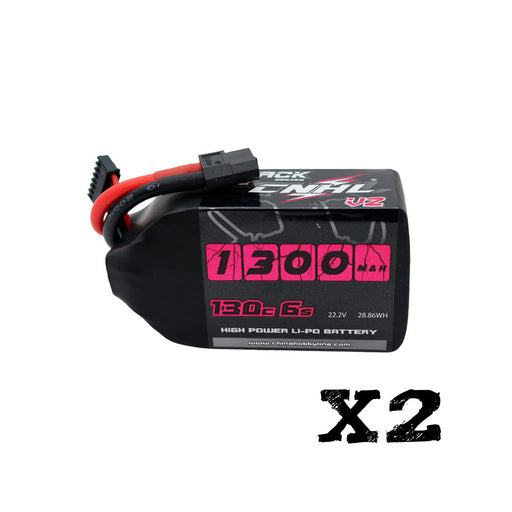
Quick Fit Check The 2 Packs CNHL Black Series V2.0 1300mAh 22.2V 6S 130C LiPo Battery with XT60 Plug is a strong fit for FPV pilots who want a prov...
View full detailsSpare Parts & Long-Term Support We know that for RC pilots, reliable spare parts support is an important part of keeping an aircraft fl...
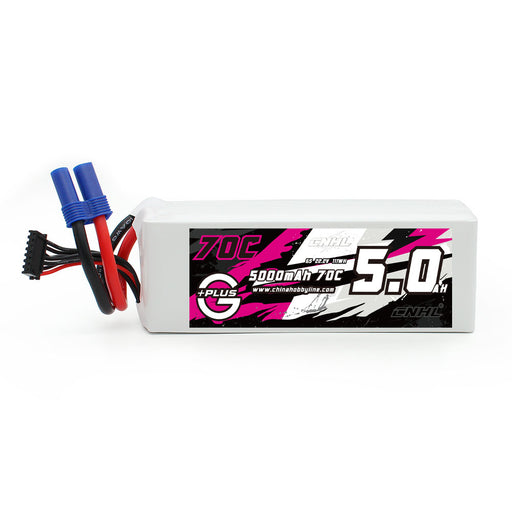
View full detailsSpecifications: Stock Number: 500706EC5 Capacity: 5000mAh Voltage: 22.2V / 6-Cell / 6S1P Discharge Rate: 70C Continual / 140C Burst Charge Rate: ...
View full details
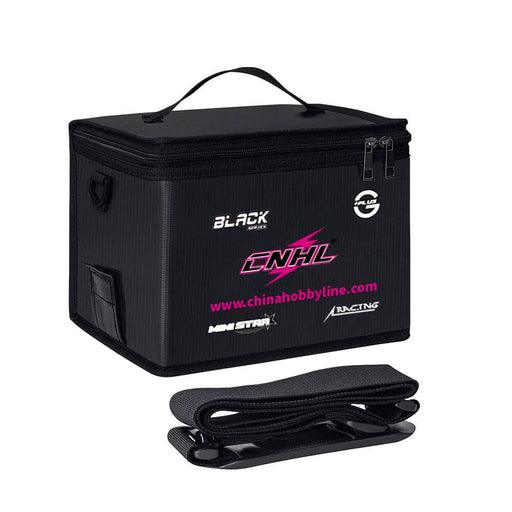
The CNHL LiPo Battery Bag is designed for safer LiPo charging, transport, and storage at home or at the field. It adds a practical layer of protect...
View full details

Quick Fit Check The 2 Packs CNHL Speedy Pizza Series Pro 1350mAh 6S 150C LiPo Battery with XT60 Plug is built for 5-inch FPV pilots who want a ...
View full details

Quick Fit Check The CNHL Speedy Pizza Series 2200mAh 22.2V 6S 120C LiPo Battery with XT60 Plug combines the familiar 2200mAh 6S format with a ligh...
View full details

Quick Fit Check The CNHL Speedy Pizza Series 2200mAh 14.8V 4S 120C LiPo Battery with XT60 Plug combines a widely used 2200mAh 4S format with a sli...
View full details

Quick Fit Check The CNHL Speedy Pizza Series 2200mAh 11.1V 3S 120C LiPo Battery with XT60 Plug takes the familiar 3S 2200mAh aircraft battery form...
View full detailsThe CNHL Long Range Series BAK 65E 6350mAh 21700 Li-ion battery cell is built around one clear priority: maximum stored energy from a lightweight c...
View full details

The CNHL Long Range Series BAK 50D 5000mAh 21700 Li-ion battery cell is designed for custom high-energy battery packs that need a strong balance be...
View full details




Leave a comment