
CNHL Lipo Batteries
CNHL aim at providing high-quality Li-Po batteries and RC products to all hobby enthusiasts with excellent customer services and competitive prices
Walk into any hobby shop or browse online, and you're bombarded with a dizzying array of 6S LiPo battery options. Different brands, capacities, C-rates, sizes – it's a lot to take in. The temptation is often to either go for the cheapest option or assume the one with the biggest numbers must be the best. But the truth is, the "best" battery is the one that's right for your specific needs and equipment, and that doesn't always mean the priciest. Let's break down how to make an informed choice.
Quick answer: the right 6S LiPo battery is the one that matches your model’s real current demand, physical fit, connector type, and intended use. A bigger C number or larger capacity is not automatically better if it adds unnecessary weight, fit problems, or cost without solving a real performance need.
If you want the definition first before getting into buying decisions, start with What Is a 6S LiPo Battery.
If you are still deciding whether your platform should stay on 4S or move to 6S at all, read 4S vs 6S LiPo Battery first.
Before we get to what you should look for, let's bust some common myths that can lead you astray when buying a 6S LiPo battery.
That big "C" number (discharge rate) on the label looks impressive, right? While a higher C-rate means the battery claims it can deliver more current, it's not the whole story. Firstly, some manufacturers are, shall we say, optimistic with their C-ratings. A "100C" pack from a lesser-known brand might not perform as well as a conservatively rated "75C" pack from a reputable one.
Secondly, an excessively high C-rate for your application often just means you're carrying unnecessary weight and paying for performance you can't even use. Your motors will only draw what they need. Match the C-rate to your model's actual current draw, with a reasonable safety margin.
If you want to see how advertised C-ratings compare with real-world battery behavior, read Real LiPo Battery C-Rating Test and Performance Comparison.
It seems logical: more milliamp-hours (mAh) equals longer run times. And to an extent, that's true. But a bigger capacity 6S LiPo battery also means more weight. For an FPV drone, that extra weight can make it feel sluggish and less agile. For an RC car, it can affect handling and strain the suspension. It's about finding a balance, considering the "energy density" – how much power you get for a given weight.
Everyone loves a bargain, but when it comes to LiPo batteries, an unusually low price can be a red flag. It might mean the manufacturer used lower-grade cells, has lax quality control, or is fudging the performance parameters. While you might save a few bucks upfront, a cheap, inferior 6S LiPo battery will likely degrade faster, deliver inconsistent power, and could even pose a safety risk. In the long run, you might end up spending more on frequent replacements.
This one bites a lot of people. You find a 6S LiPo battery with great specs, order it, and then realize it doesn't physically fit in your model's battery compartment, or it throws the center of gravity way off. Always double-check the dimensions (length, width, height) and weight against your model's specifications and available space before you hit "buy."
Your fancy new 6S LiPo battery arrives, and... oops, the connector doesn't match your ESC or charger. While adapters exist, it's best to get a battery with the correct connector type (XT60, XT90, EC5, etc.) from the start. Also, ensure your charger is capable of safely charging a 6S LiPo and handling its capacity.
If connector type is part of the confusion, this RC Battery Connectors Guide helps explain battery plugs, charger compatibility, and common RC connector choices more clearly.

Okay, myths busted. Now, what should you focus on when selecting a 6S LiPo battery?
This is step one. What are you powering?
Define your priorities: punch, endurance, or lightweight performance?
This is harder for the average buyer to assess directly, but it’s where reputable brands make a difference. Consistent cell matching and quality manufacturing lead to more reliable and longer-lasting 6S LiPo battery packs.
If your goal is a 5-inch freestyle / light racing build on 6S and you want a simple, repeatable way to choose packs in the 1100–1300mAh range (instead of guessing by C labels), this guide is the best next step: Best 6S 1100–1300mAh LiPo Battery for a 5 Inch FPV Quad.
In the world of LiPo batteries, brand matters. It's not just about a fancy label.
Established brands generally have more stringent quality control, are more likely to provide accurate (or at least consistent) performance ratings, and often offer better customer support or return policy if issues arise. They have a reputation to uphold. When considering a 6S LiPo battery, this can be a significant factor.
Don't just take the manufacturer's word for it. Check out reviews from other users on hobby store websites, watch YouTube reviews from trusted RC channels, and see what experienced pilots and drivers are saying on forums like RCGroups or IntoFPV. Real-world feedback is invaluable.
While individual experiences vary, brands like China Hobby Line and others often get positive mentions for their 6S LiPo battery offerings in terms of performance and reliability for different applications. Do your research based on your specific RC discipline. For instance, CNHL batteries are often popular in the FPV community for their good power-to-weight ratio.

Where you buy your 6S LiPo battery can be just as important as what you buy. Utilize quality hobby stores, known online stores, or directly buy from the manufacturer if possible. Be wary of third-party sellers at big marketplaces if the price is abnormally low since B-grade or counterfeit batteries can be a problem.
Verify the seller's return policy before purchasing, especially for DOA (dead on arrival) faulty products. Some companies do offer a limited warranty on their 6S LiPo packs, and that might be some consolation.
Choosing the right 6S LiPo battery is not a quest for a unicorn; it's a quest to know your needs, understand what the specs really mean, and do some research. By avoiding common misconceptions and by keeping an eye on the underlying factors relevant to your application, you can choose a battery that will deliver good quality power, reasonable performance, and an acceptable lifespan for your RC model. Enjoy flying (or driving)!

For a wider overview of where 6S sits compared with lower and higher LiPo classes, see this LiPo Battery Voltage Guide: 1S to 8S Explained for RC Models, which breaks down how voltage changes power delivery, setup stress, and application fit across the hobby.
CNHL aim at providing high-quality Li-Po batteries and RC products to all hobby enthusiasts with excellent customer services and competitive prices

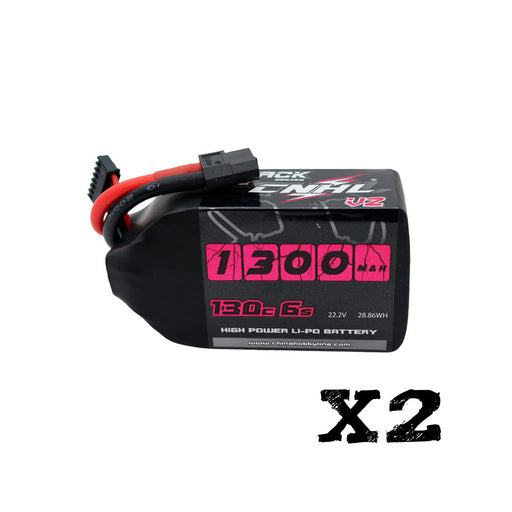
Quick Fit Check The 2 Packs CNHL Black Series V2.0 1300mAh 22.2V 6S 130C LiPo Battery with XT60 Plug is a strong fit for FPV pilots who want a prov...
View full detailsSpare Parts & Long-Term Support We know that for RC pilots, reliable spare parts support is an important part of keeping an aircraft fl...
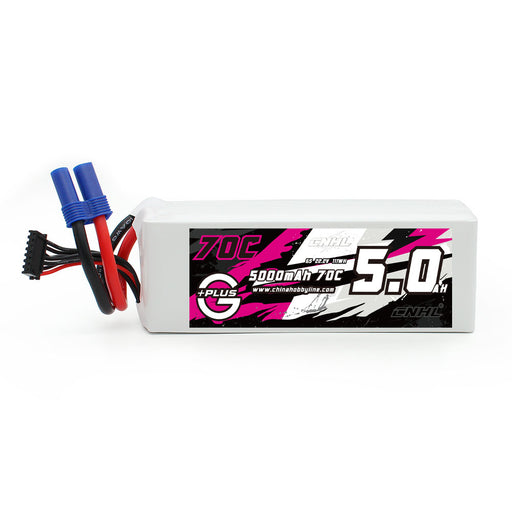
View full detailsSpecifications: Stock Number: 500706EC5 Capacity: 5000mAh Voltage: 22.2V / 6-Cell / 6S1P Discharge Rate: 70C Continual / 140C Burst Charge Rate: ...
View full details
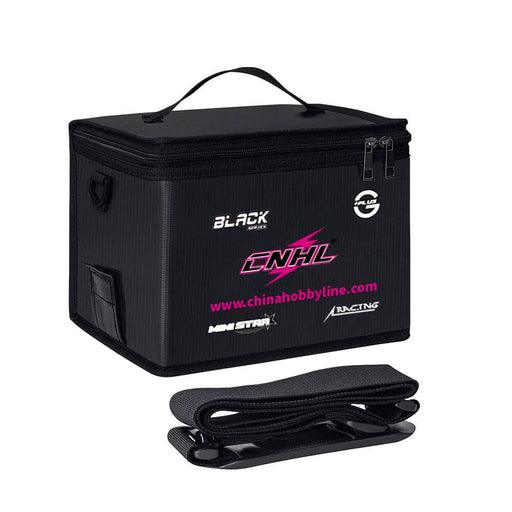
The CNHL LiPo Battery Bag is designed for safer LiPo charging, transport, and storage at home or at the field. It adds a practical layer of protect...
View full details

Quick Fit Check The 2 Packs CNHL Speedy Pizza Series Pro 1350mAh 6S 150C LiPo Battery with XT60 Plug is built for 5-inch FPV pilots who want a ...
View full details

Quick Fit Check The CNHL Speedy Pizza Series 2200mAh 22.2V 6S 120C LiPo Battery with XT60 Plug combines the familiar 2200mAh 6S format with a ligh...
View full details

Quick Fit Check The CNHL Speedy Pizza Series 2200mAh 14.8V 4S 120C LiPo Battery with XT60 Plug combines a widely used 2200mAh 4S format with a sli...
View full details

Quick Fit Check The CNHL Speedy Pizza Series 2200mAh 11.1V 3S 120C LiPo Battery with XT60 Plug takes the familiar 3S 2200mAh aircraft battery form...
View full detailsThe CNHL Long Range Series BAK 65E 6350mAh 21700 Li-ion battery cell is built around one clear priority: maximum stored energy from a lightweight c...
View full details

The CNHL Long Range Series BAK 50D 5000mAh 21700 Li-ion battery cell is designed for custom high-energy battery packs that need a strong balance be...
View full details




Leave a comment