
CNHL Lipo Batteries
CNHL aim at providing high-quality Li-Po batteries and RC products to all hobby enthusiasts with excellent customer services and competitive prices
You plug in, hear that clean XT60 click, and the OSD looks fine. Then the first real punch-out feels soft. Not broken. Not unsafe. Just… dull.
That is the moment most people start shopping by big C numbers. I get it. But on a 5 inch 6S build, the label is rarely the real answer.
What actually matters is how the pack behaves under real load: weight, voltage sag, connector and lead quality, and how consistent it stays after a few weekends.
If you want to browse the right category first (then filter by capacity and connector), start here: 6S LiPo for FPV.
Scope note: This guide focuses on the most common modern setup: 5-inch freestyle on 6S, especially the 1100–1300mAh range with XT60. If you are still flying 4S on a 5-inch (totally valid), the same logic applies—just shift capacity up and prioritize weight + sag the same way.
If you want the 6S definition first before getting into pack size and feel, start with What Is a 6S LiPo Battery?

| What you want | What it feels like in the air | What usually delivers it |
|---|---|---|
| Punch and snap (freestyle) | Less mid-pack mush, throttle feels honest longer | Lower sag, healthy cells, solid XT60 and leads |
| More reps (practice time) | More attempts before you start landing early | 1300mAh, but only if weight stays reasonable |
| Handling (less brick feeling) | Cleaner recoveries, faster transitions, less top-heavy | 1100-1200mAh and a compact shape |
| Consistency (underrated) | Pack #10 still feels close to pack #1 | QC plus boring charging and storage habits |
Simple truth: Two packs can share the same capacity and C rating and still fly totally differently. If you only remember one filter, remember this: weight and sag beat hype.
About flight time: On a typical 5 inch freestyle build, 6S 1100-1300mAh is usually a few minutes of real flying. You can stretch it with smoother throttle and cruising, but most pilots pick this range for feel, not for “long-range” minutes.

LiHV is not “too delicate.” Plenty of pilots run it all the time. The main rule is simple: do not let fully-charged packs sit around for long. If you fly often, LiHV can be a perfectly normal daily choice.
Numbers that matter: standard LiPo is 4.20V/cell; LiHV is 4.35V/cell. For storage, most pilots aim around 3.80–3.85V/cell.
If you want a low-stress routine, you can still treat full HV as “session mode,” and keep everything else boring and consistent. Either way, what matters most is repeatable habits and pack temperature.
The practical approach most pilots end up with is simple:
Browse: CNHL LiHV batteries.
Even a great pack becomes annoying if mounting is a hassle. Two details matter more than most people admit:
The shake test: Strap the pack on, plug in, and gently shake the quad. If the lead can reach a prop arc, it eventually will.

If you want to compare packs across brands without getting trapped by marketing, do this once and repeat it whenever you buy something new:
Keep a tiny note: pack name, cycles, weight, IR, and a one-line “feel” summary. After 10-15 cycles, patterns show up fast.
Rule of thumb: If a pack feels great for one flight but falls off quickly when it is warm, you are usually seeing heat and recovery time issues, not “bad luck.” Let packs cool between hard packs.
You do not need a lab to be “data-driven.” A kitchen scale and your charger are enough. Keep a tiny log like this and your buying gets smarter fast.
| Pack | Weight (g) | IR (mΩ) | Lowest OSD voltage on a repeatable punch | Notes after 10–20 cycles |
|---|---|---|---|---|
| Example: 6S 1200mAh (Brand/Series) | ___ | ___ | ___ | “Still crisp” / “Gets mushy when warm” / “One cell drifts” |
Quick note: Don’t chase someone else’s numbers. Use the same punch, the same pack temperature, and compare packs against each other. You’re looking for which one sags less on your build—not a perfect voltage.
IR reality check: IR numbers vary by charger and method. The key is to compare packs using the same charger and watch trends (and big cell-to-cell imbalance), not argue over absolute values.
In the 5-inch FPV world, you will hear the same names over and over: Tattu R-Line, GNB, Dogcom, plus many solid “value” options from other brands. The problem is that most comparisons turn into label arguments.
The cleaner approach is to compare any brand using the same 3-minute checklist: weight, IR, and real sag on your build. That way, you are judging behavior, not marketing.
Once you do that, it becomes obvious why some packs feel great for 10 cycles and then fade, while others stay consistent for months. The brand matters, but the behavior is what you are actually buying.
If you are still deciding how to judge 6S packs more broadly before narrowing down to 1100-1300mAh, read 6S LiPo Battery Selection Guide.
Think of it like this: 1200mAh is the ‘feel’ pick, and 1300mAh is the ‘holds up in wind’ pick. Then buy more of what stays consistent on your build.
Instead of listing everything, here are straightforward starting points that match how most pilots actually fly:
| Flying style | Good starting capacity | CNHL examples (XT60) |
|---|---|---|
| Freestyle, want a crisp feel | 6S 1200mAh | CNHL Pizza Series 1200mAh 6S |
| Freestyle, steady default | 6S 1300mAh |
CNHL Black Series 1300mAh 6S CNHL MiniStar 1300mAh 6S |
| Light build, want minimum weight | 6S 1000-1100mAh | CNHL MiniStar 1000mAh 6S |
Practical weight tip: For many 5-inch freestyle builds, keeping the battery roughly at or under ~220g often helps the quad feel less top-heavy and more predictable in recoveries. If a pack is heavier than that, it should “earn” the weight by holding voltage better under load.
If your frame is in the 200-220mm class and you want a clean category shortcut, use: CNHL batteries for 200-220mm FPV quads.
| Moment | What to check | What “good” looks like |
|---|---|---|
| On delivery | No swelling, no crushed corners, leads intact | Wrap is tight, balance lead and XT60 lead look solid |
| First charge | Balance behavior | Cells stay close, no runaway cell racing ahead |
| After flying | Heat, smell, swelling | Warm is normal. Hot plus puffy is a red flag. |
| Storage | Do not leave packs full overnight | Stored near storage voltage, not full or empty |
If you are still deciding whether a 5 inch quad should stay on 4S or move to 6S, this broader LiPo Battery Voltage Guide: 1S to 8S Explained for RC Models helps explain how voltage changes throttle feel, battery weight, and overall setup character.
Most of the time it is heat and recovery time. Pack #1 starts cool. By pack #3, you may be flying warmer packs with less cooldown, pushing deeper into lower voltage, and seeing more sag. Let packs cool and do not store them full.
No. 1100mAh is a common freestyle choice because it keeps weight down and the quad stays crisp. You trade flight time, not control.
Most 6S 5 inch builds use XT60 as the practical match. The bigger win is clean lead routing and a solid solder joint, not debating connector names.
It can be, if you use it intentionally. If you want longer life, treat full HV as a “special session” option and keep your normal routine boring.
Start here: LiPo Batteries for FPV Drones Explained: Voltage, Sag, and Safe Habits and then follow with: FPV Drone Battery Guide.
CNHL aim at providing high-quality Li-Po batteries and RC products to all hobby enthusiasts with excellent customer services and competitive prices

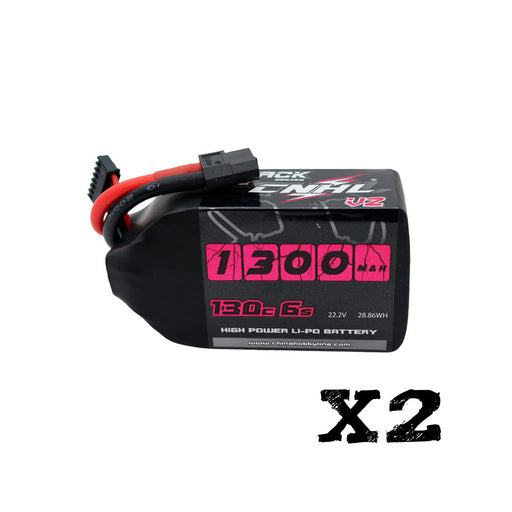
Quick Fit Check The 2 Packs CNHL Black Series V2.0 1300mAh 22.2V 6S 130C LiPo Battery with XT60 Plug is a strong fit for FPV pilots who want a prov...
View full detailsSpare Parts & Long-Term Support We know that for RC pilots, reliable spare parts support is an important part of keeping an aircraft fl...
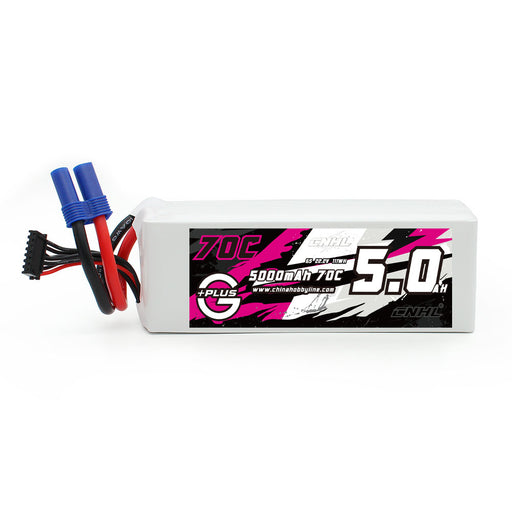
View full detailsSpecifications: Stock Number: 500706EC5 Capacity: 5000mAh Voltage: 22.2V / 6-Cell / 6S1P Discharge Rate: 70C Continual / 140C Burst Charge Rate: ...
View full details
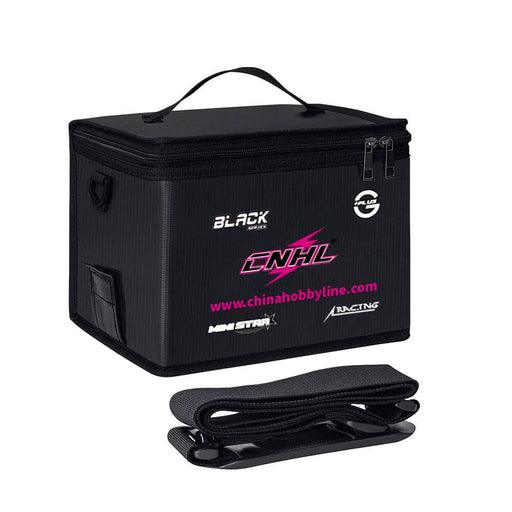
The CNHL LiPo Battery Bag is designed for safer LiPo charging, transport, and storage at home or at the field. It adds a practical layer of protect...
View full details

Quick Fit Check The 2 Packs CNHL Speedy Pizza Series Pro 1350mAh 6S 150C LiPo Battery with XT60 Plug is built for 5-inch FPV pilots who want a ...
View full details

Quick Fit Check The CNHL Speedy Pizza Series 2200mAh 22.2V 6S 120C LiPo Battery with XT60 Plug combines the familiar 2200mAh 6S format with a ligh...
View full details

Quick Fit Check The CNHL Speedy Pizza Series 2200mAh 14.8V 4S 120C LiPo Battery with XT60 Plug combines a widely used 2200mAh 4S format with a sli...
View full details

Quick Fit Check The CNHL Speedy Pizza Series 2200mAh 11.1V 3S 120C LiPo Battery with XT60 Plug takes the familiar 3S 2200mAh aircraft battery form...
View full detailsThe CNHL Long Range Series BAK 65E 6350mAh 21700 Li-ion battery cell is built around one clear priority: maximum stored energy from a lightweight c...
View full details

The CNHL Long Range Series BAK 50D 5000mAh 21700 Li-ion battery cell is designed for custom high-energy battery packs that need a strong balance be...
View full details




Leave a comment