
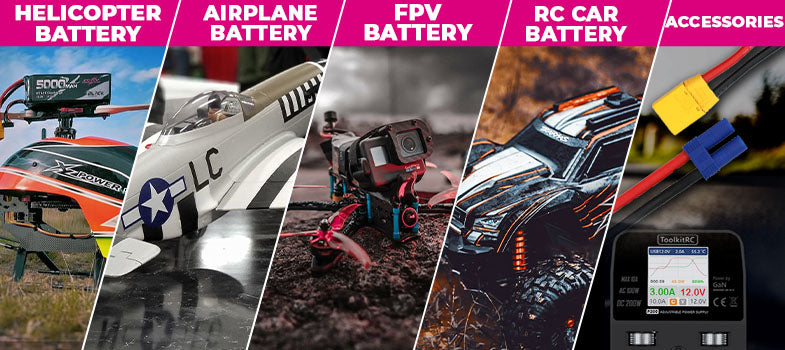
CNHL Lipo Batteries
CNHL aim at providing high-quality Li-Po batteries and RC products to all hobby enthusiasts with excellent customer services and competitive prices
Since its first release back in 2008, the Axial SCX10 has become almost a rite of passage for scale crawling fans. If you’ve been around the RC world long enough, chances are your first serious crawler was an SCX10. From the simple but effective Gen 1, to the scale-detailed Axial SCX10 II, and now the performance-focused SCX10 III Coyote, this lineup has shaped how we look at 1/10 rock crawling.
From Gen 1 to the latest Coyote, the SCX10 has changed a lot without losing the things people liked about it in the first place. So what actually changed from one generation to the next? Which version feels more at home on relaxed trail runs, and which one makes more sense if you care about climbing performance? Let’s take a closer look at how the SCX10 grew into one of the most recognizable platforms in 1/10 crawling.

When the original SCX10 hit the market in 2008, it felt fresh. A ladder-frame chassis, 4-link suspension, and simple design gave hobbyists a tough, reliable crawler that could be built up and customized endlessly. It wasn’t perfect, but it set the stage for the modern scale crawling scene. Many drivers still keep their Gen 1s running as “trail legends,” and it remains a nostalgic favorite in the RC community.

By 2016, Axial rolled out the SCX10 II, and this is where things started to look and feel a lot more scale. The updated axles and transmission added durability, while the steering geometry was noticeably improved over the first generation. Add in licensed bodies and detailed interiors, and you had a rig that looked like a true miniature 4x4 without giving up trail capability. Many hobbyists loved the balance—it wasn’t just about crawling; it was about building a truck that felt real on the trail.

The SCX10 III changed the game. Axial introduced AR45 portal axles, which immediately gave the truck more ground clearance and let you tackle rocks that would have high-centered earlier models. The new high-clearance links helped it slide over obstacles with less hang-up. But the most talked-about feature? The forward-mounted battery tray. Shifting the weight to the front made climbing feel so much more planted—like the truck was gripping the rocks instead of tipping back. For many drivers, this was the first time an RTR SCX10 felt truly “competition capable” right out of the box.

Fast forward to today, and the Axial 1/10 SCX10 III Coyote 4X4 RTR Brushed Rock Crawler arrives. It’s not just a body swap—it’s a thoughtful refresh of the Base Camp idea, now tuned with comp-style features. The Coyote comes with a sharp, no-clip body, boat-sided rock sliders, and multiple shock mount positions for dialing in performance. It’s a rig that feels like a solid entry point for new drivers, yet it still gives experienced crawlers a platform to push further with upgrades.
One reason the SCX10 family has lasted so long is how much of the hardware carries across generations. Want to swap bodies? You can still mount the Jeep JL, CJ-7, or aftermarket shells with body posts. Want sharper turning? The chassis is already ready for a dig unit or overdrive gears. Many community members are excited about adding brass portal covers, beadlock wheels, or adjusting shock geometry for more articulation.

And of course, there’s the power system. A lot of SCX10 drivers eventually start looking for more punch or longer runtime. That’s when a LiPo battery upgrade for SCX10 becomes a simple but effective step. Gen 1 rigs commonly ran 2S or 3S packs in the 2200–5000mAh range, while SCX10 II builds generally became more comfortable with 3S setups. On newer SCX10 III trucks, battery choice depends a lot on tray layout and available space, but many drivers still end up favoring compact or moderate-size 3S packs for a good balance of runtime, fitment, and trail feel.
In recent years, Axial has released several different models based on the SCX10 III platform, including the Jeep CJ-7, 1987 Toyota SR5, Base Camp, Jeep JT Gladiator, Jeep JLU Wrangler, and the newer Coyote. While these trucks may look very different on the outside, most of them share the same core SCX10 III architecture.
The biggest differences usually come down to body style, battery tray layout, and intended driving style rather than completely different platforms. Some are more scale-focused, while others lean more toward performance or comp-style crawling. That is why, even across different models, many upgrade paths—including tires, suspension tuning, and battery setups—still follow very similar logic.

Over the years, Axial’s SCX10 has always had competition—from the Traxxas TRX-4 to the Redcat Gen8. The SCX10 III Coyote pushes back with its clever weight distribution, forward-mounted battery design, and tuning options. While the TRX-4 leans heavily into scale features like locking diffs and a two-speed gearbox, the Coyote aims for a more direct, performance-first approach. Fans of the SCX10 II often highlight its realistic bodies, while the Gen 1 is still admired for its simplicity. Each generation speaks to a different kind of RC driver, but together they’ve kept Axial at the heart of the crawler world.
One of the fun parts of following Axial is watching how they respond to the community. The new Coyote already shows they’re listening, with features like the clipless body and better sliders. Many drivers are asking for a servo-on-axle setup or straight axle options, while others dream about larger-scale rigs or a fresh take on the Capra. Whatever comes next, the SCX10 platform has proven it can adapt and keep the passion alive.

The early buzz around the Coyote has been positive. Longtime Axial fans call it a solid, durable crawler at an attractive price. Others love the fact that it’s “RTR comp-ready” and a great starting point for beginners. Some wish it shipped with beadlock wheels or a servo-on-axle, but most agree the new updates—like the body mounting system and shock towers—are steps in the right direction. More importantly, people feel that Axial is finally listening to what the community has been asking for.
The Axial SCX10 has never stood still. From the original trail pioneer to the detail-rich Gen 2 and the performance-driven SCX10 III Coyote, it’s clear this platform keeps evolving with the hobby. Today’s Coyote isn’t just another body on a chassis—it’s a signal that Axial is doubling down on performance while still leaving plenty of room for you to make it your own. Whether you’re here for casual adventures or eyeing your first comp rig, the SCX10 family has something that will click with you.
Q: Is the SCX10 III Coyote just a new body on an old chassis?
A: Not exactly. While it shares the proven SCX10 III platform, the Coyote introduces real upgrades like forward battery placement, new shock towers, high-clearance links, and a clipless body system.
Q: Can I swap bodies between SCX10 generations?
A: Yes. The SCX10 III Coyote still supports standard body posts, so you can fit Jeep JL, CJ-7, or aftermarket shells if you prefer a different look.
Q: What batteries does the SCX10 series usually run?
A: Gen 1 rigs often used 2S–3S LiPo packs around 2200–5000mAh. Gen 2 made 3S setups more common, while SCX10 III models often depend more on tray layout and battery space. In practice, many SCX10 III owners prefer compact or moderate-size 3S packs that give a good balance of fitment, runtime, and usable crawling performance. For upgrade options, check our Axial SCX10 battery collection.
Q: How does the SCX10 compare to the Traxxas TRX-4 or Redcat Gen8?
A: The TRX-4 leans toward scale realism with features like locking diffs, while the SCX10 III Coyote prioritizes comp-style performance with portals and smart weight distribution. Both approaches have their fans, but SCX10’s versatility keeps it a staple in the crawler scene.
Looking to get more out of your crawler? Check our full range of RC crawler batteries for TRX-4, SCX10, SCX24 and more to find the right pack for your rig.
CNHL aim at providing high-quality Li-Po batteries and RC products to all hobby enthusiasts with excellent customer services and competitive prices
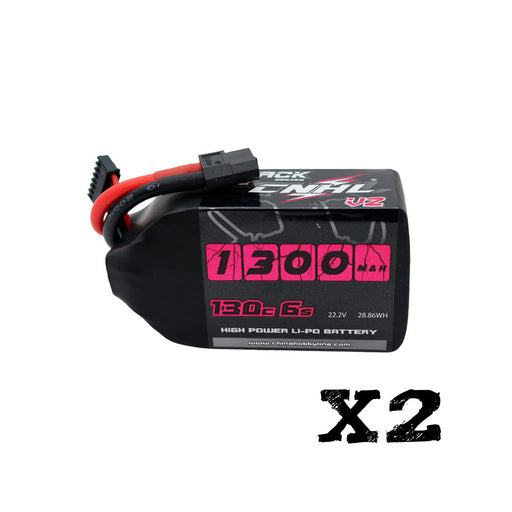
Quick Fit Check The 2 Packs CNHL Black Series V2.0 1300mAh 22.2V 6S 130C LiPo Battery with XT60 Plug is a strong fit for FPV pilots who want a prov...
View full details

Hstar D43-01Q 911 Style is a mini 1/43 alloy drift RC car designed for indoor tabletop fun and realistic drifting. It features full proportional ...
View full details

Spare Parts Availability We know that for RC pilots, reliable spare parts support often determines how long an aircraft can actually sta...
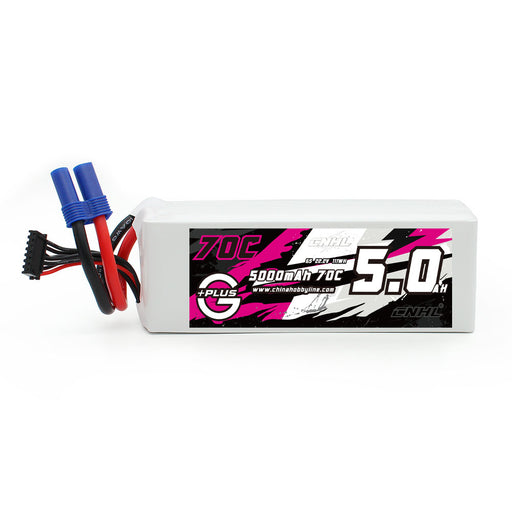
View full detailsSpecifications: Stock Number: 500706EC5 Capacity: 5000mAh Voltage: 22.2V / 6-Cell / 6S1P Discharge Rate: 70C Continual / 140C Burst Charge Rate: ...
View full details
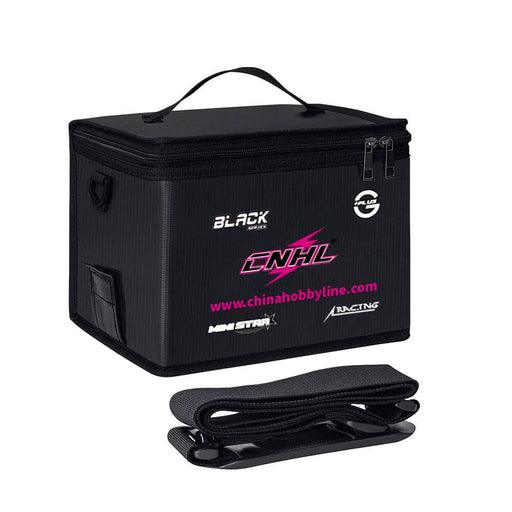
The CNHL LiPo Battery Bag is designed for safer LiPo charging, transport, and storage at home or at the field. It adds a practical layer of protect...
View full details

CNHL Havok 1000mm 4S Sport Racer Plane – Built on a Proven 1m Havok Airframe The CNHL Havok 1000mm 4S Sport Racer RC Plane PNP is a 1-meter foam...
View full detailsQuick Fit Check Voltage: 2S (7.4V)Capacity: 350mAhConnector: PH (UMX) High-Current 3-PinSize (L × W × H): 43 × 19 × 14 mm (±1–5 mm)Weight: Approx. ...
View full details

Quick Fit Check If you are buying a replacement battery for an FMS FCX18 or FCX24, confirm these three points before ordering: Check Item Your V...
View full detailsQuick Fit Check The CNHL Speedy Pizza 1550mAh 14.8V 4S LiPo Battery 120C with XT60 Plug is a compact 4S FPV battery built for pilots who want a liv...
View full detailsSpecifications: Stock Number: S220402BKT Capacity: 2200mAh Voltage: 7.4V / 2-Cell / 2S1P Discharge Rate: 40C Continual / 80C Burst Charge Rate: 5...
View full details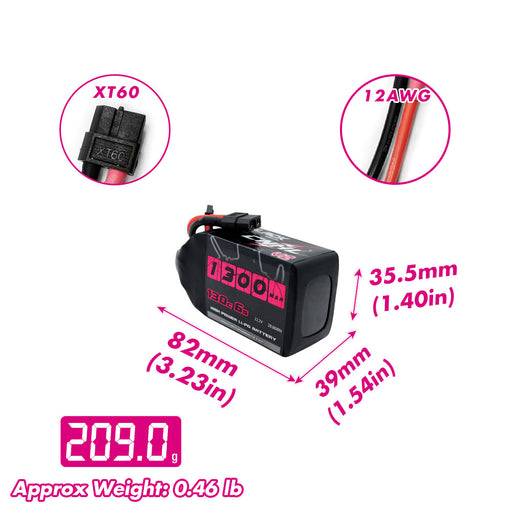



Leave a comment