

CNHL Lipo Batteries
CNHL aim at providing high-quality Li-Po batteries and RC products to all hobby enthusiasts with excellent customer services and competitive prices

The Durafly Brewster F2A Buffalo V2 920mm is not the kind of warbird that wins everyone over with a spec sheet alone. On paper, it looks like a compact foam fighter with a familiar 3S power setup, a 40A ESC, a 10x5 prop, and the usual Plug-N-Fly promise. In practice, though, this little Buffalo feels more interesting than that. It has the sort of size, style, and everyday usability that makes a model easy to keep flying long after the “new release” excitement fades.
The short version is simple: this is a much more convincing airplane than many people may expect from its shape, size, or price bracket. The Durafly F2A Buffalo V2 is not a giant warbird. It is not a showpiece packed with extra features. It does not try to impress with complexity. What it does instead is offer a compact, hand-launch-friendly, belly-landing warbird that looks distinctive, flies with more stability than its stubby outline suggests, and feels better sorted than older HobbyKing-era “project planes” used to feel.
For pilots who want a small warbird that can live in the car, come out on short notice, run on a common battery, and still give a proper warbird flavor in the air, the Durafly Brewster Buffalo V2 has a very clear identity. And for pilots trying to choose the right pack, the battery side is straightforward too: most owners will be best served by a properly sized 3S 2200mAh setup first, then move to 4S only if they really want a sharper, faster version of the same airplane. For battery options, see Best LiPo Battery for Durafly Brewster F2A Buffalo V2 920mm PNF.
Some warbirds sell on pure icon status. A Mustang does not need much introduction. A Spitfire rarely has to explain itself. The Buffalo is different. The Brewster F2A Buffalo V2 is not the most glamorous fighter of its era, and it does not have the same built-in fan base as more famous World War II subjects. Oddly enough, that helps this model. The Durafly Buffalo V2 feels less like a checkbox release and more like a plane chosen because somebody actually wanted to make this shape work well in RC form.
That matters because the V2 does not feel like a simple re-release. The more meaningful update is that it seems to fix the parts that held the older version back. Early flight impressions keep coming back to the same point: this one feels better sorted. Not just better painted or better presented, but genuinely better behaved in the air. With the weight distribution and thrust setup cleaned up, the Buffalo V2 feels much more like a plane you can trust from the first few flights.
That is what makes the V2 more interesting than a simple comeback story. Plenty of foam warbirds become enjoyable after owners sort out a few details. The Buffalo V2 feels much closer to the kind of plane that starts making sense right away, which is exactly what most people want from a compact everyday warbird.
The USS Lexington pre-war Yellow Wing scheme does a lot of work here. This is one of those models that does not rely on aggressive graphics or oversized dimensions to stand out. The silver fuselage, bright yellow wing surfaces, and blue accents give it a look that is instantly recognizable in the air and on the ground. That matters more than it may sound. On a sub-1-meter warbird, visibility is not just a style bonus. It is part of the flying experience.

There is also something honest about the way this airframe looks. The Buffalo is short, thick through the fuselage, and not especially sleek by modern fighter standards. It has the sort of silhouette that some pilots may call quirky before they ever call it beautiful. But that is also part of its charm. Early reactions have been noticeably positive on the finished look, and that tracks with what often happens with unusual warbirds: people may hesitate on the subject, then end up liking the actual model much more than expected once it is assembled and in the air.
In other words, this is not just a history-themed foam plane. It is a model with character.
The Buffalo V2’s 920mm wingspan is one of its biggest strengths. This is a very useful size class for warbirds because it sits in the middle ground that many pilots end up preferring in real use. It is large enough to look like a real airplane in the air, but still small enough to stay convenient. That balance is a big part of why this model feels appealing.
A larger warbird often asks for more planning. Bigger transport space, more careful field choice, more setup time, and usually a stronger sense that the flying session needs to justify the effort. The Buffalo V2 has the opposite energy. It feels like the kind of airplane that can stay assembled, ride in the back of the car, and come out when the weather is merely decent instead of perfect.

That is why the phrase “road trip plane” fits so well. This is the kind of model that makes sense for a quick stop at a field, a short evening session, or a casual one-pack outing. For many pilots, that convenience matters more than absolute top-end performance.
| Area | What the Durafly Buffalo V2 does well |
|---|---|
| Transport | Easy to keep assembled and carry in a car without turning the trip into a full logistics job |
| Launch style | Simple hand launches suit small fields and casual flying sessions |
| Landing style | Belly landings remove the need to baby fixed gear on rough grass |
| Battery access | Built around common 3S 2200mAh packs rather than exotic setups |
| Everyday usability | Feels like a plane that can actually become part of a regular flying routine |
This is where the Durafly F2A Buffalo V2 starts to make a strong case for itself. The stock-style 3S setup is not just acceptable. It is really the heart of the airplane. There is always a temptation to look straight at 4S on paper, but the Buffalo V2 makes a strong case for staying with 3S first. The real strength of this airplane is that it already flies with enough pace and enough authority on 3S 2200mAh that many pilots may never feel a real need to push further.
Early flight impressions repeatedly describe a model that tracks cleanly, handles wind better than expected for its size, and settles into that satisfying “bank and yank” warbird rhythm without constantly asking to be rescued. It can cruise comfortably at partial throttle, yet still has enough energy for loops, rolls, stall turns, and spirited passes.
That is probably the kind of setup most small warbird buyers are really looking for: enough speed to feel lively, enough stability to stay enjoyable, and no constant sense that the airplane is asking for more battery just to wake up.
The stall behavior also sounds encouraging. Instead of a nasty snap-happy attitude, the Buffalo V2 seems to slow down more honestly than its shape might suggest. That does not make it a trainer, and nobody should mistake it for one. But it does suggest a plane that is easier to trust than some compact fighters.
That matters most in the parts of a flight that make people keep or sell a model: the launch, the first few circuits, the slow pass, and the landing. If a small warbird feels cooperative in those moments, it usually stays in the lineup a lot longer.
That also lines up with what early viewers and owners are already saying: this airplane does not feel underpowered on 3S. It is already quick enough to feel like a proper small warbird, which is why 3S makes so much sense as the main setup. You can move to 4S later if you want a sharper edge, but the Buffalo V2 does not need 4S to feel alive.
Yes, the Buffalo V2 can run 4S. And yes, that will change the personality of the plane. But the right way to frame that change is not “3S for beginners, 4S for the real airplane.” A better way to say it is that 3S is the balanced, everyday version, while 4S is the sharper upgrade path for pilots who want more urgency.
| Setup | Flight feel | Best for | Practical note |
|---|---|---|---|
| 3S 2200mAh | Balanced, stable, already quick enough for most pilots | Everyday flying, sport warbird sessions, first flights | Best match to the airplane’s grab-and-go role |
| 4S 2200mAh | More aggressive, faster, more vertical authority | Pilots who already know they want extra pace | Upgrade path, not the default recommendation |
The most sensible approach is still to start on 3S, sort out the airframe, confirm the CG, and get comfortable with the model’s feel. Once that is done, 4S becomes a choice rather than a gamble.
The Buffalo V2 may be built around a 2200mAh 3S pack, but that does not mean every 2200mAh 3S battery will feel equally ideal. One of the most useful patterns across build commentary and owner feedback is that battery shape and weight matter here. A short, very compact pack may technically fit, but that does not automatically make it the best choice for the airplane.

This model clearly likes its weight forward, so battery choice affects more than simple fit. It affects how settled the airplane feels. Early setup notes and owner feedback point in the same direction: the Buffalo V2 is happier when the pack can sit properly forward and contribute enough nose weight to make the CG easy to hit without extra fuss.
That is a practical buying note, not a theoretical one. If the goal is a cleaner first flight and a more convincing everyday setup, it makes sense to prioritize a 3S 2200 pack that can sit forward properly and contribute enough weight up front. That is also why the dedicated battery guide exists here: Best LiPo Battery for Durafly Brewster Buffalo V2 920mm PNF.
The Buffalo V2’s assembly story is reassuring, but it should be described honestly. This is not a plane that falls out of the box fully finished. There are still the normal PNF tasks: control linkage work, tail installation, wing attachment, prop assembly, and receiver setup if the pilot is adding stabilization or radio-specific features. There is also some nose-bay tidying to think through if the goal is a clean battery installation and sensible CG.
That said, this still sounds more like a straightforward compact PNF build than a genuine project. That distinction matters. Some foam warbirds feel like they need owner engineering before they deserve trust. The Buffalo V2 does not seem to live in that category. The repeated feeling from the build side is that there are steps to do, but the airplane is fundamentally workable. That is a much better place to start.
There are some minor complaints worth acknowledging. Packaging does not sound like the strongest part of the experience. A few finishing details appear more budget-minded than premium. And the strap and nose-bay cable routing are not flawless. But these points land more in the category of “things you notice during setup” than “reasons not to buy the airplane.”
Not as a first airplane. That is the cleanest answer. The Buffalo V2 is still a warbird, still a belly lander, and still a model that benefits from a pilot who understands fixed-wing basics. It would be unfair to describe it as a trainer replacement.
At the same time, it also would be unfair to describe it as a difficult little monster. It sounds more approachable than many small fighters because the launch is simple, the airframe appears stable for the class, and the stall does not seem especially nasty. With a stabilized receiver, it should become friendlier still. That makes it a very reasonable choice for a pilot who already has basic fixed-wing experience and wants a first true small warbird rather than a first plane of any kind.
One specific note is worth carrying into a maiden: elevator response may deserve attention. Owner feedback has already pointed out that the elevator can feel quite sensitive. That does not contradict the airplane’s generally stable reputation. It just means pilots should be thoughtful with rates, expo, and mechanical setup before the first launch.
The Buffalo V2 is not packed with extras. No LEDs. No dramatic inboard flap system from the factory. No elaborate gear setup that turns every rough landing into a mechanical risk. On paper, that may sound like a list of missing features. In actual use, it may be the opposite. This model’s appeal comes from doing the important things well enough to keep flying sessions light and repeatable.
That is part of the airplane’s value. There are plenty of planes that look feature-rich in a product list and then end up feeling inconvenient in practice. The Buffalo V2 seems to go in the opposite direction. It keeps the concept compact, direct, and useful. That helps explain why even the comments pointing out what it does not have still land in roughly the same place: this looks like a genuinely fun airplane, and more importantly, one that people would actually want to keep taking to the field.
The Durafly Brewster Buffalo V2 920mm does not try to be the biggest, fastest, or most feature-heavy small warbird on the market. That is probably why it works. It feels like a model built around the question, “What would make this airplane easy to keep flying?” The answer turns out to be a very practical mix of compact size, common battery format, hand-launch simplicity, belly-landing convenience, and a V2 update that seems to have corrected the parts that needed correction most.
That does not make it perfect. It still needs proper setup. Battery choice deserves more thought than a casual glance at the label. The nose bay could be tidier. Some finishing and packaging details remind you that this is not a premium giant-scale warbird. But the overall picture is still very attractive. This is a small warbird with enough personality to feel special and enough usability to feel realistic.
For many pilots, that combination is exactly what turns a new airplane into a regular flyer.
If the goal is to get the Buffalo V2 on the right battery path from the start, the most sensible move is still a properly chosen 3S 2200mAh pack first, then a 4S option only after the airplane is trimmed, balanced, and understood. Battery recommendations are here: Best LiPo Battery for Durafly Brewster Buffalo V2 920mm PNF.
Is the Durafly F2A Buffalo V2 good on 3S?
Yes. In fact, 3S 2200mAh appears to be the best everyday setup for the airplane. It already gives the Buffalo V2 enough pace, clean sport-warbird handling, and the most balanced overall character.
Can the Durafly F2A Buffalo V2 fly on 4S?
Yes, but 4S should be treated as an upgrade path rather than the starting point. It is better suited to pilots who already know the airplane and want a more aggressive version of it.
Does battery shape matter on the Durafly F2A V2?
Yes. This is one of the more useful real-world lessons from early setup feedback. A pack that helps place weight forward tends to make life easier than a very short or unusually light 2200mAh pack.
Is the Buffalo V2 hard to hand launch?
It does not sound especially difficult to hand launch for the class. Its compact size and stable manners are part of what makes the airplane attractive as a grab-and-go warbird.
Is the Buffalo V2 suitable as a first warbird?
Yes, for a pilot who already has basic fixed-wing experience. No, for a true beginner looking for a first airplane. It is friendlier than many small warbirds, but it is still a warbird.
CNHL aim at providing high-quality Li-Po batteries and RC products to all hobby enthusiasts with excellent customer services and competitive prices
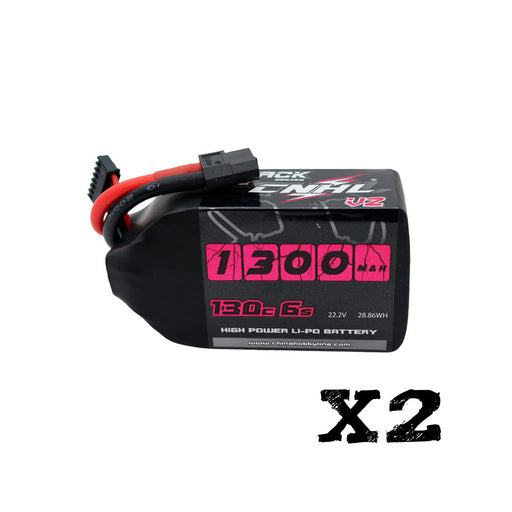
Quick Fit Check The 2 Packs CNHL Black Series V2.0 1300mAh 22.2V 6S 130C LiPo Battery with XT60 Plug is a strong fit for FPV pilots who want a prov...
View full details

Hstar D43-01Q 911 Style is a mini 1/43 alloy drift RC car designed for indoor tabletop fun and realistic drifting. It features full proportional ...
View full details

Spare Parts Availability We know that for RC pilots, reliable spare parts support often determines how long an aircraft can actually sta...
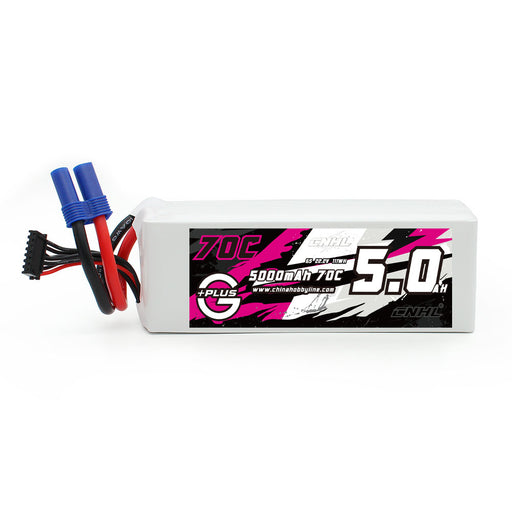
View full detailsSpecifications: Stock Number: 500706EC5 Capacity: 5000mAh Voltage: 22.2V / 6-Cell / 6S1P Discharge Rate: 70C Continual / 140C Burst Charge Rate: ...
View full details
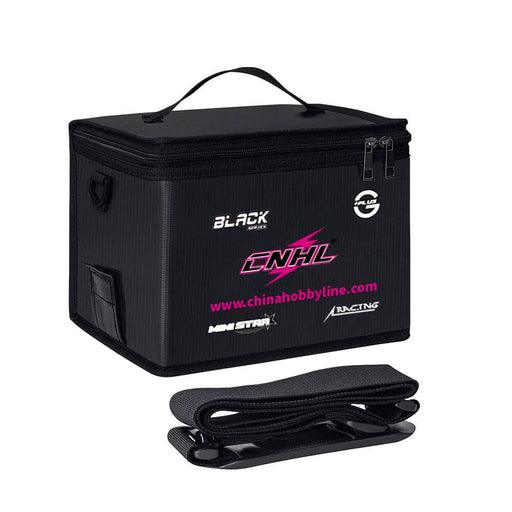
The CNHL LiPo Battery Bag is designed for safer LiPo charging, transport, and storage at home or at the field. It adds a practical layer of protect...
View full details

CNHL Havok 1000mm 4S Sport Racer Plane – Built on a Proven 1m Havok Airframe The CNHL Havok 1000mm 4S Sport Racer RC Plane PNP is a 1-meter foam...
View full detailsQuick Fit Check Voltage: 2S (7.4V)Capacity: 350mAhConnector: PH (UMX) High-Current 3-PinSize (L × W × H): 43 × 19 × 14 mm (±1–5 mm)Weight: Approx. ...
View full details

Quick Fit Check If you are buying a replacement battery for an FMS FCX18 or FCX24, confirm these three points before ordering: Check Item Your V...
View full detailsQuick Fit Check The CNHL Speedy Pizza 1550mAh 14.8V 4S LiPo Battery 120C with XT60 Plug is a compact 4S FPV battery built for pilots who want a liv...
View full detailsSpecifications: Stock Number: S220402BKT Capacity: 2200mAh Voltage: 7.4V / 2-Cell / 2S1P Discharge Rate: 40C Continual / 80C Burst Charge Rate: 5...
View full details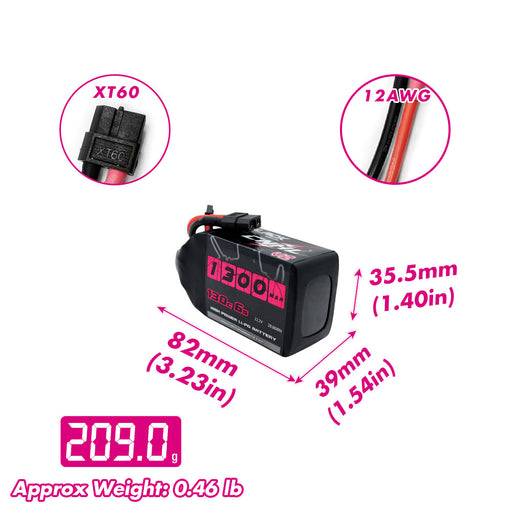



Leave a comment