

CNHL Lipo Batteries
CNHL aim at providing high-quality Li-Po batteries and RC products to all hobby enthusiasts with excellent customer services and competitive prices

Voltage sag is one of the most common battery problems RC and FPV users talk about, but it is also one of the most misunderstood. A battery that feels strong at the start of a run or flight can suddenly feel softer once the load rises. Punch gets weaker, recovery feels slower, and the whole setup starts feeling less confident. That drop in loaded voltage is what most hobbyists mean when they talk about sag.
Quick answer: voltage sag is the drop in battery voltage that happens when the pack is put under load. Some sag is normal in every LiPo battery. The real question is how early it appears, how severe it becomes, and whether it matches what the setup should reasonably demand. Excessive sag usually points to a battery that is too small for the job, too cold, too old, too weak internally, or simply not as strong in real use as the label suggests.
If you want the broader foundation first, start with LiPo C Rating Explained: What 30C, 100C, and 130C Really Mean. If you want the wider performance cluster, continue into the LiPo C Rating and Battery Performance Guide.
Voltage sag is the temporary drop in battery voltage that happens when the battery is asked to deliver significant current. The battery may show a healthy voltage at rest, but once the motor, ESC, prop, fan, or drivetrain starts demanding real power, the voltage dips. That dip is sag.
The important part is that sag happens under load, not just while the battery is sitting still. That is why a pack can look fine when you check it at rest, but feel much weaker once the model is actually moving. Sag is not always a sign that the battery is empty. It is often a sign that the battery is struggling to keep voltage stable while current demand is high.

In real use, sag usually feels like the battery has lost sharpness. In FPV, that often shows up as weaker punch-outs, softer recovery after a hard move, or a battery that feels flat after just a few aggressive throttle hits. In RC cars, sag often feels like the launch has gone soft, repeated acceleration has lost some bite, or the truck feels heavier and less eager than it did at the start of the run.
In airplanes and EDF jets, sag often shows up as less confident climb, softer sustained power, or a setup that feels noticeably less clean later in the flight. The exact feeling changes by category, but the pattern is the same: the battery can no longer hold voltage as cleanly as the setup wants under real load.
Every LiPo battery sags to some degree under load because no battery can deliver current with zero internal loss. Once current demand rises, the voltage naturally drops somewhat. That part is normal. The real issue is not whether sag exists at all, but how much the voltage drops and how early that drop starts affecting the experience.
A healthy, well-matched battery still sags a little. A weak, cold, tired, or undersized battery sags much more. That is why sag is best understood as a performance symptom rather than a simple yes-or-no condition.
Excessive sag usually comes from one or more practical causes working together. The most common ones are battery size, pack quality, internal resistance, low temperature, battery age, and setups that demand more current than the pack can comfortably support.
A battery that is too small for the job usually sags earlier because it is being asked to work too hard. A battery with higher internal resistance usually drops voltage more easily under load. A cold battery usually feels softer because low temperature makes its output less willing. An old battery often sags more because aging usually raises internal resistance and reduces how cleanly the pack can hold voltage.
If temperature is part of the problem, continue into LiPo Batteries in Cold Weather: Performance Loss, Voltage Sag, and What to Do.

One of the biggest mistakes is assuming sag always means the battery is simply almost empty. Low state of charge can absolutely make sag worse, but sag can also show up long before the pack is near empty if the battery is cold, tired, weak internally, or just not strong enough for the setup.
That is why two batteries at similar voltage can still feel very different in the model. One may hold up well because it is healthier and better matched. The other may collapse under load because the pack quality, age, temperature, or size is working against it. So sag is related to battery condition and load, not just to remaining charge.
If your main question is why one battery feels flat while another with similar specs still feels clean, continue into Why Some LiPo Batteries Feel Weak Despite Similar Specs.
C rating and voltage sag are closely related, but they are not the same thing. In theory, a battery with stronger real discharge ability should resist sag better under load. In practice, a higher printed C number does not guarantee that outcome. Two packs can both advertise strong C ratings and still show very different sag behavior once the model is actually pushed.
This is one reason experienced hobbyists do not judge a battery by the printed number alone. Sag is where real-world performance starts exposing whether the pack can truly support the setup. If you want that bigger question unpacked first, see Does Higher C Rating Really Matter? and Burst C Rating vs Continuous C Rating.
Internal resistance is one of the main reasons sag becomes severe. A battery with higher IR usually struggles more once the current demand rises, so the voltage falls faster and the pack feels weaker. This is why a battery can still look acceptable on the outside and still feel disappointing in the model.
If sag has suddenly become worse than it used to be, rising internal resistance is one of the first things worth suspecting. That is also why sag and IR are so often discussed together. If you want the deeper technical explanation, continue into How Internal Resistance Affects LiPo Performance.
No. Some voltage sag is completely normal. Every LiPo battery drops some voltage under load. The goal is not to eliminate sag entirely. The real question is whether the sag is small and expected, or whether it is heavy enough to noticeably hurt the model’s performance much earlier than it should.
That means the useful question is not “Does this battery sag at all?” but “Does it sag too much for this setup?” A little sag during hard use is normal. Very early, very heavy sag during reasonable use is where the warning signs begin.
| Sag behavior | What it often means |
|---|---|
| Mild sag during hard load | Usually normal |
| Noticeable early sag in a demanding setup | May still be normal if the load is very aggressive |
| Heavy sag very early in normal use | Often a warning sign |
| Suddenly worse sag than before | Often points to aging, weak cells, cold conditions, or mismatch |
The best way to reduce sag is to match the battery more honestly to the setup. That usually means avoiding undersized packs, avoiding tired batteries, and not expecting a mild pack to support a very aggressive load without consequences. In many cases, sag improves when the battery is simply better matched to the actual job.
None of these steps makes voltage sag disappear completely, because some sag is normal. The point is to keep it within a range that still feels healthy and appropriate for the setup.
It is easy to misread sag if you compare the wrong batteries or the wrong conditions. A cold battery will often look worse than a warm one. An old battery should not be judged against a new one as if nothing has changed. A small pack in a heavy setup should not be expected to behave like a larger pack in a milder setup.
That is why sag should always be judged in context. Compare similar packs, similar temperatures, and similar use cases. Look for trends, not isolated moments. A battery that feels soft one day in freezing weather may not be a bad battery. A battery that feels soft all the time, sags early, and heats quickly is a more serious concern.
Voltage sag becomes a warning sign when it gets much worse than the setup used to show, when one cell falls behind the others, when the battery heats too quickly, or when the model feels flat very early in use despite the pack not being close to empty. Those are usually signs that the issue is no longer just normal loaded voltage drop.
In that situation, the battery may be aging, suffering from higher internal resistance, damaged by poor treatment, or simply mismatched to the setup. Sag is not always a death sentence, but it is often one of the clearest early warnings that something is no longer as healthy as it used to be.
If you want to verify whether rising IR may be behind the sag you are noticing, continue into How to Measure the Internal Resistance of a LiPo Battery.
In FPV, voltage sag usually shows up as weaker punch-outs, less confident recovery, and a battery that feels flat after repeated hard moves. In RC cars, it often shows up in softer launches, weaker repeated acceleration, and a setup that stops feeling sharp once the run gets serious. In airplanes and EDF jets, sag often shows up as less confident sustained power and a setup that loses its clean pull earlier in the flight.
That is why sag is such a useful concept across the whole RC hobby. Different models express it differently, but the underlying problem is the same: the battery is struggling to hold voltage under the load the setup is asking for.
| Use case | How sag shows up | What users often notice |
|---|---|---|
| FPV freestyle / racing | Punch weakens under repeated hard moves | Softer recovery and flatter battery feel |
| High-performance RC cars | Launch and repeated acceleration lose sharpness | Less bite and less confidence as the run continues |
| Airplanes / EDF jets | Sustained load feels softer earlier | Less clean power later in the flight |
For the core C-rating definition page, continue into LiPo C Rating Explained: What 30C, 100C, and 130C Really Mean. For the broader question of whether bigger numbers really improve performance, see Does Higher C Rating Really Matter?. For the continuous-versus-burst part of the label, continue into Burst C Rating vs Continuous C Rating. For the internal resistance side of the same problem, continue into How Internal Resistance Affects LiPo Performance. If temperature may be part of the sag you are noticing, continue into LiPo Batteries in Cold Weather: Performance Loss, Voltage Sag, and What to Do. If you want to verify battery health more directly, continue into How to Measure the Internal Resistance of a LiPo Battery.
What is voltage sag in a LiPo battery?
It is the drop in voltage that happens when the battery is under load and asked to deliver real current.
Is voltage sag normal?
Yes. Some sag is normal in every LiPo battery. The real question is how early and how severely it appears.
Why does my FPV battery sag so fast?
Common causes include aggressive current demand, higher internal resistance, cold temperature, battery aging, or a pack that is too small for the setup.
Why does my RC car feel soft after a few throttle hits?
That often points to voltage sag becoming more noticeable once the battery is repeatedly loaded.
Does higher C rating reduce sag?
It can help if the battery is honestly rated and better matched to the setup, but printed C rating alone does not guarantee low sag.
Does cold weather make voltage sag worse?
Yes. Cold conditions often make batteries feel weaker and sag more easily under load.
When does sag mean the battery may be going bad?
When sag becomes much worse than before, happens very early in normal use, or appears together with heat, weak cells, or obvious softness under load.
CNHL aim at providing high-quality Li-Po batteries and RC products to all hobby enthusiasts with excellent customer services and competitive prices
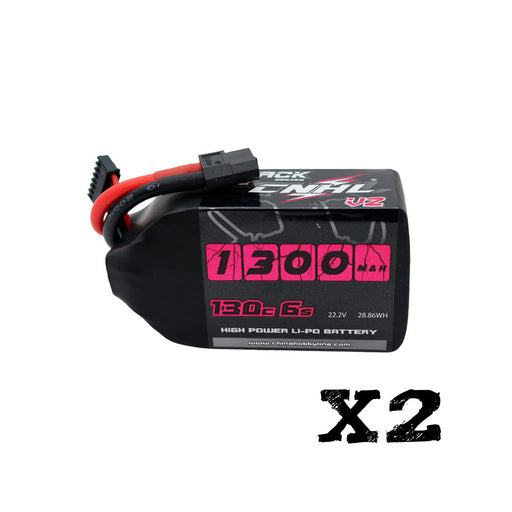
Quick Fit Check The 2 Packs CNHL Black Series V2.0 1300mAh 22.2V 6S 130C LiPo Battery with XT60 Plug is a strong fit for FPV pilots who want a prov...
View full details

Hstar D43-01Q 911 Style is a mini 1/43 alloy drift RC car designed for indoor tabletop fun and realistic drifting. It features full proportional ...
View full details

Spare Parts Availability We know that for RC pilots, reliable spare parts support often determines how long an aircraft can actually sta...
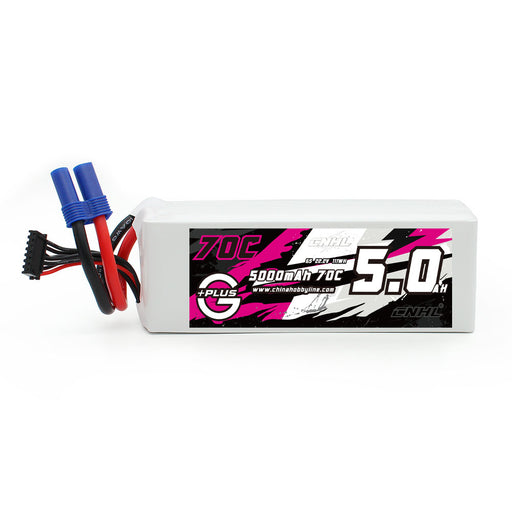
View full detailsSpecifications: Stock Number: 500706EC5 Capacity: 5000mAh Voltage: 22.2V / 6-Cell / 6S1P Discharge Rate: 70C Continual / 140C Burst Charge Rate: ...
View full details
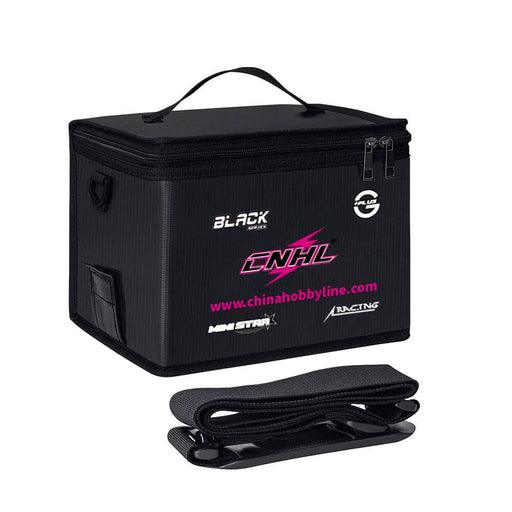
The CNHL LiPo Battery Bag is designed for safer LiPo charging, transport, and storage at home or at the field. It adds a practical layer of protect...
View full details

Quick Fit Check The CNHL Lightning LiHV 8500mAh 6S 120C battery is designed for high-power RC systems that need strong current delivery, stable vol...
View full details

Quick Fit Check The CNHL Lightning LiHV 6700mAh 8S battery is designed for high-voltage RC systems that demand strong burst power and stable voltag...
View full details

Quick Fit Check Before choosing a 4S LiHV battery for your RC model, confirm these basic fit points. This helps you judge whether the pack suits...
View full details

Quick Fit Check If you are selecting a 4S LiHV battery for an RC aircraft, FPV drone, or RC vehicle, confirm these points before ordering: ...
View full details

Quick Fit Check If you are selecting a 3S LiHV shorty battery for your RC vehicle or lightweight aircraft, confirm these points before ordering: ...
View full details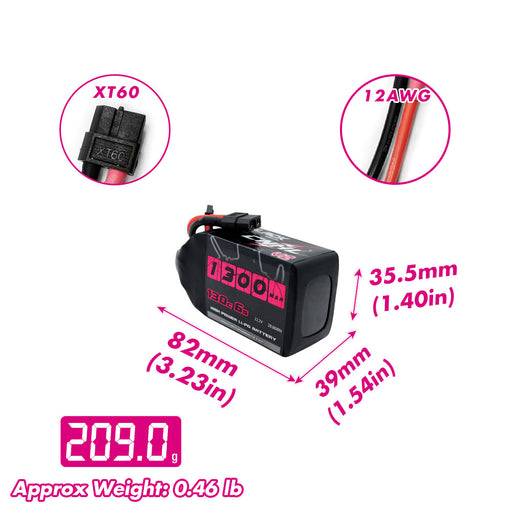

Leave a comment