
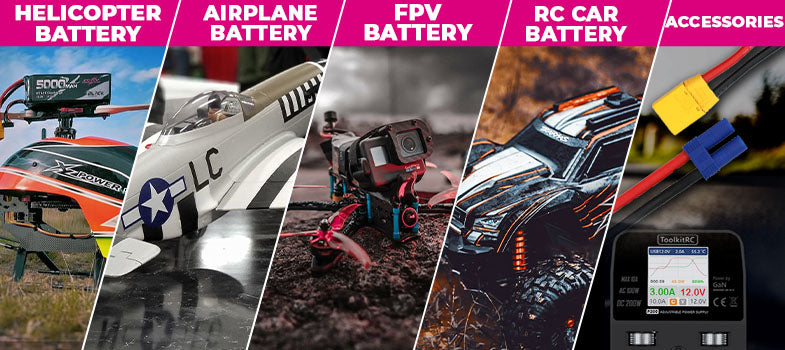
CNHL Lipo Batteries
CNHL aim at providing high-quality Li-Po batteries and RC products to all hobby enthusiasts with excellent customer services and competitive prices
Short answer: The E-flite Habu SS 50mm EDF V2 is not just a color refresh of the older Habu 50mm. The real upgrade is the stronger 3S/4S-capable power system, revised airframe structure, larger rudder, and more useful BNF Basic electronics package. It is still not a true first RC airplane, but for pilots who already fly basic 4-channel models with confidence, it is one of the more approachable ways to step into a small EDF jet.
The Habu name already carries weight in the Eflite EDF lineup because these jets have always been known for doing something slightly unusual: they fly fast enough to feel exciting, but they slow down better than many pilots expect from an EDF. The Habu SS 50mm EDF V2 keeps that personality and adds the one upgrade many Habu 50mm pilots wanted most — proper 4S support without treating it like a risky power-system experiment.
For CNHL, the most interesting part of this aircraft is not only the airplane itself, but how sensitive it is to battery choice. The official range is 3S or 4S 1300–2200mAh LiPo with an EC3 or IC3 connector, but the real-world question is more detailed: should you fly it on 3S first, go straight to 4S, use a direct EC3 pack, or choose a shorter XT60 shorty pack with an adapter to improve battery bay space?

The original Habu SS 50mm earned a loyal following because it was small, affordable, quick, and easy to transport. It was also one of the more forgiving 50mm EDF jets because the Habu wing design allowed it to slow down without feeling as nervous as many small EDF models. The V2 keeps that basic formula but makes the aircraft more flexible by supporting both 3S and 4S batteries from the factory.
That is a bigger change than it sounds. Many pilots already knew the older 3S Habu 50mm could move quickly, but pushing a non-4S system beyond its intended setup was never the cleanest path. The V2 solves that by using an updated motor and 30A Spektrum Avian Smart Lite ESC setup designed around 3S and 4S use. In practice, this means the airplane can be flown as a calmer small EDF on 3S or as a much more energetic compact sport jet on 4S.
The airframe update also matters. The V2 has a stronger and stiffer structure, including added reinforcement in key areas, plus a taller functional rudder. That rudder is not just a nice specification line. It makes the airplane more useful for coordinated turns, slow-speed control, and basic aerobatics. Many small EDF jets skip the rudder or treat it as an afterthought. The Habu SS 50mm V2 benefits from having one that actually matters.
Yes, but only with the right expectation. The Habu SS 50mm EDF V2 can be a very good first EDF jet, but it should not be treated as a first-ever RC airplane. EDF flying still rewards clean approaches, throttle planning, orientation awareness, and the ability to stay ahead of the aircraft. If a pilot is still learning basic turns, altitude control, and landing patterns, a slower trainer is the better starting point.
Where the Habu SS 50mm makes sense is after a pilot already feels comfortable with models such as a basic high-wing trainer, a T-28-style sport plane, or another stable 4-channel aircraft. At that point, the Habu becomes a practical bridge into EDF flying because it is smaller than a 70mm or 80mm jet, uses common 3S and 4S packs, and has unusually good low-speed manners for its size.
The BNF Basic version also helps. With AS3X+, SAFE Select, Smart telemetry support, and a preconfigured receiver package, it gives lower-time EDF pilots a cleaner starting point than a blank PNP installation. SAFE Select can reduce stress during early flights, takeoffs, hand launches, and recovery moments. AS3X+ helps the jet feel more locked in once the pilot is ready to fly it more normally.
The official battery range gives the E-flite Habu SS 50mm EDF V2 a useful split personality. On 3S, it is still a real EDF jet, but the pace is more manageable. The model has enough power for normal sport flying, basic loops, rolls, and clean passes, but it gives the pilot a little more time to think. For a first EDF session, that matters.
On 4S, the airplane becomes much more exciting. The sound changes, the acceleration feels sharper, and the vertical performance improves noticeably. This is where the V2 starts to feel like a real upgrade rather than simply a re-released Habu 50mm. For pilots who already understand EDF energy management, 4S is likely the setup that makes the airplane feel most alive.
| Setup | Flying feel | Best for | CNHL battery note |
|---|---|---|---|
| 3S 1300–2200mAh | Calmer, lighter, easier to manage | First EDF flights, lower-stress flying, pilots stepping up from trainers | Recheck CG carefully, especially if the factory tail weight remains installed. |
| 4S 1300–1800mAh | Fast and lively without the full weight of a 2200mAh pack | Pilots who want 4S speed with a lighter feel | A good direction when balancing performance, CG, and battery bay space. |
| 4S 2200mAh | Strongest mainstream setup, better speed and climb | Most pilots who want the full V2 performance upgrade | Direct EC3 packs are easiest. Shorty XT60 packs may improve fit but need an adapter. |
The important point is that 3S is not wrong, and 4S is not automatically better for every pilot. A pilot who wants a calmer first EDF experience may enjoy 3S more at the beginning. A pilot who already has EDF experience will probably prefer 4S quickly. The aircraft supports both, but the setup has to be checked every time battery size, voltage, or weight changes.
The Habu SS 50mm EDF V2 has a compact battery bay. That is expected in a small 50mm jet, but it means the battery conversation should not stop at capacity and voltage. The pack may technically fit, yet the main lead, balance lead, receiver wiring, antenna, and nose-wheel steering linkage still have to share the same tight space.
This is why battery shape matters. A standard 4S 2200mAh pack can work well, especially if it has the correct EC3 plug and reasonable dimensions. But a shorter pack can sometimes make the installation easier because it leaves more room for wire routing and battery position adjustment. This matters even more when using the aircraft gear-on, because the nose-wheel steering linkage must remain free and smooth.
CNHL’s direct EC3 4S 2200mAh packs are the simplest route for most pilots. The CNHL battery collection for the E-flite Habu SS 50mm EDF V2 includes EC3 options for a cleaner plug setup, plus compact shorty choices for pilots who are willing to use an XT60-to-EC3 adapter in exchange for a shorter battery body.
Many Habu SS 50mm EDF V2 setups are shown around the common Spektrum SPMX224S30 4S 2200mAh 30C reference pack, which measures about 112 × 34 × 31.5mm and weighs about 204g. The CNHL G+Plus 2200mAh 14.8V 4S 70C EC3 pack measures about 106 × 35 × 31mm. That makes the CNHL pack slightly shorter while staying in the same general 4S 2200mAh category.
Six millimeters may not sound dramatic on a large airplane. On a compact 50mm EDF battery tray, it can help. A slightly shorter pack can create a little more working room for the main lead and canopy fit, while the EC3 connector keeps the setup clean for the Habu’s EC3/IC3 requirement. The 70C rating also gives more discharge headroom than a basic 30C pack, though the Habu SS 50mm V2 does not need an extreme C-rating just to fly well.
This is the kind of practical difference that does not always show up in a basic battery recommendation chart. For the Habu SS 50mm V2, the best battery is not simply the biggest pack or the highest-C pack. It is the pack that gives the right balance of voltage, weight, physical fit, connector simplicity, and CG control.
A compact shorty battery is especially interesting for this airplane. A shorter body may give the pilot more room to place the pack correctly, route the wires, and keep the canopy area from feeling crowded. That is why the CNHL LiHV Lightning 2400mAh 15.2V 4S 120C HV Shorty pack deserves attention, even though its capacity is slightly above the official 2200mAh range.
Compared with the Spektrum SPMX224S30 4S 2200mAh pack at about 112 × 34 × 31.5mm and 204g, the CNHL LiHV Lightning 2400mAh 4S Shorty measures about 76 × 32 × 35mm and weighs about 185g. In other words, it is shorter and lighter while offering more capacity. For a small EDF where battery bay space is tight, that combination is meaningful.
There are tradeoffs. This CNHL shorty pack uses an XT60 plug, so the Habu SS 50mm EDF V2 needs an XT60-to-EC3 adapter. The pack is also LiHV, which means pilots should be thoughtful about charger settings, ESC expectations, and how aggressively they use full HV voltage. The safest way to present it is not as the default plug-and-play choice, but as an advanced compact-fit option for pilots who understand how to check CG, canopy clearance, adapter placement, and lead routing.
Not necessarily. This is still a 50mm EDF with a 30A ESC, not a large high-current EDF system that demands extreme battery ratings. A quality 30C pack can fly the aircraft, especially for normal sport use. A higher-C pack can still help the airplane feel cleaner during repeated full-throttle passes, hot-weather flying, and 4S climbing, but C-rating should not be the only reason to choose a battery.
For this e flite Habu setup, fit and weight are just as important. A very high-C pack that is too long, too heavy, or too difficult to route inside the bay may be less practical than a slightly lower-C pack that fits cleanly and keeps the aircraft balanced. CNHL’s advantage here is having both direct EC3 2200mAh 4S options and compact shorty formats, so pilots can choose based on how they actually fly the jet.
The Habu SS 50mm EDF V2 can be flown with its fixed tricycle landing gear installed or removed. For early flights, the gear-on setup is the more conservative choice. It allows runway takeoffs, easier trimming, and a more familiar landing routine for pilots stepping into EDF flying. It also gives pilots time to understand how the airplane carries speed before trying hand launches and belly landings.
Once the model is trimmed and the pilot is comfortable, gear-off flying gives the Habu SS 50mm a cleaner feel. Drag drops, the airplane accelerates better, and the little EDF feels more like a compact sport jet. This is one reason many experienced Habu pilots prefer the no-gear setup, especially when flying from grass or when chasing a faster, cleaner pass.


The battery still matters in both styles. With gear installed, make sure the main lead or adapter does not interfere with the nose-wheel steering linkage. With gear removed, a shorter battery can help the model feel cleaner and may make battery positioning easier. Either way, the correct CG and secure battery retention are more important than squeezing in the largest pack possible.
The Habu SS 50mm V2 is not difficult because it drops suddenly. It is challenging in the opposite way: it carries energy well and can float longer than expected. Pilots coming from prop-driven trainers may expect the airplane to slow down more quickly when the throttle is reduced, but the Habu airframe likes a longer and flatter approach.
This is also why the airplane does not need flaps to be usable. The low-speed handling is already good for a small EDF, and the model can slow down cleanly when the approach is planned correctly. The mistake is trying to force it onto the runway from too steep or too fast an approach. A smoother EDF landing usually starts earlier, lower, and farther out than many pilots expect.
For grass flying, belly landing with the gear removed can feel natural once the pilot is comfortable. The V2’s cleaner underside and lack of bottom cheater holes also help reduce the chance of debris getting pulled into the fan during belly landings compared with designs that expose the fan more directly to grass and dirt.
The PNP version makes sense for pilots who already have a receiver they trust and know how to set up rates, stabilization, failsafe, and telemetry behavior. It is also a good route for experienced pilots who prefer their own radio setup and do not need SAFE Select or the factory receiver configuration.
The BNF Basic version is more attractive for pilots using Spektrum gear who want a cleaner first setup. The upgraded AR631+ receiver package gives access to AS3X+, SAFE Select, Smart telemetry, and a Smart Transmitter File. Pilots still need to bind properly, verify control directions, check throws, confirm failsafe, and balance the airplane, but they are not starting from a blank receiver installation.
For a first EDF pilot, BNF Basic is usually the more confidence-building version. SAFE Select is not a substitute for real flying skill, but it can reduce the workload during takeoff, hand launch, recovery, and early landings. Once the pilot is comfortable, AS3X+ gives the aircraft a more natural sport-jet feel while still keeping it steady in the air.

The E-flite Habu STS 70mm is still the more trainer-oriented EDF choice. It is larger, more visible, and better suited to pilots who want a more structured step into EDF flying with a larger airframe. The Habu XS 80mm is a different kind of airplane again: bigger, faster, more complex, and more demanding in battery cost, storage, and field space.
The Habu SS 50mm EDF V2 sits between those ideas. It is not as trainer-focused as the Habu STS 70mm and not as serious as the Habu XS 80mm. Its appeal is convenience. It is small enough to keep in the car, easy enough to fly more often, and now powerful enough on 4S to feel like a proper compact EDF session.
For pilots comparing Eflite RC planes, this is the main reason the Habu SS 50mm V2 makes sense. It does not try to be the biggest or most scale-looking jet in the lineup. It gives the e flite Habu family a practical, quick-session EDF that can still be genuinely fast when powered correctly.
A common question for compact EDF buyers is whether to choose the Habu SS 50mm or a smaller Viper 30mm-style jet. The Viper 30mm may appeal to pilots who need the smallest possible EDF and have very limited storage or flying space. The Habu SS 50mm V2 is still compact, but it has more presence in the air, a broader battery range, and a more serious 3S/4S sport-jet feel.
For a first EDF, the Habu 50mm is likely the more confident choice if the pilot has enough field space. It is easier to see, has useful landing gear options, can be hand launched or flown from a suitable runway, and has enough size to feel less toy-like without jumping into a 70mm or 80mm EDF setup.
The Habu SS 50mm EDF V2 makes the most sense for pilots who already have basic airplane skills and want a compact EDF that can grow with them. On 3S, it can help build EDF rhythm without overwhelming the pilot. On 4S, it becomes a much sharper little jet with enough speed and vertical performance to stay interesting for experienced flyers.
It is also a strong choice for pilots who liked the original Habu 50mm but wanted a more official 4S path. If the old model is still flying well and the pilot is happy with its 3S performance, the V2 is not a forced upgrade. But if the goal is stronger 4S performance, better electronics support in BNF Basic form, and a cleaner updated airframe, the new model gives the Habu 50mm platform a real reason to return.
The main caution is battery setup. This airplane is small enough that battery shape, connector type, wire routing, CG, and canopy clearance all matter. A direct EC3 4S 2200mAh pack is the simplest route. A compact shorty pack can be a smart solution for battery bay space, but only when the adapter and wiring are checked carefully.
For most pilots, CNHL’s direct EC3 4S 2200mAh options are the cleanest first choice for the E-flite Habu SS 50mm EDF V2. The CNHL G+Plus 2200mAh 14.8V 4S 70C EC3 pack is especially practical because it stays within the expected 2200mAh 4S class, uses the correct EC3 connector, and is slightly shorter than the common Spektrum 4S 2200mAh 30C reference pack.
For pilots who care more about battery bay space and are comfortable using an adapter, CNHL shorty packs open another path. A 2200mAh 4S Shorty XT60 pack keeps capacity within the official range while offering a shorter body. The CNHL LiHV Lightning 2400mAh 4S Shorty is more advanced because it is lighter and much shorter than some standard 2200mAh packs, but it requires more careful checking because it is LiHV, XT60, and slightly above the official capacity range.
To see the recommended CNHL options in one place, visit the Best Battery for E-flite Habu SS 50mm EDF V2 collection. For other EDF aircraft, browse the broader LiPo Batteries for EDF Jets collection or the main CNHL airplane batteries collection.
The E-flite Habu SS 50mm EDF V2 works because it does not chase complexity. It takes a proven small EDF platform, keeps the friendly low-speed behavior that made the Habu name popular, and adds the practical upgrade many pilots actually wanted: factory-supported 4S power. It can still be flown calmly on 3S, but 4S is where the new version feels most convincing.
For pilots ready for their first EDF, the Habu SS 50mm V2 is one of the more approachable choices, especially in BNF Basic form. For experienced pilots, it is a compact, fast, easy-to-carry jet that can deliver a proper EDF fix without the space, battery cost, or setup time of a larger model. Just do not treat battery choice as an afterthought. On this airplane, the right pack can make the difference between a tight, awkward setup and a clean, confident flying experience.
No. It is not a true first RC airplane. It can be a good first EDF jet for pilots who already fly basic 4-channel aircraft confidently, but brand-new pilots should start with a slower trainer before moving into EDF flying.
3S is better for a calmer first EDF experience, while 4S gives the Habu SS 50mm V2 its strongest speed, climb, and sport-jet feel. Most experienced pilots will find 4S more exciting, but 3S still has value for lower-stress practice.
The official range is 3S or 4S 1300–2200mAh LiPo with an EC3 or IC3 connector. CNHL recommends checking not only capacity and voltage, but also physical dimensions, lead direction, connector type, weight, and CG.
Yes, but an XT60-to-EC3 adapter is required because the Habu SS 50mm EDF V2 is designed around EC3/IC3 battery connection. After adding the adapter, check canopy clearance and make sure the wiring does not interfere with the rudder or nose-wheel steering linkage.
A shorty pack can leave more usable space inside the compact battery bay. This may help with battery positioning, wire routing, and CG adjustment. The tradeoff is that many shorty packs use XT60, so an adapter may be needed.
No. The Habu SS 50mm V2 already has good low-speed handling for an EDF and carries energy well. Landing is more about planning a longer, flatter approach than adding flaps.
For early flights, yes. Gear-on flying is better for trimming, runway takeoffs, and learning the landing behavior. Once the airplane is set up and the pilot is comfortable, removing the gear gives the model a cleaner and faster EDF feel.
For pilots using Spektrum equipment and wanting a simpler setup, the BNF Basic version is usually the easier choice because it includes the AR631+ receiver with AS3X+, SAFE Select, Smart telemetry support, and a Smart Transmitter File. PNP is better for pilots who prefer installing and configuring their own receiver.
CNHL aim at providing high-quality Li-Po batteries and RC products to all hobby enthusiasts with excellent customer services and competitive prices
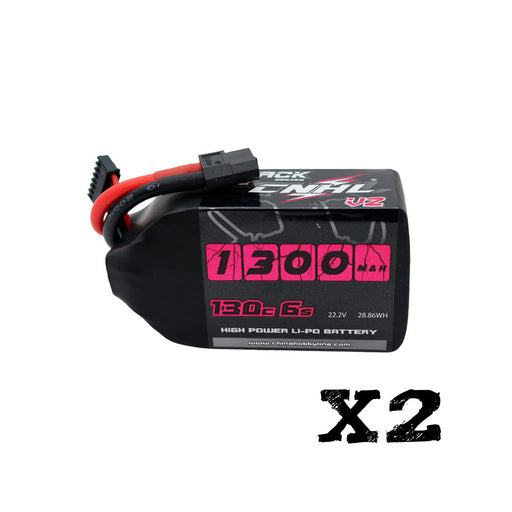
Quick Fit Check The 2 Packs CNHL Black Series V2.0 1300mAh 22.2V 6S 130C LiPo Battery with XT60 Plug is a strong fit for FPV pilots who want a prov...
View full detailsSpare Parts & Long-Term Support We know that for RC pilots, reliable spare parts support is an important part of keeping an aircraft fl...
View full details
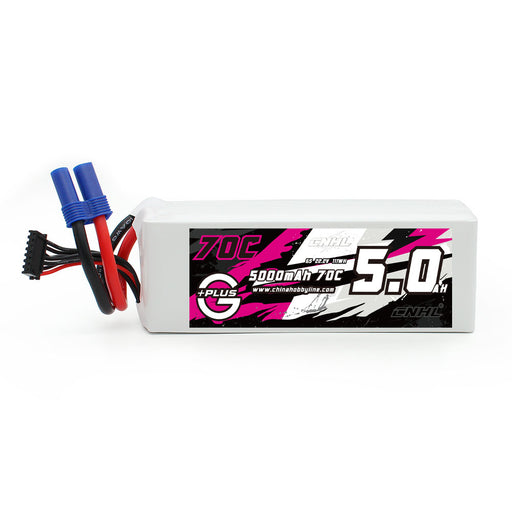
Specifications: Stock Number: 500706EC5 Capacity: 5000mAh Voltage: 22.2V / 6-Cell / 6S1P Discharge Rate: 70C Continual / 140C Burst Charge Rate: ...
View full details
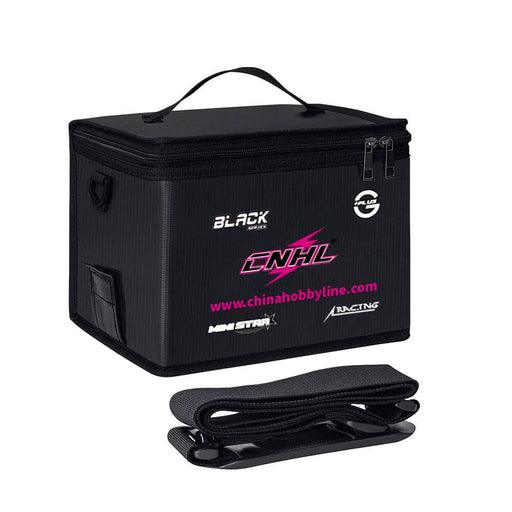
The CNHL LiPo Battery Bag is designed for safer LiPo charging, transport, and storage at home or at the field. It adds a practical layer of protect...
View full details

Quick Fit Check The 2 Packs CNHL Speedy Pizza Series Pro 1350mAh 6S 150C LiPo Battery with XT60 Plug is built for 5-inch FPV pilots who want a ...
View full details

Quick Fit Check The CNHL Speedy Pizza Series 2200mAh 22.2V 6S 120C LiPo Battery with XT60 Plug combines the familiar 2200mAh 6S format with a ligh...
View full details

Quick Fit Check The CNHL Speedy Pizza Series 2200mAh 14.8V 4S 120C LiPo Battery with XT60 Plug combines a widely used 2200mAh 4S format with a sli...
View full details

Quick Fit Check The CNHL Speedy Pizza Series 2200mAh 11.1V 3S 120C LiPo Battery with XT60 Plug takes the familiar 3S 2200mAh aircraft battery form...
View full details

The CNHL Long Range Series BAK 65E 6350mAh 21700 Li-ion battery cell is built around one clear priority: maximum stored energy from a lightweight c...
View full details

The CNHL Long Range Series BAK 50D 5000mAh 21700 Li-ion battery cell is designed for custom high-energy battery packs that need a strong balance be...
View full details


Leave a comment