

CNHL Lipo Batteries
CNHL aim at providing high-quality Li-Po batteries and RC products to all hobby enthusiasts with excellent customer services and competitive prices
The 1600mm FlightLine P-51D Mustang isn’t just another foam warbird release. It’s the first large-format Mustang in years that actually feels proportionally right, field-ready out of the box, and visually dominant in the air. At 63 inches of wingspan, this isn’t a mid-size sport model pretending to be scale. It looks like a warbird, sits like a warbird, and flies like one.
When the announcement dropped, the reaction was immediate. Comments ranged from “Take my money” to “That’s a serious price tag” — but almost nobody ignored it. Whether excited or skeptical, the RC community recognized one thing quickly: this one has presence.

Some pilots voiced what many quietly think: “Another Mustang?” The P-51 has been done in almost every size and configuration imaginable. From micro park flyers to giant-scale composite builds, the Mustang is arguably the most produced warbird in RC history.
But there’s a reason manufacturers keep returning to it. The Mustang isn’t just popular — it’s commercially reliable. In the single-engine warbird category, the Mustang, Spitfire, and Corsair consistently outsell everything else. Even MotionRC acknowledged that while niche aircraft like the Zero or 109 have passionate fans, they simply don’t move in the same numbers.
From a business perspective, adding a 1600mm Mustang completes the “big three” lineup alongside their large Spitfire and Corsair. From a pilot’s perspective, it fills a noticeable gap: a truly large foam Mustang that feels modern rather than recycled.
The P-51D isn’t just another WWII fighter. It’s one of the aircraft that reshaped the air war in Europe. The laminar flow wing design reduced drag and improved high-speed efficiency. The Packard-built Merlin engine gave it altitude performance that earlier variants simply couldn’t match. Most importantly, its long range allowed it to escort bombers deep into hostile territory — something few fighters could reliably do at the time.
But here’s the part that matters to RC pilots: most people don’t buy a Mustang because of its performance statistics. They buy it because of how it looks in a banking turn. Because of the long nose and bubble canopy. Because of the sound a big prop makes at mid-throttle. Because it carries history with it.
Warbird pilots don’t choose a P-51D purely on climb rate or top speed. They choose it for presence — the silhouette, the stance, and the emotional weight it carries every time it lines up on the runway.
At 1600mm, this aircraft steps into a different category. It no longer competes with 1400mm foam warbirds. It competes with presence.
| Model | Wingspan | Category Feel | Air Presence |
|---|---|---|---|
| Older 1400mm Foam Mustangs | ~1400mm | Mid-size sport | Good but compact |
| FlightLine P-51D | 1600mm (63”) | Large-format scale | Dominant and proportional |
That extra wingspan isn’t just a number. It stretches the proportions in a way that feels closer to scale. The fuselage doesn’t look stubby. The nose has authority. The stance on the ground looks planted. Even simple taxiing carries a presence that smaller foam models can’t quite replicate.

This release isn’t relying on size alone. It includes scale-oriented features that elevate the experience: drop tanks, integrated lighting, and simulated gun effects. None of these are mandatory for flight performance — but collectively they shift the model from “sport warbird” to “field event.”
The best part is how practical the design feels at the field. The button-release wings and auto-connect leads reduce the “pits time” (setup time), and the slide-out battery tray makes pack swaps and CG tweaks feel routine instead of fussy. For pilots who fly in windier conditions, the gyro-equipped version adds another layer of confidence without changing the airframe itself.
When a 1600mm Mustang rolls out at your local field with tanks installed and lights on, it draws attention. That’s part of the appeal. Warbirds are about presence as much as performance.
On the sticks, the aircraft doesn’t beg to be thrown around. It invites you to fly it like a warbird. Smooth throttle management, long passes, wide banking turns — that’s where it looks right.
In 15–20 mph crosswinds, the model stayed composed, which says more than any spec sheet ever will.
In moderate wind, the larger wingspan helps it track with confidence. Takeoffs feel stable rather than twitchy. Landings benefit from predictable glide behavior, especially when flown with a balanced setup and realistic approach speed. Ground behavior is where many Mustangs get judged, and this one is notably well-mannered—especially when the runway is less than perfect.
It’s not trying to be a 3D monster. It’s not trying to be a speed demon. It’s designed for scale presence with controlled authority. And flown that way, it rewards patience.
This is not a ‘speed-run’ Mustang; it looks best flown like a Mustang—smooth passes, big turns, and confident vertical when asked. When it banks at half throttle and carries through a long sweeping turn, it looks less like a foam model and more like the real thing at a comfortable, realistic speed.

A 6S 5000mAh pack is the cleanest “set-and-forget” baseline for this airframe. With relaxed scale flying, an 8-minute timer feels realistic and repeatable, and power delivery stays smooth without the system feeling stressed.
Pilots looking for lighter feel may experiment in the 4000–4500mAh range, while those wanting extended runtime may step toward 6000mAh. The removable tray design simplifies positioning the pack forward for consistent center of gravity.
If you’re looking for recommended 6S setups matched specifically for this model, you can reference our curated collection here: Recommended 6S batteries for the FlightLine 1600mm P-51D.
| Flying Style | Typical Capacity | What It Feels Like in the Air |
|---|---|---|
| Lighter, more responsive feel | 6S 4000–4500mAh | Slightly quicker transitions and lighter wing loading, ideal for pilots who prefer a more active throttle style. |
| Balanced everyday setup | 6S 5000mAh (EC5) | The most consistent baseline for scale-style flying with predictable landing behavior and comfortable 8-minute timers. |
| Longer flight sessions | 6S 6000mAh | More momentum and extended runtime, suited for smooth passes and less aggressive throttle changes. |
| Item | What Worked Well | Why It Matters |
|---|---|---|
| Wind validation | Handled quartering crosswinds and gusts (roughly low-to-mid teens mph) | Warbirds reveal bad ground manners quickly in crosswind conditions |
| Battery baseline | 6S 5000mAh with an 8-minute timer | Simple, repeatable setup for mixed “scale style” flying |
| Post-flight check | Battery landed near storage voltage (~3.80V/cell) after spirited flying | Confirms the 8-minute timer is realistic without over-discharging |
| Landing technique | Mains-first touchdown with a little power carried in | Helps avoid bounce and keeps rollout calmer on imperfect surfaces |
| Battery tray | Tray pulls out for fast swaps and easy “pack forward” CG positioning | Makes big-warbird ownership easier for frequent field days |
| Gyro version choice | Two versions: with Freewing gyro or without | Lets pilots pick “plug-and-fly stability” or their own setup |
Price sparked immediate reaction. Some comments were blunt: “$635?!” Others shrugged and replied, “Welcome to 2026.”
Large foam aircraft are no longer entry-level purchases. Inflation, electronics integration, lighting systems, and modern finishing standards have shifted pricing upward across the industry. Whether it’s justified depends on what you value: raw performance per dollar, or the complete visual package.
For many pilots, the decision won’t be purely financial. It will be emotional. The Mustang is iconic. That alone carries weight.
In the 1600mm category, there are other compelling aircraft — including turboprop trainers like the Super Tucano. But the audiences aren’t identical.
The Mustang appeals to historical warbird enthusiasts and collectors who value WWII lineage. The Tucano appeals to pilots drawn to modern military trainers and sport aggression. Budget may overlap, but identity rarely does.
In short, they share scale — not personality.
If anything, the overlap is usually in budget — not in flying intent. A Super Tucano tends to scratch the “modern trainer / sporty” itch, while a P-51D is bought for silhouette, history, and the way it looks on a long low pass.
This isn’t a beginner platform. It’s not a casual park flyer. It’s for:
If your flying style leans toward patience, realism, and visual drama rather than aggressive 3D aerobatics, this aircraft makes sense.
The release has reignited discussion about what comes next: a 1600mm Sea Fury? A new 109? Perhaps a refined Zero? Market trends suggest the “big three” will always come first, but strong reception here may open doors.
For now, what matters is this: the 1600mm FlightLine P-51D feels complete. Not rushed. Not recycled. Just finished.
It isn’t the first foam Mustang ever made. It just might be the first large-format one in years that genuinely feels done right.
Is there a gyro in the FlightLine 1600mm P-51D?
Yes — there are two versions available: one with a pre-installed Freewing gyro and one without. The airframe is otherwise identical. Many pilots prefer assigning the gyro to a three-position switch for easy control in gusty conditions. Deeper tuning adjustments require a compatible programming card.
How difficult is assembly and field setup?
Assembly is designed to be field-friendly. The wings use a button-release quick-connect system with automatic lead connections. The tail section is secured with standardized 2mm screws. Overall, it feels built for repeat trips to the field rather than long workshop sessions.
Any common “don’t do this” mistakes during assembly?
Two notes stand out from early builds: the short orange wing joiner included for transport should not be used for flight — swap to the long joiner for proper structural support. Also, if applying CA glue to alignment caps, allow it to fully cure before mounting the wing to avoid accidental bonding.
What’s a realistic flight time?
With a typical 6S 5000mAh setup and relaxed scale-style flying, an 8-minute timer is a comfortable and repeatable baseline.
Do I need an adapter for my batteries?
Most setups for this airframe are built around EC5-style connections. If your packs are XT90/XT60 or another plug type, use a quality adapter and keep connections tight and clean. For high-current warbird setups, avoid loose or worn adapters.
Is it a “fast” Mustang?
Top speed is not the primary focus. The aircraft looks best flown in smooth passes, wide turns, and confident vertical segments rather than high-speed runs.
How does it handle grass and uneven runways?
Field reports suggest it manages grass surfaces and light bumps well. Landings tend to settle predictably, with better shock absorption behavior than many mid-size Mustangs.
CNHL aim at providing high-quality Li-Po batteries and RC products to all hobby enthusiasts with excellent customer services and competitive prices
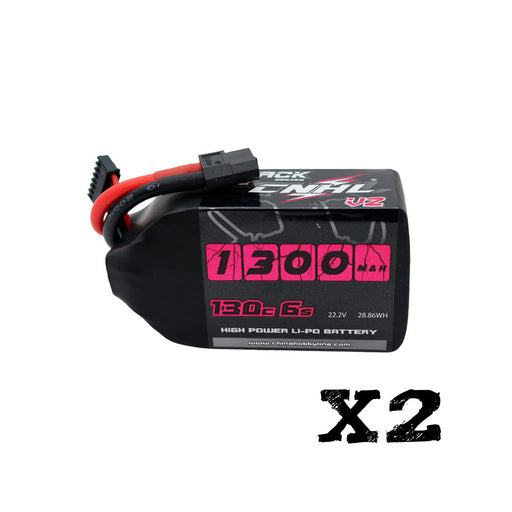
Quick Fit Check The 2 Packs CNHL Black Series V2.0 1300mAh 22.2V 6S 130C LiPo Battery with XT60 Plug is a strong fit for FPV pilots who want a prov...
View full detailsSpare Parts & Long-Term Support We know that for RC pilots, reliable spare parts support is an important part of keeping an aircraft fl...
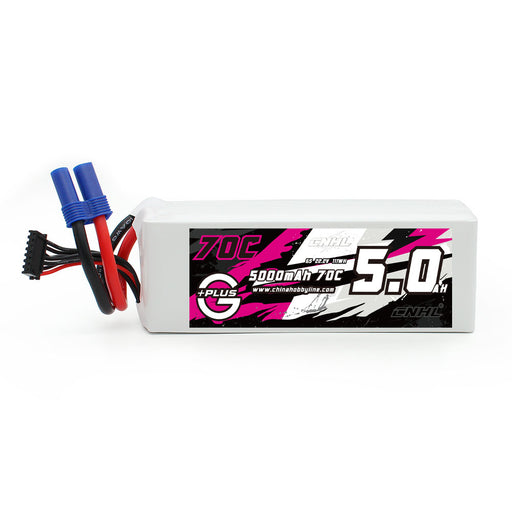
View full detailsSpecifications: Stock Number: 500706EC5 Capacity: 5000mAh Voltage: 22.2V / 6-Cell / 6S1P Discharge Rate: 70C Continual / 140C Burst Charge Rate: ...
View full details
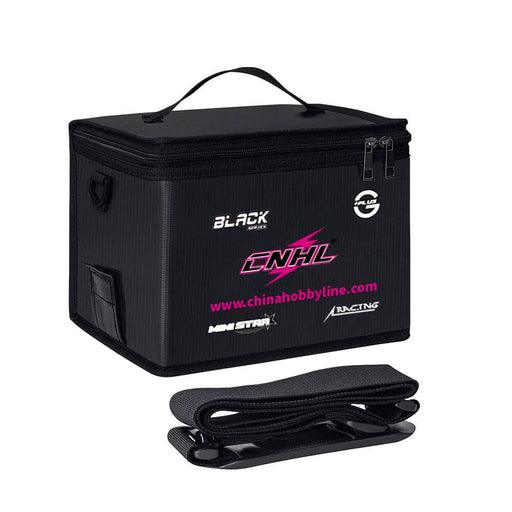
The CNHL LiPo Battery Bag is designed for safer LiPo charging, transport, and storage at home or at the field. It adds a practical layer of protect...
View full detailsQuick Fit Check The 2 Packs CNHL Speedy Pizza Series Pro 1350mAh 6S 150C LiPo Battery with XT60 Plug is built for 5-inch FPV pilots who want a ...
View full details

The CNHL Long Range Series BAK 65E 6350mAh 21700 Li-ion battery cell is built around one clear priority: maximum stored energy from a lightweight c...
View full details

The CNHL Long Range Series BAK 50D 5000mAh 21700 Li-ion battery cell is designed for custom high-energy battery packs that need a strong balance be...
View full details

The ISDT C4 EVO is a versatile smart battery charger built for AA, AAA and cylindrical rechargeable cells from compact 10440 batteries all the way ...
View full details

The CNHL Long Range Series 6350mAh 21.6V 6S1P 21700 Li-ion battery combines six BAK 65E high-energy cells into a 137.16Wh pack designed for ultra-e...
View full details

The CNHL Long Range Series 5000mAh 21.6V 6S1P 21700 Li-ion battery combines six BAK 50D cells into a compact 108Wh pack designed around long-range ...
View full details




Leave a comment