
CNHL Lipo Batteries
CNHL aim at providing high-quality Li-Po batteries and RC products to all hobby enthusiasts with excellent customer services and competitive prices

Quick answer: The iFlight Nazgul Evoque F5 V3 is best understood as a premium 5-inch 6S FPV drone for pilots who want one aircraft to cover both clean DJI O4 Pro cinematic footage and serious freestyle flying. Its switchable DeadCat and True-X geometry, front-mounted DJI O4 Pro air unit, refined molded construction, strong 6mm arms, and smooth 1750KV motor setup make it feel more complete than a basic 5-inch BNF. It is not the cheapest way into 5-inch FPV, and it is not the simplest crash-practice quad, but for pilots who want a polished high-end platform, it makes a lot of sense.
The Nazgul Evoque line has always had a strong reputation among pilots who want a ready-to-fly 5-inch drone without building everything from scratch. The F5 V3 version pushes that idea further. Instead of being just another update with a new camera system, this version changes the frame layout, air unit position, side panel construction, electronics packaging, and overall ownership experience.
That matters because modern 5-inch FPV is no longer just about raw speed. Many pilots now want one drone that can record clean high-resolution footage, cruise smoothly, carry speed through open terrain, and still feel sharp enough for freestyle when the battery and location allow it. The Nazgul Evoque F5 V3 is built around that exact middle ground.
The biggest difference is that the Evoque F5 V3 does not force the pilot to choose between a DeadCat cinematic frame and a True-X freestyle frame. By moving a few screws, the arms can be repositioned between the two layouts. DeadCat keeps the propellers out of the DJI O4 Pro view and makes more sense for clean cinematic flying. True-X gives a more symmetrical motor layout, which can feel more natural for freestyle because pitch and roll behavior are more evenly matched.

For casual pilots, the difference may not feel dramatic every time. A well-tuned DeadCat 5-inch drone can still freestyle very well, and the Evoque F5 V3 in DeadCat layout is still fast, locked-in, and powerful. But for pilots who push harder, fly tighter lines, or prefer a more symmetrical stick feel, True-X gives the frame another personality without needing to buy a second drone.
This is the core reason the F5 V3 feels interesting. It is not just a cinematic 5-inch quad with nice bodywork, and it is not just a freestyle drone with an O4 camera bolted on. It is designed as a hybrid platform from the start.
DeadCat is the layout most pilots will probably use first. It keeps the props out of the camera view, which is important when the DJI O4 Pro is being used as the main recording system. For smooth mountain lines, open-field cruising, chase footage, or travel-style FPV clips, DeadCat is the more practical setup.
True-X is the more freestyle-focused option. With the motors placed more symmetrically, the drone can feel more consistent between pitch and roll inputs. This matters most when the pilot is doing faster direction changes, reversals, dives, split-S moves, rolls, and aggressive proximity flying.
The important point is that neither layout makes the drone bad at the other job. DeadCat is not weak for freestyle, and True-X is not useless for cinematic flying. The real advantage is flexibility. The Evoque F5 V3 lets the pilot tune the character of the frame around the day’s flying rather than locking the drone into one role forever.
The front-mounted DJI O4 Pro air unit is one of the most practical changes on this version. On many FPV drones, the air unit sits toward the rear, and the camera cable needs to pass through or under more of the frame. The Evoque F5 V3 places the O4 Pro system up front, closer to the camera and with more direct access to cooling airflow.
This layout brings several real advantages. USB and microSD access are easier. The air unit is easier to reach if it ever needs to be removed. Cable routing looks cleaner. There is also more physical separation between the video system and the rear GPS area, which can help reduce interference in a layout built for DJI O4 Pro, GPS, and longer cruising flights.
The cooling channel and front structure also make sense for pilots who record a lot. DJI O4 Pro can generate heat, especially when sitting powered on before takeoff. Better airflow does not remove the need for basic care, but the layout shows that iFlight was thinking beyond the spec sheet.

The O4 Pro camera mount is another area where the Evoque F5 V3 feels more premium than a basic open-frame build. The camera is supported by a strong front structure with silicone isolation, and there is enough space for ND filters without making the front end feel cramped. Camera tilt adjustment also gives enough range for both slower cinematic lines and faster freestyle flying.
For this type of drone, camera stability matters as much as raw speed. A 5-inch quad can have plenty of power, but if the camera mount transfers vibration into the footage, the final result suffers. The Evoque F5 V3 feels clearly designed around the O4 Pro system rather than simply adapted to it.
For pilots using Gyroflow or turning off in-camera stabilization for post-processing, a clean mechanical setup becomes even more important. A good mount, fresh props, and a smooth tune all work together. The Evoque F5 V3 gives the pilot a strong starting point instead of forcing immediate modification.
The Evoque F5 V3 is not the lightest 5-inch FPV drone, but it does not feel lazy in the air. With DJI O4 Pro, molded side panels, LEDs, GPS, antennas, and a premium frame structure, the aircraft naturally carries more weight than a stripped-down freestyle build. The key is choosing the right battery for the flying style.

For normal freestyle and mixed FPV flying, a 6S LiPo in the 1300mAh to 1500mAh range is the most natural match. A lighter 6S 1350mAh pack keeps the drone agile and gives it a stronger power-to-weight feel. A 6S 1500mAh pack adds a little more flight time and feels more balanced for everyday O4 Pro recording.
CNHL’s dedicated battery collection for this model focuses on that practical range. Pilots looking for the right setup can browse the LiPo Battery for iFlight Nazgul Evoque F5 V3 collection, where the recommendation logic is built around 6S 1300mAh to 1500mAh FPV packs rather than oversized batteries that make the drone feel heavy.
| Battery Setup | Best Use | Flight Feel | CNHL View |
|---|---|---|---|
| 6S 1350mAh LiPo | Freestyle and aggressive 5-inch flying | Light, snappy, high power-to-weight feel | Best when response and agility matter more than maximum flight time. |
| 6S 1500mAh LiPo | Everyday FPV and O4 Pro recording | Balanced, slightly calmer, longer runtime | The safer all-around choice for mixed freestyle and cinematic use. |
| Large 21700 Li-ion pack | Long smooth cruising | Heavier, less snappy, more distance-focused | Useful for extended cruising, but not the main recommendation for freestyle. |
One of the most interesting things about the Evoque F5 V3 is how much its personality changes with the battery. On a lighter 6S LiPo, it feels like a proper 5-inch freestyle machine. It responds quickly, recovers from dives with confidence, and feels much more playful when flying close to trees, gaps, hills, or structures.
With a large 21700 Li-ion pack, the drone moves into a different role. It becomes a longer-cruising cinematic platform. That can be useful for smooth lines, wide landscapes, and flights where duration matters more than fast stick movement. However, the extra weight reduces the crisp freestyle character that makes a 5-inch quad so fun.
The Evoque F5 V3 uses a rear captured XT60 connector. It looks clean and gives the rear of the drone a finished feel, but it also means battery lead length matters more than usual. A pack can be correct on voltage, capacity, and connector type, but still feel awkward if the discharge leads are too short for the fixed rear connector angle.

Before choosing a pack, pilots should check voltage, capacity, connector, battery dimensions, lead length, and strap fit. This is especially important when trying packs from different brands or when using taller batteries. For normal 6S LiPo flying, the 1300mAh to 1500mAh range keeps the fitment discussion much more predictable than large cruising packs.
The XING2 2207 1750KV motors are a strong match for this drone. They are not just about maximum punch. The lower KV setup gives good throttle resolution, which makes the drone easier to manage during cinematic lines and smoother flying. At the same time, there is still enough power for dive recovery, pop-ups, and fast freestyle moves.
This balance is important because the Evoque F5 V3 is not trying to be a stripped race quad. It is a premium BNF that needs to feel controlled across more than one style of flying. The motor choice supports that. It gives the drone enough authority to rip, but it also keeps the throttle from feeling too twitchy when the pilot wants clean footage.
The result is a 5-inch drone that feels easy to trust. It can be fast, but it does not feel uncontrolled. It can cruise, but it does not feel underpowered. That middle ground is where the Evoque F5 V3 makes the most sense.
The Evoque F5 V3 is expensive compared with some other 5-inch O4-ready quads, but the build quality helps explain the price. The frame uses 6mm arms, molded plastic side panels, aluminum structure pieces, built-in LEDs, clean wiring, removable antennas, a front-mounted air unit, and a tidy rear assembly. It feels less like a basic carbon plate build and more like a finished FPV product.
That premium finish does have a trade-off. The side panels, LEDs, wiring, and compact electronics make the drone more complex than a simple open-frame freestyle quad. It is durable, but it is not the kind of drone most pilots would buy purely for repeated crash practice. It is closer to a high-performance sports car than a demolition tool.
For experienced pilots, that is not a problem. For newer pilots, it simply means expectations should be realistic. The Evoque F5 V3 can be a great first serious 5-inch drone if the pilot has simulator time, open space, and good setup habits. But anyone still crashing constantly may be better served by a cheaper practice platform first.
The Evoque F5 V3 is repairable, but it is not the most universal frame for random spare parts. The electronics layout is built around 20x20 components. That means a common 30x30 stack will not simply drop into the frame. Pilots who enjoy swapping parts from different builds should keep this in mind before buying only the frame or planning a custom conversion.
On the positive side, the Borg Mini stack, locking plugs, clean cable routing, and removable arms make the drone more serviceable than the external appearance might suggest. It is not fragile. It is just more specialized than a basic freestyle frame.
Waterproofing is another interesting option on this platform. A factory-coated version can be appealing for pilots flying in wet grass, misty locations, or uncertain weather. However, any waterproofed electronics should be treated carefully, because opening the drone for repair or modification may compromise the coating or sealing. That is not a reason to avoid the option, but it is worth understanding before choosing it.
The rear antenna and GPS layout is one of the cleaner parts of the Evoque F5 V3 design. The front-mounted DJI O4 Pro gives the GPS more separation from the video system, and the folding GPS mount keeps storage practical. For pilots who fly over open terrain, hills, forests, or larger fields, that layout makes sense.
Still, GPS should never be treated as magic. Before flying far or over risky terrain, pilots should test satellite lock, OSD warnings, GPS rescue behavior, and failsafe settings in a safe area. A good GPS layout helps, but setup discipline matters more.
This is especially important for pilots coming from DJI Avata-style products. A traditional FPV drone gives more freedom, more power, and more manual control, but it also expects the pilot to understand link quality, battery voltage, failsafe behavior, and recovery planning.

A lot of pilots will naturally compare the Nazgul Evoque F5 V3 with value-focused 5-inch quads such as the GEPRC Vapor D5 or Nazgul Eco. That comparison is fair because all of them can get a pilot into modern 5-inch FPV, especially in the DJI O4 generation. The question is not whether the Evoque flies and the others do not. The question is whether the extra refinement is worth paying for.
| Drone | Best For | Main Advantage | Main Trade-off |
|---|---|---|---|
| iFlight Nazgul Evoque F5 V3 | Premium 5-inch freestyle and cinematic FPV | Dual geometry, DJI O4 Pro layout, premium motors, LEDs, molded finish | Higher price and more specialized repair layout |
| GEPRC Vapor D5 | Value-focused DJI O4 5-inch flying | Strong performance for the price | Less premium hardware finish and fewer refined details |
| Nazgul Eco | Lower-cost entry into 5-inch FPV | Accessible price and capable flight performance | Less refined frame structure and fewer premium features |
The Vapor D5 and Nazgul Eco can both be good choices, especially for newer pilots or anyone trying to manage budget. The Evoque F5 V3 makes more sense when the pilot wants the more polished version: stronger-looking frame details, better aesthetics, switchable geometry, premium motor hardware, removable antennas, integrated LEDs, and a more finished overall design.
In the air, the performance gap may not feel huge to every pilot. Good 5-inch quads are already very capable. The Evoque’s advantage is not one single magic feature. It is the total package.
The Evoque F5 V3 is a strong fit for pilots who want a premium 5-inch BNF and do not want to build from scratch. It is also a strong choice for pilots coming from cinewhoops or DJI Avata-style drones who are ready for the power, speed, and freedom of a proper 5-inch FPV platform.
It is especially suitable for pilots who fly in open areas, want DJI O4 Pro image quality, care about clean footage, and still want enough power for freestyle. The dual-geometry frame makes it easier to grow with the drone. A pilot may start with DeadCat for clean footage and later experiment with True-X for a more freestyle-focused feel.
It is less ideal for pilots who want the cheapest possible first 5-inch drone, pilots who expect to crash constantly, or builders who want maximum compatibility with standard 30x30 electronics. Those users may be happier starting with a simpler value-focused platform and upgrading later.
For CNHL, the practical battery direction is clear: the Evoque F5 V3 should be treated primarily as a 6S 5-inch FPV drone. The most useful battery range is 1300mAh to 1500mAh, with 1350mAh leaning more freestyle and 1500mAh leaning more balanced.
If you fly mostly freestyle, choose the lighter side. If you want a more relaxed everyday setup for mixed cinematic and freestyle use, choose the 1500mAh side. If you want to explore longer cruising flights with large Li-ion packs, treat that as a separate flying style, not as the main battery setup for this collection.
You can compare suitable CNHL packs here: LiPo Battery for iFlight Nazgul Evoque F5 V3. For broader options, you can also browse the iFlight FPV drone battery collection, the main FPV drone battery collection, or the dedicated 6S LiPo for FPV collection.
The iFlight Nazgul Evoque F5 V3 is one of the more complete premium 5-inch BNF drones in the DJI O4 Pro era. It is not perfect for everyone, and its price makes more sense for pilots who already know they want a polished high-end platform. But the design direction is strong: switchable geometry, front-mounted O4 Pro, premium motors, clean electronics, strong arms, refined molded panels, and flexible battery behavior.
For cinematic FPV, it offers clean O4 Pro footage and a DeadCat layout that keeps props out of view. For freestyle, it can switch to True-X and run lighter 6S LiPo packs for a sharper feel. For longer cruising, it can handle a heavier setup, although that should be seen as a separate use case rather than the main personality of the drone.
The best way to look at the Evoque F5 V3 is simple: it is not the cheapest 5-inch FPV drone, but it is one of the most polished. If the goal is a premium ready-to-fly 5-inch platform that can grow across cinematic, freestyle, and cruising use, this drone deserves serious attention.
Yes. The Nazgul Evoque F5 V3 is a strong premium 5-inch FPV drone for pilots who want DJI O4 Pro recording, high-quality build details, switchable DeadCat and True-X geometry, and a balanced mix of cinematic and freestyle performance.
The Evoque F5 V3 is the more premium drone, with 6mm arms, switchable geometry, higher-end XING2 motors, molded side panels, LEDs, removable antennas, and a cleaner finished design. The Vapor D5 may still be the better value choice for pilots who want strong performance at a lower price.
For normal 5-inch FPV flying, 6S 1300mAh to 1500mAh LiPo batteries are the best range. A 1350mAh pack gives a lighter freestyle feel, while a 1500mAh pack offers a more balanced mix of runtime, control, and power.
Yes, large Li-ion packs can be used for long, smooth cinematic cruising, but they make the drone heavier and less responsive for freestyle. For aggressive flying and normal 5-inch FPV use, a 6S LiPo pack remains the better main choice.
Most pilots can fly both layouts with the standard BNF tune. True-X may feel more symmetrical for freestyle, while DeadCat is better for clean O4 Pro footage. Hardcore pilots may experiment with tuning, but most users do not need separate profiles just to enjoy both layouts.
It can work for a newer pilot with simulator practice and enough open space, especially someone moving up from DJI Avata-style flying. However, it is not a cheap crash-practice drone. New pilots should set up OSD warnings, understand link quality, test GPS rescue, and fly in safe open areas before pushing range or freestyle.
Yes. The rear captured XT60 layout means battery lead length matters. A pack with very short discharge leads may feel tight, even if the voltage and capacity are correct. Always check connector direction, lead length, dimensions, and strap fit before flying.
No. It is durable and uses strong 6mm arms, but it is better understood as a premium finished BNF rather than a low-cost basher. The molded panels, LEDs, compact electronics, and refined layout make it more polished, but also more complex than a basic practice frame.
CNHL aim at providing high-quality Li-Po batteries and RC products to all hobby enthusiasts with excellent customer services and competitive prices
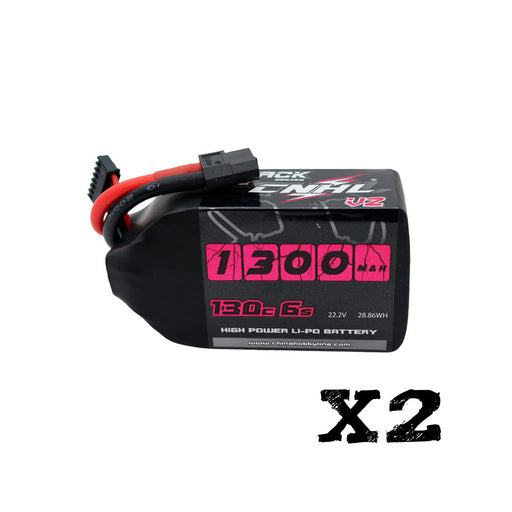
Quick Fit Check The 2 Packs CNHL Black Series V2.0 1300mAh 22.2V 6S 130C LiPo Battery with XT60 Plug is a strong fit for FPV pilots who want a prov...
View full details

Hstar D43-01Q 911 Style is a mini 1/43 alloy drift RC car designed for indoor tabletop fun and realistic drifting. It features full proportional ...
View full details

Spare Parts Availability We know that for RC pilots, reliable spare parts support often determines how long an aircraft can actually sta...
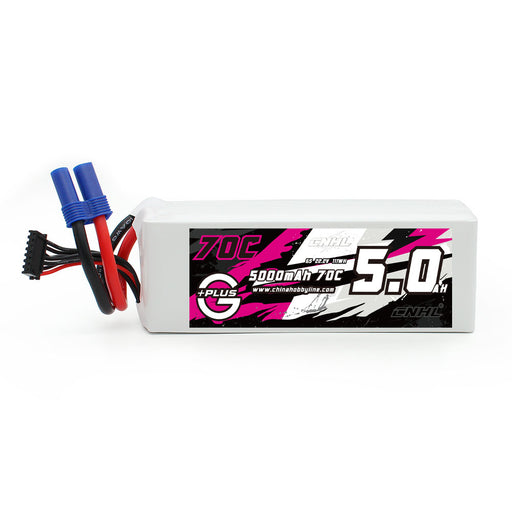
View full detailsSpecifications: Stock Number: 500706EC5 Capacity: 5000mAh Voltage: 22.2V / 6-Cell / 6S1P Discharge Rate: 70C Continual / 140C Burst Charge Rate: ...
View full details
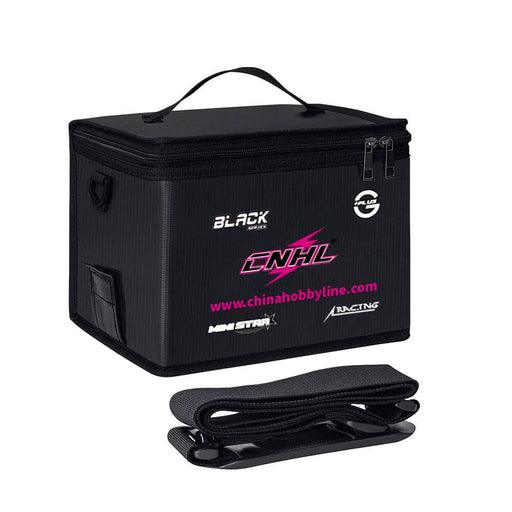
The CNHL LiPo Battery Bag is designed for safer LiPo charging, transport, and storage at home or at the field. It adds a practical layer of protect...
View full details

CNHL is the first to bring AviNationRC’s debut aircraft, the Horten Ho-229, to market — a compact EDF that combines a rare scale flying-wing desig...
View full details

The CNHL KAVAN Pulse 2200 V2 PNP Glider in orange is not a basic powered glider for casual first flights. It is a 2206mm full-house electric sport...
View full details

CNHL Bison XT STOL 1750mm PNP RC Airplane (Orange) CNHL Bison XT STOL V2 is a large high-wing bush-style aircraft built for slow, confident flyin...
View full details

Quick Fit Check The CNHL Lightning LiHV 7800mAh 4S 120C battery is designed for high-performance RC platforms that require strong burst power, stab...
View full details

Quick Fit Check The CNHL Lightning LiHV 6700mAh 6S battery is designed for RC pilots who need strong burst power with stable voltage delivery. ...
View full details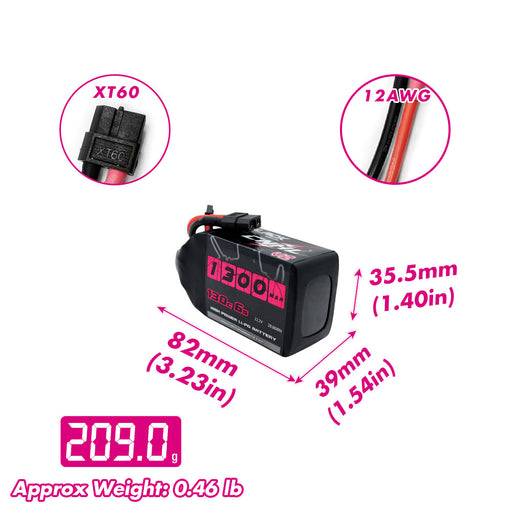

Leave a comment