
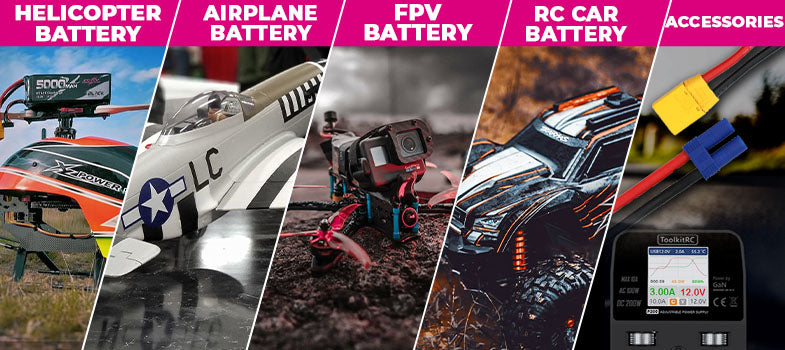
CNHL Lipo Batteries
CNHL aim at providing high-quality Li-Po batteries and RC products to all hobby enthusiasts with excellent customer services and competitive prices
The Yokomo YZ10 is a belt-driven 1/10 scale 4WD electric race buggy platform originally developed in the late 1980s and later re-released as the Team Associated YZ10 Classic. It helped define what serious electric 4WD racing looked like when belt drive efficiency, service access, and competition geometry began to converge. Decades later, the story gained a new chapter with the co-branded release that asks a question enthusiasts have debated for years: what would the platform feel like if it had been “an Associated car” from the start, not just a closely partnered American-market interpretation?
This guide analyzes the Yokomo YZ10 and the Team Associated YZ10 Classic as a 1/10 scale 4WD electric race buggy platform—covering IFMAR history, belt-drive architecture, vintage racing debates, and modern build considerations.
The Yokomo YZ-10, originally developed by Yokomo in the late 1980s, is a historic belt-driven 4WD racing platform associated with IFMAR-era development and associated with IFMAR-era development and linked to legendary competitors such as Masami Hirosaka. The Team Associated YZ10 Classic is an officially co-branded re-release that retains the same core 4WD belt-drive concept and race-engineering DNA, while packaging the kit for modern electronics and contemporary build expectations. In short, it’s the same platform story told for two audiences—collectors who value lineage and authenticity, and builders who want to assemble and actually run a chassis without worrying about aging plastics.

A major part of the YZ10 legend comes from the platform’s association with elite-level development and the personalities who made it famous. At the 1987 IFMAR World Championship in England, Yokomo arrived with a prototype direction that would later evolve into the production-era YZ10 concept. Although that early version did not secure the ultimate result, the experience directly influenced the improvements that followed in 1988.
Those refinements were not cosmetic. The race-spec configuration featured a 2mm pitch belt system for efficient power transfer, an upper deck structure that improved chassis rigidity, and a saddle-style battery layout that balanced weight across the chassis. Teflon-coated shocks and large 2.2-inch wheels were part of the competitive package, designed to cope with the evolving track conditions of late-1980s 4WD racing.

In the official narrative surrounding the Team Associated YZ10 Classic, this period is framed not as a single model year but as a development philosophy—build a belt-driven 4WD buggy capable of winning at the highest level, then refine it so racers could tune and service it efficiently between heats. That balance of outright performance and mechanical logic is why the Yokomo YZ10 still gets described as “state of the art” for its era.
Part of what separated the platform from many early 4WD competitors was not just the belt layout, but how the gearing strategy interacted with it. Period setups typically ran conservative spur-to-pinion ratios that prioritized driveline smoothness over outright top speed. Typical pinion selections often fell in the 18–22T range depending on track size, paired with spur gearing that favored controlled rollout rather than extreme top-end speed. This approach kept the car predictable on mixed-grip surfaces and reduced belt shock loads under acceleration.
Front and rear differentials were tuned not only with fluid choice, but with gearing balance in mind. A stable ratio window helped the car stay predictable on mixed-grip surfaces—an important factor at IFMAR-level tracks where conditions changed throughout the day.
One recurring misconception is that the modern release represents one brand “repackaging” another brand’s car. Historically, the relationship between Yokomo and Associated was more collaborative than that narrative suggests. During the late 1980s, the YZ10 platform was developed under Yokomo’s engineering direction, while the American market saw versions distributed and marketed through Associated channels, sometimes with different body styling and wheel colors tailored for regional preference.
That context matters. The current co-branded release does not rewrite history; it acknowledges it. The chassis DNA remains rooted in the original Yokomo design philosophy, while the Team Associated YZ10 Classic represents an official collaboration that reflects how the platform was experienced in both Japanese and American markets.
Community reactions often fall into two camps. Some view modern reissues as “cash grabs,” while others question whether a newly manufactured kit should compete in vintage classes. From a technical standpoint, a re-release preserves the design architecture but benefits from new production materials. Whether that qualifies as “vintage” is determined by local race rules, not by the existence of the kit itself. What remains unchanged is the mechanical identity of the YZ10 platform—its belt-driven efficiency, tunable differentials, and race-focused layout.
The original architecture centered around a 2-belt layout connecting front and rear gear differentials. In later generations of 4WD racing buggies, 3-belt systems became more common, allowing additional tuning flexibility in center drive balance. The YZ10’s 2-belt configuration reflected the engineering priorities of its time: simplicity, efficiency, and reduced rotating mass.
For many enthusiasts, that simpler layout is part of the charm. It offers fewer variables, a clean belt path, and a direct mechanical feel. While modern competition platforms have evolved, the 2-belt identity remains central to how this chassis behaves on throttle.
Compared to modern ultra-low center-of-gravity competition platforms with extensive carbon bracing and highly modular drivetrains, the YZ10 architecture feels mechanically honest. The layout is visible, the belt path is traceable, and setup changes are tangible rather than abstract. You can look at the chassis and immediately understand how torque travels from motor to wheels—a trait that many contemporary designs, optimized for ultimate lap time, no longer prioritize in the same way.
The Team Associated YZ10 Classic is positioned as a “what if” that still respects the original. The release messaging emphasizes that it retains the world-championship-winning technology of the original concept, especially the extremely efficient belt-driven 4WD system. At the same time, it updates the kit experience in ways that matter in 2026: hardware standardization, modern materials, and fitment decisions that acknowledge how people build today.
| Category | Original Yokomo YZ10 (Platform Era) | Team Associated YZ10 Classic (Co-branded Re-release) | Why it matters for builders |
|---|---|---|---|
| Core drivetrain concept | Belt-driven 4WD efficiency | Retains belt-driven 4WD efficiency | Preserves the “smooth + efficient” identity that defines the platform |
| Differentials and tuning | Gear differential tuning approach | Fluid-filled gear differentials highlighted for surface tuning | Practical adjustability is central to real track use |
| Service and hardware | Period-correct hardware norms | Full metric hardware emphasized for tool simplicity | Modern builders expect fewer tool changes and easier maintenance |
| Materials aging | Original plastics may be 30+ years old | New production plastics and components | Running an original often requires “collector caution”; re-release invites driving |
| Electronics accommodation | Period electronics assumptions | Battery box designed to accept modern shorty packs | Modern packaging reduces wiring stress and simplifies build planning |
| Visual identity | Classic era look, period wheels/tires | Gold aluminum, white nylon parts, studded tire tribute | Collectors value “looks right on the shelf,” drivers value durability |
Another detail often overlooked by casual observers is the inclusion of an anti-roll bar. In late-1980s 4WD racing, sway bars were not universally standard equipment. Their presence signaled a shift toward more controlled chassis roll and flatter cornering behavior, especially on higher-grip tracks. This contributed to steering consistency and made the platform more predictable in transitional sections.
For many long-time racers, the visual cues alone—the gold anodized chassis, the white nylon components—trigger immediate muscle memory. Pit tables, setup sheets, the faint smell of brushed motors cooling between heats. Those sensory details are part of why this platform resonates beyond pure performance metrics.

A few specific features get repeated in launch coverage for a reason: a floating servo mount, a spring-loaded servo saver, threaded shocks with that recognizable gold aesthetic, and a slipper clutch meant to help tune bite and protect driveline parts. Those details are not just cosmetic—they influence how the car behaves under modern power. Even if the build goal is a display shelf piece, the kit is still constructed like a track-capable buggy, not a fragile model.
The comment sections around modern reissues tend to split into two predictable camps. The first is the “thank you for bringing this back” group—people who missed the original era or could not afford the kit as a kid. The second is the “is it fair in vintage racing?” group—drivers who own true originals and worry that brand-new materials and crisp tolerances create an uneven playing field.
As several experienced racers pointed out in discussion threads: companies typically avoid labeling these as “vintage” because the term implies collector authenticity, not a modern production kit. “Re-release,” “reissue,” or “classic” is the safer language. That distinction matters in a practical way. Most local race rule sets define “vintage class” differently, and there is no universal standard. Some tracks welcome re-releases as long as the design is period-correct. Others restrict modern shocks, modern materials, or certain tire types. The Team Associated YZ10 Classic will inevitably land in different places depending on local rules, not because the kit is trying to cheat, but because the hobby never settled on one definition of “vintage.”
For builders who own an original Yokomo YZ10, there is also a simple durability reality: plastic aging is real. Even sealed, unused vintage parts can become brittle. Many owners end up driving originals gently and driving re-releases harder. That behavior alone explains why re-releases remain popular even among collectors who already own period cars.
Whether the project is a true original Yokomo YZ10 restoration or a fresh Team Associated YZ10 Classic build, the same “practical build” topics show up repeatedly: electronics packaging, drivetrain smoothness, and weight distribution. The platform is famous for efficiency, but it still needs a clean, modern build approach to show its best side.
One practical detail worth mentioning is belt tension management. Belt-driven platforms reward careful setup. Too much tension increases friction; too little can introduce skip under load. Modern builders often take extra time during initial assembly to verify alignment and tracking, especially when pairing the chassis with contemporary brushless systems that produce more immediate torque than late-80s motors.
A quick tip: after the first few packs, recheck belt tension—belts can “seat” slightly, and a small adjustment often brings the drivetrain back to that smooth, free-rolling feel.
One area where modern builds differ significantly from the late-80s era is battery format. For readers who want the short version: most modern builders prefer a 2S shorty LiPo approach because it keeps wiring manageable and fits how current electronics are packaged. That aligns with the Classic kit’s shorty-ready battery box and keeps the platform’s central mass tidy.
If you're building specifically for this chassis, start with the dedicated collection here: 2S Shorty LiPo Batteries for Yokomo YZ10 & Team Associated YZ10 Classic . For broader compatibility across modern 1/10 buggies, you can also explore the main RC Car 2S Shorty LiPo Battery Collection .
Scroll through the comment sections and a pattern quickly appears “this kit is cool,” but “what’s next?” People specifically ask for IFMAR-style editions, replicas tied to famous driver names, and even other platform reissues from brands that have been quiet on the retro front. That appetite suggests the YZ10 story is bigger than one kit. It’s part of a broader hobby trend: builders want variety again, and they want cars with visible mechanical personality.
The platform also provides something modern designs sometimes minimize: a strong “engineering identity” that is easy to see. The belt drive path, the differential locations, the shock stance, and the overall chassis layout communicate how the car works. That visible logic is part of why collectors enjoy display builds, and why track builders enjoy tuning it. In many ways, the Team Associated YZ10 Classic succeeds because it does not try to disguise its roots. It celebrates them.
It is best understood as a co-branded re-release that preserves the platform’s core belt-driven 4WD concept and classic identity while packaging the kit for modern building expectations. Some details are updated for usability and compatibility rather than trying to recreate every era-specific limitation.
“Vintage” is often used casually by racers and content creators to describe classic designs. Brands typically use terms like “classic,” “re-release,” or “reissue” because the word “vintage” implies collector authenticity. Local race rules decide what class it belongs in, and those rules vary widely.
Both. Many buyers build it as a display piece because the look is iconic. But the platform’s feature set—belt-driven efficiency, tunable differentials, slipper clutch, and robust hardware—supports real driving, especially in the re-release form where component aging is not a concern.
Most modern builders use a 2S shorty LiPo approach because it fits current electronics packaging and supports tidy weight placement. The Classic kit is explicitly designed around shorty compatibility.
For builders who plan to actually run the chassis rather than display it, battery choice influences weight bias and driveline smoothness more than most expect. For battery options and fitment guidance, use: YZ10 2S Shorty LiPo Battery Collection.
Both forms appear in hobby discussions and product references. This article primarily uses “YZ10” to match common search behavior, while occasionally referencing “YZ-10” where it helps clarify the classic naming style. Either way, the platform identity remains the same in practical terms.
Collectors sometimes prefer the hyphenated style “YZ-10” because it feels closer to period branding, while many modern listings and searches default to “YZ10.” The co-branded Team Associated YZ10 Classic release effectively bridges both audiences: it keeps the recognizable look and story of the Yokomo YZ10, while offering a kit experience that is easier to build and easier to run.
CNHL aim at providing high-quality Li-Po batteries and RC products to all hobby enthusiasts with excellent customer services and competitive prices

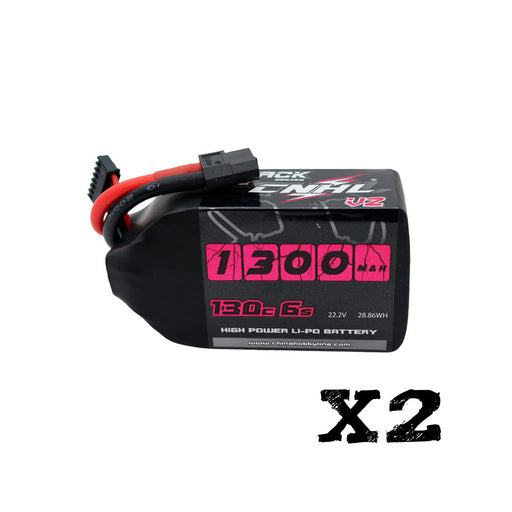
Quick Fit Check The 2 Packs CNHL Black Series V2.0 1300mAh 22.2V 6S 130C LiPo Battery with XT60 Plug is a strong fit for FPV pilots who want a prov...
View full details

Spare Parts & Long-Term Support We know that for RC pilots, reliable spare parts support is an important part of keeping an aircraft fl...
View full details
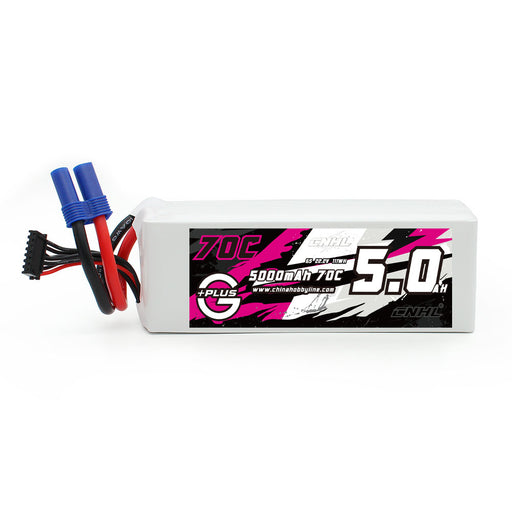
Specifications: Stock Number: 500706EC5 Capacity: 5000mAh Voltage: 22.2V / 6-Cell / 6S1P Discharge Rate: 70C Continual / 140C Burst Charge Rate: ...
View full details
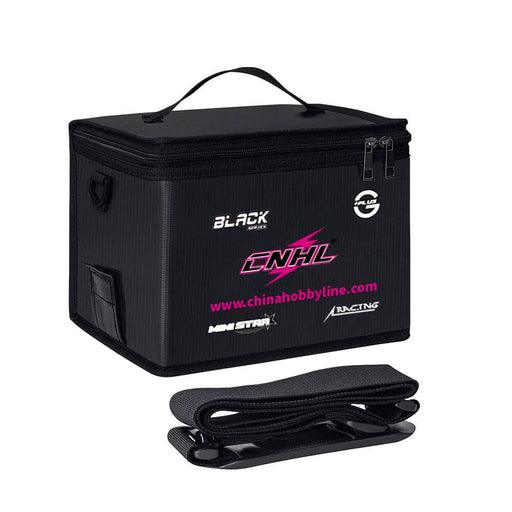
The CNHL LiPo Battery Bag is designed for safer LiPo charging, transport, and storage at home or at the field. It adds a practical layer of protect...
View full detailsQuick Fit Check The 2 Packs CNHL Speedy Pizza Series Pro 1350mAh 6S 150C LiPo Battery with XT60 Plug is built for 5-inch FPV pilots who want a ...
View full details

The CNHL 75mm EDF pilot figure is designed for 80–90mm RC jet airplanes that need a more realistic cockpit appearance without adding excessive weig...
View full details

The WNF Mitsubishi Lancer Evolution IX is an officially licensed Mitsubishi Motors 1:64 RC drift car that combines detailed Evo IX styling with rea...
View full details

The ISDT K4 is a high-power 8S LiPo smart dual charger built for demanding RC battery setups. It combines two independently controlled charging cha...
View full details

The ISDT PC-4860S is a compact four-port XT60 parallel charging board designed for experienced RC and FPV users who want to connect multiple co...
View full details

Quick Take: This officially licensed WNF 1:43 Land Rover Defender 110 Pick-Up RC crawler combines the proportions and detailing of the 1993 ...
View full details

Leave a comment