
CNHL Lipo baterie
CNHL si klade za cíl poskytovat vysoce kvalitní Li-Po baterie a RC produkty všem nadšencům do koníčků s vynikajícím zákaznickým servisem a konkurenceschopnými cenami
For years, the formula for a 5-inch FPV drone has remained relatively familiar: a carbon fiber frame, four powerful brushless motors, a flight controller and ESC stack, a digital video system and a battery strapped to the top. Manufacturers have refined that formula countless times, but relatively few have attempted to rethink the relationship between the aircraft, its electronics and the way pilots build their FPV fleets.
The GEPRC ELEGANT50 V2 O4 Pro takes a different approach.
With its elevated motor arms, underslung electronics, interchangeable DJI O4 Pro module and integrated protective structure, the ELEGANT50 V2 is one of the more unconventional 5-inch FPV platforms to emerge in recent years.
It is powerful enough for freestyle, refined enough for cinematic flying and versatile enough to explore endurance-oriented configurations. Yet it also raises an important question: does adding more engineering make a freestyle drone better, or does it move the aircraft away from the simplicity that made 5-inch FPV so appealing in the first place?

What makes it special: An interchangeable six-point suspended camera and VTX module, unusual weight distribution, substantial carbon fiber reinforcement and a versatile 6S power system.
Best suited to: Pilots who enjoy a combination of freestyle, cinematic FPV and recreational exploration, particularly those already invested in GEPRC's modular FPV ecosystem.
Main compromises: Increased weight, more complex internal construction and a less conventional approach to crash protection and maintenance.

The Elegant name belongs to an earlier generation of GEPRC aircraft, when the FPV hobby was still dominated by custom-built quads and pilots were becoming increasingly interested in professionally assembled bind-and-fly platforms.
Much has changed since then. Digital video transmission has replaced analog for many pilots, flight controllers have become significantly more capable, and factory tuning has reached a level where modern BNF drones can deliver impressive flight characteristics with relatively little initial configuration.
GEPRC's MARK and Vapor families helped establish the company's presence in this evolving 5-inch market. These aircraft largely followed the familiar freestyle formula while improving frame construction, electronics integration and camera protection.
The ELEGANT50 V2 does not simply continue that progression. It introduces a broader idea of what a ready-built FPV drone can be.
Instead of treating every aircraft as an entirely independent system, GEPRC is developing multiple platforms around a shared digital video architecture. The drone becomes part of an ecosystem rather than an isolated purchase.
That change may ultimately prove more important than any individual specification on the ELEGANT50 V2.
| Model | GEPRC ELEGANT50 V2 O4 Pro |
| Frame | GEP-EG50 V2 |
| Drone Class | 5-inch FPV |
| Wheelbase | 240mm |
| Top / Bottom Plate Thickness | 3mm / 3mm |
| Arm Thickness | 7mm Carbon Fiber |
| Flight Controller | TAKER H743 MINI |
| Gyroscope | ICM42688-P / LSM6DSK320X / BMI270, depending on production configuration |
| ESC | TAKER H60 MINI AM32 60A 4-in-1 |
| Motors | SPEEDX2 2207E 1960KV |
| Propellers | Gemfan 5136-3 |
| Digital Video System | DJI O4 Air Unit Pro |
| Camera / VTX Mounting | Interchangeable Six-Point Suspended Module |
| Receiver Options | ELRS 2.4GHz / PNP |
| GPS | GEP-M10 |
| Power System | 6S / XT60 |
| Weight Without Battery | 530g ±5g (ELRS) / 527g (PNP) |
| External Camera Mount | 3D-Printed GoPro Mount Included |
The specifications reveal a drone that is clearly not designed around minimum weight. Thick carbon components, a premium electronics stack and extensive structural integration indicate that GEPRC has prioritized a more complete flying platform rather than a minimalist freestyle build.

Perhaps the most immediately recognizable feature of the ELEGANT50 V2 is its unusual vertical layout.
On a conventional 5-inch freestyle quad, the motor arms generally sit near the lower part of the main frame, with the electronics installed above them and the battery mounted higher still.
The ELEGANT50 V2 rearranges these components. Its motor arms sit higher relative to the main electronics, while the flight controller and ESC occupy the protected lower section of the aircraft.
The battery remains on top, but the relationship between battery mass, electronics mass and propeller height is different.
In freestyle FPV, handling is not determined by motor power alone. The distribution of mass throughout the aircraft influences how readily it begins and stops rotating during pitch, roll and yaw maneuvers.
Moving the center of gravity closer to the propeller plane is one way of reconsidering how the aircraft responds to changes in thrust. However, center-of-gravity height is only part of the equation. Rotational inertia, motor response, frame geometry, propeller characteristics and flight controller tuning remain equally important.
Battery and electronics positioned above a more conventional lower arm structure.
Elevated arms with the primary electronics positioned beneath the frame.
The interesting aspect of the ELEGANT50 V2 is that GEPRC is attempting to preserve responsive flight characteristics in an aircraft carrying more structural and electronic hardware than many conventional freestyle designs.
It is not a way to eliminate the effects of weight, but it is a meaningful attempt to manage how that weight is distributed.

The DJI O4 Air Unit Pro is already a capable digital FPV system, but the quality of its recorded footage depends on more than the camera itself.
A powerful 5-inch FPV drone creates vibration through its motors, propellers and frame. Those vibrations can travel into the camera assembly, affecting image quality and making electronic stabilization less effective.
Small propeller imperfections, motor imbalance or frame resonance can introduce visible oscillations commonly described as jello.
GEPRC addresses this through an independently suspended camera and VTX assembly that incorporates six vibration-isolating mounting points.
Rather than expecting electronic stabilization to correct every movement after the footage has been captured, the suspended module aims to reduce unwanted vibration before it reaches the camera.
This creates a potentially useful combination of mechanical vibration isolation and digital stabilization through DJI RockSteady or compatible Gyroflow processing.
↓
↓
↓
↓
This design helps explain why the ELEGANT50 V2 is particularly interesting for pilots who want to combine the freedom of a freestyle quad with the visual quality of a more cinematography-focused aircraft.
Rather than carrying an additional action camera for every casual cinematic session, some pilots may find that the O4 Pro's onboard recording capabilities are sufficient.
Mechanical isolation does not make the drone immune to vibration, however. Correctly balanced propellers, healthy motors and intact damping components remain essential. Bent or damaged propellers should always be replaced before further flight.

Beyond its flight characteristics, the ELEGANT50 V2 belongs to a broader GEPRC ecosystem built around an interchangeable front-mounted digital video assembly.
This may be the most commercially significant innovation in the entire aircraft.
Traditionally, expanding an FPV fleet means purchasing another video transmission system with every new drone. For pilots who want a small cinewhoop, a larger cinematic platform, a freestyle quad and a dedicated long-range aircraft, the combined cost of digital video hardware can become substantial.
GEPRC's modular approach changes that relationship by allowing a compatible suspended video module to move between several different aircraft.
Shared Suspended Camera and VTX Module
↓
2.5-inch
Compact Cinewhoop and Tight-Space Flying
3.5-inch
Cinematic FPV and Controlled Camera Movement
5-inch
Freestyle and Versatile Cinematic FPV
6-inch
Long Range and Endurance-Oriented FPV
The ELEGANT50 V2 fills an important gap between the smaller cinematic aircraft and the larger long-range platform. Pilots can choose the aircraft best suited to a particular environment without necessarily duplicating the most expensive part of their digital video equipment.

The interchangeable assembly is secured by four mounting screws and an electrical connection. With the aircraft powered off and the flight battery disconnected, the module can be removed and transferred to another compatible, appropriately configured GEPRC frame.
For pilots who maintain several aircraft, this is more convenient than repeatedly disassembling a conventional camera installation and removing the air unit from deep inside the frame.
It also makes upgrading or replacing an individual flight platform more practical, provided the new aircraft supports the same module configuration.
Consider a pilot who wants four aircraft for four different applications.
Using an illustrative digital video system cost of $250, purchasing four separate systems would represent $1,000 in video hardware alone. Sharing one compatible system could theoretically reduce that portion of the investment to $250.
Four Independently Equipped Drones — $1,000
Four Compatible Drones Sharing One Module — $250
$750
Potential video hardware savings in this example
Illustrative calculation only. Actual savings depend on aircraft configurations, module availability, accessory requirements and purchase prices. Aircraft costs are excluded.
Of course, there is a trade-off. Sharing one O4 Pro means that only one aircraft can use that module at a time. Damage to the shared unit could also temporarily affect the availability of the entire fleet.
Nevertheless, for pilots who normally fly one aircraft at a time, the opportunity to build a more diverse FPV fleet without purchasing duplicate digital video hardware is compelling.
The real value of modularity is not simply faster maintenance. It is the ability to separate the choice of aircraft from the cost of its video system.

Weight is arguably the most controversial aspect of the ELEGANT50 V2.
At approximately 530g without a battery in ELRS configuration, it is clearly a substantial 5-inch aircraft. Pilots accustomed to lighter custom freestyle builds may immediately question whether the additional mass is justified.
That concern is reasonable. Weight influences acceleration, motor loading, energy consumption, rotational inertia and the forces experienced during a collision.
But it is also worth considering what the extra weight is being used for.
The ELEGANT50 V2 demonstrates an important distinction between a drone that is heavy and a drone that necessarily feels sluggish. Its motor combination, propeller selection and unconventional mass distribution are intended to preserve a responsive flying character despite the additional hardware.
Early flight impressions suggest that the aircraft can feel more agile than its weight alone might imply. However, that does not erase the fundamental advantages of a lighter freestyle frame.
The question is not whether weight matters. It is whether the benefits obtained from that weight match the pilot's priorities.

The combination of SPEEDX2 2207E 1960KV motors, Gemfan 5136-3 propellers and a 6S power system gives the ELEGANT50 V2 a familiar high-performance foundation.
The TAKER H743 MINI flight controller and 60A AM32 ESC add a modern electronics platform capable of supporting a variety of demanding flight characteristics.
These specifications do not make the ELEGANT50 V2 a dedicated racing drone, nor do they guarantee that it will outperform a lighter freestyle machine. They do, however, provide a strong foundation for a versatile 5-inch aircraft.
With a suitable high-discharge LiPo battery, the ELEGANT50 V2 offers the power required for dynamic acceleration, rolls, flips, power loops and controlled dives.
The elevated arm layout and mass distribution make it particularly interesting for pilots who enjoy flowing freestyle, where precision and controlled transitions can be as important as raw acceleration.
Pilots who specialize in extremely aggressive, crash-intensive freestyle may still prefer a simpler and lighter frame that is easier to rebuild repeatedly.
This is where the ELEGANT50 V2 becomes especially compelling.
A 5-inch aircraft offers a useful combination of maneuverability, speed and outdoor flight capability. Adding a carefully isolated O4 Pro camera system gives the platform additional appeal for scenic reveals, sweeping turns, smooth descents and other forms of dynamic aerial cinematography.
Unlike a small ducted cinewhoop, the ELEGANT50 V2 can cover larger outdoor spaces with the speed and momentum associated with a powerful open-propeller quad.
Unlike a purely minimalist freestyle build, its camera mounting architecture has clearly been developed with image quality in mind.
For pilots who enjoy both flying and creating visually engaging footage, that combination is potentially more useful than a narrow focus on either extreme freestyle or traditional cinematic flight.
Not every FPV flight needs to involve repeated acrobatic maneuvers.
Many pilots simply enjoy exploring open landscapes, following natural terrain and experiencing the immersive perspective of digital FPV.
The ELEGANT50 V2's GPS, stable camera architecture and versatile power platform also make it attractive for these applications. With an appropriate battery and flight configuration, it can transition from an energetic freestyle aircraft to a more endurance-oriented cruising platform.
The existence of the popular Vapor D5 naturally raises a question: why would GEPRC introduce another premium 5-inch FPV drone?
Both aircraft share a broadly similar propulsion concept, but their overall construction reflects different priorities.
The Vapor D5 follows a more traditional freestyle-oriented design, whereas the ELEGANT50 V2 introduces a more integrated frame and the benefits of GEPRC's interchangeable camera ecosystem.
| Specification | ELEGANT50 V2 O4 Pro | Vapor D5 O4 Pro |
|---|---|---|
| Drone Class | 5-inch | 5-inch |
| Wheelbase | 240mm | 230mm |
| Frame Layout | Elevated Arms, Underslung Electronics | Conventional Freestyle Layout |
| Arm Thickness | 7mm | 5mm |
| Flight Controller | TAKER H743 MINI | GEP-F722-HD V2 |
| ESC | 60A AM32 4-in-1 | 60A BLS 4-in-1 |
| Motors | 2207E 1960KV | 2207E 1960KV |
| Video System | DJI O4 Pro | DJI O4 Pro |
| Shared Camera Module | Yes | Not Part of This Modular Ecosystem |
| GPS | Included | Configuration Dependent |
| Listed PNP Weight | 527g | 428g ±5g |
| Power Connector | 6S / XT60 | 6S / XT60 |
| Preferred Application | Versatile Freestyle and Cinematic FPV | Traditional Performance Freestyle |
Specifications refer to the standard 6S O4 Pro product listings. Actual weight varies with receiver, GPS, hardware and accessories. Application preferences are editorial assessments rather than standardized flight-test rankings.
ELEGANT50 V2 O4 Pro — 527g
Vapor D5 O4 Pro — 428g
The listed PNP configurations differ by approximately 99g. This is a comparison of published specifications, not an isolated measurement of the weight added by the modular camera system.
The ELEGANT50 V2 should not be viewed as an automatic replacement for the Vapor D5. The two aircraft can coexist because they address different ownership priorities.
For someone already invested in GEPRC's interchangeable O4 Pro ecosystem, the ELEGANT50 V2 offers a particularly logical expansion. For someone seeking a standalone freestyle quad, the Vapor D5 remains a highly relevant alternative.
Pilots considering the Vapor can also explore our dedicated GEPRC Vapor D5 O4 Pro battery collection to compare compatible power configurations.
Durability is always an important consideration for freestyle FPV, and the ELEGANT50 V2 certainly appears substantial.
Its 7mm carbon fiber arms are significantly thicker than the arms used on many conventional 5-inch frames. The triangular aluminum side structures reinforce the arm mounting areas while supporting a convenient replacement system.
These features should appeal to pilots who want substantial structural rigidity and easier replacement of individual arms.
However, thick carbon fiber alone does not define the crash resistance of an entire aircraft.
The ELEGANT50 V2 uses an injection-molded lower enclosure that covers the primary electronics. Ventilation openings allow airflow through the structure while maintaining a more integrated appearance than a conventional exposed electronics stack.
This gives the aircraft a polished, carefully engineered appearance and provides a physical barrier around sensitive components.
Nevertheless, the lower enclosure and forward plastic structure introduce different impact considerations from a simpler carbon frame. A severe underside impact or hard frontal collision could transfer force through several interconnected components.
The additional mass of the aircraft can also increase collision energy at a given speed.
Without controlled impact testing, it would be unreasonable to conclude that the ELEGANT50 V2 is either unusually fragile or exceptionally crash-resistant. Its construction simply creates a different set of durability and repair considerations.

One of the most useful aspects of the frame is its removable arm design. Individual arms can be accessed without necessarily dismantling the entire aircraft.
The modular video assembly is similarly designed for convenient removal.
Internal electronics maintenance is a different matter. The integrated lower shell, tightly organized wiring and compact electronics arrangement can make complete disassembly more involved than on a conventional open freestyle frame.
| Maintenance Task | Practical Considerations |
|---|---|
| Propeller Replacement | Conventional and straightforward. |
| O4 Pro Module Replacement | Convenient four-screw modular mounting arrangement. |
| Arm Replacement | Quick-release structure helps simplify mechanical removal. |
| Motor Replacement | Requires access to motor wiring and appropriate soldering. |
| Flight Controller / ESC Replacement | More involved due to integrated enclosure and wiring. |
| Major Front Frame Repair | May require several interconnected structural components. |
The result is a drone that can be particularly convenient for certain maintenance tasks without necessarily being easier to repair in every situation.
For pilots who regularly push their aircraft into severe crash environments, the availability and cost of replacement shells, aluminum brackets, arms and modular camera components will be worth considering.
The ELEGANT50 V2's versatility becomes especially interesting when battery selection is treated as part of the aircraft configuration rather than simply a question of capacity.
At CNHL, we believe that different flying applications call for different battery characteristics. A compact freestyle LiPo and a high-energy-density long-range Li-ion pack may share the same cell count and power connector, but they serve very different purposes.
The ELEGANT50 V2 is a good example of how a capable 6S platform can benefit from several distinct power solutions.
Compact High-Discharge LiPo
Selected 1100–1500mAh CNHL packs help control flying weight while delivering the power required for dynamic freestyle maneuvers.
Featured: Speedy Pizza Pro 1350mAh and Black Series V2.0 1500mAh.
Lightweight Extended-Capacity LiPo
The CNHL Speedy Pizza 2200mAh combines a slim battery profile with approximately 315g of weight, offering additional energy while retaining high-discharge LiPo characteristics.
Featured: Speedy Pizza 2200mAh 6S 120C XT60.
High-Energy 21700 Li-ion
Compatible 5000mAh and 6350mAh CNHL Li-ion packs provide high energy density for carefully configured, efficiency-focused cruising.
Featured: BAK 50D and BAK 65E Long Range Series.
The lightweight 2200mAh LiPo is particularly interesting because it bridges the gap between traditional freestyle batteries and specialized endurance packs. It gives pilots who enjoy longer cinematic flights an option that retains the power reserve of a LiPo-based system.
Our 21700 Li-ion batteries take a different approach by prioritizing stored energy relative to battery mass. They are intended for suitable controlled cruising configurations, not repeated high-throttle freestyle maneuvers.
Before using a Li-ion configuration for extended flying, pilots should establish adequate hover and climb capability within the battery's continuous and peak current limits, account for the higher all-up weight, and retain sufficient power and energy reserves. Initial checks should be performed during short local flights under safe operating conditions.
Explore compatible CNHL 6S LiPo and 21700 Li-ion batteries, including lightweight freestyle packs, extended-capacity cinematic batteries and dedicated long-range power solutions.
Shop GEPRC ELEGANT50 V2 BatteriesUltimately, the best battery depends on whether you want the ELEGANT50 V2 to feel like a performance freestyle quad, a cinematic explorer or an endurance-oriented FPV platform.
Beyond flight performance, several practical features deserve attention when evaluating the ELEGANT50 V2 as an aircraft to own and maintain over time.
The rear-mounted GEP-M10 GPS module provides useful navigation data, including position, speed and distance information when configured with the flight controller.
It also supports GPS Rescue functionality through an appropriately configured flight control system.
However, GPS Rescue should not be confused with the fully automated return-to-home systems found on consumer camera drones. Pilots should verify satellite acquisition, rescue settings and actual behavior during controlled local tests before relying on this emergency feature.
The recessed XT60 connection and integrated battery mounting area contribute to the ELEGANT50 V2's clean appearance.
The elevated arm and motor arrangement does make cable management particularly important. Battery leads, balance connectors, loose strap ends and antenna components must be kept clear of the propeller arcs.
This is especially relevant when installing longer LiPo batteries or larger 21700 Li-ion configurations.
Battery placement should be adjusted to maintain suitable balance and ensure secure mounting without interfering with the camera assembly or propellers.
The modular front cage helps protect the camera but also creates limits on the space available around the lens.
Pilots who use ND filters for cinematic footage should pay particular attention to filter dimensions and mounting thickness. Compact, low-profile filters are generally a more practical choice for recessed camera installations than oversized filter housings.
Compatibility should be checked with the specific filter model rather than assuming that every DJI O4 Pro accessory fits every camera cage.
The protected electronics layout incorporates access points for servicing the digital video system and flight electronics.
Convenient USB access can simplify firmware maintenance, configuration and footage management. Depending on receiver and hardware configuration, some devices may also receive power through the flight controller's USB connection.
When configuring a new aircraft, pilots should verify which components are actually powered through USB and remove propellers before performing any powered bench testing.
Although the DJI O4 Pro is capable of recording high-quality onboard footage, some pilots may still prefer to use a dedicated action camera for more advanced filming requirements.
The ELEGANT50 V2 includes a 3D-printed GoPro mount, allowing compatible external camera configurations.
Adding an action camera changes both total flying weight and mass distribution. Pilots who value the aircraft's responsive handling may prefer to use O4 Pro footage alone whenever it meets their recording requirements.
The integrated fiber-optic lighting is an interesting visual departure from exposed LED strips commonly found on FPV builds.
It contributes to the aircraft's premium appearance, particularly in darker environments, but visibility in bright daylight is naturally more limited.
For most pilots, the lighting is better viewed as an aesthetic feature rather than an important reason to choose the ELEGANT50 V2.
The ELEGANT50 V2 is an ambitious design, and ambitious designs inevitably introduce compromises.
There are several areas where future versions of the modular ecosystem could become even more attractive.
A lighter version retaining the interchangeable O4 Pro module could appeal to pilots who currently prefer conventional freestyle frames. Reducing nonessential structural and cosmetic mass without compromising necessary rigidity would be an interesting engineering challenge.
The modular system is particularly attractive to DJI O4 users. A wider selection of camera cages or purpose-built adapters for other digital video systems could make the platform more appealing to pilots invested in Walksnail or alternative FPV hardware.
A custom installation alone would not guarantee equivalent vibration isolation, camera protection or module interchangeability.
The external modular components are convenient, but simplifying access to the FC, ESC and internal wiring could help reduce maintenance time after electronic faults or more substantial crashes.
An innovative frame is only as practical as its long-term serviceability. Readily available arms, bottom shells, aluminum structures, camera cages and damping components are especially important for a proprietary integrated design.
A wider range of interchangeable aircraft, including lighter open-propeller platforms, could make the shared camera concept even more valuable to pilots with different flying preferences.
The ELEGANT50 V2 will not be the ideal aircraft for every FPV pilot. Its appeal depends heavily on how the aircraft will be used and whether the owner values the modular video architecture.
| Pilot Profile | Suitability | Reason |
|---|---|---|
| Existing GEPRC Modular Drone Owner | Excellent | Can benefit directly from the shared video module. |
| Cinematic FPV Pilot | Very Good | Suspended O4 Pro system and versatile open-propeller platform. |
| Flow Freestyle Pilot | Very Good | Powerful 6S propulsion and responsive frame concept. |
| Recreational Cruising Pilot | Very Good | GPS, camera architecture and flexible battery options. |
| Experienced Long-Range Pilot | Application Dependent | Can explore endurance configurations within appropriate power, weight and operating limits. |
| Extreme Freestyle / Bando Pilot | Consider Alternatives | A lighter, simpler frame may be preferable for repeated severe crashes. |
| First-Time FPV Pilot | Not Recommended as a First Aircraft | A powerful 6S open-propeller quad requires substantial flying experience. |
| Weight-Focused DIY Builder | Application Dependent | A custom minimalist build may provide greater control over component weight. |
For someone progressing from a tiny whoop or small cinewhoop, the ELEGANT50 V2 may represent an appealing future upgrade. However, the step from a small protected-propeller aircraft to a powerful 5-inch 6S quad is substantial.
Simulator practice, experience with manual FPV controls and access to a suitable flying location remain important before making that transition.
The most interesting question raised by the ELEGANT50 V2 extends beyond this particular drone.
What happens when FPV aircraft become interchangeable platforms built around shared premium electronics?
For years, pilots have accepted that purchasing another aircraft often means purchasing another camera, another video transmitter and another set of supporting components.
Modular systems offer an alternative approach.
A pilot could begin with a compact cinewhoop, add a larger cinematic aircraft, expand into a 5-inch freestyle platform and eventually purchase a dedicated long-range quad while continuing to use compatible digital video hardware across the fleet.
That does not eliminate the value of dedicated aircraft. A modular freestyle quad still needs to fly well, a cinewhoop still needs appropriate propeller protection and a long-range aircraft still needs excellent propulsion efficiency.
Instead, modularity allows those different aircraft to share an expensive component without requiring them to share the same purpose.
The existing ecosystem covers several important FPV applications, but there is still room for further development.
A compact, open-propeller freestyle aircraft in the 3.5-inch class could bridge the gap between smaller cinewhoops and the ELEGANT50 V2. A lighter 5-inch model using the same interchangeable video architecture could also appeal to pilots who value simplicity and agility above integrated construction.
These are potential directions rather than announced products, but they illustrate the broader opportunity created by a common camera interface.
The more aircraft that support a shared module, the more valuable that module becomes to its owner.
Modularity also creates an interesting relationship with battery technology. While a camera system can remain common across multiple aircraft, the best power configuration remains specific to the aircraft and its intended flying style.
That is why CNHL continues to develop different power solutions across the FPV market, from compact high-discharge LiPo batteries to lightweight extended-capacity packs and high-energy-density cylindrical Li-ion systems.
Explore our broader GEPRC FPV drone battery collection for model-specific power solutions across the GEPRC ecosystem.

The GEPRC ELEGANT50 V2 O4 Pro is not necessarily the lightest, simplest or most specialized 5-inch freestyle drone available.
But that is not what makes it interesting.
Its appeal comes from combining several characteristics that are not always found together: substantial frame reinforcement, responsive 6S propulsion, refined camera isolation, interchangeable digital video hardware and a design that supports several different styles of FPV flying.
For a pilot already invested in GEPRC's modular ecosystem, the ELEGANT50 V2 represents a logical expansion into the 5-inch class.
For cinematic pilots, it provides an opportunity to combine smooth digital footage with the freedom and power of an open-propeller freestyle aircraft.
For endurance-focused pilots, its versatile power platform creates opportunities to explore different battery configurations, provided aircraft loading and electrical demands remain appropriate.
For dedicated extreme freestyle pilots, a simpler and lighter platform such as the Vapor D5 may still be the better choice.
The ELEGANT50 V2 does not need to replace those aircraft to justify its existence. Its value lies in offering a different balance of performance, ownership flexibility and engineering refinement.
The CNHL Perspective
The ELEGANT50 V2 shows that the future of FPV may not be about finding one aircraft that does everything better than every other drone. It may be about building adaptable aircraft and choosing the right combination of camera technology, propulsion and battery power for the way each pilot wants to fly.
The ELEGANT50 V2 O4 Pro is a premium 5-inch 6S FPV drone featuring an interchangeable DJI O4 Pro camera and VTX module, elevated motor arms, underslung electronics and a reinforced carbon fiber frame. It is suitable for freestyle, cinematic FPV and versatile recreational flying.
Neither aircraft is universally better. The ELEGANT50 V2 offers greater modular ecosystem flexibility and an integrated suspended camera design, while the Vapor D5 is a lighter and more conventional freestyle-oriented platform.
The O4 Pro ELRS version has a listed weight of approximately 530g ±5g without a battery, while the PNP version is listed at 527g. Actual flying weight depends on battery selection, configuration and additional accessories.
The ELEGANT50 V2 shares its modular front-section concept with compatible configurations of the Cinebot25 V2, Cinebot35 and TriPro6. The assembly can be transferred using the appropriate mounting hardware and electrical connection.
Yes. Its six-point suspended camera assembly, powerful propulsion system and versatile flight characteristics make it an attractive platform for dynamic outdoor cinematography, smooth flight lines and scenic exploration.
The elevated motor and arm arrangement is intended to bring the center of gravity closer to the propeller plane and reconsider the aircraft's mass distribution. Actual maneuverability also depends on rotational inertia, propulsion performance and flight controller tuning.
It can be configured for endurance-oriented and long-range FPV applications using suitable batteries and flight settings. Compatible high-energy-density CNHL 21700 Li-ion batteries provide additional energy storage for controlled cruising, subject to aircraft weight, current demand, radio-link performance and applicable operating requirements.
The aircraft uses a 6S power system with an XT60 connector. CNHL offers compatible LiPo and Li-ion batteries for lightweight freestyle, cinematic FPV, cruising and endurance-focused configurations. Explore our ELEGANT50 V2 battery collection for model-specific options.
Yes. The aircraft incorporates a GEP-M10 GPS module, providing navigation data and support for appropriately configured GPS Rescue functionality.
Yes. A 3D-printed GoPro mount is included. Pilots should consider the additional camera weight, mounting requirements and its effect on balance and flight characteristics.
The standard shared camera architecture is designed around compatible DJI O4 configurations. Alternative digital video systems may require custom mounting solutions, and equivalent vibration isolation or cross-platform compatibility should not be assumed.
The integrated lower shell provides a physical enclosure around the electronics, but it also incorporates ventilation openings. It should not be treated as a waterproof aircraft or operated in wet conditions without appropriate protection.
It is better suited to pilots with previous FPV experience. Its powerful 6S propulsion system and open 5-inch propellers make simulator training and experience with smaller FPV aircraft advisable before flying it.
Whether you are building your first performance-oriented FPV aircraft or expanding an existing fleet, the right battery can help align your aircraft with your flying objectives.
Different aircraft. Different flying styles. The right power for every flight.
CNHL si klade za cíl poskytovat vysoce kvalitní Li-Po baterie a RC produkty všem nadšencům do koníčků s vynikajícím zákaznickým servisem a konkurenceschopnými cenami
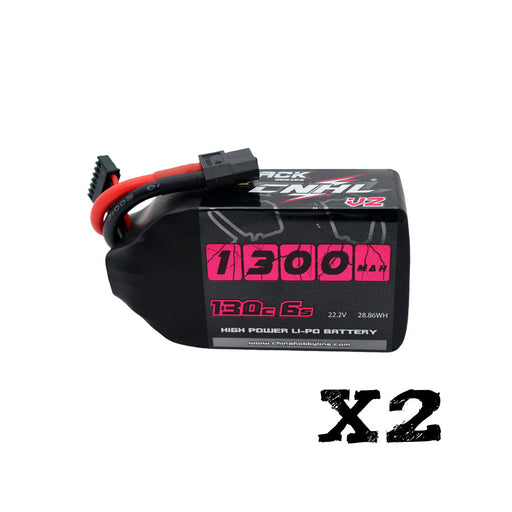
Rychlá kontrola kompatibility 2 akumulátory CNHL Black Series V2.0 1300mAh 22.2V 6S 130C LiPo s konektorem XT60 jsou skvělou volbou pro FPV piloty,...
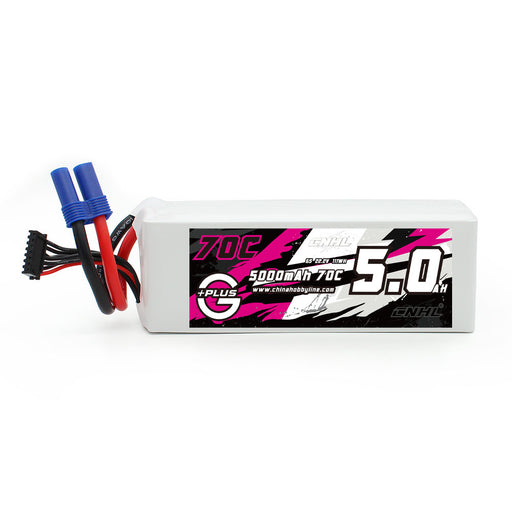
Zobrazit úplné detailySpecifikace: Číslo skladu: 500706EC5 Kapacita: 5000mAh Napětí: 22.2V / 6-článků / 6S1P Výbojový proud: 70C kontinuální / 140C špičkový Nabíjecí p...
Zobrazit úplné detaily
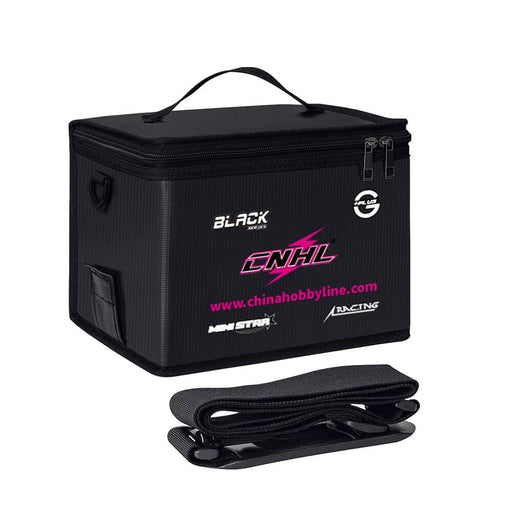
CNHL LiPo Battery Bag je navržen pro bezpečnější nabíjení, přepravu a skladování LiPo doma nebo v terénu. Přidává praktickou vrstvu ochrany tím, že...
Zobrazit úplné detailyRychlá kontrola montáže 2 balení CNHL Speedy Pizza Series Pro 1350mAh 6S 150C LiPo baterie s XT60 zástrčkou jsou navrženy pro 5palcové FPV pilo...
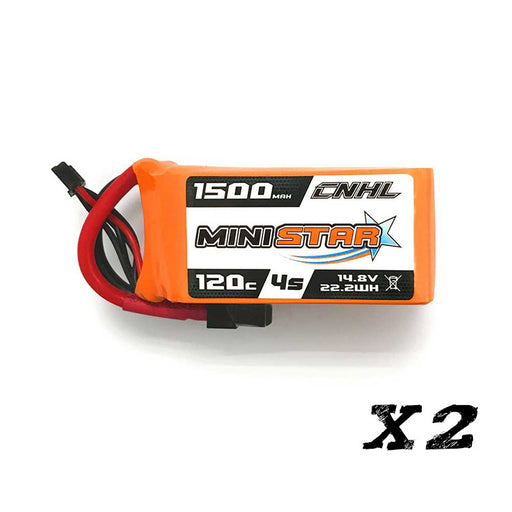
Zobrazit úplné detailySpecifikace: Skladové číslo: 1501204 Kapacita: 1500 mAh Napětí: 14,8 V / 4 články / 4S1P Vybíjecí proud: 120C trvale / 240C špičkově Nabíjecí prou...
Zobrazit úplné detaily

Adaptérový kabel baterie CNHL z XT60 na IC2, 2 kusy umožňuje pohodlně připojit kompatibilní LiPo baterie XT60 k RC modelům vybaveným konektorem IC...
Zobrazit úplné detaily

ISDT X16 je profesionální výkonná dvoukanálová nabíječka LiPo s napájením ze sítě AC, určená pro rozsáhlé systémy RC baterií, které výrazně přesah...
Zobrazit úplné detaily

ISDT PD60 je kompaktní 60W nabíječka s balancérem pro LiPo baterie a napájením přes USB-C, určená uživatelům RC modelů, kteří hledají jednoduch...
Zobrazit úplné detaily

Rychlá kontrola kompatibility LiPo baterie CNHL Speedy Pizza Series 2200mAh 22,2V 6S 120C s konektorem XT60 kombinuje známý formát 2200mAh 6S s le...
Zobrazit úplné detaily

Rychlá kontrola kompatibility LiPo baterie CNHL Speedy Pizza Series 2200mAh 14.8V 4S 120C s konektorem XT60 kombinuje běžně používaný formát 2200m...
Zobrazit úplné detaily



Zanechte komentář