
CNHL Lipo akut
CNHL pyrkii tarjoamaan korkealaatuisia Li-Po-akkuja ja RC-tuotteita kaikille harrastajille erinomaisella asiakaspalvelulla ja kilpailukykyisillä hinnoilla

Choosing LiPo voltage is one of the first decisions that shapes how an RC model feels, how hard the electronics work, and how forgiving the setup will be over time. The short answer is simple: lower-voltage packs such as 1S and 2S are common on small, light, or beginner-friendly models, while 4S, 6S, and 8S setups are used when the goal shifts toward more speed, more headroom, and heavier-duty platforms. But in practice, voltage is not just about going faster. It affects throttle feel, current draw, motor temperature, setup stress, battery size, connector choice, and how easy the whole system is to live with after dozens of runs or flights.
This guide explains LiPo voltage from 1S to 8S in plain language. It is designed to help RC hobbyists understand what changes as voltage increases, where each voltage level usually makes sense, and why choosing a battery by numbers alone often leads to the wrong setup. For more focused comparisons, readers can also continue into 1S vs 2S LiPo Batteries Guide, 3S vs 4S LiPo Battery Guide, and 6S LiPo Battery Selection Guide.
In practical terms, 1S and 2S are usually best for very small, light, or beginner-friendly RC models, 3S and 4S cover a huge part of everyday hobby use, 6S is often the smarter choice for more demanding high-performance systems, and 8S belongs mostly on larger heavy-duty platforms that can actually use that extra headroom. The right answer is not “the highest voltage possible,” but the voltage that gives the model the behavior you want without creating unnecessary heat, weight, or setup stress.
Quick answer: 1S–2S fits very small and beginner-friendly models, 3S–4S covers most mainstream RC use, 6S suits more demanding high-performance systems, and 8S is mainly for large heavy-duty platforms.
When hobbyists say 1S, 2S, 3S, 4S, 6S, or 8S, the “S” refers to the number of cells connected in series inside the pack. Each standard LiPo cell is rated at 3.7V nominal. Put two in series and the pack becomes 7.4V nominal. Put four in series and it becomes 14.8V. Six cells make 22.2V. Eight cells make 29.6V.
That number matters because voltage is what lets a power system reach a given RPM with less current for the same general power target. In very simple terms, increasing voltage usually means the system can produce speed and power more easily without pulling as much current as a lower-voltage setup trying to do the same work. That is one reason higher-voltage systems often run cooler and feel more effortless when the model is heavy or fast.
But there is a tradeoff. Higher voltage usually means a more serious setup: bigger batteries, stricter fit requirements, more expensive electronics, and less room for careless choices. That is why a 1S whoop and an 8S monster truck can both be “right” for their jobs even though they live at opposite ends of the voltage ladder.
| Voltage Level | Nominal Voltage | Common RC Use | Typical Character |
|---|---|---|---|
| 1S | 3.7V | Tiny whoops, ultra micro models | Light, simple, low-risk, low inertia |
| 2S | 7.4V | Micro cars, crawlers, small planes, some boats | Mild to moderate power, easy to manage |
| 3S | 11.1V | Sport planes, trainers, entry performance cars | Noticeably stronger punch and speed |
| 4S | 14.8V | FPV drones, RC cars, performance boats, planes | High performance with broad versatility |
| 6S | 22.2V | EDF jets, large planes, FPV, RC cars | More authority, more efficiency under load |
| 8S | 29.6V | Large RC cars, heavy-duty speed and bashing setups | Extreme power ceiling, serious hardware demand |

A common beginner assumption is that voltage only affects top speed. In reality, voltage changes the whole feel of a model. It changes how quickly a motor reaches RPM, how much stress ends up in the system, and how stable the setup feels when the load gets heavy. The result is that two setups with similar advertised power can behave very differently on the bench and in the real world.
Higher voltage setups often feel more relaxed under load. A 6S system pushing a heavy airframe or a large RC car usually has an easier time than a lower-voltage setup trying to make up the difference by drawing more current. That can mean less heat, less sag, and more consistent performance near the end of a pack. On the other hand, the higher the voltage goes, the less forgiving the system becomes if the gearing, motor KV, prop choice, or ESC limits are wrong.
Voltage also does not replace battery quality. A mediocre higher-voltage pack can still feel weak if its real-world discharge performance is poor. That is why voltage choice and pack quality should be looked at together. For a deeper look at how advertised discharge numbers compare with real behavior, see Real LiPo Battery C-Rating Test and Performance Comparison.
1S LiPo packs are most at home on ultra-light aircraft, tiny whoops, and compact micro platforms where every gram matters. Their strength is not raw force. Their strength is how little they ask from the system. Small motors, tiny ESCs, and minimal wiring all benefit from the simplicity of a single-cell setup.
For indoor flying and beginner practice, 1S remains one of the most approachable ways to get into the hobby. A good 1S setup is less intimidating, easier to charge, and less punishing when the inevitable early mistakes happen. It also keeps the platform light, which often matters more than raw power on small models.
Still, the moment the model gains weight or the pilot starts asking for harder punch, 1S reaches its ceiling quickly. That is where 2S starts to look attractive. Readers comparing those two starting points can continue into 1S vs 2S LiPo Batteries Guide.
2S is often where “toy-grade feel” starts giving way to more serious RC behavior. On small cars, crawlers, micro boats, and lighter aircraft, 2S provides enough voltage to wake a model up without pushing it into a high-stress zone. It is one of the easiest voltages to live with because it balances useful performance and broad compatibility.
That balance is why 2S is such a strong option for newcomers, backyard driving, trail use, and many small-scale applications. It usually gives better throttle response and more usable speed than 1S, but it does not force the same level of setup discipline as higher-voltage systems.
For shoppers browsing products directly, the main category is 2S LiPo Batteries. It is also the voltage range that teaches a valuable lesson early: the “best” battery is often the one that matches the platform cleanly, not the one that simply posts the bigger number.
3S is a major step because it often changes a model from calm and casual into something that feels properly energetic. Trainers become more confident in wind. Sport planes feel less flat on climb-out. Surface vehicles gain a more satisfying pull without necessarily crossing into overkill. For a lot of hobbyists, 3S is where the model starts behaving the way they originally imagined.
That said, 3S is not just “2S but better.” It can expose weak drivetrains, make throttle control more important, and punish cooling issues that were not obvious before. On the right platform, though, 3S often lands in a sweet spot: enough voltage to feel exciting, not so much that the model becomes tiring or fragile.
CNHL’s category for this step is 3S LiPo Batteries. It is also worth noting that 3S remains relevant well beyond cars and fixed-wing sport models. Some specialty air platforms sit here naturally, which is part of why voltage should always be discussed in context rather than as a universal ladder.
A good example is the difference between RC paragliders and paramotors, where overall system layout and flying style matter as much as raw pack voltage. For that niche perspective, see Paraglider vs Paramotor in RC: Why Both Can Have Motors.

If one voltage deserves to be called broadly versatile in modern RC, it is 4S. In FPV, 4S still has a loyal following because it offers quick response, lighter battery weight, and a very direct, easy-to-read feel in the air. In RC cars and boats, 4S often delivers enough power to feel serious without pushing every run into extreme territory. In fixed-wing aircraft, 4S is a popular choice for many sport and performance setups.
One reason 4S remains so popular is that it often gives a strong balance between excitement and manageability. It has enough voltage to feel fast and capable, but it is still accessible in terms of battery size, charger demand, and system complexity. That makes it a common “forever voltage” for hobbyists who want performance without rebuilding every supporting component around it.
Readers weighing 3S and 4S more directly can continue into 3S vs 4S LiPo Battery Guide. Product browsing can start from 4S LiPo Batteries, while FPV-specific shoppers can go straight to 4S LiPo Batteries for FPV Drones.

6S is where many hobbyists first notice that higher voltage is not just about more aggression. A good 6S setup often feels more composed. It can hold power deeper into the run or flight, keep the system from working as hard for the same outcome, and provide a bigger margin when the model itself is heavier, larger, or more demanding.
That is why 6S shows up across several important RC segments. In EDF jets, 6S is a very common working voltage because it helps the system produce strong fan performance without leaning too hard on current. In RC cars, 6S gives larger platforms the kind of authority that makes them feel planted and properly powered instead of always chasing more punch. In FPV, 6S has become a preferred choice for many pilots who want cleaner throttle feel and better efficiency at comparable output levels.
But 6S is also the point where poor choices become more expensive. Motor KV, gearing, prop load, ESC margin, connector quality, and battery fit all matter more. It is not unusual to see hobbyists step into 6S because the headline numbers look impressive, only to realize later that the setup no longer has much tolerance for bad assumptions. That is exactly why 6S LiPo Battery Selection Guide is worth reading before buying by capacity alone.
For product and application paths, readers can start with 6S LiPo Batteries, then move into 6S LiPo Batteries for RC Cars, 6S LiPo Batteries for RC Airplanes, or 6S LiPo Batteries for FPV Drones.
For smaller freestyle quads, battery size within 6S matters just as much as the voltage itself. That is why 6S is really a family of setups rather than one fixed answer. A focused example can be found in Best Battery for 5 Inch Quad.

8S is a more specialized step. It is usually associated with large RC cars, high-speed heavy-duty setups, and platforms where lower voltage would require too much current to achieve the same kind of real-world authority. When the vehicle is big, heavy, and expected to accelerate hard without fading, 8S starts making sense.
That does not mean every large platform automatically needs it. In many cases, 6S is already enough for a satisfying and more practical setup. The appeal of 8S is that it lifts the ceiling further and reduces the feeling that the system is straining to keep up. The tradeoff is obvious: higher battery cost, more size and weight, stricter space requirements, and a sharper need for electronics that truly belong in that class.
For direct browsing, the main category is 8S LiPo Batteries. This is a good example of where voltage should follow platform demand, not curiosity. A system built for 8S can be thrilling. A system pushed there without the right hardware usually becomes an expensive lesson.
One of the most useful ways to think about LiPo voltage is to stop asking which voltage is “best” and start asking which voltage fits the job. The correct answer changes dramatically depending on whether the platform is a tiny FPV drone, a 1/8 scale RC car, a sport plane, or an EDF jet.
| Application | Most Common Voltage Range | What usually matters most |
|---|---|---|
| Tiny whoop / ultra micro | 1S–2S | Weight, connector efficiency, simplicity |
| Micro cars / crawlers | 2S | Control, fit, run time, moderate heat |
| Sport planes / trainers | 3S–4S | Climb authority, balance, flight duration |
| FPV drones | 4S–6S | Throttle feel, sag, weight, punch recovery |
| EDF jets | 6S | Efficiency under load, current control, fan performance |
| 1/8 and larger RC cars | 4S–6S–8S | Torque feel, heat control, drivetrain durability |
For FPV-specific battery browsing, CNHL already separates 4S LiPo Batteries for FPV Drones and 6S LiPo Batteries for FPV Drones. That split makes sense because 4S and 6S often produce different flying character even when both are perfectly valid.
For many readers, the fastest way to narrow battery choice is not to start with chemistry or C rating, but to first match the model type to the voltage range that usually works best. This does not replace the manufacturer recommendation, but it gives a practical starting point for understanding what hobbyists commonly use in the real world.
| RC Type | Best Starting Voltage | Common Upgrade Voltage | What matters most |
|---|---|---|---|
| Tiny whoop / ultra micro | 1S | 2S | Low weight, simple setup, efficient connector choice |
| Micro car / crawler | 2S | 3S | Fit, runtime, smooth control, manageable heat |
| Sport plane / trainer | 3S | 4S | Balanced climb performance and flight time |
| FPV drone | 4S | 6S | Throttle feel, sag control, battery weight, flight style |
| EDF jet | 6S | — | Efficiency under load, strong fan performance, heat control |
| 1/8 and larger RC car | 4S or 6S | 8S | Vehicle size, drivetrain strength, real platform demand |
A battery can have the “right” voltage and still be the wrong choice. Capacity affects runtime and pack size. Discharge quality affects how the battery holds up under load. Connector choice affects resistance, fit, and compatibility. Chemistry affects pack behavior and charging ceiling. That is why voltage should be the first sorting step, not the only step.
For example, once the voltage category is chosen, the next questions are usually: how much capacity can the model physically accept, how much discharge performance is actually needed, and which connector belongs on the platform. Those questions often decide whether the final setup feels clean and confidence-inspiring or awkward and compromised.
Readers who want to go deeper into those adjacent decisions can continue into LiHV vs LiPo: Is More Voltage Really Worth It and RC Battery Connectors Guide. Together with voltage choice, those two topics usually explain most of the confusion people have when comparing packs that look similar on paper.
The nominal voltage values in this guide are standardized battery specifications: 1S is 3.7V, 2S is 7.4V, 3S is 11.1V, 4S is 14.8V, 6S is 22.2V, and 8S is 29.6V. Those numbers are useful because they describe the electrical class of the pack, but they do not tell the full story of how a model will actually feel on the bench, in the air, or on the ground.
In real use, throttle response, sag, motor heat, runtime, and overall “feel” depend on the complete system. Motor KV, gearing, prop load, fan size, vehicle weight, ESC limits, connector resistance, and battery quality all influence the result. That is why two models running the same voltage can behave very differently, and why experienced hobbyists usually judge voltage as one part of a system decision rather than a standalone performance shortcut.
The most common mistake is choosing the highest voltage the user can physically fit, then assuming that more voltage automatically means a better setup. It often does not. If the electronics, gearing, prop, or flying style do not match, the result may be more heat, less balance, shorter usable runtime, or a platform that becomes annoying to control.
The second mistake is comparing voltages without comparing the entire system. A well-matched 4S setup can feel better than a sloppy 6S setup. A carefully chosen 2S pack can transform a micro platform more effectively than an oversized pack that technically fits but ruins balance. Voltage should always be judged together with model weight, intended use, component quality, and available space.
The third mistake is ignoring pack quality in favor of spec-sheet bravado. Higher voltage does not fix poor cells, weak connector decisions, or unrealistic discharge claims. Good setups tend to be coherent rather than dramatic. That is also why experienced hobbyists often sound less impressed by big numbers and more interested in whether the pack fits the platform honestly.
The practical answer is this: choose the lowest voltage that gives the model the behavior you actually want without making the system work too hard. For very small platforms, that may be 1S or 2S. For many everyday RC models, it may be 3S or 4S. For demanding jets, larger airframes, serious FPV power systems, and heavy RC cars, 6S often becomes the smarter long-term solution. For truly large and aggressive surface platforms, 8S may be justified.
That is a very different way to think about batteries than simply chasing bigger numbers. The goal is not to “move up the ladder” for its own sake. The goal is to match voltage to real platform demand, then refine the rest of the system around that choice.
For direct category browsing, readers can continue to 2S LiPo Batteries, 3S LiPo Batteries, 4S LiPo Batteries, 6S LiPo Batteries, and 8S LiPo Batteries.
Readers who already know their application can also move directly into the most relevant category pages, such as 4S LiPo Batteries for FPV Drones, 6S LiPo Batteries for FPV Drones, 6S LiPo Batteries for RC Cars, and 6S LiPo Batteries for RC Airplanes.
Is higher LiPo voltage always better?
No. Higher voltage is only better when the platform, electronics, and intended use can justify it. A model that feels excellent on 4S will not automatically improve on 6S.
What is the biggest real-world benefit of moving to a higher voltage setup?
Usually it is not just speed. The biggest gain is often that the system can make the required power more comfortably, with less current stress and better consistency under load.
Does higher voltage always mean longer runtime?
No. Runtime depends more directly on capacity, efficiency, vehicle or aircraft load, and how the system is driven or flown. A higher-voltage setup can be more efficient in some cases, but it does not automatically guarantee longer runtime.
What voltage is most versatile for RC hobby use?
Across the hobby as a whole, 4S is one of the broadest sweet spots. It appears in FPV, RC cars, boats, and airplanes. That said, 6S becomes more attractive as the platform gets heavier or more performance-oriented.
Why do so many EDF jets and large RC cars use 6S?
Because 6S gives those platforms more useful headroom. It supports stronger performance without forcing the system to rely on as much current as a lower-voltage setup would need for similar output.
Should beginners start with the lowest voltage possible?
Not always, but beginners usually benefit from a voltage that matches the model’s intended design instead of trying to “upgrade” immediately. A clean 2S or 3S setup is often more enjoyable than an overbuilt setup that never feels settled.
Is 6S better than 4S for FPV?
Not automatically. Many pilots prefer 6S because it can feel more efficient and more composed under load, but 4S still makes a lot of sense for pilots who prefer a lighter battery feel, lower overall weight, or a more direct setup. The better choice depends on flying style, motor setup, and what kind of response the pilot actually wants.
Can I use a higher voltage LiPo than my model recommends?
Only if the full power system is designed to support it. Using a higher-voltage LiPo than recommended can over-stress the motor, ESC, drivetrain, prop, or fan system. Battery choice should follow the platform’s real electrical limits, not just physical fit.
Which is better for beginners, 2S or 3S?
In many cases, 2S is easier for beginners because it is usually more forgiving and easier to manage. But for some larger or heavier beginner models, 3S may actually be the intended starting point. The better beginner voltage is the one that matches the model’s design and keeps the setup controllable rather than overpowered.
What should I read after this voltage guide?
A good next step is to compare specific voltage ranges and adjacent topics: 1S vs 2S LiPo Batteries Guide, 3S vs 4S LiPo Battery Guide, 6S LiPo Battery Selection Guide, LiHV vs LiPo, and RC Battery Connectors Guide.
CNHL pyrkii tarjoamaan korkealaatuisia Li-Po-akkuja ja RC-tuotteita kaikille harrastajille erinomaisella asiakaspalvelulla ja kilpailukykyisillä hinnoilla

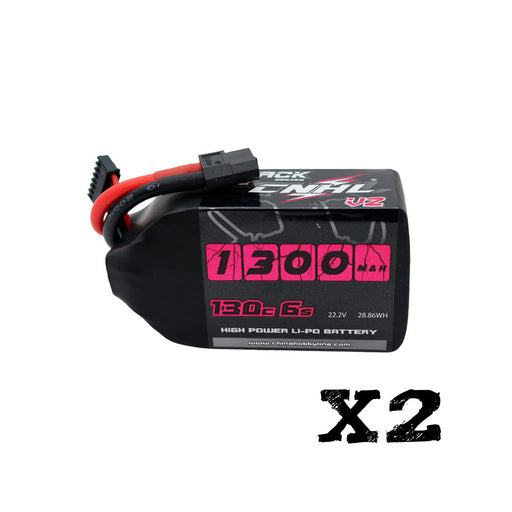
Nopea sovitustarkistus 2 Packs CNHL Black Series V2.0 1300mAh 22.2V 6S 130C LiPo-akku XT60-liittimellä sopii erinomaisesti FPV-lentäjille, jotka ha...
Näytä täydet tiedotVaraosat ja pitkäaikainen tuki Tiedämme, että RC-piloteille luotettava varaosatuki on tärkeä osa sitä, että lentokone pysyy lentokunnossa vuo...
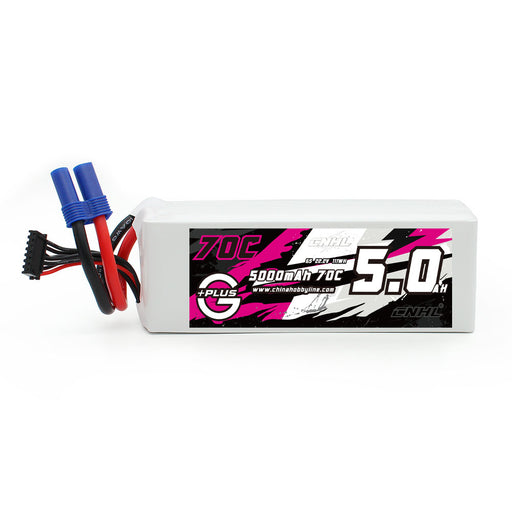
Näytä täydet tiedotTekniset tiedot: Varastonumero: 500706EC5 Kapasiteetti: 5000mAh Jännite: 22,2V / 6-kennoa / 6S1P Purkunopeus: 70C jatkuva / 140C hetkellinen Lata...
Näytä täydet tiedot
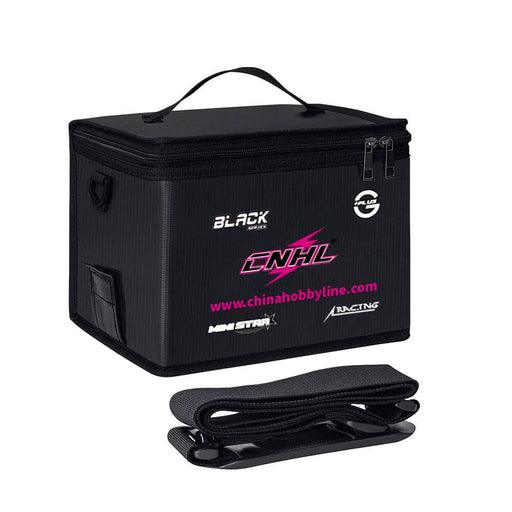
CNHL LiPo Battery Bag on suunniteltu turvallisempaan LiPo-lataukseen, kuljetukseen ja säilytykseen kotona tai kentällä. Se lisää käytännöllisen suo...
Näytä täydet tiedot

Nopea sovitustarkistus 2 paketin CNHL Speedy Pizza Series Pro 1350mAh 6S 150C LiPo -akku XT60-liittimellä on suunniteltu 5-tuuman FPV-piloteill...
Näytä täydet tiedot

Quick Fit Check The CNHL Speedy Pizza Series 2200mAh 22.2V 6S 120C LiPo Battery with XT60 Plug combines the familiar 2200mAh 6S format with a ligh...
Näytä täydet tiedot

Quick Fit Check The CNHL Speedy Pizza Series 2200mAh 14.8V 4S 120C LiPo Battery with XT60 Plug combines a widely used 2200mAh 4S format with a sli...
Näytä täydet tiedotQuick Fit Check The CNHL Speedy Pizza Series 2200mAh 11.1V 3S 120C LiPo Battery with XT60 Plug takes the familiar 3S 2200mAh aircraft battery form...
Näytä täydet tiedotThe CNHL Long Range Series BAK 65E 6350mAh 21700 Li-ion battery cell is built around one clear priority: maximum stored energy from a lightweight c...
Näytä täydet tiedot

The CNHL Long Range Series BAK 50D 5000mAh 21700 Li-ion battery cell is designed for custom high-energy battery packs that need a strong balance be...
Näytä täydet tiedot




Jätä kommentti