
סוללות CNHL ליפו
CNHL שואפת לספק סוללות Li-Po באיכות גבוהה ומוצרי RC לכל חובבי התחביב עם שירות לקוחות מצוין ומחירים תחרותיים
Answer first: The Axial SCX24 1971 Chevrolet C10 V3 is not a complete redesign of the SCX24 platform. It is still the familiar 1/24 RC rock crawler underneath, with compact 2S LiPo power, simple factory electronics, worm gear axles, and the same upgrade-friendly personality that made the SCX24 series popular in the first place. What makes this version worth talking about is the C10 character. The interchangeable grille options, cleaner no-post body, retro wheel-and-tire package, oil-filled shocks, and backpack-friendly size make it a fun micro crawler for casual drivers, classic Chevy truck fans, and anyone who wants an easy RC truck to enjoy indoors or outdoors. Experienced SCX24 builders may still wish Axial had gone further with electronics, chassis layout, and weight distribution.

The Axial SCX24 line has always worked because it keeps RC simple. You do not need a large field, a crawler course, or a full equipment bag to enjoy one. A desk obstacle, a backyard stone path, a small pile of rocks, or a quiet trail stop can be enough. That low-pressure fun is the real reason the SCX24 series has stayed relevant for so long.
The new Axial SCX24 1971 Chevrolet C10 leans directly into that idea. It is small enough to carry, easy enough for beginners to understand, and familiar enough for experienced micro crawler owners to modify. It is not the most radical SCX24 ever released, but it brings back one of the best-looking body styles in the lineup with a few meaningful visual and usability updates.
For casual owners, the SCX24 C10 V3 may feel like a neat little classic Chevy crawler that is ready to enjoy right away. For experienced SCX24 fans, it may feel like a conservative refresh that should have included better electronics, improved balance, or a more modern chassis layout. Both reactions make sense.
The first thing to understand is that the 1971 Chevrolet C10 V3 is still very much an SCX24. Under the body, the basic formula remains familiar: steel C-channel frame rails, full-time 4WD, worm gear axles, a small brushed motor, compact two-in-one electronics, servo-on-axle steering, 3-link front suspension, 4-link rear suspension, and 2S LiPo power.
That is not automatically a bad thing. For a new driver, the familiar SCX24 setup is part of the appeal. It is simple, ready-to-run, easy to understand, and supported by one of the biggest micro crawler upgrade ecosystems in the hobby. Parts are easy to find, tuning ideas are everywhere, and the truck is approachable even for someone buying their first crawler.
For someone who already owns several SCX24 builds, the reaction may be different. The platform has been around long enough that many experienced owners were hoping for more than another refresh. A stronger servo, smoother low-speed electronics, better weight distribution, higher-clearance links, or even a factory premium version would have made this release feel more ambitious.
That split is the key to understanding this truck. The new C10 is not trying to win a spec-sheet fight against every newer micro or mini crawler on the market. It works best when viewed as a character-driven SCX24 refresh rather than a full mechanical evolution.
Classic Chevy truck fans will notice the naming debate right away. In full-size Chevrolet truck history, C10 is usually associated with 2WD models, while K10 points to 4WD. The Axial truck is a 4WD crawler, so it is easy to understand why some scale-truck owners feel that “K10” would be the more technically accurate name.
From an RC product standpoint, the logic is also easy to understand. Axial is using the C10 identity because the body, styling, and classic pickup recognition are centered around the Chevrolet C10 look. Underneath, it is still the SCX24 4WD crawler chassis. The simplest way to understand this model is this: it is a C10-inspired scale body on a full-time 4WD SCX24 micro crawler platform.
This small naming debate actually makes the truck more interesting. It shows that we are not only looking at the RC chassis. We care about the real vehicle history, the body style, and whether the scale details feel right. For a model that sells heavily on classic truck character, that matters.
The interchangeable grille setup is one of the smartest parts of this release. The full-size 1967–1972 Chevrolet C10 generation changed visually across those years, and Axial gives owners different front-end options to capture that range. Instead of locking the truck into one exact look, the C10 V3 lets the owner choose the face that feels right.
That matters because this truck is not only a crawler. It is also a small scale model that people will look at on a desk, shelf, workbench, or trail rock. The grille options make the truck feel more personal right away. A casual owner gets a fun customization feature without buying extra parts. A builder gets a better starting point for a period-correct or custom C10 project.

This is also one of the updates that helps separate the V3 C10 from older versions. The platform underneath may be familiar, but the front-end customization gives the truck a stronger collectible feel. It is a small thing, but on a body-led release like this, small details carry a lot of weight.
Another useful change is the cleaner body mounting. The new C10 body removes the visible body-post look, giving the hood a smoother and more realistic appearance. The rear hinge and front latch setup also make the body easier to open when accessing the battery compartment.
That may sound like a minor detail, but on a 1/24 crawler it matters. These trucks are handled constantly. Batteries are changed often. Owners open the body to check wiring, adjust parts, or make small modifications. A body that opens cleanly and avoids visible body-post holes makes the truck feel better both as a scale model and as a daily-use micro crawler.
This also fits the C10’s casual-use personality. If the truck is being driven around the house, carried outside, or taken along on a light RC hike, easy battery access is a real advantage. It is not a dramatic performance upgrade, but it improves the way the truck feels in normal use.
The wheel and tire package is probably the easiest visual upgrade to notice. The smaller retro-style wheels and thicker tire sidewalls suit the old Chevy body better than a more modern wheel design would. The result is a chunkier, more period-correct stance that makes the C10 look like an old truck rather than just another micro crawler wearing a pickup shell.
The licensed Interco Super Swamper TSL Bogger-style tires add to that old-school off-road attitude. They give the truck a more aggressive look without making it feel too extreme. On a scale truck like this, that balance matters. A C10 body can look strange if the wheel and tire combination feels too modern, too large, or too disconnected from the truck’s era. This setup fits the body much better.

From a crawling standpoint, the tires help the truck look and feel more capable, but expectations should stay realistic. This is still a lightweight factory SCX24, not a weighted competition build. The tires and oil-filled shocks help the truck feel more planted, but they do not erase the limits of the factory electronics, weight balance, and short-wheelbase micro crawler layout.
The new C10 works best in the places where the SCX24 formula already makes sense. It is easy to carry. It is easy to run indoors. It looks good sitting on a shelf. It can be driven in short sessions without much preparation. The refreshed body, grille choices, wheel-and-tire package, and no-post body make that simple formula more appealing.
This truck also fits the RC hiking idea very naturally. A small crawler can be packed into a bag and taken outside without turning the whole day into an RC trip. A full-size trail crawler or large basher needs more space, more planning, and often more cleanup. A micro crawler can be part of a short walk, a quiet afternoon, or a quick backyard session.
That said, responsible use matters. Not every hiking trail, protected rock formation, public park, or scenic area allows RC vehicles. Some places restrict them because of erosion, wildlife, visitor safety, or local rules. The SCX24 C10 is easy to carry, but it should still be driven only where RC use is allowed and where it will not disturb the area or other people.
Used in the right place, this is exactly the kind of truck that makes casual outdoor crawling enjoyable. It does not need huge rocks or a competition course. Smooth stone, small ledges, roots, gravel, and low-speed obstacles are enough to make it fun.
The biggest criticism of this C10 is also easy to understand: experienced SCX24 owners wanted more platform development. At the current price level, many long-time micro crawler fans naturally expect more than new body details, grille options, tires, and a cleaner body mount.
The factory electronics are still basic. The brushed power system is familiar. The servo is familiar. The overall chassis layout is familiar. For a beginner, that may not matter much. For someone who already replaces servos, motors, ESCs, wheels, tires, links, and brass parts on every SCX24 build, the truck can feel like a body refresh rather than a serious mechanical update.
This is where the new C10 becomes a very specific kind of product. It is not the best choice for someone who wants a factory brushless micro crawler, premium electronics, a modern competition-style chassis, or a major performance jump out of the box. It makes more sense for someone who likes the C10 body, wants a ready-to-run truck, and enjoys the idea of upgrading later.
| What Works Well | Where Owners May Want More |
|---|---|
| Classic C10 body with strong scale character | Still built on the familiar SCX24 platform |
| Interchangeable grille options | No major electronics upgrade |
| Cleaner no-post body appearance | No factory brushless or premium version |
| Retro wheels and Bogger-style tires suit the truck | Sticker graphics may not feel premium enough |
| Small size makes it easy to carry and drive anywhere suitable | Experienced builders may still replace many factory parts |
The removable two-tone graphics are useful if the owner wants to customize the body, but they also feel like a compromise. A cleaner painted finish would have made the body feel more premium, especially because this release depends so heavily on the C10 body’s character.
The lack of an interior is another detail scale-focused owners may notice. Clear windows look good from a distance, but an empty cabin stands out more on a truck with this much classic body personality. A simple interior insert or driver figure would have helped the C10 feel more complete.
These are not deal-breaking issues for every owner. Many SCX24 buyers will modify the body anyway. Still, they are worth mentioning because this truck sells on personality and scale presence. When the body is the star, the body details matter.
The Axial SCX24 C10 uses a compact 2S LiPo battery setup. The original-style Spektrum battery commonly associated with SCX24 applications is the SPMX3502S30, titled 7.4V 350mAh 2S LiPo Battery: SCX24 PH 2.0. That small 350mAh pack keeps the truck light and simple, which works well for quick indoor runs or short test drives.
Once the truck is used outdoors, taken along for a trail walk, or driven for longer casual sessions, runtime becomes more noticeable. That is where a higher-capacity 2S replacement battery makes sense. For this truck, CNHL recommends the best battery for Axial SCX24 1971 Chevrolet C10 RC rock crawler collection built around the CNHL MiniStar 900mAh 7.4V 2S 30C LiPo Battery with PH2.0 & JST.
This is not a 3S conversion and not a claim that the C10 becomes a totally different crawler. It is a runtime upgrade. The goal is more driving time, fewer battery swaps, and better usefulness for the way many people actually use an SCX24: short bursts of crawling, indoor obstacles, backyard trails, light outdoor driving, and relaxed RC hiking.

Battery weight still matters. On a 1/24 RC crawler, a larger battery can affect balance and center of gravity. Owners should check fit, wire routing, polarity, and body closure before driving. A bigger battery is useful only when it works with the chassis instead of fighting it.
The difference between the Spektrum SPMX3502S30 7.4V 350mAh 2S LiPo Battery: SCX24 PH 2.0 and the CNHL MiniStar 900mAh 2S PH2.0 & JST pack is not about voltage. Both stay in the 2S LiPo class. The difference is capacity and runtime.
| Battery Option | Capacity | Main Benefit | Best Use |
|---|---|---|---|
| Spektrum SPMX3502S30 7.4V 350mAh 2S LiPo Battery: SCX24 PH 2.0 | 350mAh | Small, light, and close to the original RTR battery setup | Short indoor runs, quick test drives, and lightweight setups |
| CNHL MiniStar 900mAh 7.4V 2S 30C LiPo Battery with PH2.0 & JST | 900mAh | Longer runtime and fewer battery swaps | Outdoor crawling, backyard courses, RC hiking, and longer casual sessions |
For many SCX24 C10 owners, the most noticeable improvement is convenience. A 900mAh 2S pack lets the truck stay on the rocks longer, which matters when the C10 is used away from the charger or carried outside for a relaxed trail run.
The JST output lead also gives the CNHL pack extra flexibility beyond SCX24-style PH2.0 use. Selected Ultra Micro planes and small RC models that use a 2S JST battery setup may also be able to use this pack, as long as voltage, connector type, polarity, battery compartment size, and wire routing are checked carefully before use.
This truck makes the most sense for three types of buyers.
First, it is a good fit for beginners who want a small ready-to-run crawler with a body that feels more interesting than a generic trail truck. The SCX24 platform is easy to understand, parts support is strong, and the size makes it easy to drive almost anywhere that RC use is allowed.
Second, it works for classic Chevy truck fans. The C10 body is the main reason this model exists, and the grille options make that body more enjoyable. If the owner has a connection to old Chevrolet trucks, the appeal is obvious.
Third, it works for SCX24 owners who enjoy building and modifying. The factory truck may not satisfy someone who wants premium electronics from day one, but it is a strong starting point for a custom C10 build. Wheels, tires, weight, links, servo, electronics, body details, and battery setup can all become part of the project.
It is less ideal for buyers who want the most advanced micro crawler for the money right out of the box. If the priority is brushless power, premium electronics, two-speed transmission, metal upgrades, or the latest chassis geometry, this C10 may feel too conservative.
The Axial SCX24 1971 Chevrolet C10 V3 is easy to criticize if judged only as a mechanical update. The electronics are still basic. The platform is familiar. The body graphics could feel more premium. Some long-time owners wanted Axial to move the SCX24 forward in a bigger way.
But judged as a character-driven RC rock crawler, the C10 still works. The body has personality, the grille options are smart, the no-post body looks cleaner, the wheel-and-tire package fits the truck better, and the size makes it easy to enjoy without planning a full RC outing.
That is the real reason this model matters. It is not the most radical SCX24 ever released. It is not the high-spec factory build many experienced owners hoped for. It is a familiar little crawler wrapped in one of the best-looking classic truck bodies in the SCX24 lineup. For many casual drivers, that will be enough. For builders, it is a clean starting point. And with a practical 2S battery upgrade, it becomes a more useful truck for longer everyday crawling sessions.
For more CNHL LiPo options across crawlers, bashers, touring cars, and small-scale RC trucks, explore the broader CNHL RC car batteries collection.
No. It is best understood as a refreshed SCX24 C10 built on the familiar SCX24 platform. The biggest changes are around the body, grille options, wheel-and-tire look, body access, and overall styling rather than a full chassis redesign.
In full-size Chevy truck history, C10 is usually associated with 2WD, while K10 refers to 4WD. Since the SCX24 is a 4WD crawler, some scale-truck fans feel K10 would be more accurate. Axial uses the C10 name because the body and styling are based around the classic Chevrolet C10 identity.
The SCX24 C10 uses a 2S LiPo battery setup. The original-style Spektrum option commonly associated with SCX24 use is the SPMX3502S30 7.4V 350mAh 2S LiPo Battery: SCX24 PH 2.0. For longer runtime, the CNHL MiniStar 900mAh 7.4V 2S 30C LiPo Battery with PH2.0 & JST is a practical replacement option when fit and wire routing are checked.
For runtime, yes. A 900mAh 2S battery offers much more capacity than the 350mAh Spektrum SPMX3502S30. It should be treated as a runtime upgrade, not a higher-voltage performance upgrade. Fit, battery weight, connector type, polarity, and body closure still need to be checked.
Yes. It is ready-to-run, small, easy to carry, and simple to drive in short sessions. Beginners who like classic trucks may enjoy it more than a generic micro crawler. More experienced owners may want upgrades later.
The main downsides are the familiar factory electronics, limited mechanical changes compared with older SCX24 models, sticker-based body graphics, no interior, and a price that may feel high to experienced owners who expected a bigger platform update.
Yes, if the owner enjoys building micro crawlers. The SCX24 platform has a large upgrade ecosystem. Common upgrade areas include servo, motor, ESC, wheels, tires, brass weight, links, and battery setup. For a casual owner, a higher-capacity 2S battery may be the most practical first upgrade.
CNHL שואפת לספק סוללות Li-Po באיכות גבוהה ומוצרי RC לכל חובבי התחביב עם שירות לקוחות מצוין ומחירים תחרותיים

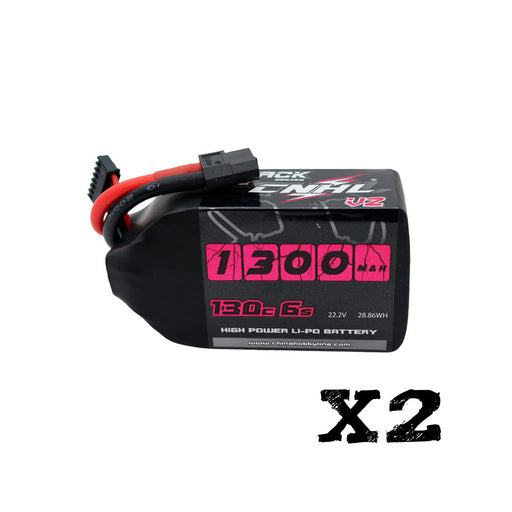
בדיקת התאמה מהירה ה2 Packs CNHL Black Series V2.0 1300mAh 22.2V 6S 130C LiPo Battery with XT60 Plug מתאים היטב למטיסי FPV שרוצים סוללת 6S 1300mAh X...
הצג פרטים מלאים

חלקי חילוף ותמיכה לטווח ארוך אנו יודעים שעבור טייסי RC, תמיכה אמינה בחלקי חילוף היא חלק חשוב בשמירה על מטוס כשיר לטיסה במשך שנים. לכן CNHL מת...
הצג פרטים מלאים
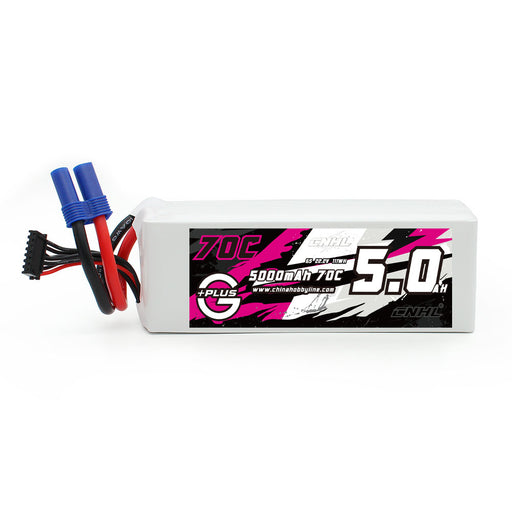
מפרטים: מספר מלאי: 500706EC5 קיבולת: 5000mAh מתח: 22.2V / 6 תאים / 6S1P קצב פריקה: 70C רציף / 140C פיצוץ קצב טעינה: 5C מקסימום גודל (הבדל של 1-5 ...
הצג פרטים מלאים
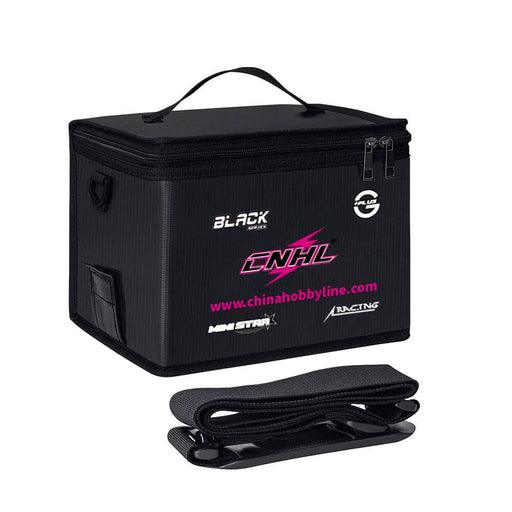
תיק סוללות LiPo של CNHL מיועד לטעינה, הובלה ואחסון בטוחים יותר של סוללות LiPo בבית או בשדה. הוא מוסיף שכבת הגנה פרקטית על ידי סיוע במניעת התפשטות ח...
הצג פרטים מלאיםבדיקת התאמה מהירה חבילת 2 CNHL Speedy Pizza Series Pro 1350mAh 6S 150C LiPo עם תקע XT60 מיועדת לטייסי FPV בגודל 5 אינץ' שרוצים מערכת 6S חופשית ...
הצג פרטים מלאים

The WNF Mitsubishi Lancer Evolution IX is an officially licensed Mitsubishi Motors 1:64 RC drift car that combines detailed Evo IX styling with rea...
הצג פרטים מלאים

The ISDT K4 is a high-power 8S LiPo smart dual charger built for demanding RC battery setups. It combines two independently controlled charging cha...
הצג פרטים מלאים

The ISDT PC-4860S is a compact four-port XT60 parallel charging board designed for experienced RC and FPV users who want to connect multiple co...
הצג פרטים מלאים

Quick Take: This officially licensed WNF 1:43 Land Rover Defender 110 Pick-Up RC crawler combines the proportions and detailing of the 1993 ...
הצג פרטים מלאים

Quick Fit Check Continuous / Peak Current: 20A / 30A peak Battery: 3-4S LiPo BEC: No Motor Connectors: 3.5mm gold female ...
הצג פרטים מלאים

Leave a comment