
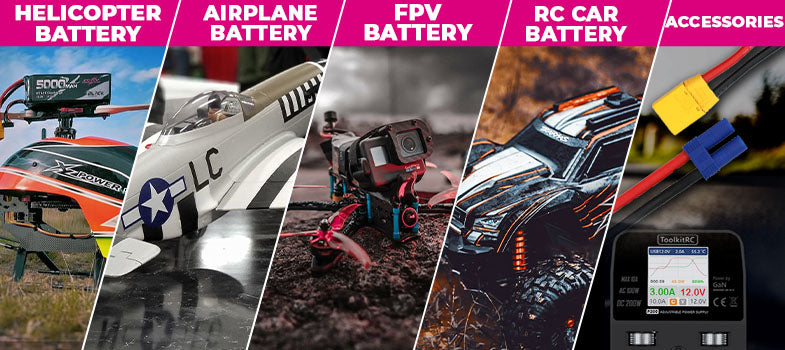
CNHL Lipo Batteries
CNHL aim at providing high-quality Li-Po batteries and RC products to all hobby enthusiasts with excellent customer services and competitive prices

The CNHL Lightning LiHV battery series marks the launch of a new high-performance battery family for RC users who want sharper response, stronger punch, and a broader range of LiHV options in one consistent lineup. Built around LiHV high-voltage chemistry and a unified 120C discharge structure, the Lightning series brings together capacities from 750mAh to 8500mAh across 2S to 8S configurations, with multiple connector options and selected Shorty formats for more demanding setups.
That sounds technical, but what it really means is this: the series was built for users who want quicker response, stronger punch, and a more deliberate high-performance feel, whether they are dealing with a compact setup, a racing chassis, a larger aircraft, or a heavier high-current setup.
More importantly, Lightning does not feel like a random collection of LiHV batteries. It feels like CNHL decided to launch a full performance-oriented battery family from the beginning, with enough voltage, capacity, connector, and format coverage to work across very different RC setups without losing the identity of the series.
A lot of RC battery discussions get stuck at the usual checklist: voltage, capacity, connector, dimensions, and maybe discharge rate if someone is paying close attention. Those things matter, but they do not fully explain why one battery setup can feel sharper and more immediate while another feels flatter, softer, or less composed once the load comes in.
That gap between paper specs and actual feel is where a series like Lightning starts to make sense. The goal is not simply to say “higher voltage is better” or “120C is better.” The real point is to build a battery line that supports stronger output behavior under demanding use, while also covering enough real-world configurations that users can stay inside one series instead of jumping between unrelated packs every time the model changes.
That is what makes Lightning feel more like a complete lineup than a simple category. It is broad enough to support different RC needs, but specific enough to have a clear identity.
LiHV is not brand-new technology, and that is exactly why it is worth talking about carefully. For a long time, many hobbyists mostly associated high-voltage LiPo packs with smaller applications. That old impression never completely disappeared. But in recent years, there has been a noticeable shift in how people think about larger LiHV batteries and more performance-oriented high-voltage setups.
In simple terms, a standard LiPo cell is typically charged to 4.20V, while a LiHV cell is designed for a higher full-charge ceiling of 4.35V per cell. That difference does not automatically transform every setup, but it is the technical reason LiHV packs are often discussed in terms of sharper response and a slightly more aggressive power feel when the application suits them.
Part of that renewed interest comes from a very practical place. Once a model is more demanding, whether because it pulls harder, flies longer, carries more weight, or simply puts the battery under heavier stress, small differences in voltage behavior start to matter more. That is when higher-voltage packs stop looking like a niche curiosity and start looking like a serious option.
Another part of the conversation is packaging efficiency. Users are often willing to try a different battery philosophy when they believe they are getting a more useful balance of size, weight, capacity, and output. That is one reason high-voltage batteries tend to attract attention again whenever a new range arrives with broader capacity coverage and more usable model fit options.
What has changed more recently is not just the availability of LiHV batteries, but how they are being used. For a long time, many users associated high-voltage packs with smaller setups where the gains were relatively modest. In those cases, the difference could feel subtle, sometimes closer to a slight improvement rather than a clear upgrade.
That perception starts to shift once you move into larger packs and higher-demand setups. In those situations, the difference becomes easier to notice. A well-matched LiHV pack in a more demanding system can feel more consistent under load and more stable when the setup is pushed harder.

On some smaller or lighter setups, the difference between a standard LiPo and a well-matched LiHV pack may feel modest. It can show up as a slightly more eager launch, a cleaner response to throttle input, or a setup that feels a little less lazy once you ask more from it. Not every model turns into a different machine overnight.
How noticeable that change feels still depends heavily on the platform itself, including current draw, overall weight, gearing or prop choice, and how well the pack matches the model. In other words, battery chemistry matters, but it is never the only variable shaping the final result.
Where things usually become more noticeable is under heavier load. That is when users start talking less about numbers and more about feel. Power comes in earlier. Response feels tighter. The model seems less reluctant when you ask for acceleration or sustained output. Instead of the battery feeling like it is trailing the system, it feels like it is keeping up with it more confidently. It is the point where a setup starts to feel less soft on entry and less reluctant when you ask for repeated hard pulls.
That kind of difference is hard to fake in writing because it is not just about top-end speed or one flashy moment. It is more about the overall character of the setup. When a battery line is designed around that kind of feel, it stops being just a chemistry discussion and becomes a broader setup discussion.
A common mistake is assuming that every LiHV setup will feel equally dramatic. In reality, that is not usually the case. Smaller packs can show the benefits in a lighter, more subtle way. Larger packs running in more demanding systems are often where the value becomes easier to feel, whether that shows up as stronger response, better consistency, or more useful endurance over the course of a run or flight.
What really defines the series is the way CNHL built a complete structure around the high-voltage concept:
That breadth matters because one of the biggest frustrations with battery shopping is inconsistency. A user might like one pack in one size, then discover the next needed configuration belongs to a completely different line with different positioning, different feel, or limited connector choices. Lightning solves part of that problem by acting like one coherent family instead of a handful of disconnected SKUs.
| Lightning Series Range | Coverage |
|---|---|
| Capacity | 750mAh to 8500mAh |
| Voltage | 2S, 3S, 4S, 6S, 7S, 8S |
| Discharge Platform | 120C |
| Connector Options | XT30, XT60, XT90, EC3, EC5, QS8, TRX |
| Special Formats | Lightning Shorty available in selected sizes |
One of the most realistic ways people judge a battery is not by discharge charts. It is by the quiet question they ask before they buy it: will this actually fit, and if it does, will the extra capacity feel worth it?
That question matters because a lot of battery decisions are really packaging decisions. The user is often trying to get more output, more runtime, or both, without creating a new headache around tray space, body clearance, cable routing, or overall balance. That is why size-to-capacity efficiency gets so much attention whenever a new battery line appears.
Another factor that keeps coming up in real-world use is the balance between size and usable capacity. Many users are not simply looking for the biggest number possible, but for a battery that makes better use of the space they already have. For many setups, the appeal is not just higher voltage by itself, but the possibility of getting a more useful combination of output, fit, and available capacity within the constraints of a real chassis or airframe.
This is also where high-voltage batteries tend to gain traction. When space is limited but performance expectations are not, a pack that offers a better balance of response, usable capacity, and real-world fit can become a meaningful option. It is less about chasing a headline spec and more about making better use of the physical space the model already allows.
Lightning benefits from entering the market as a full series rather than a one-size experiment. Smaller packs support compact builds. Mid-size packs give flexibility. Larger 6S, 7S, and 8S configurations open the door for high-current setups where bigger power reserves are part of the appeal. The point is not that every user needs the largest pack. The point is that the lineup makes more sense because it scales with the application instead of forcing the application to adapt to a narrow product window.
With CNHL Lightning Shorty options such as 2400mAh, 3200mAh, and 3500mAh in selected configurations, CNHL is clearly acknowledging that performance users do not all want the same battery shape. In racing and space-sensitive layouts, pack format can matter just as much as chemistry or discharge rating. A battery that fits the platform properly is often a better upgrade than one that only looks stronger on paper.
In some racing platforms, Shorty packs are not just about saving space. They can also influence weight placement and chassis balance, which is one reason the format remains important well beyond simple dimensions.

The CNHL Lightning series is not trying to be the answer to every battery question in RC. It is trying to be the answer to a more specific one: what should you look at when you want a setup that feels more serious, more responsive, and more deliberately performance-focused?
That is why the most natural fit for this series is in setups where users already care about output behavior and system response. Typical use cases include:
It is also a good match for users who are simply tired of compromise. Sometimes the right battery is not the one with the highest number in one category. It is the one that does more things correctly at the same time.
In practical terms, the series makes the most sense in setups where users already notice differences in response, punch, runtime balance, or pack fitment, rather than in very casual applications where almost any decent pack would feel acceptable.
A useful way to think about Lightning is not “standard LiPo versus LiHV” in isolation, but “general-purpose battery thinking versus platform-driven battery thinking.”
| Comparison Point | CNHL Lightning LiHV | Typical Standard LiPo Approach |
|---|---|---|
| Voltage Ceiling | LiHV high-voltage platform | Conventional LiPo baseline |
| Platform Coverage | 750mAh to 8500mAh, 2S to 8S, multiple connector types | Often narrower or more fragmented by application |
| Performance Identity | Unified 120C high-performance line | Mixed-purpose positioning |
| Special Formats | Includes Shorty branch | Often separate or inconsistent |
High-voltage batteries are not without questions. One of the most common discussions is around long-term durability and whether charging to a higher voltage impacts cycle life. CNHL Lightning Series have seen strong long-term results with well-designed LiHV packs, while others remain cautious and prefer to monitor performance over time.
Another point that comes up in practice is system compatibility. Certain flight controllers or telemetry setups may require small adjustments to correctly interpret higher cell voltage. These are not major obstacles, but they are part of the real-world experience that often gets overlooked in purely spec-driven discussions.
These kinds of questions are not a weakness of the category. They are simply part of what happens when a battery moves from being a niche option to a more widely used performance choice.
There is a reason experienced hobbyists tend to ask practical questions when a new battery range appears. They want to know how it will fit. How it will behave under load. Whether the gain is noticeable in their type of setup. Whether larger packs are actually usable. Whether the long-term experience will justify the switch.
Those are the right questions.
CNHL Lightning LiHV Series does offer is a clearer and more complete answer for users who already know they want a more performance-oriented battery family. It gives them a broader set of options without diluting the identity of the series.
That is why Lightning feels important. Not because it uses one magic spec, but because CNHL treated it like a real product platform from the beginning.
If you want to browse the full lineup, you can explore the CNHL Lightning LiHV battery series here.
What is the CNHL Lightning LiHV series?
The Lightning LiHV series is CNHL’s new high-performance battery platform built around LiHV high-voltage chemistry, a unified 120C discharge structure, and broad configuration coverage from 750mAh to 8500mAh across 2S to 8S setups.
Is Lightning only for one type of RC model?
No. One of the strengths of the series is that it was designed as a full battery family rather than a single-purpose line. It includes compact packs, larger high-current packs, multiple connector options, and selected Shorty versions.
What makes Lightning different from a normal LiPo lineup?
The difference is not only the LiHV chemistry. Lightning combines a higher charge ceiling, a unified 120C positioning across the line, broader model coverage, and a more platform-driven design philosophy.
Are there Lightning Shorty batteries?
Yes. Selected Lightning Shorty packs are part of the lineup, including options such as 2400mAh, 3200mAh, and 3500mAh in specific configurations for users who need a more compact racing-friendly pack format.
What connector types are available in the Lightning series?
Depending on the model, the series includes XT30, XT60, XT90, EC3, EC5, QS8, and TRX options. This broad connector coverage is one of the reasons Lightning works well as a scalable battery platform.
What voltage options are included?
The current Lightning lineup covers 2S, 3S, 4S, 6S, 7S, and 8S configurations.
Do LiHV batteries need a charger with a LiHV mode?
Yes, if you want to charge the pack to its full LiHV voltage ceiling. A charger with a proper LiHV mode is the correct way to charge a LiHV battery to 4.35V per cell. Charging practices should always match the battery type and the charger settings should be checked carefully before use.
CNHL aim at providing high-quality Li-Po batteries and RC products to all hobby enthusiasts with excellent customer services and competitive prices

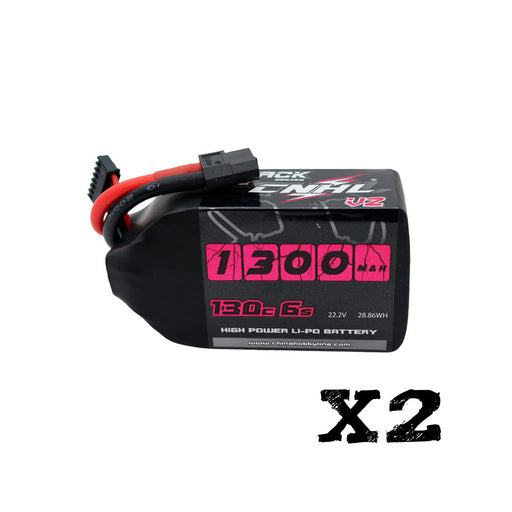
Quick Fit Check The 2 Packs CNHL Black Series V2.0 1300mAh 22.2V 6S 130C LiPo Battery with XT60 Plug is a strong fit for FPV pilots who want a prov...
View full detailsSpare Parts & Long-Term Support We know that for RC pilots, reliable spare parts support is an important part of keeping an aircraft fl...
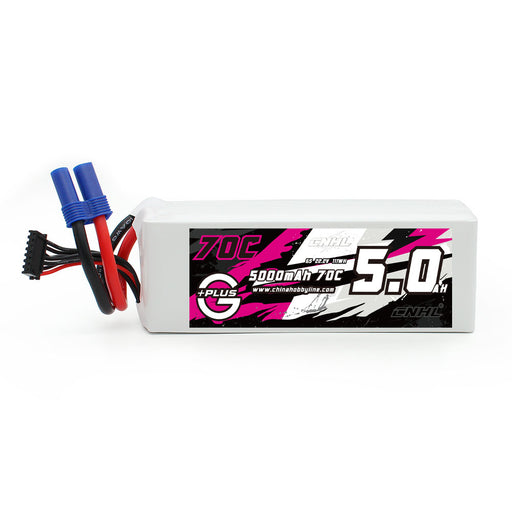
View full detailsSpecifications: Stock Number: 500706EC5 Capacity: 5000mAh Voltage: 22.2V / 6-Cell / 6S1P Discharge Rate: 70C Continual / 140C Burst Charge Rate: ...
View full details
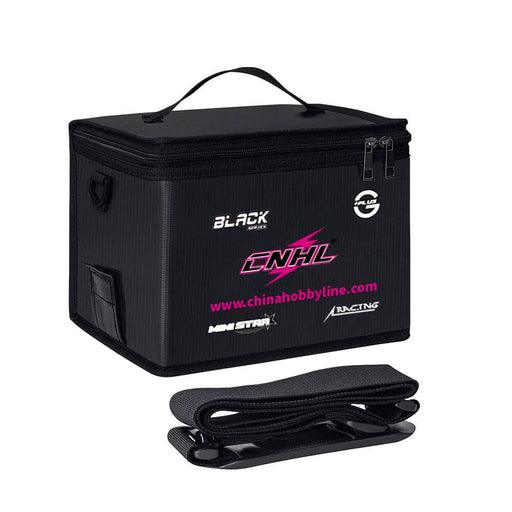
The CNHL LiPo Battery Bag is designed for safer LiPo charging, transport, and storage at home or at the field. It adds a practical layer of protect...
View full detailsQuick Fit Check The 2 Packs CNHL Speedy Pizza Series Pro 1350mAh 6S 150C LiPo Battery with XT60 Plug is built for 5-inch FPV pilots who want a ...
View full details

The CNHL Long Range Series BAK 65E 6350mAh 21700 Li-ion battery cell is built around one clear priority: maximum stored energy from a lightweight c...
View full details

The CNHL Long Range Series BAK 50D 5000mAh 21700 Li-ion battery cell is designed for custom high-energy battery packs that need a strong balance be...
View full details

The ISDT C4 EVO is a versatile smart battery charger built for AA, AAA and cylindrical rechargeable cells from compact 10440 batteries all the way ...
View full details

The CNHL Long Range Series 6350mAh 21.6V 6S1P 21700 Li-ion battery combines six BAK 65E high-energy cells into a 137.16Wh pack designed for ultra-e...
View full details

The CNHL Long Range Series 5000mAh 21.6V 6S1P 21700 Li-ion battery combines six BAK 50D cells into a compact 108Wh pack designed around long-range ...
View full details




Leave a comment