
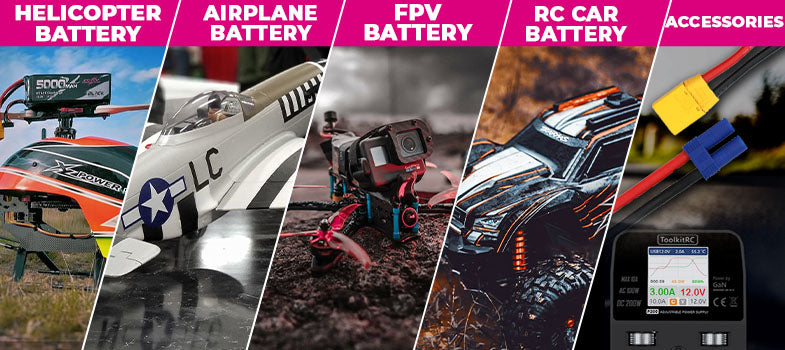
CNHL Lipo Batteries
CNHL aim at providing high-quality Li-Po batteries and RC products to all hobby enthusiasts with excellent customer services and competitive prices

Conclusion first: The Kyosho Inferno MP11e is best understood as a purpose-built 1/8 electric racing buggy, not a simple electric conversion of the MP11 nitro platform. Its most important changes sit in the middle of the car: split 2S battery trays, adjustable battery placement, a cleaner center driveline, forward electronics options, quick center differential access, and a layout designed around modern high-grip race tracks.
That difference matters. Many 1/8 electric buggies can run hard on 4S power. What makes the MP11e interesting is how Kyosho uses the battery and electronics layout as part of the handling package. The battery is not just a power source here. It is part of the setup sheet.
For racers planning their build, CNHL has prepared a dedicated LiPo Battery for Kyosho Inferno MP11e 1/8 Electric Buggy Kit collection focused on matched 2S shorty packs for the MP11e’s split 4S race layout.

The smartest thing about the Kyosho Inferno MP11e is that it does not try to reinvent the whole car just to look new. The front and rear sections stay close to the proven MP11 racing platform. That makes sense. Kyosho already had a serious suspension and drivetrain foundation from the nitro side, and those areas did not need to be changed just for marketing.
The real redesign happens in the center of the chassis. This is where the electric version gets its own identity. The motor position, center differential, ESC area, receiver box layout, battery trays, and bracing are all arranged around electric racing needs. It is a much more thoughtful approach than simply removing the nitro hardware and finding somewhere to place a motor and battery.
This is also why the MP11e feels like a more modern answer to high-traction electric buggy racing. On today’s tracks, weight distribution matters as much as raw power. A car can have a strong motor and still feel difficult if the battery mass is in the wrong place, the driveline is not clean, or the electronics layout locks the chassis into one balance point.
The MP11e keeps the split battery concept, but the layout has been heavily reworked. Instead of placing the batteries far forward, the packs sit behind the motor and center differential area. That change gives the car a more useful way to tune rear traction, corner balance, and chassis response.
This is where the MP11e becomes more interesting than a normal single-pack 4S buggy. The car uses two 2S LiPo batteries, one on each side of the chassis, to create a 4S race setup. The battery boxes can be configured for shorty or mid-size 2S packs, and the trays allow multiple placement choices. That means the driver can move battery mass forward, rearward, inward, or outward depending on the track and driving style.
Moving the packs inward can make the buggy feel more agile and quicker to change direction. Moving the packs outward can make the chassis feel calmer and more stable. Moving them rearward can help rear drive and traction feel, while moving them forward can add more front balance and entry response. This is not a gimmick. In 1/8 electric racing, a few millimeters of battery position can change how the car rotates, lands, and drives off the corner.

Because the MP11e places one battery on each side of the chassis, battery matching becomes more important than it would be in a single-pack layout. Two packs should be as close as possible in capacity, weight, internal resistance, age, voltage behavior, and connector setup. A mismatched pair may still power the car, but it can make the chassis feel less predictable.
This is also why mixing one shorty pack with one mid-size pack is not a good default recommendation. Electrically, two 2S packs can create a 4S setup, but the MP11e is not just asking for 4S voltage. It is asking for balanced left-right battery mass. A shorty pack on one side and a mid-size pack on the other can create uneven corner weight and different discharge behavior, especially under race load.
For most MP11e racers, the cleaner choice is simple: use two matching 2S shorty packs or two matching 2S mid-size packs. For CNHL users, the dedicated Kyosho Inferno MP11e battery collection focuses on matched shorty hardcase options that suit this split layout.
The MP11e battery tray is one of the clearest signs that this buggy is aimed at racers. A casual basher battery tray usually has one job: hold the battery. The MP11e battery tray does more than that. It gives the driver a way to tune balance.
| MP11e battery setup choice | Typical handling effect | Why racers care |
|---|---|---|
| Two matched 2S shorty packs | Balanced 4S race layout | Keeps left-right weight and voltage behavior consistent. |
| Shorty battery format | More placement freedom | Useful when tuning weight location for different tracks. |
| Mid-size battery format | More capacity potential | Helpful when runtime and voltage support matter, as long as fitment is correct. |
| Packs moved inward | More nimble feel | Can help on tighter layouts where quick direction changes matter. |
| Packs moved outward | More stable feel | Can calm the chassis on faster or higher-grip tracks. |
| Higher-capacity packs | More runtime and voltage support | Useful for longer runs, but extra weight can change rotation and landing feel. |
That is why the battery choice should not be treated as an afterthought. A heavier pack may give longer runtime but slow the car’s response. A lighter ultra-thin shorty may feel more reactive but reduce runtime. A higher-capacity pack may support voltage better but add side weight. The right choice depends on track size, grip level, motor power, race length, and how the driver wants the MP11e to feel.
Another important change is the cleaner centerline drivetrain. With the center driveline running straighter through the chassis, the MP11e should waste less energy through awkward angles and should feel more efficient under throttle. That kind of detail does not always show up in a simple spec list, but racers notice it in how the car drives and how smoothly the drivetrain works.
The center differential area also gets serious attention. The center diff can be accessed quickly, which makes setup changes more realistic during a race weekend. Instead of treating the center diff as something buried inside the car, Kyosho appears to understand that electric buggy racers may want to change diff settings, gearing, and drivetrain feel as conditions change.
The adjustable center diff height also helps with spur gear choices. With larger spur gears, raising the center diff can keep the spur from hanging too low under the chassis without forcing the motor higher than necessary. That supports the bigger MP11e goal: keep the electric layout efficient while protecting the low center of gravity.
The MP11e gives racers more flexibility around electronics placement than a simple fixed-layout electric buggy. The ESC can sit farther forward, which gives another way to adjust corner weight because the ESC usually carries more mass than the receiver box. This is a small detail, but it shows how deeply the car is built around balance.
There is also more room around the motor area, including space for larger motor fans. That matters in 1/8 e-buggy racing because motor temperature can quickly become part of the setup conversation. A powerful 1/8 motor on a high-grip track can generate serious heat, especially if gearing, airflow, and fan clearance are not considered together.
This is where the MP11e behaves like a real kit. Motor orientation, sensor wire exit, steering post clearance, ESC wiring, battery connector direction, and cooling space all need to work together. It is not difficult for an experienced builder, but it is more involved than dropping electronics into a ready-to-run layout.

One of the more important MP11-series tuning features is differential height adjustment. This is not just an extra part on the setup sheet. Diff height connects directly to ride height, driveshaft angle, track grip, and how the buggy behaves through corners.
On rougher layouts where the car runs taller, a lower diff position can make sense. On smoother, higher-grip tracks where racers run lower ride height, raising the diff can help the drivetrain work more naturally with the chassis attitude. Raising the front diff can also calm the front end if the buggy feels too reactive, while a higher rear diff can add support when the car is on throttle through corners.
The important point is that diff height should not be changed blindly. Ride height, arm angle, track condition, and driveshaft angle all need to make sense together. That is the kind of tuning depth that separates the MP11e from a simpler electric off-road car.
The steering system is another area where careful building matters. On a modern high-torque steering servo, a servo saver that is too loose can make the car feel like it pushes under power or loses steering consistency on high-grip tracks. The MP11e’s revised servo saver appears easier to assemble than older Kyosho layouts, but it still needs to be set with intention.
The MP11e also seems to start from a fairly neutral steering character rather than an overly aggressive one. That is not a bad thing. A neutral starting point gives racers room to tune. Drivers who want more steering response can work through servo horn length, steering geometry, front-end setup, and battery position. Drivers on high-grip tracks may prefer a smoother setup that keeps the car calm and predictable.
This is one of the reasons the MP11e will appeal to experienced racers. It does not force one driving style. It gives the driver a platform that can be pushed sharper or calmer depending on the track.
The MP11e has more setup depth than a quick glance suggests. Suspension inserts allow racers to work with kick-up, pivot width, arm sweep, wheelbase spacing, and front-end support. That matters on smooth high-bite tracks, outdoor rough layouts, and race weekends where grip changes from practice to mains.
Even simple parts like sway bars should be treated carefully. A centered, free-moving sway bar that engages evenly left to right can make the buggy feel more consistent in both directions. It is a small build detail, but on a race buggy, small details stack up.
The shocks reinforce the same idea. Piston choice, oil weight, bladder or emulsion style, shaft length, spring collar position, and left-right consistency all affect how the MP11e lands, settles, and drives through rough sections. This is not a car where the shock build is just another manual step. It is part of how the car will feel on track.
The rear wing also gives setup options. Raising the wing can add rear grip when the track is loose, while venting the center section can help the car rotate more freely. Some racers will leave the wing mostly stock, while others will tune it depending on wind, grip, and how much rear support the car needs.
The MP11e body has already become one of the more emotional talking points. Some racers will care mainly about function, airflow, electronics clearance, and downforce. Others will judge the car more visually because Kyosho buggies have always carried a strong identity.
The cab-forward look will not be everyone’s favorite. Some drivers may prefer the cleaner shape of older Inferno electric buggies, while others will accept the body if the chassis underneath performs. There may also be interest in alternative body options as more racers put the MP11e on track.
That said, the body debate should not distract from the real engineering story. The chassis layout is where the MP11e makes its strongest argument. The split battery system, center drivetrain, diff height adjustment, ESC placement, and serviceability are the reasons this car deserves attention.

The MP11e is best suited to drivers who want a serious 1/8 electric race kit and are willing to build, tune, and maintain it properly. It is not the easiest way into RC. It requires electronics, servo, motor, ESC, wheels, tires, inserts, oils, paint, tools, batteries, charger, and setup knowledge.
For some drivers, that will feel intimidating. For others, that is exactly the point. Building the car helps the owner understand how the drivetrain, suspension, shocks, steering, and battery trays work together. Later repairs and race-day setup changes become much less mysterious when the car was assembled by hand.
This buggy also has enough substance to attract drivers beyond the Kyosho crowd. Anyone comparing serious 1/8 platforms such as Kyosho, Tekno, Team Associated, Mugen, XRAY, SWorkz, or other race-level brands should look closely at what the MP11e offers in the center layout. Its biggest argument is not just brand heritage. It is the way Kyosho has turned the electric layout into a tuning tool.
If someone wants a simple waterproof-ready basher to run through wet grass, mud, and parking lots with minimal preparation, the MP11e is probably not the right choice. This is a kit. Waterproofing depends on the electronics chosen, how the receiver is protected, how the wiring is routed, and how much risk the driver wants to take.
If someone does not want to think about diff oil, ride height, shock feel, servo saver tension, battery placement, tire inserts, or gearing, a simpler RTR may be a better fit. The MP11e rewards attention. It does not hide complexity.
That is also what makes it appealing. A fixed-layout RTR can be fun, but it does not teach the same lessons. The MP11e gives experienced drivers room to chase setup changes and feel the result.
Before building an MP11e, it is smart to plan the battery setup together with the ESC, motor, connector, and charger. The car uses two 2S packs, so a matching pair should be treated as one working race set. Charge them together, maintain them together, and avoid mixing packs from different ages or specifications.
For CNHL shorty options, the 2 Packs CNHL Racing LiHV 5200mAh 2S 120C Shorty EC3 setup is a strong overall starting point. The 4900mAh 7.4V Racing Series pack is a good standard LiPo choice, while the 4900mAh LiHV option offers a lighter HV alternative. Ultra-thin 4000mAh and 4600mAh packs make sense for lighter, lower-profile setups, while 6400mAh can be considered when runtime and voltage support matter more than minimum weight.
The important thing is not to chase the biggest number blindly. In the MP11e, battery mass changes the car. Extra capacity can be useful, but extra weight affects rotation, landing, and traction. That is why the dedicated MP11e LiPo battery collection separates balanced shorty options from more setup-specific choices.
The Kyosho Inferno MP11e is not the simplest 1/8 electric buggy to understand, and that is part of its appeal. It is built for racers who care about balance, setup, serviceability, and how the car reacts as conditions change. The front and rear MP11 race DNA give it a proven foundation, while the redesigned center layout gives the electric version its own purpose.
The split battery trays are the headline feature because they show how Kyosho thinks about electric racing. Power is only one part of the story. Where that power source sits, how much it weighs, how it affects corner weight, and how it works with the driveline all matter.
For the right driver, the MP11e looks like one of the most interesting 1/8 electric buggy kits of its generation. It is not just an MP11 with a motor installed. It is an electric race platform built around weight placement, tuning freedom, and a more serious understanding of how modern e-buggy racing works.
No. The MP11e keeps key front and rear MP11 race platform elements, but the center of the chassis is reworked around electric racing. The split battery trays, centerline drivetrain, ESC layout, center diff access, and motor area make it feel purpose-built for EP competition.
The MP11e uses two 2S LiPo batteries in a split layout to create a 4S electric buggy setup. Shorty and mid-size 2S hardcase packs are the main formats to consider.
The MP11e is designed around two 2S packs rather than one large 4S pack. The split battery layout is part of the chassis balance and tuning system, so one large 4S battery is not the intended setup.
It is not recommended. Mixing one shorty pack with one mid-size pack can create left-right weight imbalance and different voltage behavior. For predictable handling, use two matching 2S shorty packs or two matching 2S mid-size packs.
For many standard 1/8 electric buggy classes, 4S is the common maximum setup. Rules can vary by track or race organization, so always check your local regulations before racing.
The MP11e is better suited to experienced builders and racers. A patient beginner can build one with help, but it is not a simple RTR vehicle. It requires electronics selection, battery planning, tire choice, oils, tools, painting, and careful setup.
The MP11e is a kit, so waterproofing depends mostly on the electronics installed and how the wiring is protected. The chassis includes race-focused protection features, but motor, ESC, servo, receiver, connectors, and wiring should all be checked before running in wet or muddy conditions.
The MP11e uses split battery trays with multiple placement options. That allows racers to tune the car’s balance, traction, and stability by moving battery weight inward, outward, forward, or rearward.
The 2 Packs CNHL Racing LiHV 5200mAh 2S 120C Shorty EC3 setup is a strong overall starting point because it matches the MP11e’s two-pack split layout and offers a useful balance of capacity, punch, and compact shorty fitment.
You can browse the dedicated CNHL LiPo Battery for Kyosho Inferno MP11e 1/8 Electric Buggy Kit collection for matched 2S shorty options selected for this split 4S race layout.
CNHL aim at providing high-quality Li-Po batteries and RC products to all hobby enthusiasts with excellent customer services and competitive prices

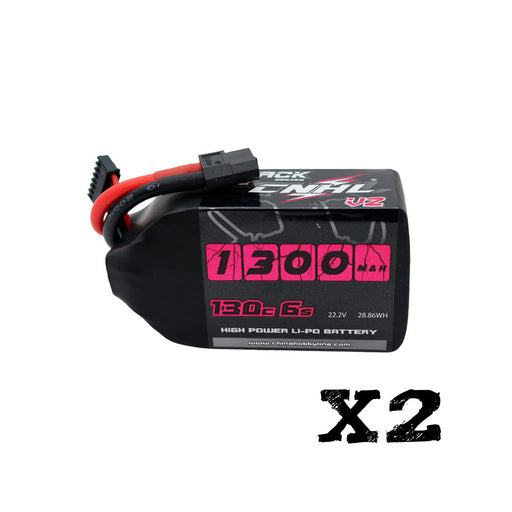
Quick Fit Check The 2 Packs CNHL Black Series V2.0 1300mAh 22.2V 6S 130C LiPo Battery with XT60 Plug is a strong fit for FPV pilots who want a prov...
View full details

Spare Parts & Long-Term Support We know that for RC pilots, reliable spare parts support is an important part of keeping an aircraft fl...
View full details
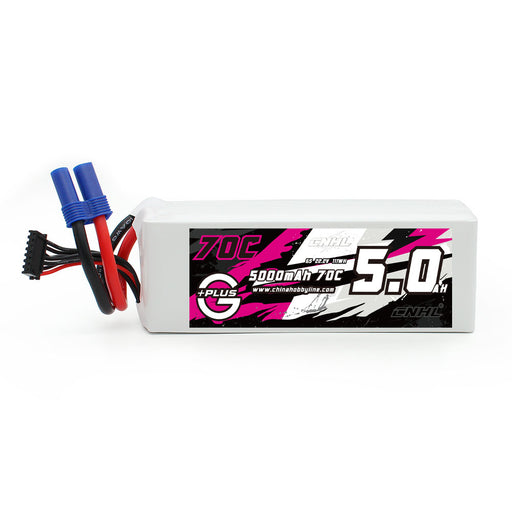
Specifications: Stock Number: 500706EC5 Capacity: 5000mAh Voltage: 22.2V / 6-Cell / 6S1P Discharge Rate: 70C Continual / 140C Burst Charge Rate: ...
View full details
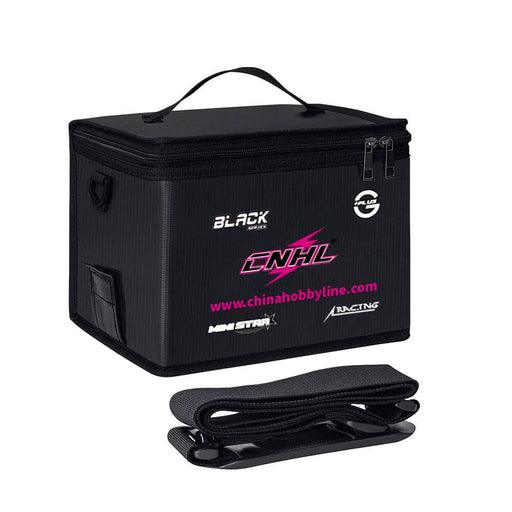
The CNHL LiPo Battery Bag is designed for safer LiPo charging, transport, and storage at home or at the field. It adds a practical layer of protect...
View full detailsQuick Fit Check The 2 Packs CNHL Speedy Pizza Series Pro 1350mAh 6S 150C LiPo Battery with XT60 Plug is built for 5-inch FPV pilots who want a ...
View full details

The CNHL 75mm EDF pilot figure is designed for 80–90mm RC jet airplanes that need a more realistic cockpit appearance without adding excessive weig...
View full details

The WNF Mitsubishi Lancer Evolution IX is an officially licensed Mitsubishi Motors 1:64 RC drift car that combines detailed Evo IX styling with rea...
View full details

The ISDT K4 is a high-power 8S LiPo smart dual charger built for demanding RC battery setups. It combines two independently controlled charging cha...
View full details

The ISDT PC-4860S is a compact four-port XT60 parallel charging board designed for experienced RC and FPV users who want to connect multiple co...
View full details

Quick Take: This officially licensed WNF 1:43 Land Rover Defender 110 Pick-Up RC crawler combines the proportions and detailing of the 1993 ...
View full details

Leave a comment