
CNHL Lipo Batteries
CNHL aim at providing high-quality Li-Po batteries and RC products to all hobby enthusiasts with excellent customer services and competitive prices

If you are new to FPV, LiPo batteries can feel like a black box. One pack feels sharp and confident, another feels soft and noisy with low-voltage warnings, even though the labels look similar. This guide explains what is actually happening in simple terms, using the same language your goggles and charger are already showing you: voltage, sag, heat, and habits.
If you want the broader framework behind battery lifespan, warning signs, safe storage, and end-of-life handling beyond FPV-specific use, start with the LiPo Battery Maintenance and Safety Guide.
A LiPo battery is a group of cells working together. Each cell is a small energy tank. When you wire cells in series, you get a pack: 4S means 4 cells in series, 6S means 6 cells in series.
For FPV, you do not need a chemistry degree. You only need to understand three practical things:
FPV pilots often talk in "voltage per cell" because it stays consistent across 2S, 4S, 6S, and beyond. Your OSD might show total pack voltage, but your charger shows per-cell voltage (and that is the number that keeps you safe).
| Per-cell voltage | What it usually means | What you do as a pilot | Why it matters |
|---|---|---|---|
| 4.20V | Full charge (standard LiPo) | Start your flight here (or slightly below if you prefer gentler packs) | Maximum punch, also the moment weak packs show flaws fastest |
| 3.85V (about) | Storage voltage | Store packs here if you will not fly soon | Best balance for long-term health |
| 3.70V (resting) | Healthy "landed with margin" zone for many pilots | After landing, let it rest and confirm on the charger | Good habit that avoids deep discharge |
| 3.50V (resting) | Getting low for routine use | Treat this as "end of useful pack" for most styles | Repeated low voltage speeds up aging and puffing risk |
| < 3.30V (resting) | Too low for routine flying | Avoid making this your normal landing target | Deep discharge can create weak cells and early pack failure |
Important: OSD voltage under throttle is not "resting voltage". Sag can temporarily pull the number down. The safer habit is to land with margin, then verify per-cell voltage on the charger after the pack rests.

Here is the beginner-friendly explanation: for the same power, higher voltage can reduce current demand. Lower current usually means less heat and less sag. This is why many pilots feel that 6S builds can be smoother and more consistent under load.
This does not mean 6S is always better. It means 6S gives you headroom when your setup is current-hungry (heavier quad, aggressive props, hard freestyle, windy long-range).
Simple mindset: Think of 4S versus 6S as "how hard the battery has to work for the same move". Less strain often means cooler packs and more repeatable flights.
If you are ready to pick your first packs (or replace the tired ones that sag early), this collection is a clean starting point:
Voltage sag is what happens when high current is forced through resistance. Every pack has resistance: inside the cells, in the wires, in the connector, and in every solder joint.
When you punch the throttle:
When you ease off:
What to listen for: sag depth (how low it dips), recovery speed (how fast it bounces back), and pack temperature after landing. Those three signals tell you more than the label.
| What you notice | What it often means | A simple fix |
|---|---|---|
| Early low-voltage beeps on punch-outs | Cold packs, aging packs, or too much current demand | Warm packs, check connectors, consider a healthier pack or slightly larger capacity |
| Slow recovery even after you back off | Pack is aging or one cell is weaker | Move it to "easy flights only" and monitor balance |
| Packs land very hot after normal flights | Setup is stressing the pack or power path is inefficient | Try gentler props, lighter build, or a pack that stays cooler |
| Connector area is hotter than the pack | Connector or wiring is the bottleneck | Inspect solder joints, replace worn connectors, avoid loose fits |

Related reading: If sag is the thing you feel the most (that “soft punch-out” mid-pack), here’s a practical buying guide built around weight, IR, and real-world sag for the most common setup: 5-inch on 6S (1100–1300mAh, XT60). Best Battery for a 5 Inch FPV Quad.
Capacity (mAh) is not just more minutes. It is also more weight. Weight changes throttle feel, braking distance, crash energy, and how hard the motors have to work.
| Drone type | Typical battery style | What to optimize | Common beginner mistake |
|---|---|---|---|
| 1S whoop (indoor) | 300-450mAh (light) | Agility and low crash energy | Going heavy for time and making the whoop feel clumsy |
| Cinewhoop (2S-4S) | Moderate capacity, steady delivery | Smooth power for video | Over-sizing until it flies hot and unstable |
| 5-inch freestyle / racing | Balanced capacity with fast recovery | Punch plus consistency | Mixing too many capacities and never learning landing rhythm |
| Long-range | Higher capacity with efficiency focus | Stability and safer margin | Trusting borderline packs far away where reliability matters most |
Helpful habit: Pick one default capacity for your main quad and stick with it for most flights. You will learn safer landing timing much faster.
C rating is supposed to describe how much current a battery can deliver relative to its capacity. In practice, printed C ratings vary between brands. For beginners, treat C rating as a rough category, not a promise.
Instead, trust repeatable signals:
Beginner rule: Buy a small batch first. If they stay consistent for a few weekends, then scale up. A simple way to do this is to pick one “baseline” pack and stick with it while you learn how your quad sags and lands. If you are starting from zero, choosing a consistent CNHL FPV Battery as that baseline can make the learning curve feel much smoother. You can browse our FPV drone batteries collection and start with one pack you can repeat week after week.
Most packs do not die suddenly. They fade because of small habits: charging hot packs, leaving packs fully charged for days, and flying deep discharge as a normal routine.
| Habit | What it does over time | Better habit |
|---|---|---|
| Charging packs while still very hot | Internal resistance rises faster, lifespan drops | Let packs cool to "warm but comfortable" before charging |
| Leaving packs fully charged for days/weeks | Puffing risk increases, capacity fades | Use storage charge if you will not fly soon (around 3.85V per cell) |
| Flying until the last possible second | Weak cells develop, packs become inconsistent | Land with margin and verify per-cell after resting |
| Charging in full sun or far away from you | Heat stress and missed warning signs | Charge in shade, in a spot you naturally walk past |
If you want a more drone-specific maintenance follow-up after the basics here, continue into Proper Drone Battery Maintenance: Tips for Longevity and Performance.
Standard LiPo charges to 4.20V per cell. LiHV (high-voltage LiPo) charges higher (commonly 4.35V per cell) to squeeze a little more energy and punch. Some pilots like LiHV for short, aggressive sessions; others prefer standard LiPo for simplicity and consistency.
Safety rule: Only charge LiHV packs in LiHV mode. If you are unsure, treat it as standard LiPo and confirm the label first.
If you want to see why correct charging mode matters in a much harsher real-world example, read What Happens When You Overcharge a LiPo Battery? A Real FPV Fire You Should Learn From.

Use warnings as a reminder, not a dare. A conservative warning under load can help beginners build safer habits. If it triggers instantly on punch-outs, that often points to cold packs, tired packs, or an overly aggressive setup. Land with margin and confirm resting per-cell voltage after the pack rests.
Warm is common. Hot is a signal. If you do not want to hold the pack comfortably, treat it as a warning sign and reduce stress with a healthier pack, gentler props, or a more efficient setup.
Because labels do not show internal resistance, aging, or small wiring and connector differences. Storage heat, fast-charging while hot, and deep discharge habits can also make "identical" packs behave very differently.
Three habits do most of the work: store near storage voltage when you are not flying soon, avoid charging hot packs, and stop making deep discharge your normal landing target.
When you are ready to choose packs by drone type and voltage, you can browse here:
If you found this helpful, bookmark it and revisit after a few weekends of flying. LiPo knowledge clicks fastest when you connect the words to what you see in your goggles.
CNHL aim at providing high-quality Li-Po batteries and RC products to all hobby enthusiasts with excellent customer services and competitive prices

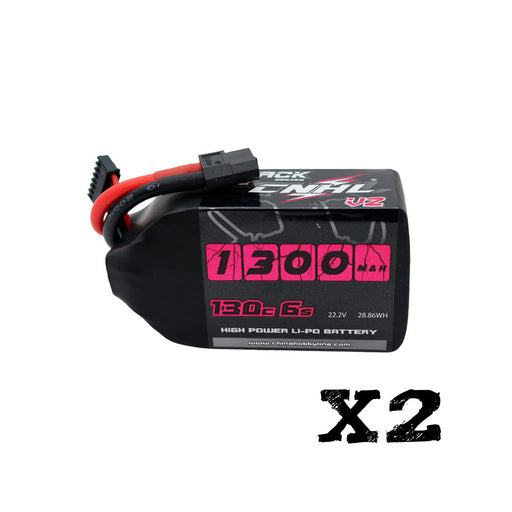
Quick Fit Check The 2 Packs CNHL Black Series V2.0 1300mAh 22.2V 6S 130C LiPo Battery with XT60 Plug is a strong fit for FPV pilots who want a prov...
View full detailsSpare Parts & Long-Term Support We know that for RC pilots, reliable spare parts support is an important part of keeping an aircraft fl...
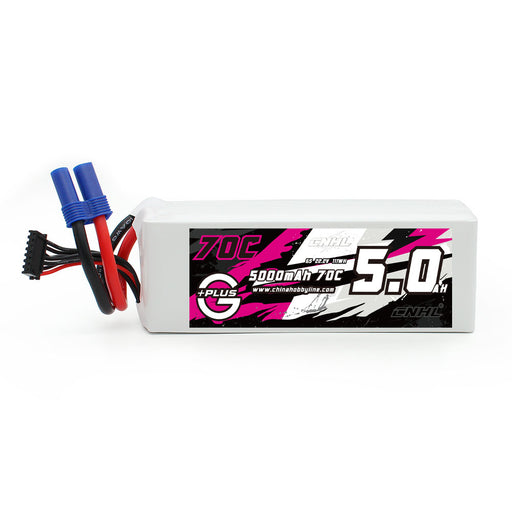
View full detailsSpecifications: Stock Number: 500706EC5 Capacity: 5000mAh Voltage: 22.2V / 6-Cell / 6S1P Discharge Rate: 70C Continual / 140C Burst Charge Rate: ...
View full details
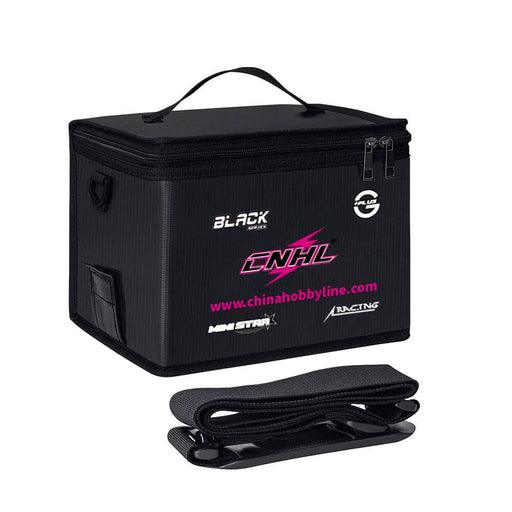
The CNHL LiPo Battery Bag is designed for safer LiPo charging, transport, and storage at home or at the field. It adds a practical layer of protect...
View full detailsQuick Fit Check The 2 Packs CNHL Speedy Pizza Series Pro 1350mAh 6S 150C LiPo Battery with XT60 Plug is built for 5-inch FPV pilots who want a ...
View full details

The CNHL Long Range Series BAK 65E 6350mAh 21700 Li-ion battery cell is built around one clear priority: maximum stored energy from a lightweight c...
View full details

The CNHL Long Range Series BAK 50D 5000mAh 21700 Li-ion battery cell is designed for custom high-energy battery packs that need a strong balance be...
View full details

The ISDT C4 EVO is a versatile smart battery charger built for AA, AAA and cylindrical rechargeable cells from compact 10440 batteries all the way ...
View full details

The CNHL Long Range Series 6350mAh 21.6V 6S1P 21700 Li-ion battery combines six BAK 65E high-energy cells into a 137.16Wh pack designed for ultra-e...
View full details

The CNHL Long Range Series 5000mAh 21.6V 6S1P 21700 Li-ion battery combines six BAK 50D cells into a compact 108Wh pack designed around long-range ...
View full details




Leave a comment