
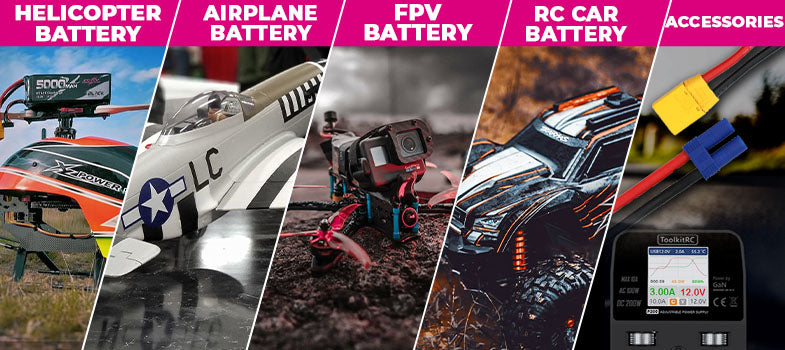
CNHL Lipo Batteries
CNHL aim at providing high-quality Li-Po batteries and RC products to all hobby enthusiasts with excellent customer services and competitive prices

Quick answer: PH2.0 still works for older and gentler micro FPV setups, BT2.0 is usually the best all-around choice for most modern 1S whoops, and A30 makes the most sense when the build is more power-hungry and you want the strongest current path of the three.
Do you ever feel that your FPV drone is slow when you attempt to fly fast? You may imagine that the battery or motors are at fault. But most of the time, the actual issue is the tiny plastic battery plug. It can be a bottleneck and prevent power from reaching your drone. This tutorial will introduce you to the three major plugs: PH2.0, BT2.0, and A30. Then you can choose the best one for yourself.

The PH2.0 plug was the default one for almost all small drones for a very long time. If you bought an early drone kit a few years ago, it definitely had batteries that featured this small white plug with solid metal pins inside. It was just the standard one.
The best thing about the PH2.0 is that it's ubiquitous. It was the default plug for so long that a lot of older drones and chargers still use it. So, if you're new to drones or you have older parts, you probably already have what you need for it. And the PH2.0 is good enough for just flying around your house slowly and not doing any complicated tricks.
But that's the problem: the PH2.0 plug has a hard time letting power through. The small pins inside can't handle much power, only about 4 amps.
When you attempt to draw more power to fly fast, the power level decreases rapidly. We refer to this as a "power drop." This is when your drone is not receiving enough power, thus it becomes sluggish and juddery. This explains why your drone will be fast for 30 seconds before becoming weak throughout the remainder of the flight.

The people at BetaFPV saw the PH2.0 was a problem for new drones, so they fixed it. They made the BT2.0 plug to stop the power drop problem. It does not use thin pins. Instead, it uses better "bullet" plugs that touch more.
This new layout allows power to flow much more easily. The BT2.0 can carry around 9 amps of power. That is over twice what the older PH2.0 was capable of.
So how does that impact flying? The difference is enormous. Your drone is going to be faster and more responsive during the flight. You'll have more power when you need it. You might even get 30 to 60 extra seconds of flight time. And the drone is more stable and easier to fly. For most individuals flying a small drone these days, the BT2.0 is the way to go.

The BT2.0 was a great upgrade. But certain pilots who were building very powerful small drones needed even more power. So, Flywoo created the A30 plug. It is the same concept as the BT2.0, but even larger and more powerful. This plug is for individuals who wish to squeeze the best out of their small drones.
The A30 allows power to flow the most easily of the three. That means it can deal with a lot of power, over 15 amps. For a typical small drone, that is much too much power. But it is ideal for some very high-powered drones.
You need this plug if you do drone racing or are making a really fast drone with powerful motors that require lots of power. It is also suitable for flying tiny drones at a distance, as it keeps you in the air for longer. If you wish to obtain as much power as possible from your battery, the A30 is your best bet.
Not by default. A30 and BT2.0 are different connector standards, so they are not designed to plug directly into each other. If a pilot wants to move between the two systems, that usually means changing the connector on the drone, changing the connector on the battery, or using a dedicated adapter. In practice, most micro FPV pilots treat them as separate ecosystems rather than as directly interchangeable plugs.
That is why the better question is usually not just A30 vs BT2.0, but whether the whole build is meant to stay in a BT2.0 setup or move fully into an A30 setup.
In simple terms, PH2.0 is mostly the old legacy option, BT2.0 is the practical modern default for most pilots, and A30 is the stronger specialist choice when a micro build starts asking for more than a normal 1S whoop setup. That is why most comparisons in the real world usually come down to PH2.0 vs BT2.0 for older whoops, or BT2.0 vs A30 for harder-flying micro builds.
Here is a simple chart to show the differences.

| Feature | PH2.0 (The Old One) | BT2.0 (The New Upgrade) | A30 (The Strongest One) |
| Max Power (About) | ~4A | ~9A | >15A |
| Power Blockage | High | Low | Very Low |
| Power Drop | A lot | A little | Almost none |
| Main Brand | Generic | BetaFPV | Flywoo |
| Best For | Flying slowly indoors, old drones | Everyday flying, most small drones | Racing, powerful builds |
Choosing the right plug is pretty easy. If you still use the old PH2.0 plugs, changing to a better one is a cheap and big upgrade. You will see the difference in how your drone flies right away.
For most people, the BT2.0 is the perfect choice. It gives you a big power boost and works great for almost any new small drone. But if you are a serious racer or a builder who likes to push your drone to be the best, the A30 is the very best one.
If you want the broader connector picture first, start with Which RC Battery Connector Is Best for Your Car, Boat, or Plane?. For the full connector family overview, continue into RC Battery Connector Types Explained: XT30, XT60, XT90, EC3, EC5, IC3, IC5, TRX, QS8 and More. If your next question is how the larger XT family compares in normal RC use, read XT30 vs XT60 vs XT90: Pick the LiPo Plug. If the real problem is power loss, heat, or extra resistance in the connector path, continue into Why RC Battery Connectors Get Hot: Resistance, Loose Fit, Adapters, and Common Mistakes.
Is BT2.0 better than PH2.0?
For most modern micro FPV use, yes. BT2.0 usually provides a cleaner current path and helps reduce the connector bottleneck that PH2.0 can show in harder-flying setups.
Is A30 better than BT2.0?
Not automatically. A30 usually makes more sense when the build is more power-hungry and the pilot wants a stronger connector path. For many normal 1S whoops, BT2.0 is still the more practical all-around choice.
Are A30 and BT2.0 compatible?
No, not directly. They are different connector standards and are usually treated as separate ecosystems unless a pilot rewires the setup or uses an adapter.
What is a PH2.0 plug?
The PH2.0 plug is the older small connector standard that appeared on many early 1S whoops and micro FPV drones. It still works in older and gentler setups, but many pilots now move to BT2.0 or A30 for better power delivery.
CNHL aim at providing high-quality Li-Po batteries and RC products to all hobby enthusiasts with excellent customer services and competitive prices
Quick Fit Check The 2 Packs CNHL Black Series V2.0 1300mAh 22.2V 6S 130C LiPo Battery with XT60 Plug is a strong fit for FPV pilots who want a prov...
View full details

Hstar D43-01Q 911 Style is a mini 1/43 alloy drift RC car designed for indoor tabletop fun and realistic drifting. It features full proportional ...
View full details

Spare Parts Availability We know that for RC pilots, reliable spare parts support often determines how long an aircraft can actually sta...
View full details
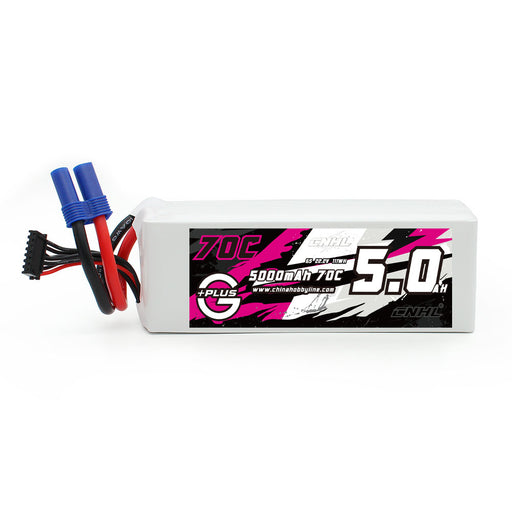
Specifications: Stock Number: 500706EC5 Capacity: 5000mAh Voltage: 22.2V / 6-Cell / 6S1P Discharge Rate: 70C Continual / 140C Burst Charge Rate: ...
View full details
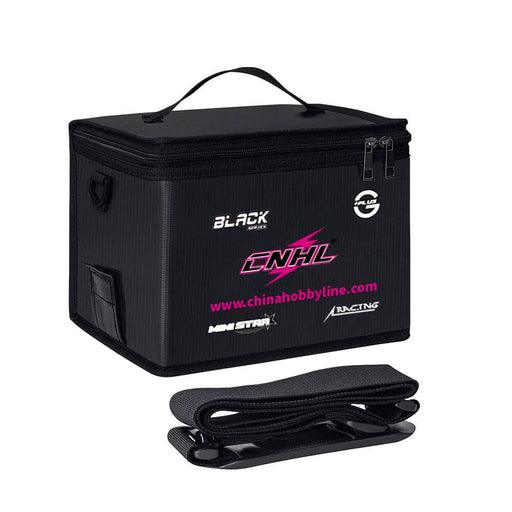
The CNHL LiPo Battery Bag is designed for safer LiPo charging, transport, and storage at home or at the field. It adds a practical layer of protect...
View full details

Quick Fit Check The CNHL Lightning LiHV 7800mAh 4S 120C battery is designed for high-performance RC platforms that require strong burst power, stab...
View full details

Quick Fit Check The CNHL Lightning LiHV 6700mAh 6S battery is designed for RC pilots who need strong burst power with stable voltage delivery. ...
View full details

Quick Fit Check If you are selecting a 2S LiHV battery with TRX plug for a Traxxas mini platform, confirm these points before ordering: Check I...
View full details

Quick Fit Check Before ordering this battery for a CineWhoop or micro FPV drone, check these key points first: Check Item What Your Drone Shoul...
View full details

Quick Fit Check If you are selecting a 3S LiHV shorty battery for your RC vehicle or lightweight aircraft, confirm these points before ordering: ...
View full details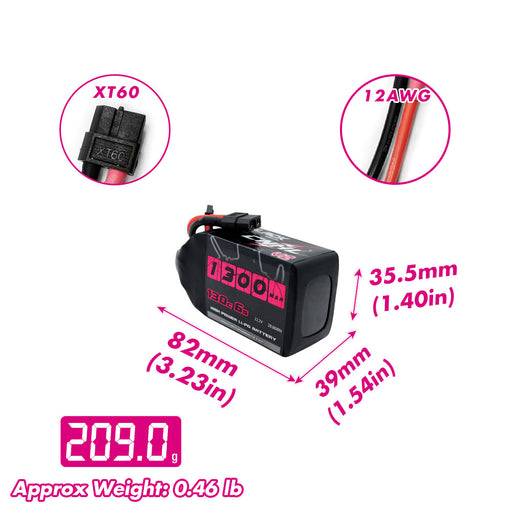
Leave a comment