
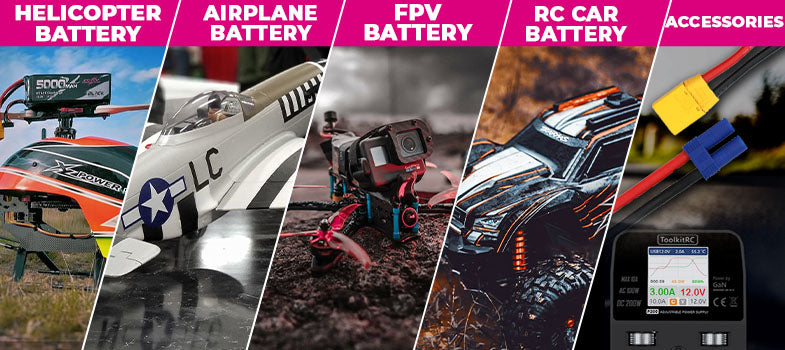
CNHL Lipo Batteries
CNHL aim at providing high-quality Li-Po batteries and RC products to all hobby enthusiasts with excellent customer services and competitive prices
The Streamline RC Thrasher XP RTR Jet Boat is not trying to be another calm-water speed boat. It is a 6S electric jet boat built for the kind of places where normal RC boats make you nervous: shallow rivers, rocky banks, beach landings, rough water, and adventure-style RC sessions where durability matters as much as speed.
That is what makes the Thrasher XP interesting. On paper, it is easy to describe it as a high-end RTR jet boat. But in real use, the appeal is more specific. This is a boat for people who want to throw an RC in a backpack, ride to a river spot, launch from imperfect terrain, and not panic every time the hull gets close to rocks or shore.
It is also expensive, specialized, and not for everyone. That is part of the story too. The Thrasher XP is the kind of RC boat that creates two reactions at the same time: “That looks incredible” and “Wait, how much?” This review looks at both sides.

The Streamline RC Thrasher XP RTR Jet Boat is a ready-to-run electric jet boat designed for aggressive river running and RC boat bashing. Instead of using an exposed propeller and traditional rudder layout, it uses a jet-drive system. That gives it a very different personality from a normal deep-V or catamaran RC boat.
The basic idea is simple: this boat is made to go where many prop boats do not belong. Shallow water, rocky river sections, beaching, and rough launches are not just accidents waiting to happen. They are part of the intended use case.
That is why the Thrasher XP feels closer to an RC basher truck than a delicate speed boat. You are not only buying speed. You are buying the confidence to run in imperfect water.
Most RC boats reward clean water and careful driving. A traditional prop boat can be extremely fast, but the hardware underneath the hull is vulnerable. A rock, log, shallow shelf, or hard beach landing can damage the drive system quickly.
The Thrasher XP changes that mindset. Its jet-drive layout keeps the main propulsion system protected compared with a normal exposed prop. The bottom of the boat is built with a rugged, skid-plate-style personality, making it feel more like something you can bash, slide, beach, and recover.
That does not mean it is magic or impossible to damage. Sand, gravel, moss, weeds, and debris still matter. Jet boats can suck things into the intake, and the boat still needs cleaning and inspection after rough use. But the overall design clearly encourages a different kind of driving. It makes you want to explore.

The first thing that stands out is the shape. The Thrasher XP has the presence of a real adventure boat rather than a delicate race hull. It looks wide, stable, and purposeful. The flat, protected bottom makes it easy to set down without a stand, and the hull design immediately suggests that it is meant to touch the real world.
That matters because a lot of RC boats look exciting until you start thinking about where you can actually run them. The Thrasher XP answers that question differently. Instead of needing perfect water and a perfect launch point, it invites you to find a riverbank, shallow section, rocky area, or pond edge and just go.
This is also why the boat has crossover appeal. It is not only for RC boat people. Crawler drivers, trail drivers, e-bike explorers, and GoPro-style RC content creators can all understand the appeal. It fits the “take it somewhere and make a day out of it” style of RC.
The Thrasher XP runs on 6S power, and that is exactly where it should be. It has enough punch to feel exciting, enough thrust to push through moving water, and enough speed to make a pond test feel entertaining. But the point of this boat is not to chase the highest GPS number on glass water.
That distinction is important. Some boats are built around top speed. The Thrasher XP is built around capability. The 6S setup gives it the power needed for hard acceleration, jet-drive steering, river use, shallow water, and playful bashing. It is fast enough to be fun, but the real value is that it stays usable when the water and terrain are not perfect.
For most owners, that is a better tradeoff than simply making it faster. A river basher needs thrust, control, stability, and durability. Speed is only one part of the experience.
One of the biggest driving differences is steering. A jet boat does not behave exactly like a prop-and-rudder boat. On a traditional RC boat, the rudder can still influence direction when the boat is moving through water. On a jet boat, steering depends heavily on water thrust being redirected by the jet nozzle.
That means throttle matters. With little or no throttle, there is not much water being pushed through the jet, so the boat will not turn strongly. Once you add throttle, the jet stream gives the steering system something to redirect, and the boat responds much more clearly.
This can feel strange at first if you are used to regular RC boats or RC cars. You may turn the wheel and expect the boat to carve, only to realize that it needs power to rotate. Once you understand the rhythm, it starts to make sense: let off, set the direction, then feed in throttle to push the stern around and drive out of the turn.
This is also why battery choice matters. A responsive 6S pack helps the boat feel more connected. If the battery is too heavy or sluggish, the jet boat can lose some of the lively throttle response that makes it fun in tight water.

With a 6S jet boat, the battery, ESC, motor, receiver box, steering servo, and water-management system all work together. The battery is not just a runtime accessory. It affects voltage delivery, throttle response, hull balance, and how confidently the boat can recover from rough driving.
The ESC has to handle repeated throttle changes, water load, and the high-current demands of the jet pump. River driving can be harder on electronics than smooth pond cruising because the boat may be constantly accelerating, turning, beaching, and restarting. That is different from a long straight-line pass on clean water.
Waterproofing also matters. A basher-style jet boat is expected to deal with splashes, flips, wet recovery, and messy launches. Owners should still inspect the receiver box, wiring, battery straps, connectors, and seals after use. “Water-ready” does not mean “maintenance-free.”
Servo strength is another point worth watching. Jet steering can feel different from rudder steering, and some drivers may eventually want a stronger or faster steering servo depending on how aggressively they run the boat. For a stock RTR setup, the main thing is to learn the throttle-steering behavior before assuming the servo is the problem.
The Thrasher XP is designed with self-righting and water-management behavior in mind. In real use, owners may hear a small motor or pump sound even when the main drive is not being hammered. This is commonly associated with the boat’s internal water-management system, including the process of moving water in and out during recovery.
For a river boat, this is a big deal. A normal RC boat flip can mean a long wait, a rescue boat, a fishing rod, or a wet walk. A self-righting system gives the driver more confidence to push harder, especially when running near current, rocks, or uneven water.
Still, self-righting should not be treated as unlimited protection. Battery weight, hull balance, water conditions, debris, and how the boat lands can all affect recovery. That is another reason a the battery setup matters.
The Thrasher XP uses a 6S battery setup with XT90 connection, and the best battery choice is not always the largest pack you can physically install. For most drivers, the sweet spot is a lightweight 6S LiPo or LiHV battery in the 5000mAh to 6000mAh range.
That range gives the boat strong power and usable runtime without adding unnecessary weight. In a jet boat, extra battery mass can change how the hull sits in the water, how quickly it responds to throttle, and how reliably it self-rights. A heavy pack may look attractive for runtime, but it can make the boat feel less lively.
This is where CNHL’s battery lineup fits well. For a dedicated Thrasher XP battery collection, the main recommendations should focus on lightweight 6S XT90 packs rather than oversized packs that only win on capacity.
For owners looking for the easiest place to compare compatible options, see our Thrasher XP RTR Jet Boat batteries collection.
The best overall CNHL recommendation is the CNHL Lightning LiHV 6000mAh 6S 120C with XT90 plug. It sits at the upper end of the ideal capacity range while staying compact and lightweight. That makes it a strong choice for drivers who want a balance of runtime, punch, and handling.
The second key recommendation is the CNHL Lightning LiHV 5500mAh 6S 120C with XT90 plug. This pack is especially appealing for river running, shallow-water sessions, GoPro-style driving, and backpack-friendly RC use. It gives up a little capacity compared with a 6000mAh pack, but it keeps the boat light and responsive.
For users who prefer a standard 22.2V LiPo instead of LiHV, the CNHL G+Plus 5000mAh 6S 70C with XT90 plug is the cleanest standard-voltage recommendation. It is a practical option for owners who want reliable 6S power without changing their charging habits to LiHV mode.
For more general high-power battery options, you can also browse CNHL 6S LiPo batteries or compare performance-focused Lightning LiHV batteries.
Yes, larger 6S packs may fit depending on their dimensions, and some real-world users have tested high-capacity batteries in the Thrasher XP. Bigger packs are possible, but lighter packs are usually smarter.
A 6700mAh or 7200mAh 6S battery can be attractive if you want longer sessions, but it brings tradeoffs. More weight can affect hull balance, throttle response, self-righting behavior, and how the boat feels when running in shallow water or rapids. It may also make backpack transport less convenient.
That is why a battery like the CNHL Lightning LiHV 6700mAh 6S works better as a high-capacity upgrade for experienced users, not the default recommendation. The CNHL Lightning LiHV 7200mAh 6S should be treated as a maximum-capacity option where owners need to check tray clearance, strap security, hull balance, and recovery behavior before hard river use.
A standard 6S LiPo battery has a nominal voltage of 22.2V, while a 6S LiHV battery has a nominal voltage of 22.8V. LiHV packs can provide a slightly higher voltage platform when charged correctly with a LiHV-compatible charger and the correct charge mode.
For the Thrasher XP, LiHV makes sense when the goal is strong punch, compact size, and lightweight performance. That is why the CNHL Lightning LiHV 5500mAh and 6000mAh packs are such strong fits for this boat.
Standard LiPo still has a place. Some owners prefer the familiar 22.2V charging routine, and a good 5000mAh 6S LiPo can be a very sensible setup. The key is not to choose only by voltage label or C-rating. Fit, weight, connector, and stable voltage delivery matter more.
One of the most exciting things about the Thrasher XP is the way it invites camera use. A normal RC boat can produce great footage on clean water, but the Thrasher XP adds a more adventurous angle. It can run near rocks, skim through shallow areas, beach itself, and move through river sections where the camera view feels more dramatic.
The top-mounted GoPro-style setup is a natural fit for this boat. River footage from a jet boat has a different feel from standard pond running because the boat is moving through a real environment, not just making passes across open water.
There is also FPV potential. Some drivers may want to mount a small FPV camera for low-angle river exploration. This is not required, but it fits the personality of the platform. The Thrasher XP feels like the kind of RC that can become part boat, part trail companion, and part action-camera tool.
The Thrasher XP makes the most sense in places where normal boats feel limited. Shallow rivers, rocky edges, uneven banks, gravel beaches, mild rapids, and mixed water conditions are where its personality comes alive.
It is also a strong fit for drivers who already enjoy RC crawling, trail trucks, hiking, biking, or outdoor exploration. If your idea of RC fun is finding a spot rather than only driving at a prepared location, the Thrasher XP starts to make sense.
That is also why the boat does not need to be the fastest thing on the water. It needs to be durable, easy to launch, fun to drive, and capable enough to make you want to explore new places.
The Thrasher XP is not the best choice for everyone. If you only want maximum top speed on calm water, a dedicated speed boat may be a better fit. If you want the cheapest way into RC boating, this is not it. If you mostly run in clean ponds with no interest in shallow water, rocks, beaching, or river-style driving, much of the Thrasher XP’s value may be wasted.
It is also not a maintenance-free boat. Jet-drive systems need attention. Moss, weeds, sand, gravel, and small debris can create problems. After running in dirty or shallow water, owners should inspect the intake, clean the hull, check the battery area, and make sure the electronics remain dry and secure.
This is the most honest question around the Thrasher XP. It is a premium RC jet boat, and the price will be a deal-breaker for many hobbyists. That reaction is understandable. Not every driver needs a specialized river basher, and not every RC boat buyer is looking for a Made-in-USA, rough-water, rock-friendly jet boat.
But the value question changes when you compare it to what it is actually built to do. The Thrasher XP is not competing only with ordinary pond boats. It is offering a more specialized experience: jet-drive protection, rugged hull behavior, shallow-water capability, self-righting confidence, camera-friendly adventure use, and the ability to run in places where many boats would feel fragile.
So is it worth it? For a casual boater who just wants to make a few fast passes on a pond, probably not. For a driver who wants a serious 6S RC jet boat for river running, rock hits, beaching, GoPro footage, and adventure-style RC use, the Thrasher XP becomes much easier to understand.
The Streamline RC Thrasher XP RTR Jet Boat is one of the most interesting RC boats because it changes the way you think about where a boat can run. It is not just about speed. It is about confidence. It is about being able to approach shore, run shallow, hit imperfect water, and treat an RC boat more like a basher than a fragile high-speed toy.
The 6S power system gives it enough punch to be exciting, the jet-drive layout gives it a unique driving style, and the rugged hull design gives it a purpose beyond clean-water passes. It is expensive, specialized, and not for everyone, but it has a clear identity.
For battery setup, the best path is equally clear. Stay focused on lightweight 6S XT90 packs. For most owners, a 5000mAh to 6000mAh battery is the smartest range. The CNHL Lightning LiHV 6000mAh 6S is the best overall choice, the CNHL Lightning LiHV 5500mAh 6S is the best lightweight handling option, and the CNHL G+Plus 5000mAh 6S 70C is the best standard LiPo alternative.
Choose the battery that keeps the boat balanced, responsive, and ready for the places that make the Thrasher XP special.
The Thrasher XP uses a 6S battery setup with XT90 connection. For most owners, a lightweight 6S LiPo or LiHV battery in the 5000mAh to 6000mAh range is the best starting point.
The best overall CNHL option is the CNHL Lightning LiHV 6000mAh 22.8V 6S 120C with XT90 plug. It offers a strong mix of runtime, compact size, and lightweight handling. The CNHL Lightning LiHV 5500mAh 6S is also excellent for drivers who want a lighter, more responsive setup.
Large 6S packs may fit depending on their dimensions, but they should be treated as high-capacity options rather than default recommendations. Extra weight can affect handling, self-righting, balance, and river performance. Always check fit, strap security, and hull behavior before aggressive use.
The Thrasher XP is a jet boat, so steering depends on water thrust. With little or no throttle, there is less water flow to redirect, so the boat will not turn as strongly. Smooth throttle control is part of driving a jet-drive RC boat.
Yes, shallow river running is one of the main reasons the Thrasher XP is appealing. Its jet-drive layout and rugged hull make it better suited to rough, shallow, and rocky environments than many traditional prop boats. Owners should still avoid heavy weeds, moss, gravel intake, and debris whenever possible.
It depends on the driver. If you only want a budget pond boat or a pure speed-run hull, the Thrasher XP may feel too expensive. If you want a premium 6S jet boat for rocks, shallow water, river running, beaching, and GoPro-style adventure use, its value is much easier to understand.
CNHL aim at providing high-quality Li-Po batteries and RC products to all hobby enthusiasts with excellent customer services and competitive prices
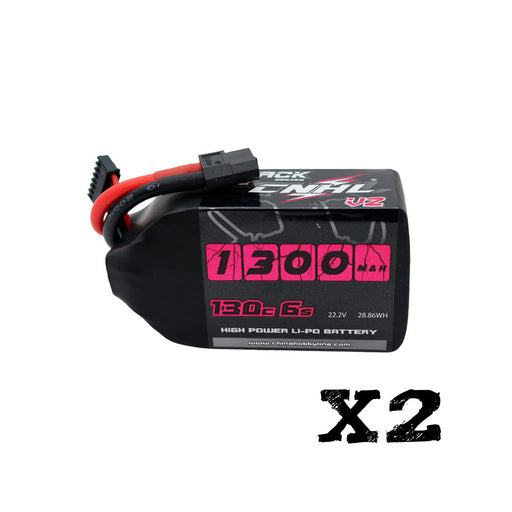
Quick Fit Check The 2 Packs CNHL Black Series V2.0 1300mAh 22.2V 6S 130C LiPo Battery with XT60 Plug is a strong fit for FPV pilots who want a prov...
View full detailsSpare Parts & Long-Term Support We know that for RC pilots, reliable spare parts support is an important part of keeping an aircraft fl...
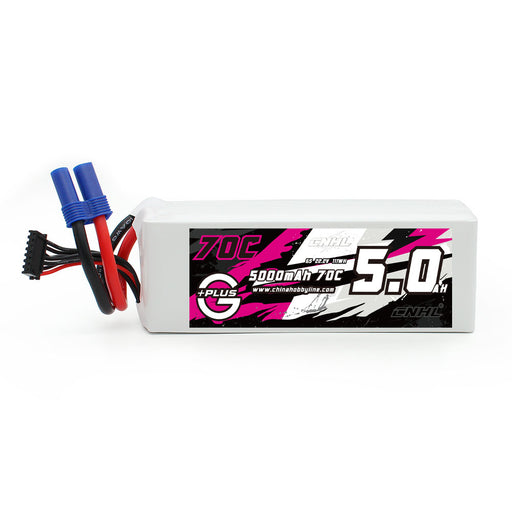
View full detailsSpecifications: Stock Number: 500706EC5 Capacity: 5000mAh Voltage: 22.2V / 6-Cell / 6S1P Discharge Rate: 70C Continual / 140C Burst Charge Rate: ...
View full details
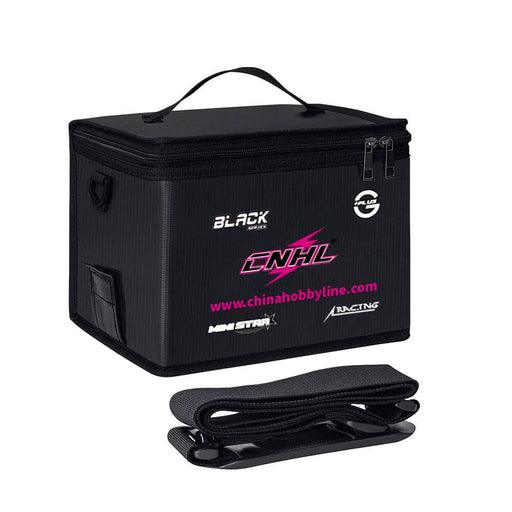
The CNHL LiPo Battery Bag is designed for safer LiPo charging, transport, and storage at home or at the field. It adds a practical layer of protect...
View full detailsQuick Fit Check The 2 Packs CNHL Speedy Pizza Series Pro 1350mAh 6S 150C LiPo Battery with XT60 Plug is built for 5-inch FPV pilots who want a ...
View full details

The CNHL Long Range Series BAK 65E 6350mAh 21700 Li-ion battery cell is built around one clear priority: maximum stored energy from a lightweight c...
View full details

The CNHL Long Range Series BAK 50D 5000mAh 21700 Li-ion battery cell is designed for custom high-energy battery packs that need a strong balance be...
View full details

The ISDT C4 EVO is a versatile smart battery charger built for AA, AAA and cylindrical rechargeable cells from compact 10440 batteries all the way ...
View full details

The CNHL Long Range Series 6350mAh 21.6V 6S1P 21700 Li-ion battery combines six BAK 65E high-energy cells into a 137.16Wh pack designed for ultra-e...
View full details

The CNHL Long Range Series 5000mAh 21.6V 6S1P 21700 Li-ion battery combines six BAK 50D cells into a compact 108Wh pack designed around long-range ...
View full details




Leave a comment