Quick Fit Check
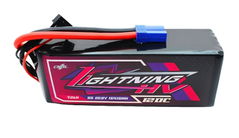
The CNHL Lightning LiHV 2400mAh 15.2V 4S 120C HV Shorty LiPo Battery with XT60 Plug is a compact, high-output aircraft battery designed for installations where battery length, weight and center-of-gravity control are just as important as capacity.
Before ordering, confirm all five items below. A model being described simply as “4S compatible” does not automatically confirm compatibility with a fully charged 4S LiHV battery.
| Check Item |
Your Model Should Match |
This Battery |
| Cell Count |
4S power system |
15.2V nominal / 4S LiHV |
| Maximum Input Voltage |
ESC and electronics support up to 17.4V when fully charging as LiHV |
4.35V per cell / 17.4V fully charged |
| Connector |
XT60 battery connection |
XT60 Plug |
| Battery Space |
Compartment supports a compact short-format pack |
76 × 32 × 35mm |
| Installed Weight |
Center of gravity remains within the model’s approved range |
Approx. 185g |
This pack is especially useful when a conventional long 4S battery makes installation difficult or limits center-of-gravity adjustment. Always verify the battery compartment, hatch clearance, wire routing and final balance in the actual aircraft.
Product Specifications
| Capacity |
2400mAh |
| Nominal Voltage |
15.2V |
| Cell Configuration |
4S LiHV |
| Fully Charged Voltage |
17.4V when charged to 4.35V per cell |
| Discharge Rate |
120C Continuous / 240C Burst |
| Output Connector |
XT60 Plug |
| Dimensions (L × W × H) |
76 × 32 × 35mm |
| Approx. Weight |
185g |
| Maximum Charge Rate |
5C |
| Balance Connector |
JST-XH 5-Pin |
| Wire Gauge |
12AWG |
| Stock Number |
HVS2401204XT60 |
Compact 2400mAh Power Without a Long Battery Pack
The CNHL Lightning LiHV 2400mAh 4S 120C Shorty LiPo Battery combines useful 2400mAh capacity with an unusually compact 76mm-long format. It is intended for aircraft and FPV installations where a traditional long battery may interfere with the hatch, receiver, flight controller, cooling path or center-of-gravity adjustment.
At approximately 185g, the pack remains suitable for many models commonly built around compact 4S batteries. The short layout also gives pilots more freedom to move the battery forward or rearward inside the available compartment instead of having a longer pack occupy the full installation area.
The 120C continuous discharge rating, 12AWG main wires and XT60 connector support power systems that require strong throttle response and stable voltage delivery. Actual performance depends on the motor, propeller or EDF unit, ESC settings, cooling, ambient temperature and total current demand.
Why Choose the 2400mAh Shorty Instead of a Standard 2200mAh Pack?
A 2200mAh 4S battery remains one of the most common power options for medium-size foam aircraft and compact EDF jets. This CNHL shorty pack increases rated capacity to 2400mAh—approximately 9% more than 2200mAh—while retaining a compact 76mm battery length.
That combination can be useful when the model has enough weight and center-of-gravity margin for 185g, but does not have enough usable length for a conventional larger-capacity battery. The additional 200mAh may provide more usable energy, although actual flight-time improvement varies with throttle use, aircraft drag, propeller or fan load and flying style.
| Comparison Point |
CNHL 2400mAh Shorty |
Typical 2200mAh Selection |
| Rated Capacity |
2400mAh |
2200mAh |
| Capacity Difference |
About 9% more rated capacity |
Baseline 2200mAh capacity |
| Battery Length |
76mm |
Varies by battery model and construction |
| Weight |
Approx. 185g |
Varies by discharge rating, wires and cell construction |
| Main Advantage |
More capacity in a compact short-format layout |
Broad availability and common model recommendations |
Choose by measured fit rather than capacity alone. Compare the complete dimensions, actual weight, connector, maximum charged voltage and the model’s approved center-of-gravity range.
Why Pilots Choose Shorty LiPo Batteries
More center-of-gravity adjustment
A shorter pack can provide additional room to move the battery inside the compartment. This is useful when the aircraft requires the battery to sit farther forward or rearward to reach the recommended center of gravity.
Easier installation in compact battery bays
Some aircraft have enough width and height for a higher-capacity pack but limited usable length because of a former, receiver tray, flight controller, cooling duct or nose structure. A 76mm battery can solve a length restriction that a conventional pack cannot.
Cleaner wire routing
Additional space around the end of the pack can make it easier to route the XT60 connector and balance lead without sharply bending the wires or placing them against the hatch.
Flexible equipment placement
In FPV and custom aircraft, the saved battery length can leave more room for a receiver, flight controller, GPS module, video transmitter or cooling airflow. All equipment must still be secured and positioned within the aircraft’s balance limits.
4S LiHV Performance
LiHV chemistry allows this battery to be charged to a maximum of 4.35V per cell when using the correct LiHV charging program. A fully charged 4S LiHV pack therefore reaches 17.4V, compared with 16.8V for a standard 4S LiPo charged to 4.20V per cell.
The additional starting voltage can provide stronger initial throttle response in a compatible power system. However, the ESC, BEC, receiver, servos and any connected accessories must tolerate the electrical conditions created by the complete setup.
Do not assume compatibility based only on a “4S” label. Check the ESC manufacturer’s maximum input-voltage specification. When the electronics are approved only for a conventional 4S maximum of 16.8V, do not charge the battery above the voltage supported by the system.
Typical Applications
-
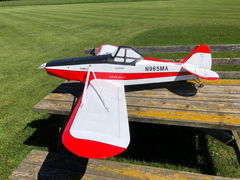
Foam warbirds: Compact 4S aircraft that need useful capacity without a long battery occupying the entire nose compartment.
-
64–70mm EDF jets: Lightweight EDF installations that accept 185g and require strong current delivery from an XT60-equipped pack.
-
Sport RC airplanes: Models where responsive throttle and flexible battery positioning are useful for aerobatics and general flying.
-
STOL and bush planes: Aircraft that benefit from longer usable flight time while maintaining a manageable installed weight.
-
FPV fixed-wing aircraft: Compact builds where battery length must leave room for flight electronics and video equipment.
-
Performance multirotors: 4S platforms that accept the pack’s unusual 76 × 32 × 35mm shape, weight and XT60 connector.
-
Custom lightweight RC projects: Installations where a short, high-output 4S power source is more practical than a conventional long pack.
Compatible Aircraft and Platforms
The models below are relevant platforms for comparing this compact 4S battery format. Exact suitability depends on the specific version, power system, battery compartment, connector, center of gravity and allowable maximum voltage.
Warbirds
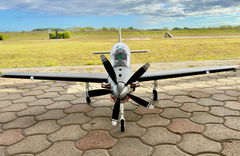
The compact case and approximately 185g weight make this battery a useful option for warbirds that normally use batteries near the 2200–2400mAh 4S range.
Confirm that the aircraft can reach its recommended center of gravity with the 76mm pack. A short battery may need to be positioned farther forward than a conventional long pack.
Compact EDF Jets
For compatible 64mm and lightweight 70mm EDF jets, the 120C discharge rating supports demanding throttle use while the short case can simplify installation inside a narrow fuselage.
Check fan-system current, ESC voltage limit, battery cooling and center of gravity before sustained full-throttle operation.
STOL, Bush and Sport Aircraft
The 2400mAh capacity can provide a practical balance between flying time and installed mass for sport, STOL and bush-plane setups that accept a compact 4S battery.
Speed and Performance Aircraft
High-current sport models can benefit from the Lightning Series discharge capability when the battery dimensions and 185g weight match the intended setup.
FPV and Multirotor Platforms
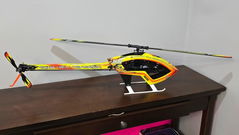
The compact dimensions may also suit custom FPV aircraft and multirotors such as the Skylark M4-FPV250, Mini Shredder 200, EMAX Nighthawk 250 and 400mm X-Sled when the tray, straps, XT60 connection and operating voltage match.
These model names cover multiple configurations and owner-built setups. Measure the actual available space instead of relying only on the model name.
XT60 Connector and Installation
The battery is supplied with an XT60 main power plug, a widely used connector for 4S airplanes, EDF jets, FPV aircraft and multirotors. It can connect directly to a corresponding XT60 device-side connector when polarity and orientation are correct.
Models using EC3, IC3, EC5, IC5, T/Deans, TRX or another connector require a correctly wired and appropriately rated adapter or connector conversion. EC3/IC3 and EC5/IC5 references do not mean they are directly compatible with XT60.
Secure the pack using the aircraft’s approved strap, tray or hook-and-loop retention system. The battery must not move during acceleration, aerobatics, landing or impact. Keep both the main lead and balance lead away from rotating motors, EDF inlets, servos, control linkages and sharp foam or composite edges.
What to Check Before Flying
-
ESC voltage limit: Confirm support for up to 17.4V if charging the pack fully in LiHV mode.
-
Battery dimensions: Measure the usable compartment, not only the external hatch opening.
-
Center of gravity: Check the completed aircraft with the battery installed and the model ready to fly.
-
Battery retention: Make sure the 76mm pack cannot slide inside a compartment designed for a longer battery.
-
Connector: Confirm XT60 polarity and inspect the housing for looseness, heat damage or contamination.
-
Wire routing: Avoid tight bends and keep the wires away from the motor, fan, servos and hatch edges.
-
Current demand: Confirm that the battery, ESC and power system are suitable for the measured current under load.
-
Cooling: Ensure the battery and ESC receive adequate airflow, especially in EDF and high-throttle applications.
-
Flight time: Set a conservative timer during the first flights and check the remaining cell voltage after landing.
More 4S Battery Options
Choose the battery according to your model’s voltage limit, compartment dimensions, connector, center of gravity and required flight time.
For aircraft that need a conventional 2200mAh pack with a T/Deans connector, consider the CNHL 2200mAh 14.8V 4S 40C LiPo battery with T plug.
A two-pack option is available as the CNHL 2200mAh 4S LiPo battery combo with T/Deans plugs.
For a standard-voltage 4S option with XT60, compare the CNHL G+Plus 2200mAh 14.8V 4S 70C LiPo battery with XT60 plug.
Browse more 15.2V 4S LiHV batteries, explore the full CNHL Lightning LiHV battery series, or compare additional CNHL batteries for RC airplanes.
FAQ
What is the main advantage of this 2400mAh shorty battery?
Its main advantage is the combination of 2400mAh capacity, a compact 76mm length and an approximate weight of 185g. This can make installation and center-of-gravity adjustment easier than with a longer battery.
Is 2400mAh a useful upgrade from a 2200mAh battery?
It can be when the model accepts the dimensions, weight and voltage. The 2400mAh rating provides approximately 9% more capacity than 2200mAh, but the actual flight-time difference depends on power consumption and flying style.
What does “shorty” mean?
Shorty describes the battery’s compact physical layout. This pack is only 76mm long, allowing it to fit installations where a conventional longer 4S pack may occupy too much of the battery compartment.
Can this battery be used in any 4S RC model?
No. The model must accept the 76 × 32 × 35mm dimensions, approximately 185g weight, XT60 connector and the battery’s operating voltage. The power system must also tolerate up to 17.4V if the battery is fully charged in LiHV mode.
Can I use this battery with a normal 4S ESC?
Only when the ESC’s published maximum input voltage supports the chosen charge voltage. A fully charged standard 4S LiPo reaches 16.8V, while a fully charged 4S LiHV battery reaches 17.4V. Check the ESC specification rather than relying only on the “4S” description.
Does this battery require a LiHV charger?
A charger with a dedicated LiHV mode is required to charge the pack to its full 4.35V-per-cell voltage. Always select the correct chemistry and four-cell setting before charging.
Can this battery be charged only to 4.20V per cell?
LiHV cells can be operated below their maximum charge voltage, but charger setup and expected performance will differ. Use a quality balance charger and follow the battery and charger instructions. Never select a voltage higher than the battery or connected equipment supports.
Is the 120C rating useful for EDF jets?
The high discharge rating is suitable for demanding applications, but battery suitability must be confirmed using actual current, voltage sag, temperature and connector performance. The ESC, motor and EDF unit must also be correctly matched.
Can I replace the XT60 plug with another connector?
A connector can be changed by someone with the correct tools and experience, but an error can cause reverse polarity, overheating or a short circuit. A correctly rated adapter may be safer when space and current demand permit.
Should I charge this battery at 5C every time?
No. The 5C value is the maximum specified charge rate, not the required everyday rate. A lower balanced charge rate generally produces less heat and reduces stress on the cells.
Notice
- This is a 4S LiHV battery. Use a charger that supports the correct LiHV chemistry and cell count.
- When charged fully in LiHV mode, the maximum voltage is 4.35V per cell and 17.4V for the complete pack.
- Confirm that the ESC and all relevant electronics support the selected maximum battery voltage.
- Do not rely only on a “4S compatible” label when determining whether the power system supports a fully charged LiHV battery.
- Always use balance charging and connect the JST-XH balance plug correctly.
- Verify charger chemistry, cell count, charge current and maximum voltage before starting every charge.
- The 5C charge specification is a maximum value, not the recommended rate for every charging session.
- Never charge the battery unattended or near flammable materials.
- Use a fire-resistant charging location and keep appropriate safety equipment nearby.
- Confirm the battery dimensions, weight, XT60 connector and center-of-gravity position before flight.
- A short battery may require additional hook-and-loop material, foam blocks or approved tray stops to prevent movement inside a longer compartment.
- Do not allow the battery, XT60 connector, main wires or balance lead to contact a motor, EDF rotor, servo arm, control linkage or sharp edge.
- Inspect the battery surface, wires, connector and individual cell voltages before first use and after any hard landing.
- Do not use a battery that is swollen, punctured, crushed, overheated, leaking or physically damaged.
- Allow the battery to cool to a safe temperature before charging it after use.
- Set a conservative flight timer during the first flights and check the remaining cell voltage immediately after landing.
- Do not continue operating the model after a noticeable loss of power or low-voltage warning.
- Avoid storing the battery fully charged or deeply discharged for extended periods.
- Use the charger’s LiHV-compatible storage program before long-term storage.
- Store and transport the battery in a cool, dry, fire-resistant location with the XT60 terminals protected from short circuits.
- Keep LiHV batteries away from children, pets, direct sunlight, moisture and excessive heat.