
CNHL Lipo akut
CNHL pyrkii tarjoamaan korkealaatuisia Li-Po-akkuja ja RC-tuotteita kaikille harrastajille erinomaisella asiakaspalvelulla ja kilpailukykyisillä hinnoilla
The ProBoat Sonicwake 36 V3 feels like the version many high-speed RC boat drivers were waiting for. It is still a 36-inch self-righting Deep-V, but the V3 is not just a V2 with a bigger power system. ProBoat changed the hull details, battery installation, cooling layout, canopy sealing, rudder protection, trim hardware, and repairability. The result is a boat that can run 8S power, hit 60+ MPH out of the box, and feel much more serious than a simple cosmetic refresh.

That matters because the Sonicwake has always been one of the most recognizable RTR speed boats in the ProBoat lineup. Earlier versions were fun, but many owners still upgraded hardware, tuned props, added longer rudders, improved sealing, or repaired bow damage after a hard impact. The V3 directly targets many of those issues. It is faster, cleaner inside, easier to service, and more thoughtfully designed for real-world running.
If you are shopping for a fast RC boat and wondering whether the Sonicwake 36 V3 is just hype, the answer is no. This is a meaningful update. But it is also a powerful 8S boat, which means the battery setup matters just as much as the hull design. Before buying batteries, it is worth understanding how the SSL tray works, why normal 4S hardcase packs may not fit, and why two matched 4S packs remain the most practical setup for most drivers.
For battery options matched to this boat, see our ProBoat Sonicwake 36 V3 Batteries collection.
The biggest mistake is to treat the Sonicwake 36 V3 as a simple power upgrade. Yes, the new boat is 8S capable. Yes, it can run beyond 60 MPH. But the real story is that ProBoat changed a lot of the practical details that affect ownership.
The V3 uses a molded ABS Deep-V hull with sharper running surfaces than earlier Sonicwake versions. The lifting strakes and spray rails are more defined, helping the boat release from the water more cleanly and stay more stable at speed. This is important because a 36-inch boat running 8S power can get light very quickly, especially in wind or chop.
ProBoat also added a replaceable bow section. That sounds like a small detail until you remember how RC boats are actually used. Docks, rocks, floating debris, pylons, and shoreline mistakes usually damage the nose first. On many boats, a hard bow impact can mean repairing or replacing the entire hull. On the Sonicwake 36 V3, the front section can be replaced more easily, making crash damage less painful and less expensive to deal with.

The canopy system is another major upgrade. Instead of the older screw-down style, the V3 uses quarter-turn hatch locks. That makes access much faster, reduces the chance of cross-threading, and helps the hatch pull down evenly against the seal. The canopy also has flotation foam and an improved sealing design to reduce water entry when the boat flips or sits upside down during self-righting.
The Sonicwake 36 V3 uses a water-cooled 1350Kv brushless motor paired with a 160A marine ESC. The boat is designed to run on 8S power, which is normally achieved with two 4S LiPo batteries connected in series. In real-world testing, the boat has shown box-stock speeds around 62 MPH, with additional speed potential when the prop and trim setup are refined.
That is very fast for an RTR 36-inch self-righting Deep-V. It also means the Sonicwake 36 V3 is not the kind of boat you casually run at full throttle in a tiny pond. It needs space, clean water, and a driver who understands that wind, chop, and throttle timing can all affect stability.
One of the impressive things about the V3 is not only the top speed, but how hard it accelerates. The boat as explosive on launch, with strong punch and plenty of throttle response. That is exactly why battery quality matters. A weak battery may technically power the boat, but voltage sag, heat, and inconsistent punch can make the experience worse.
The stock Sonicwake 36 V3 layout is built around two 4S LiPo batteries. This is the most important point for buyers to understand. Even though the boat is advertised as 8S capable, most owners should not think of it as a default single-8S battery boat. The normal setup is two matched 4S packs mounted in the SSL battery tray.
The SSL system stands for Strap, Slide, Lock. Instead of forcing you to install batteries deep inside a narrow hull, the batteries mount into a removable tray outside the boat. You strap them into the tray, slide the tray into the hull, and lock it in place. It is a much cleaner system than fighting with battery straps inside a cramped marine hull.

However, the tray also creates a fitment rule: battery dimensions matter. Regular 4S hardcase batteries may be too thick, especially when mounted upright. That is why this boat should not be matched with random 4S hardcase packs just because the voltage and capacity look right. For the Sonicwake 36 V3, the safer directions are ultra-thin 4S hardcase batteries or correctly sized soft-pack 4S LiPo packs.
For most users, the cleanest setup is still two matched 4S EC5 packs. The ProBoat Sonicwake 36 V3 battery collection focuses on this exact fitment logic rather than listing generic 4S packs that may not fit the tray.
The first choice is an ultra-thin 4S hardcase pack. This is the best direction if you want the protection of a hardcase battery while still respecting the limited tray clearance. A thin 4S hardcase design makes more sense for the Sonicwake 36 V3 than a standard thick hardcase pack.
The second choice is a 4S 5000mAh soft-pack battery with a high C rating. This follows the standard battery direction for the boat and keeps weight under control. A 5000mAh 100C soft pack is a strong baseline for punch, speed, and balance.
The third choice is a larger soft-pack 4S LiHV battery for drivers who want more runtime. A high-capacity soft pack can be more realistic than a regular hardcase pack in this hull, but weight still matters. More capacity can change how the boat launches, rides, turns, and self-rights.
The fourth choice is a single 8S LiPo battery. This is not the default recommendation. A single 8S pack may appeal to advanced users, but it requires connector planning, tray fitment checks, and a clear understanding of how the stock wiring is designed. For most owners, two matched 4S packs are the easier and cleaner solution.
To compare wider voltage options, you can also browse our 4S LiPo battery collection, CNHL Lightning LiHV battery series, and 8S LiPo battery collection.
The stock Sonicwake 36 V3 uses IC5-style high-current connectors. CNHL EC5 batteries are a practical match for this type of setup because EC5 is a strong high-current connector direction for RC boats. This is also why EC5 and IC5 search terms often overlap when people shop for Sonicwake batteries.
There is one important distinction: a standard EC5 LiPo battery does not provide Spektrum Smart battery data functions. If you use a CNHL EC5 battery, you are choosing a strong high-current connector and battery performance, not Smart battery telemetry.
Some owners may already own XT90 or QS8 batteries and wonder whether the boat can be modified. In many RC setups, connector changes are possible, but they are not the best starting point for every user. On a fast RTR boat like the Sonicwake 36 V3, keeping the battery system clean, secure, and simple is usually the better choice.
The Sonicwake 36 V3 keeps the self-righting concept that made the platform so popular. When the boat flips, the flood chamber allows water to enter one side of the hull, shifting weight so the boat can roll back upright. Once the boat moves forward again, the water exits the chamber.
This feature is very useful on a 60+ MPH RC boat because flips will happen. Wind, chop, aggressive turns, or too much throttle at the wrong time can all upset the hull. A self-righting design reduces the chance of needing a rescue boat every time the Sonicwake lands upside down.
That said, self-righting should not be treated as permission to drive carelessly. Battery weight, tray position, water inside the hull, and running conditions can all affect how quickly the boat rights itself. Keeping the canopy sealed and choosing batteries that do not overload the boat are still important.
The V3 gets a much more serious hardware package than earlier versions. The rear hardware includes dual adjustable trim tabs, a larger prop strut area, improved rudder design, and stronger tuning potential. The longer rudder is especially important because it improves left and right turning control, which was a common upgrade direction for older Sonicwake owners.
The breakaway rudder design is another practical improvement. If the rudder hits something solid in the water, it can kick up instead of transferring all of that force directly into the hull and hardware. For a fast boat that may run near floating debris, hidden branches, or shallow areas, this is not just a convenience feature. It can save the day.

Cooling also gets attention. The Sonicwake 36 V3 uses dual water pickup routing to help cool the ESC and motor. After hard running, the motor, ESC, connectors, and batteries were warm but not alarming. That is exactly what you want from a high-power marine setup: strong performance without instantly turning every run into a heat problem.
This boat may be RTR, but it is not maintenance-free. The flex shaft should be checked and greased before running. The boat may include marine grease, but you still need to inspect the shaft and make sure it has enough lubrication for high-speed use.
You may also need basic tools such as 10mm wrenches for drivetrain service. That is normal for performance RC boats, but it is worth knowing before your first lake day. High-speed boats are not like basic RC cars where you can run pack after pack with little attention. Flex shafts, stuffing tubes, prop hardware, cooling lines, and seals all deserve regular checks.
The magnetic grease catch is a smart improvement because it helps keep excess grease contained and makes cleanup easier. This sounds minor, but anyone who has serviced a messy boat hull will appreciate it quickly.
The Sonicwake 36 V3 is a strong update, but it is not perfect. Some drivers may wish ProBoat had used a metal-geared steering servo from the factory. The plastic servo arm as a possible upgrade point for aggressive running.
The livery is another area where opinions are mixed. Some drivers like the bold graphics, while others prefer the cleaner look of earlier versions. That is mostly personal taste, but it has already become a common discussion point.
Finally, the 160A ESC is powerful enough for the intended RTR setup, but extreme speed-run builders will still talk about 200A ESCs, larger motors, different props, and more aggressive setups. That does not mean the stock boat is underpowered. It simply means the Sonicwake platform attracts people who like to modify fast boats.
For most drivers, yes. The V3 is not just faster. It addresses several things V2 owners cared about: easier hatch access, better sealing, stronger hull details, improved rear hardware, longer rudder control, better cooling layout, cleaner internal packaging, and a more convenient battery tray.
The V2 can still be a fun boat, especially if you already own one and have upgraded it. But if you are buying new, the V3 makes more sense because many common upgrades are already built into the platform. That is why some V1 and V2 owners immediately reacted to the V3 as the boat they had been building toward with aftermarket parts.
The key point is that not every V3 part will automatically retrofit to older boats. The canopy locks, hull structure, battery tray layout, and internal design are part of a broader redesign. If you own a V2, the V3 is better viewed as a new platform rather than a simple parts list to copy.
The Sonicwake 36 V3 is a strong choice for drivers who want a fast RTR boat with real upgrade potential. It suits people who want more than a casual pond cruiser and are willing to learn basic boat maintenance, battery fitment, prop care, and trim adjustment.
It is especially appealing if you want a 36-inch boat that can run 8S power without immediately needing a long list of upgrades. The self-righting hull makes it more forgiving than a pure race-style hull, while the new hardware gives it enough tuning potential to stay interesting after the first few runs.
It may not be ideal for someone who wants the cheapest possible boat, runs only in very small ponds, or does not want to think about battery fitment and shaft maintenance. But for performance-minded users who want a powerful RTR Deep-V, the V3 is one of the most interesting ProBoat releases in recent years.
The best battery setup for most Sonicwake 36 V3 owners is two matched 4S LiPo batteries with EC5 connectors. The most important detail is not just voltage. It is fitment. Because the SSL tray has limited clearance, avoid assuming that every 4S hardcase pack will fit.
A smart battery selection strategy looks like this:
For a focused list of compatible options, visit the ProBoat Sonicwake 36 V3 Batteries page.
The ProBoat Sonicwake 36 V3 is a serious update. It keeps the self-righting Deep-V identity that made the Sonicwake popular, but adds the power, hardware, serviceability, and convenience that modern high-speed RC boat drivers expect. The replaceable bow, SSL battery tray, quarter-turn canopy locks, improved cooling, longer rudder, dual trim tabs, and 8S power system all make the boat feel more complete than previous versions.
The biggest buying advice is simple: do not treat the battery choice as an afterthought. The Sonicwake 36 V3 has the speed and electronics to use strong packs, but the tray design means physical fitment is just as important as capacity and C rating. Choose two matched 4S packs that actually fit, use clean EC5/IC5-style connector planning, and keep the boat maintained.
If you do that, the V3 gives you exactly what a modern RTR speed boat should offer: big power, dramatic speed, easier handling than a pure race hull, and enough smart design changes to make ownership more enjoyable.
The Sonicwake 36 V3 is advertised as a 60+ MPH 8S boat, and we real-world runs have shown speeds around 62 MPH in stock form, with additional speed possible through prop preparation and tuning.
The stock setup is designed around two 4S LiPo batteries connected in series for 8S power. A single 8S battery is more of an advanced setup and may require connector and tray fitment planning.
Not always. Battery thickness is the main issue. The SSL tray works best with ultra-thin hardcase packs or correctly sized soft-pack 4S batteries. Regular thick 4S hardcase packs may not fit properly.
Yes. The V3 uses a self-righting flood chamber design. When the boat flips upside down, the chamber helps shift weight so the boat can roll back upright, then water exits as the boat moves forward.
For most new buyers, yes. The V3 adds 8S power, a redesigned hull, replaceable bow, SSL battery tray, quarter-turn canopy locks, better sealing, improved cooling, longer rudder control, and updated rear hardware.
Use two matched 4S LiPo batteries with strong output and tray-friendly dimensions. EC5 connector packs are a practical direction for this boat, but remember that standard EC5 batteries do not provide Spektrum Smart battery data.
CNHL pyrkii tarjoamaan korkealaatuisia Li-Po-akkuja ja RC-tuotteita kaikille harrastajille erinomaisella asiakaspalvelulla ja kilpailukykyisillä hinnoilla
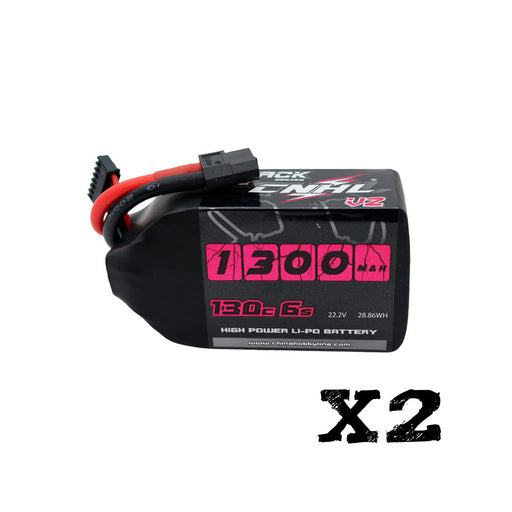
Nopea sovitustarkistus 2 Packs CNHL Black Series V2.0 1300mAh 22.2V 6S 130C LiPo-akku XT60-liittimellä sopii erinomaisesti FPV-lentäjille, jotka ha...
Näytä täydet tiedotVaraosat ja pitkäaikainen tuki Tiedämme, että RC-piloteille luotettava varaosatuki on tärkeä osa sitä, että lentokone pysyy lentokunnossa vuo...
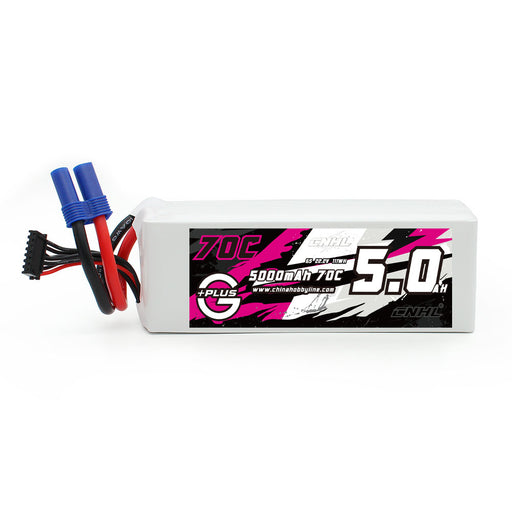
Näytä täydet tiedotTekniset tiedot: Varastonumero: 500706EC5 Kapasiteetti: 5000mAh Jännite: 22,2V / 6-kennoa / 6S1P Purkunopeus: 70C jatkuva / 140C hetkellinen Lata...
Näytä täydet tiedot
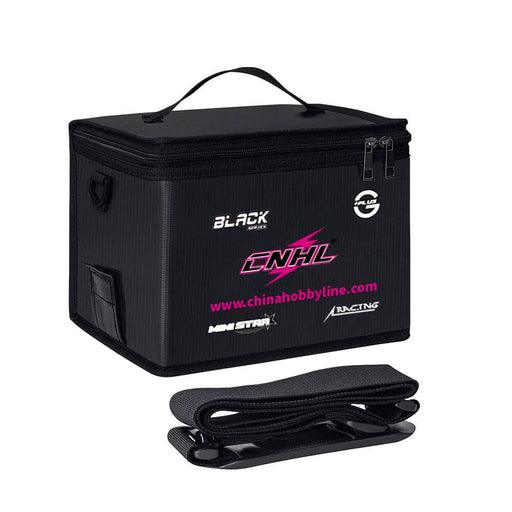
CNHL LiPo Battery Bag on suunniteltu turvallisempaan LiPo-lataukseen, kuljetukseen ja säilytykseen kotona tai kentällä. Se lisää käytännöllisen suo...
Näytä täydet tiedotNopea sovitustarkistus 2 paketin CNHL Speedy Pizza Series Pro 1350mAh 6S 150C LiPo -akku XT60-liittimellä on suunniteltu 5-tuuman FPV-piloteill...
Näytä täydet tiedot

The CNHL Long Range Series BAK 65E 6350mAh 21700 Li-ion battery cell is built around one clear priority: maximum stored energy from a lightweight c...
Näytä täydet tiedot

The CNHL Long Range Series BAK 50D 5000mAh 21700 Li-ion battery cell is designed for custom high-energy battery packs that need a strong balance be...
Näytä täydet tiedot

The ISDT C4 EVO is a versatile smart battery charger built for AA, AAA and cylindrical rechargeable cells from compact 10440 batteries all the way ...
Näytä täydet tiedot

The CNHL Long Range Series 6350mAh 21.6V 6S1P 21700 Li-ion battery combines six BAK 65E high-energy cells into a 137.16Wh pack designed for ultra-e...
Näytä täydet tiedot

The CNHL Long Range Series 5000mAh 21.6V 6S1P 21700 Li-ion battery combines six BAK 50D cells into a compact 108Wh pack designed around long-range ...
Näytä täydet tiedot




Kommentit
Jätä kommentti