
סוללות CNHL ליפו
CNHL שואפת לספק סוללות Li-Po באיכות גבוהה ומוצרי RC לכל חובבי התחביב עם שירות לקוחות מצוין ומחירים תחרותיים

A 6S LiPo battery is a lithium polymer battery pack made from six cells connected in series. In standard LiPo form, that gives it a nominal voltage of 22.2V. In RC, 6S usually appears when the platform is larger, heavier, more power-hungry, or simply needs more voltage headroom than smaller battery classes can provide comfortably.
That does not mean every RC model should use 6S. In many cases, 6S is the right answer because it helps the system make power more cleanly without feeling strained. In other cases, it is unnecessary extra battery weight and setup seriousness. The key is not whether 6S sounds more powerful. The key is whether the platform actually benefits from it.
This guide explains what a 6S LiPo battery really is, what 22.2V means in practical RC terms, where 6S is most commonly used, and what hobbyists should look at besides voltage. If you want the wider voltage picture first, the best companion read is LiPo Battery Voltage Guide: 1S to 8S Explained for RC Models.
Quick answer: a 6S LiPo battery is a 22.2V battery pack built from six cells in series. It is commonly used in larger RC cars, performance FPV drones, bigger RC airplanes, and EDF jets where more voltage headroom helps the system feel stronger and less stressed under load.
In LiPo battery terminology, the letter “S” refers to how many cells are connected in series inside the pack. Each standard LiPo cell has a nominal voltage of 3.7V. When six of those cells are connected in series, the result is a 6S battery with a nominal voltage of 22.2V.
This is why a 6S battery is not just “a bigger battery.” It is a higher-voltage battery class. That higher voltage changes how the system makes power, how much current it may need to draw for a given output target, and how serious the overall setup becomes in terms of fit, weight, and supporting electronics.
| 6S LiPo basics | Value |
|---|---|
| Cell count | 6 cells in series |
| Nominal voltage | 22.2V |
| Common shorthand | 6S battery, 22.2V LiPo |
| Common RC use | Larger RC cars, FPV drones, RC airplanes, EDF jets |

A standard 6S LiPo battery has a nominal voltage of 22.2V. A 6S LiHV battery is slightly different and is commonly referred to as 22.8V because LiHV cells are built around a higher nominal voltage per cell. In practical terms, that means a 6S LiHV pack can provide a little more voltage than a standard 6S LiPo pack, but only when the power system is actually designed to support it.
That does not mean 6S LiHV is automatically the better choice for every RC model. It only makes sense when the vehicle or aircraft, ESC, and charging routine are all compatible with LiHV use. If you want to browse higher-voltage 6S options directly, see 22.8V 6S LiHV Batteries. For a broader chemistry comparison, continue into LiHV vs LiPo: Is More Voltage Really Worth It?.
The biggest change is not just more voltage on paper. A 6S setup usually gives the system more headroom. In many RC applications, that means the motor, ESC, fan, or drivetrain does not have to work as hard to reach the same general output level that a lower-voltage setup would struggle to produce cleanly.
This is one reason 6S often feels more composed in the right platform. The system may pull less current for the same overall power target, which can help with heat and consistency. But 6S also tends to bring more battery seriousness: bigger packs, more sensitivity to fit and weight, and less tolerance for careless setup choices. That is why 6S only feels like an upgrade when the platform truly belongs there.
6S is most common where the platform is large enough, demanding enough, or performance-focused enough to benefit from the added voltage. In practical RC use, that usually means certain RC cars, many performance FPV drones, larger RC airplanes, and a wide range of EDF jets.
| RC type | How 6S is commonly used | Why 6S makes sense |
|---|---|---|
| RC cars | 1/8 buggies, truggies, larger bashers, desert trucks | More voltage headroom for heavier platforms |
| FPV drones | 5-inch freestyle, some long-range, higher-performance setups | More composed power delivery under load |
| RC airplanes | Larger sport planes, scale models, warbirds | Cleaner output for bigger or heavier airframes |
| EDF jets | 70mm, 80mm, and larger EDF aircraft | Strong sustained load handling |
In RC cars, 6S usually becomes attractive when the vehicle is larger, heavier, or clearly built for a higher platform class. Many 1/8 buggies, truggies, desert trucks, and larger bashers benefit from the extra voltage because the system no longer has to fight as hard for the same kind of output. In those vehicles, 6S often feels less like excess and more like proper headroom.
That does not mean 6S is automatically right for every surface vehicle. Many RC cars already feel excellent on 4S. But once the chassis, drivetrain, and intended use move into a more demanding class, 6S often becomes the more natural choice. If your focus is specifically on surface vehicles, continue into 6S LiPo Battery for RC Cars.
In FPV, 6S has become popular because many pilots like the way it feels under load. Compared with lower-voltage setups, 6S often delivers smoother punch recovery, less dramatic sag, and a more relaxed overall power system when the quad is actually designed around it properly. This is why 6S appears so often in higher-performance freestyle and some longer-range builds.
At the same time, 6S is not the only correct answer in FPV. Some pilots still prefer 4S because of lower battery weight and a more direct feel in the air. The point is not that 6S replaces everything below it. The point is that it solves a specific kind of demand well. For actual battery options, see 6S LiPo Batteries for FPV Drones and Best Battery for 5 Inch Quad.

In airplanes, 6S becomes more common as the airframe gets larger, heavier, or more performance-oriented. A bigger sport plane, a larger scale aircraft, or a warbird often benefits from the extra voltage because the power system can carry the aircraft more comfortably. The airplane may not just feel faster. It may simply feel less strained.
EDF jets are one of the clearest examples of where 6S makes sense. Fan systems often place a strong sustained load on the battery, and 6S gives many jets the voltage headroom needed to produce cleaner, stronger thrust without leaning as heavily on current as a lower-voltage setup would. This is one reason so many EDF jets naturally sit in the 6S category. For aircraft-specific paths, see 6S LiPo Battery for RC Airplanes and 6S LiPo Battery for EDF Jets.
No. 6S usually means more voltage headroom, not universal superiority. A platform that already feels properly matched on 4S may not improve just because someone moves to 6S. In that case, the result may be more battery weight, more setup sensitivity, or more complication without a real benefit.
The better question is whether the platform genuinely needs 6S to feel right. If it does, 6S can be the cleaner and more natural choice. If it does not, then 6S is just a bigger number attached to the wrong solution.
Voltage is only the first filter. After that, the important questions are usually about capacity, C rating, connector type, pack dimensions, and how the battery affects the way the model fits, balances, or handles. In a car, that may mean tray fit and connector layout. In a drone, it often means battery weight and overall flying feel. In an airplane, it may mean center of gravity and battery bay dimensions.
That is why a correct 6S choice is never just “pick any 22.2V battery.” It is about finding the right 22.2V battery for the actual job. Once voltage is fixed, the real differences usually come from discharge performance, connector fit, pack dimensions, and how the battery changes the way the model behaves in actual use. If you want to look more closely at those next decision points, the most useful follow-up reads are Real LiPo Battery C-Rating Test and Performance Comparison, RC Battery Connectors Guide, and 4S vs 6S LiPo Battery.
A 6S LiPo battery makes sense when the platform is large enough, demanding enough, or performance-focused enough to genuinely benefit from the extra voltage. That often means bigger RC cars, performance FPV drones, larger RC airplanes, and many EDF jets. In those applications, 6S is not about chasing numbers. It is about helping the system feel cleaner, more stable, and less strained.
If the model already feels properly matched on 4S, then 6S is not automatically the next smart step. But if the system clearly wants more voltage headroom, 6S often stops feeling like an upgrade and starts feeling like the correct baseline.
If 6S already looks like the correct voltage class for your platform, the next useful step is 6S LiPo Battery Selection Guide.

For direct browsing across this voltage class, readers can also start with 6S LiPo Batteries.
If you want the broader voltage map first, start with LiPo Battery Voltage Guide: 1S to 8S Explained for RC Models. If your question is more comparative than definitional, the next best read is 4S vs 6S LiPo Battery: Which One Makes More Sense for RC Models?. For lower mid-range comparison, continue into 3S or 4S LiPo Battery Guide.
What voltage is a 6S LiPo battery?
A standard 6S LiPo battery has a nominal voltage of 22.2V.
Is a 6S LiPo battery always better than 4S?
No. It is only better when the platform genuinely benefits from the extra voltage. Many models already feel properly matched on 4S.
What RC cars use 6S batteries?
6S is common in larger and more demanding RC cars, including many 1/8 buggies, truggies, desert trucks, and bigger bashers.
Is 6S good for FPV drones?
Yes, in many setups. 6S is popular in freestyle and some longer-range FPV builds because it can feel more composed under load, though 4S still remains a valid choice in many quads.
Why are many EDF jets 6S?
Because EDF systems often place a strong sustained load on the battery, and 6S gives many jets the voltage headroom needed to produce cleaner, stronger thrust.
Can I use a 6S LiPo in any RC model?
No. The motor, ESC, connector, fit, weight, and platform design all need to support 6S before it becomes a sensible choice.
CNHL שואפת לספק סוללות Li-Po באיכות גבוהה ומוצרי RC לכל חובבי התחביב עם שירות לקוחות מצוין ומחירים תחרותיים

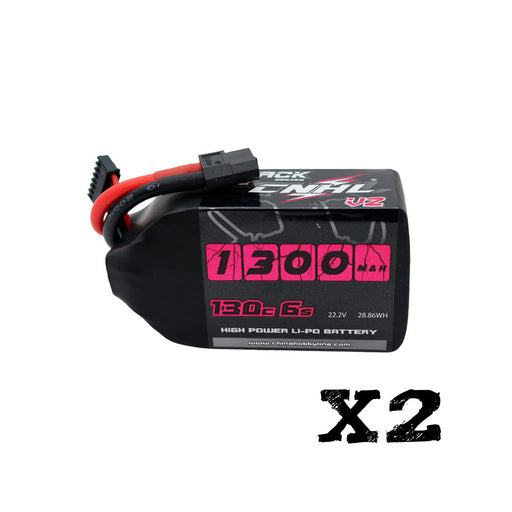
בדיקת התאמה מהירה ה2 Packs CNHL Black Series V2.0 1300mAh 22.2V 6S 130C LiPo Battery with XT60 Plug מתאים היטב למטיסי FPV שרוצים סוללת 6S 1300mAh X...
הצג פרטים מלאיםחלקי חילוף ותמיכה לטווח ארוך אנו יודעים שעבור טייסי RC, תמיכה אמינה בחלקי חילוף היא חלק חשוב בשמירה על מטוס כשיר לטיסה במשך שנים. לכן CNHL מת...
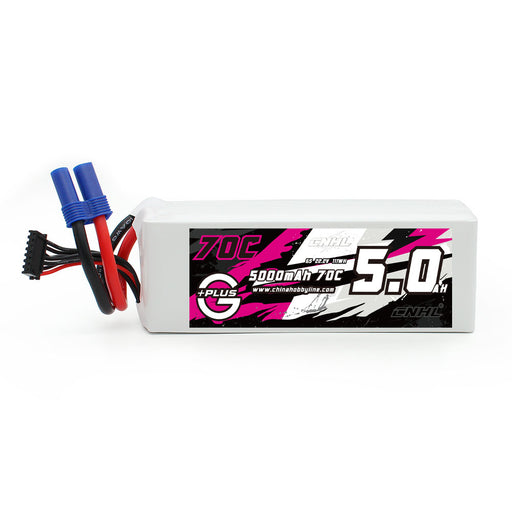
הצג פרטים מלאיםמפרטים: מספר מלאי: 500706EC5 קיבולת: 5000mAh מתח: 22.2V / 6 תאים / 6S1P קצב פריקה: 70C רציף / 140C פיצוץ קצב טעינה: 5C מקסימום גודל (הבדל של 1-5 ...
הצג פרטים מלאים
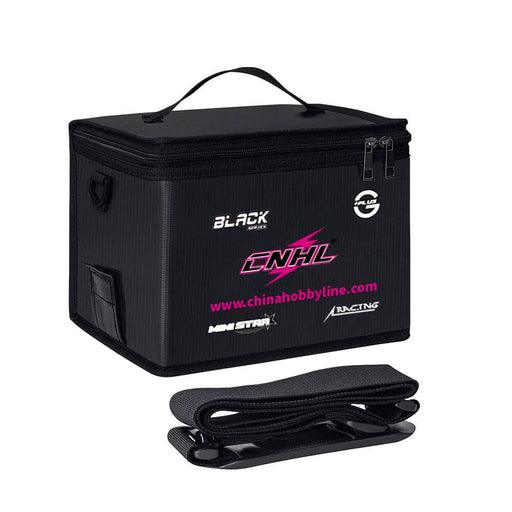
תיק סוללות LiPo של CNHL מיועד לטעינה, הובלה ואחסון בטוחים יותר של סוללות LiPo בבית או בשדה. הוא מוסיף שכבת הגנה פרקטית על ידי סיוע במניעת התפשטות ח...
הצג פרטים מלאים

בדיקת התאמה מהירה חבילת 2 CNHL Speedy Pizza Series Pro 1350mAh 6S 150C LiPo עם תקע XT60 מיועדת לטייסי FPV בגודל 5 אינץ' שרוצים מערכת 6S חופשית ...
הצג פרטים מלאים

Quick Fit Check The CNHL Speedy Pizza Series 2200mAh 22.2V 6S 120C LiPo Battery with XT60 Plug combines the familiar 2200mAh 6S format with a ligh...
הצג פרטים מלאים

Quick Fit Check The CNHL Speedy Pizza Series 2200mAh 14.8V 4S 120C LiPo Battery with XT60 Plug combines a widely used 2200mAh 4S format with a sli...
הצג פרטים מלאים

Quick Fit Check The CNHL Speedy Pizza Series 2200mAh 11.1V 3S 120C LiPo Battery with XT60 Plug takes the familiar 3S 2200mAh aircraft battery form...
הצג פרטים מלאיםThe CNHL Long Range Series BAK 65E 6350mAh 21700 Li-ion battery cell is built around one clear priority: maximum stored energy from a lightweight c...
הצג פרטים מלאים

The CNHL Long Range Series BAK 50D 5000mAh 21700 Li-ion battery cell is designed for custom high-energy battery packs that need a strong balance be...
הצג פרטים מלאים




Leave a comment