
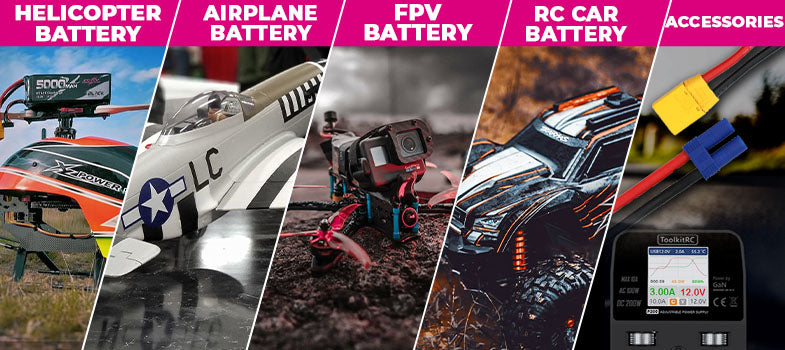
CNHL Lipo Batteries
CNHL aim at providing high-quality Li-Po batteries and RC products to all hobby enthusiasts with excellent customer services and competitive prices

At first glance, the FMS 1/10 Canyon RS doesn’t just look purpose-built—it behaves like a crawler that was engineered from the chassis up. Inspired by Dubai’s futuristic off-road police rigs, it blends a tough PC hard body, fine interior details, and a synchronized LED system with a drivetrain that feels tuned for technical terrain. What sets it apart is the way all these elements lock together: a low-center-of-gravity backbone, portal axles for ground clearance, a 2-speed transmission for on-the-fly flexibility, and a DIG function that pivots the truck with tank-turn precision.
Under the scale shell sits a reinforced nylon chassis that keeps flex under control without adding unnecessary weight. The geometry favors planted climbing and side-hill stability, while the counter-rotating driveshafts minimize torque twist when you punch the throttle on uneven rock. A unique servo damper protects the steering system from sharp hits and hard resets, adding a level of smoothness that’s noticeable the first time you bump the front end into a ledge.

The oil-filled all-metal shocks take the chatter out of broken rock and roots, while the full metal gear train (with plastic spur for noise control) transmits power without drama. A magnetic quick-mount system snaps the body on and off and automatically connects the lighting harness—no fumbling with extra plugs. It’s a small touch, but when you’re swapping packs on the trail, it saves time and keeps wiring tidy.
The Canyon RS’s 2-speed transmission shifts cleanly between low and high on the fly. Low gives you deliberate throttle resolution for technical crawling; high unlocks confidence at trail pace. The DIG system (remote single rear wheel lock) is the star: it lets you pivot the truck in tight gates, correct a poor line mid-obstacle, and square up before a climb without backing down the hill.

Portal axles raise ground clearance to 60 mm but keep the center of mass controlled thanks to the LCG layout. Approach, breakover, and departure angles feel well judged for a 1/10 rig designed to look this scale-accurate: you’re not constantly dragging bumpers to achieve the stance you want.
Early comments from the community point to a mix of surprise and curiosity. Creators who have run multiple off-road models from the brand call the Canyon RS “clean” and “precise,” with many noting how refined the driveline feels. There’s also conversation around the manufacturing lineage—some asking whether this represents a deeper collaboration with Yikong’s design DNA. Regardless of the backstory, the consensus is that the Canyon RS brings a more mature driving feel than most would expect at launch.

On real rock, the Canyon RS carries momentum without feeling light in the nose. Steep approaches reward gentle throttle and small steering inputs; the truck crawls up and over rather than hopping into trouble. The high-traction tires and weight balance make it easy to commit to a line and stay with it—especially when you use DIG to nudge the front around before the final pull.
The suspension is tuned for contact rather than float: it compresses into ledges, keeps tire patches active, and avoids the pogo effect you sometimes see with stock setups. Add in the servo saver protection and you can take sharper hits without wincing at the thought of stripped gears.
The Canyon RS is designed around a practical battery bay sized at 156 × 48 mm, accommodating popular 2S and 3S packs with room for proper mounting. While the official setup references a 5000 mAh pack with an XT60 plug, real-world crawling pushes connectors harder than spec sheets suggest—especially when you lean on the drivetrain’s strengths: slow technical climbs, DIG-assisted pivots, and repeated torque hits on uneven surfaces.
In those scenarios, the XT60 can become the limiting link, typically comfortable around ~60 A continuous. An XT90 offers additional headroom (often cited near ~90 A sustained), lower resistance, and cooler wiring under extended load, which keeps throttle response crisp and lighting stable on long sessions.
For that reason, many experienced drivers pair the Canyon RS with high-quality XT90 packs that fit the tray perfectly and keep temps under control during repeated climbs:
Both options fit within the 156×48 mm compartment and complement the truck’s 550 brushed system and Hobbywing 1060 ESC. On the trail, expect steadier LEDs during slow crawling, a cooler ESC after repeated pulls, and more consistent throttle when you transition between low and high gear.
2S suits scale-style driving, where precise wheel speed is the priority. It gives you long runtime and finer throttle control on narrow lines, making the truck feel composed on side-hills and step-ups.
3S adds punch. You’ll notice a stronger initial pull for vertical faces, more authority when resetting with DIG, and extra wheel speed for the trail sections between obstacles. If you value time on the rocks more than trail cruising, 2S is the smooth operator; if you want to blend both worlds, a good 3S XT90 pack brings the muscle without making the truck feel unruly.
Scale features only matter if they work on the trail. The Canyon RS’s synchronized lighting is wired through the magnetic mount, so you don’t juggle extra connectors. Clear windows frame a detailed cockpit and driver figure that hold up in photos, yet the shell remains durable thanks to the PC construction and nylon roof panels, mirrors, and bumpers.
Maintenance feels straightforward: the quick-release body, independent ESC layout, and accessible servos (steering, hi/lo shift, front/rear diff, and DIG) make it easy to tweak the truck as your driving evolves.

The FMS 1/10 Canyon RS lands at a rare intersection of realism and drivability. It looks right, but more importantly, it drives right—thanks to the LCG chassis, portal axles, DIG agility, and a transmission that supports both technical crawling and trail miles. If you’ve been waiting for a model that treats scale and performance as equal partners, this is it.
Dial in the power path and the truck steps up again. Pairing it with a properly spec’d XT90 pack sharpens throttle feel, keeps temps in check, and helps the electronics remain consistent over long sessions. Once you try it, you won’t want to go back.
Ready to explore compatible power options curated for this model? See all recommended RC batteries for the Canyon RS here.
It reflects a design language and chassis philosophy enthusiasts will recognize, refined under the FMS umbrella with global distribution in mind.
DIG locks the rear end to pivot the truck around its front tires, letting you re-aim on a ledge, reset for a gate, or square up for a climb without backing out. It shortens lines and increases consistency on technical sections.
The compartment is approximately 156 × 48 mm, which accommodates mainstream 2S and 3S packs in this class. If you plan to run extended DIG use or tackle long, steep climbs, consider packs with XT90 connectors for lower resistance and cooler operation.
The electronics are designed for 2S/3S operation. As with any crawler, keep gearing and temps in check, ensure secure mounting, and match the connector on your pack to the ESC harness.
CNHL aim at providing high-quality Li-Po batteries and RC products to all hobby enthusiasts with excellent customer services and competitive prices
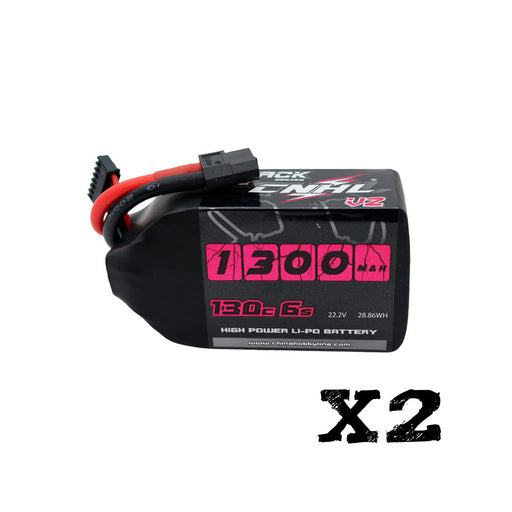
Quick Fit Check The 2 Packs CNHL Black Series V2.0 1300mAh 22.2V 6S 130C LiPo Battery with XT60 Plug is a strong fit for FPV pilots who want a prov...
View full detailsSpare Parts & Long-Term Support We know that for RC pilots, reliable spare parts support is an important part of keeping an aircraft fl...
View full details
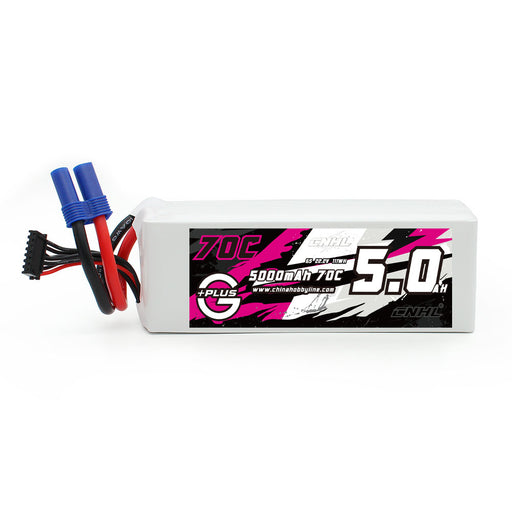
Specifications: Stock Number: 500706EC5 Capacity: 5000mAh Voltage: 22.2V / 6-Cell / 6S1P Discharge Rate: 70C Continual / 140C Burst Charge Rate: ...
View full details
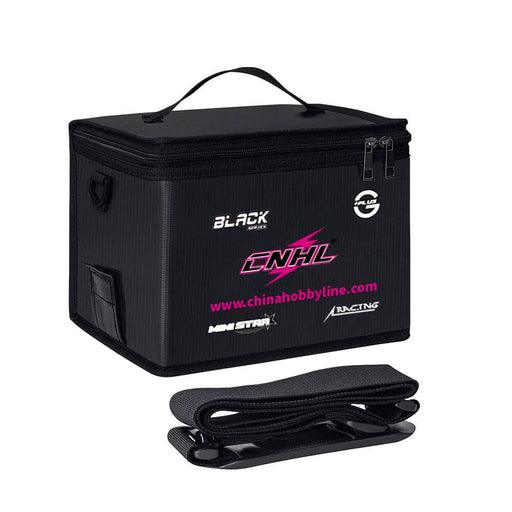
The CNHL LiPo Battery Bag is designed for safer LiPo charging, transport, and storage at home or at the field. It adds a practical layer of protect...
View full details

Quick Fit Check The 2 Packs CNHL Speedy Pizza Series Pro 1350mAh 6S 150C LiPo Battery with XT60 Plug is built for 5-inch FPV pilots who want a ...
View full details

Quick Fit Check The CNHL Speedy Pizza Series 2200mAh 22.2V 6S 120C LiPo Battery with XT60 Plug combines the familiar 2200mAh 6S format with a ligh...
View full details

Quick Fit Check The CNHL Speedy Pizza Series 2200mAh 14.8V 4S 120C LiPo Battery with XT60 Plug combines a widely used 2200mAh 4S format with a sli...
View full details

Quick Fit Check The CNHL Speedy Pizza Series 2200mAh 11.1V 3S 120C LiPo Battery with XT60 Plug takes the familiar 3S 2200mAh aircraft battery form...
View full details

The CNHL Long Range Series BAK 65E 6350mAh 21700 Li-ion battery cell is built around one clear priority: maximum stored energy from a lightweight c...
View full details

The CNHL Long Range Series BAK 50D 5000mAh 21700 Li-ion battery cell is designed for custom high-energy battery packs that need a strong balance be...
View full details


Leave a comment