
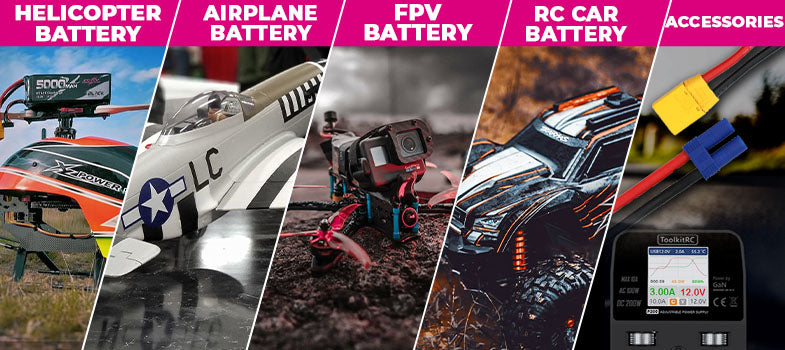
CNHL Lipo Batteries
CNHL aim at providing high-quality Li-Po batteries and RC products to all hobby enthusiasts with excellent customer services and competitive prices

The SEQURE SQFPV Rison5 is most interesting when viewed as an 8S 5-inch racing drone, not just a regular freestyle quad with a higher voltage option. Its lightweight frame, fixed high camera angle, 70A 4-in-1 ESC, XT60 battery input, and 6S/8S power choices all point toward one clear direction: this drone wants to be flown fast, kept moving forward, and treated more like a racing tool than a relaxed backyard cruiser.
That is also why battery choice matters so much on the Rison5. With a normal 5-inch FPV drone, many pilots simply reach for a familiar 6S 1300mAh pack and go fly. With the Rison5, the 8S version changes the conversation. A 1300mAh 8S LiPo or LiHV pack becomes the most practical high-voltage direction, while 6S remains the easier and more familiar choice for pilots who want strong performance without jumping straight into a sharper racing setup.
This review looks at the Rison5 from a practical FPV power-system angle: what the drone is trying to be, where 8S really helps, where it can be misunderstood, and how to choose a CNHL battery setup that fits the way this machine is meant to fly.
The SEQURE SQFPV Rison5 is a 5-inch FPV racing drone built around a positive-X frame layout, T700 carbon fiber plate, 5.5mm arms, and a 210mm wheelbase. The airframe is not trying to look like a long-range cruiser or a cinematic freestyle build. It has a compact, direct, racing-focused shape that makes more sense when the pilot is pushing forward through lines instead of floating around slowly.

The empty weight is around 300g without battery, which is important. A high-voltage setup only feels meaningful when the airframe is light enough to let the extra power show through. If an 8S drone becomes too heavy, the voltage advantage can be dulled by mass. The Rison5 avoids that problem better than many overbuilt 5-inch platforms because the frame is stiff, simple, and not overloaded with unnecessary accessories.
The power system also supports the racing identity. The 6S version uses SEQURE S2207 2100KV motors, while the 8S version uses SEQURE S2207 1500KV motors. That lower KV on 8S is exactly what you would expect from a high-voltage racing setup. Instead of simply spinning a high-KV motor harder and hoping for the best, the 8S version is designed around higher voltage with a motor KV better suited to the load.
SEQURE also uses a 32-bit 70A 4-in-1 ESC and an H7 flight controller platform. For a 5-inch racing drone, those numbers matter because the power system needs to handle sudden throttle changes, hard acceleration, and repeated punch-outs without feeling soft or delayed. This is not the kind of drone where the spec sheet only exists for marketing. The hardware choices match the way the Rison5 is expected to fly.
8S is the headline feature many pilots will notice first, but it should not be misunderstood. 8S does not automatically make a 5-inch drone the fastest thing in the sky. Top speed still depends on propeller choice, motor KV, frame drag, tune quality, battery weight, and how cleanly the power system can deliver current under load.

The real value of 8S on the Rison5 is not just top speed. It is the way the drone accelerates and carries speed. A higher-voltage setup can feel more immediate because the system has more voltage overhead. When paired with a light frame, the drone does not need as much throttle movement to feel alive. That is where the Rison5 starts to make sense as a high-voltage racing platform.
For CNHL battery planning, this is why 8S 1300mAh is the key direction. The official recommended 8S range sits around 1050–1300mAh, and 1300mAh is the most realistic capacity for pilots who want strong high-voltage performance without making the drone feel too heavy. It gives enough usable capacity for fast practice while keeping the power-to-weight balance close to what this type of build needs.
A smaller 8S pack can feel sharper and more explosive, but flight time drops quickly when the pilot stays heavy on throttle. A larger 8S pack can feel more stable and planted, but on a 5-inch racing frame it also starts to change the character of the drone. The Rison5 is not a large long-range quad. It should not be treated like one. The best battery is the one that keeps it fast, responsive, and predictable through a line.
The Rison5 supports both 6S and 8S versions, so the right setup depends on what the pilot wants from the drone. For CNHL’s current battery direction, 8S 1300mAh is the best main recommendation. 8S 1500mAh can still be discussed, but it should be treated as a heavier fit-checked option rather than the default choice. On the 6S side, the range is wider and more familiar for everyday 5-inch flying.
| Battery Setup | Best For | How It Changes the Rison5 |
|---|---|---|
| 8S 1300mAh XT60 LiPo / LiHV | Main 8S racing setup | Best balance of voltage, punch, weight, and practical flight time for the Rison5 8S version. |
| 8S 1500mAh XT60 LiPo / LiHV | More planted high-voltage setup | May feel steadier, but pilots should check battery size, strap fit, and center of gravity before flying. |
| 6S 1050–1200mAh XT60 | Lighter 6S practice | More familiar than 8S, with a lighter feel and strong throttle response. |
| 6S 1300–1400mAh XT60 | General 5-inch FPV flying | The easiest choice for pilots coming from normal 5-inch freestyle or racing setups. |
For pilots specifically buying the Rison5 because of the 8S platform, the 1300mAh class makes the most sense. It stays close to the intended battery window and keeps the drone from feeling like it is carrying more pack than frame. The 1500mAh class may work for pilots who prefer a more settled feel, but it should not be the first choice for a sharp racing build unless the physical fit and balance have been checked carefully.
6S still deserves respect. Many 5-inch FPV pilots already own 6S XT60 packs, understand how they behave, and know how to tune their flying around them. For a pilot who wants to learn the Rison5 frame, the high camera angle, and the racing posture before moving into a more aggressive voltage setup, 6S is the more forgiving route.
The Rison5’s fixed high camera angle may be the most important handling detail on the whole drone. Many freestyle pilots are used to flying around 20 to 30 degrees. At that kind of angle, the quad can still feel natural when slowing down, setting up a trick, approaching a landing spot, or flying in a tighter backyard space.

A high racing angle changes that feeling. The drone wants to move forward. When throttle is added, it does not feel like a casual quad lifting upward. It feels like a racing machine converting power into forward motion. That is exactly the point, but it also means the Rison5 is not the most comfortable choice for slow, relaxed, freestyle-style flying.
For experienced racers, the fixed high angle makes sense. It keeps the drone in a fast posture and avoids the risk of the camera moving after a hit. For newer racing pilots or freestyle pilots crossing into racing, it can feel demanding. The controls may feel mixed at first because the drone’s visual horizon and movement direction are more aggressive than a normal freestyle setup.
This is why the Rison5 should be described honestly. It is not difficult because it is poorly designed. It is demanding because it is designed around speed. Pilots who buy it expecting a casual 5-inch quad may find the camera angle too much. Pilots who buy it to practice racing lines, high-speed passes, and forward commitment will understand the logic much faster.
The Rison5 is available with DJI O4 or analog video options, and this choice depends on how the pilot plans to use the drone. The DJI O4 version is attractive because it gives a cleaner HD digital view and onboard recording capability. For pilots who want a modern digital FPV experience while still flying a racing-style frame, that version has obvious appeal.

However, pure racing pilots may still lean toward analog or other low-latency systems. Racing is not only about image quality. It is about response, field of view, reliability, and how easily the pilot can read gates and obstacles at speed. A narrower camera view can make a steep-angle racing drone feel harder to manage, especially for pilots who are still adapting to the Rison5’s posture.
This does not make the DJI O4 version wrong. It simply means the O4 version is better understood as a bridge between modern HD FPV and racing-style performance. It gives the drone a broader audience than a pure race-day analog setup. Pilots who want the most traditional racing feel may prefer analog, while pilots who want HD video and a cleaner digital system may prefer O4.
With an 8S 5-inch drone, it is easy to expect extreme top speed. The Rison5 has the power system to feel seriously quick, but top speed is not created by voltage alone. Propeller load, pitch, blade count, motor KV, and drag all decide how much of that power turns into forward speed.
The stock Gemfan 51466 V2 propeller direction makes sense for a racing-focused package. It gives the drone a strong and direct feel without asking the pilot to start with an overly risky prop setup. Pilots chasing more top-end speed may be tempted by more aggressive props or bi-blades, but that should be approached carefully.
Higher pitch can increase load on the motors and ESC. On a high-voltage 8S platform, that extra load can also increase heat, vibration, and the risk of desync if the setup is pushed too far. A better method is to fly the stock prop first, understand how the drone feels, then change one variable at a time. Racing builds reward clean setup work more than random experimentation.
The Rison5 is best viewed as a hard-accelerating 5-inch racing platform rather than a dedicated speed-run aircraft. It can be very fast, but its main personality is not just a number on GPS. It is the way it changes direction, pulls through throttle, and keeps asking the pilot to commit to forward speed.
For the 8S version of the Rison5, CNHL’s practical recommendation is to focus on 1300mAh XT60 packs first. This is the best match for the drone’s intended high-voltage battery window and keeps the racing character intact. A strong 8S 1300mAh LiPo or LiHV battery gives the pilot the voltage and punch that make the Rison5 interesting without pushing it too far into heavy-pack territory.
LiHV can make sense for pilots who want a sharper voltage profile at the start of the flight, but it should be treated as a performance setup rather than a casual upgrade. Charging mode matters. Storage habits matter. The pilot should understand the difference between standard LiPo and LiHV settings before using high-voltage packs regularly.
For 6S, CNHL can cover a broader range. A 6S 1050–1200mAh pack can keep the Rison5 light and quick, while 6S 1300–1400mAh gives a more familiar 5-inch FPV feel. This is useful for pilots who want to fly the Rison5 often, practice racing lines, and keep their battery setup closer to what they already use on other 5-inch quads.
If the goal is to experience what makes the Rison5 different, start with 8S 1300mAh. If the goal is to learn the airframe more gradually, 6S is still the sensible route. Both setups are valid, but they do not create the same drone in the air.
Explore the dedicated CNHL battery collection for the SEQURE SQFPV Rison5 to compare 8S and 6S XT60 options. Pilots building other FPV setups can also browse the broader CNHL FPV drone battery collection for more 4S, 6S, and high-voltage choices.
The Rison5 makes the most sense for pilots who already know they want a racing-focused 5-inch quad. It is not the most relaxed choice for cruising around slowly, carrying action cameras, or learning basic freestyle moves. Its steep camera angle and high-voltage option make it feel more committed than a typical freestyle build.
It suits pilots who enjoy fast lines, strong acceleration, quick direction changes, and a locked-in racing posture. It also suits pilots who want to explore 8S on a 5-inch frame without moving into a much larger platform. The airframe is light enough for the voltage to matter, and the hardware package is serious enough to justify the racing positioning.
It may not suit pilots who want adjustable camera angles, gentle low-speed handling, long cinematic flights, or a simple beginner-friendly setup. The Rison5 can be fun, but it asks the pilot to meet it halfway. The more comfortable the pilot is with speed, high camera angle flying, and power-system setup, the more sense this drone makes.
Before choosing the Rison5, pilots should think beyond the headline specs. The first question is whether the fixed high camera angle matches their flying style. If most of your flying is relaxed freestyle, low-altitude cruising, or slow backyard practice, the Rison5 may feel too aggressive. If you want to practice racing lines and fly with more commitment, the angle makes more sense.
The second question is battery fit. The Rison5 uses XT60 and supports compact 6S and 8S packs, but physical size still matters. Always check battery dimensions, strap fit, wire routing, and center of gravity before pushing the drone hard. This is especially true if you are considering an 8S 1500mAh battery, because the extra capacity can change balance and handling.
The third question is spare parts. A racing drone will eventually hit something. Arms, frame plates, TPU camera mounts, props, antennas, and other small parts are not optional in real use. Before turning the Rison5 into a serious practice machine, pilots should confirm whether replacement parts are easy to source.
The fourth question is video system preference. DJI O4 gives a cleaner HD experience and recording advantage. Analog keeps the build closer to a traditional racing mindset. Neither choice is automatically better. The better choice depends on whether the pilot values digital image quality or pure racing simplicity more.
The SEQURE SQFPV Rison5 is a focused 5-inch FPV racing drone with a real high-voltage story. Its 8S version is not just a marketing add-on. When paired with a light 300g-class frame and the right battery, it gives the drone a sharp, forward-driving personality that feels different from a normal 6S freestyle quad.
The most practical CNHL battery direction is 8S 1300mAh XT60. That is the setup that best protects the Rison5’s racing feel while still giving the pilot the punch and voltage advantage that make the 8S version worth considering. 8S 1500mAh can be useful for pilots who want a more planted feel, but it should be checked carefully for fit and balance. 6S remains the easier and more familiar option for most 5-inch FPV pilots.
The Rison5 is not perfect. The fixed high camera angle will not suit everyone, and the DJI O4 version may not satisfy pilots who want the lowest possible racing latency or a wider race-focused view. But as a lightweight 5-inch machine built around speed, stiffness, and high-voltage potential, it has a clear identity. For pilots who specifically want to explore 8S racing behavior in a compact FPV platform, the Rison5 is one of the more interesting drones to watch.
The Rison5 is available in both 6S and 8S versions. The 8S version is the more aggressive high-voltage setup and is the most interesting choice for pilots who want stronger acceleration and a more racing-focused feel.
For the Rison5 8S version, CNHL recommends focusing on 1300mAh XT60 LiPo or LiHV batteries. This capacity gives the best balance between voltage, weight, punch, and practical racing performance.
An 8S 1500mAh pack may work for pilots who want a more planted feel, but it should be checked carefully before flying. Confirm battery dimensions, strap fit, wire clearance, and center of gravity before using it as a regular setup.
8S can offer stronger voltage overhead and a sharper acceleration feel, but it is not automatically better for every pilot. 6S is easier to manage, more common, and often better for pilots who want a familiar 5-inch FPV experience.
Yes. The Rison5 battery setup uses an XT60 connector, so XT60 LiPo or LiHV batteries are the cleanest choice for direct compatibility.
The DJI O4 version is useful for pilots who want HD digital video and recording capability. Pure racers may still prefer analog or other low-latency systems, but O4 gives the Rison5 a more modern and versatile digital FPV setup.
The Rison5 is not the best first FPV drone. Its racing setup, high camera angle, and 8S option make it better suited to pilots who already understand 5-inch FPV flying and want a faster, more committed racing-style machine.
CNHL aim at providing high-quality Li-Po batteries and RC products to all hobby enthusiasts with excellent customer services and competitive prices
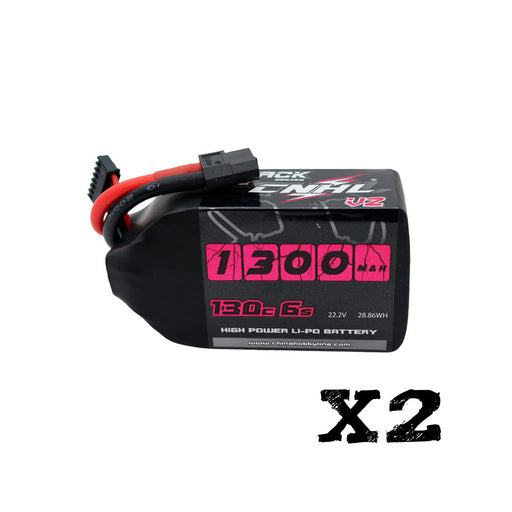
Quick Fit Check The 2 Packs CNHL Black Series V2.0 1300mAh 22.2V 6S 130C LiPo Battery with XT60 Plug is a strong fit for FPV pilots who want a prov...
View full detailsSpare Parts & Long-Term Support We know that for RC pilots, reliable spare parts support is an important part of keeping an aircraft fl...
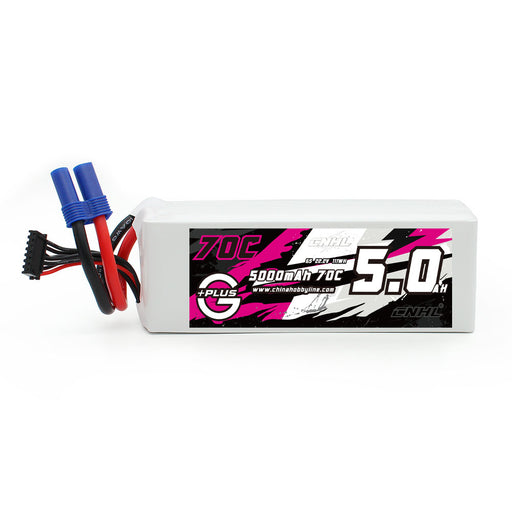
View full detailsSpecifications: Stock Number: 500706EC5 Capacity: 5000mAh Voltage: 22.2V / 6-Cell / 6S1P Discharge Rate: 70C Continual / 140C Burst Charge Rate: ...
View full details
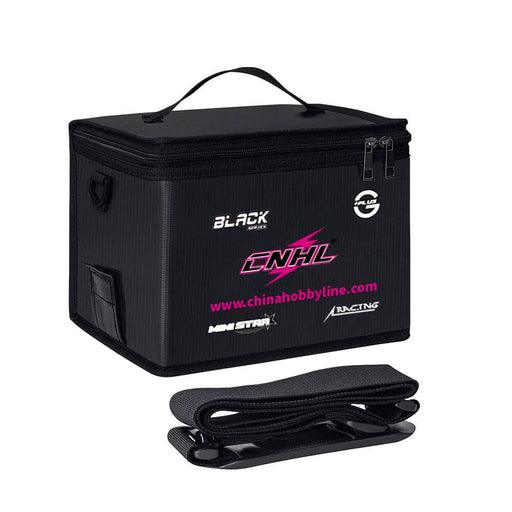
The CNHL LiPo Battery Bag is designed for safer LiPo charging, transport, and storage at home or at the field. It adds a practical layer of protect...
View full details

Quick Fit Check The 2 Packs CNHL Speedy Pizza Series Pro 1350mAh 6S 150C LiPo Battery with XT60 Plug is built for 5-inch FPV pilots who want a ...
View full details

Quick Fit Check The CNHL Speedy Pizza Series 2200mAh 22.2V 6S 120C LiPo Battery with XT60 Plug combines the familiar 2200mAh 6S format with a ligh...
View full details

Quick Fit Check The CNHL Speedy Pizza Series 2200mAh 14.8V 4S 120C LiPo Battery with XT60 Plug combines a widely used 2200mAh 4S format with a sli...
View full details

Quick Fit Check The CNHL Speedy Pizza Series 2200mAh 11.1V 3S 120C LiPo Battery with XT60 Plug takes the familiar 3S 2200mAh aircraft battery form...
View full details

The CNHL Long Range Series BAK 50D 5000mAh 21700 Li-ion battery cell is designed for custom high-energy battery packs that need a strong balance be...
View full details

The ISDT C4 EVO is a versatile smart battery charger built for AA, AAA and cylindrical rechargeable cells from compact 10440 batteries all the way ...
View full details


Leave a comment