
סוללות CNHL ליפו
CNHL שואפת לספק סוללות Li-Po באיכות גבוהה ומוצרי RC לכל חובבי התחביב עם שירות לקוחות מצוין ומחירים תחרותיים
The FMS and Arrows Hobby Viper 30mm looks almost toy-sized when it is sitting on a table. With an approximately 460mm wingspan, 410mm overall length and a flying weight around 120g, it is small enough to carry almost anywhere. Once airborne, however, the comparison with a slow micro trainer quickly falls apart.
This is a genuine brushless micro EDF built around a 30mm 12-blade fan, a 1110-KV10000 brushless motor and a compact 2S battery system. It accelerates quickly, covers more ground than its size suggests and rewards smooth energy management rather than aggressive low-speed control inputs.
FMS has introduced the aircraft together with Arrows Hobby as a highly capable micro jet, and that description gets closer to the point than simply calling it a small beginner airplane. The Viper combines an unusually compact airframe with stabilization, self-level assistance, RTF and PNP choices, removable landing gear and useful receiver flexibility. The result is easy to own and transport, but still interesting enough for experienced pilots to tune and enjoy.

The Viper 30mm takes the familiar sport-jet shape and compresses it into a platform that uses very small batteries and requires almost no preparation before flying. It is offered in both RTF and PNP versions, making it relevant to two quite different types of pilot: those who want a complete radio package and those who already have their own transmitter ecosystem.
| Specification | Arrows Hobby Viper 30mm |
|---|---|
| Wingspan | Approx. 460mm |
| Overall Length | Approx. 410mm |
| Flying Weight | Approx. 120g |
| EDF | 30mm 12-blade EDF |
| Motor | 1110-KV10000 Brushless Motor |
| ESC | 7A |
| Battery | 2S 450mAh class |
| Landing Gear | Removable |
| Versions | RTF / PNP |

The airframe may be shared, but the ownership experience is different enough that choosing between RTF and PNP matters.
The RTF package is aimed at pilots who want the shortest path from the box to the flying field. The aircraft comes with its matching transmitter system, a 2S 450mAh battery and charging equipment, with the onboard flight assistance already integrated into the package.
That removes radio compatibility and receiver installation from the initial setup. For someone interested primarily in flying the Viper rather than building a radio configuration around it, RTF is the simpler choice.
The PNP version is where this tiny aircraft becomes more unusual. Instead of locking the pilot into the supplied transmitter, it allows a compatible receiver to be integrated with the onboard control system.
That creates useful possibilities for pilots already using programmable radios, particularly those working with compact SBUS receivers or ELRS receivers using CRSF serial communication. It also gives the pilot much more freedom to adjust rates, expo and control feel.
Many EDF jets make their first demand on the owner before they ever reach the runway: wings, stabilizers, linkages or other components still need to be installed. The Viper 30mm takes a much simpler approach.
The aircraft arrives essentially assembled. If hand launching is preferred, even the removable landing gear can stay off. The result is a model that requires very little space in the car, very little preparation at the field and almost no traditional airframe assembly.
The battery compartment follows the same philosophy. A magnetic hatch provides fast access to the forward battery area, where the small 2S pack is secured in position. With batteries in the 450–550mAh class, swapping packs between flights takes very little time.
This convenience is arguably more important than the aircraft simply being small. A micro EDF becomes much more useful when it can be transported, powered up and flown without turning every short flying session into an equipment project.

Power comes from a 30mm 12-blade EDF, 1110-KV10000 brushless motor and 7A ESC. Those numbers make it clear that Arrows has not tried to turn the Viper into a tiny high-voltage missile. The design instead relies on keeping the complete aircraft light.
The 2S system delivers enough performance for fast circuits, climbing and basic aerobatic flying, but the Viper is better understood as an energy-management aircraft than an unlimited vertical performer. Smooth flying gets more from the available power than repeatedly asking the motor to recover from low-speed, high-drag situations.
That balance is also why battery weight deserves attention. A few grams represent a meaningful percentage of the total weight on a roughly 120g aircraft, so adding capacity without considering mass can change the character of the airplane more quickly than it would on a conventional 70mm or 80mm EDF.

A 12-blade fan is not only about thrust. It also gives the little Viper a recognizably EDF-style sound that helps separate it from a conventional prop-driven micro airplane.
Physics still applies: a 30mm unit cannot produce the deep, heavy fan note of a much larger ducted-fan jet. The sound is higher and lighter, but the multi-blade fan remains clearly audible and gives the aircraft more of the character people expect from an EDF.
For a model this small, that is part of the appeal. It delivers a recognizable jet experience without requiring the batteries, transport space or flying-site logistics associated with a large EDF.
The removable landing gear lets the Viper work in two different ways. On smooth pavement, the gear allows conventional ground operation. On grass or at a site without a suitable runway, removing the wheels keeps the setup simple and makes hand launching the obvious choice.
A good hand launch is more about clean acceleration than a dramatic upward throw. Full power, a firm forward release and only a modest upward angle give the EDF time to build airspeed. Throwing a small jet too steeply asks it to climb before it has the energy to do so.
The onboard stabilization is useful during this first few seconds because launch is the point where a light aircraft experiences the greatest combination of low speed, pilot workload and changing attitude. Once the Viper accelerates, the workload drops noticeably.

This is where the Viper makes the strongest case for being treated as a proper small EDF rather than a novelty aircraft.
The first surprise is how quickly it uses space. At 460mm across the wing, the aircraft looks as if it should be comfortable almost anywhere, yet its ground coverage is much closer to a small sport jet than a slow indoor model.
That leads to an important distinction: the Viper is small to transport, not necessarily small-space to fly. Give it enough room to establish a circuit, turn progressively and regain airspeed before the next maneuver. A cramped field encourages exactly the type of repeated tight turn that the Viper handles least gracefully.
The 2S power system does not require full throttle throughout an entire flight. Once established in level flight, moderate power is enough for normal circuits. What the aircraft dislikes is giving away too much speed and then asking for a large pitch change immediately afterwards.
This is an EDF habit worth learning early. A propeller aircraft with generous low-speed thrust may tolerate aggressive throttle reduction followed by a climb. The little Viper responds better when power, pitch and bank are managed together.
The easiest way to make the aircraft feel difficult is to combine a steep bank, a large elevator input and insufficient airspeed. That increases the wing loading in the turn while simultaneously asking the aircraft to climb.
A smoother technique is to carry some power through the turn, keep the bank reasonable and make the main climb once the wings are closer to level. The Viper immediately feels more predictable when flown this way.
Despite being a tiny EDF, the Viper is not incapable of gliding. With the wings relatively level and the aircraft already carrying speed, it can float farther than its dimensions suggest as power is reduced.
The margin disappears much faster when the aircraft is slow and banked. That difference explains why one low-power section of a flight can feel surprisingly relaxed while another turns into a sudden sink. The problem is usually not simply “EDF equals no glide”; it is the combination of airspeed, bank angle and elevator demand.

The Viper has a very small rotational mass and relatively generous available surface movement, so full control travel can make the aircraft feel much more sensitive than its stabilized appearance suggests.
This is especially noticeable in pitch. Too much elevator at low speed can consume the remaining energy very quickly. Aileron response can also become unnecessarily abrupt if every stick movement commands the maximum available travel.
For PNP pilots using a programmable transmitter, beginning with substantially reduced rates is a sensible first-flight strategy. Around 50% aileron and elevator rate provides a useful conservative baseline for familiarization, with additional travel added later as required. This should be treated as a practical starting point rather than a factory-prescribed setting.
Expo can also help by softening the response around stick center without removing full control authority at the end of the stick. The goal is not to make the Viper unresponsive; it is to stop minor corrections from turning into large attitude changes.
The flight controller is one of the reasons the Viper can serve several experience levels despite its speed.
Self-level assistance is the more protective behavior. When the aircraft is displaced from a level attitude and the pilot reduces the control input, the system works to bring the model back toward a more neutral orientation. That is useful during launching and when a pilot momentarily loses confidence in the aircraft's attitude.
Stabilization is less intrusive. It reacts to disturbances and helps damp unwanted movement while allowing the pilot to command the aircraft more naturally. For an experienced fixed-wing pilot, this often produces the more conventional RC feel.
PNP setups with programmable transmitters can go further because rates, expo and the available flight-control behavior can be tailored around the pilot rather than the supplied RTF transmitter. This is one of the strongest reasons an experienced pilot might choose PNP even though RTF is easier to get airborne.
Receiver flexibility is one of the Viper 30mm PNP's most interesting features because many aircraft at this physical size use a much more closed, integrated radio system.
The control board provides an SBUS input, allowing a suitably small receiver with SBUS output to be integrated without requiring individual PWM connections for every control function.
This is particularly useful when using compact receivers from established radio ecosystems. The receiver still needs to be configured correctly for SBUS output, but the aircraft does not force PNP users into one specific transmitter brand.
ExpressLRS deserves slightly more precise terminology. ELRS is the radio link system, while CRSF is the serial protocol commonly used between an ELRS receiver and the aircraft's control electronics.
A compact ELRS receiver can therefore communicate with the Viper through its serial connection. On a four-wire installation, power and ground are accompanied by TX and RX signal lines, with transmitter and receiver data paths crossed in the normal serial arrangement.
One useful diagnostic point follows from that architecture: an ELRS receiver can bind successfully to the transmitter while the aircraft still shows no control response if the serial communication connection is incorrect. Binding confirms the radio link; it does not by itself confirm the receiver-to-flight-controller connection.

The original battery direction is 2S 450mAh, and it makes sense when viewed in relation to the complete aircraft. A roughly 120g jet does not need a large pack; it needs enough energy without sacrificing the low mass that allows a 30mm EDF to work effectively.
A compact 450mAh pack also leaves room to position the battery correctly in the forward compartment. That matters because changing battery location has a noticeable influence on the center of gravity of such a small airplane.
For pilots looking for spare packs, the CNHL MiniStar 450mAh 7.4V 2S 70C LiPo Battery with XT30U follows the original 450mAh capacity closely and weighs approximately 35g.
The 450mAh and 550mAh choices are closer than the capacity figures initially suggest.
| Battery | Capacity | Voltage | Approx. Weight | Best Use |
|---|---|---|---|---|
| CNHL MiniStar 450mAh | 450mAh | 7.4V 2S LiPo | 35g | Closest stock-style capacity |
| CNHL MiniStar HV 450mAh | 450mAh | 7.6V 2S LiHV | 32g | Lightweight LiHV setup |
| CNHL MiniStar HV 550mAh | 550mAh | 7.6V 2S LiHV | 35g | More capacity without a large weight increase |
The standard 450mAh LiPo remains the most straightforward choice because it mirrors the original capacity direction. The interesting alternative is the CNHL MiniStar HV 550mAh: at approximately 35g, it carries 100mAh more capacity while remaining in essentially the same battery-weight class.
That makes 550mAh a practical option rather than an oversized endurance experiment. Battery position should still be set correctly for CG, but the additional capacity does not require turning the Viper into a noticeably heavier aircraft.
You can see all three selected options in our FMS & Arrows Hobby Viper 30mm Battery Collection.
The Viper 30mm can also use compact 2S LiHV packs, giving pilots two useful MiniStar HV choices at 450mAh and 550mAh.
A standard 2S LiPo is 7.4V nominal and reaches 8.4V when fully charged. A 2S LiHV battery is 7.6V nominal and reaches 8.7V at a full LiHV charge. That makes LiHV a useful way to keep the pack physically small while using the higher-voltage chemistry designed for this type of battery.
Use a charger that specifically supports LiHV batteries and select the correct LiHV charging program when charging to 4.35V per cell. A standard LiPo battery should never be charged beyond 4.20V per cell.
A fixed flight-time number is not especially useful on a micro EDF because throttle use changes consumption dramatically. Repeated full-power climbs and fast recoveries use the available 450mAh much more quickly than smooth circuits at moderate throttle.
In practical use, this is a several-minute flight platform rather than an endurance airplane. The better field strategy is usually to carry multiple small packs rather than make the aircraft heavier in pursuit of a very long single flight.
That is another reason three-pack battery options work well here. A handful of 450mAh or 550mAh packs takes very little transport space and allows the aircraft to retain the light setup it was designed around.
The comparison with the Volantex 30mm F-16 is natural because both aircraft sit in the same emerging micro-EDF space, but comparing them only by fan diameter misses most of what separates them.
The Viper takes a lightweight 2S approach and places unusual emphasis on receiver flexibility in its PNP version. The Volantex F-16 uses a more powerful electrical architecture capable of running 2S or 3S, giving pilots who choose 3S more voltage and greater emphasis on outright thrust.
| Comparison | Arrows Hobby Viper 30mm | Volantex 30mm F-16 |
|---|---|---|
| EDF Size | 30mm | 30mm |
| Motor | 1110-KV10000 | 1112-KV11000 |
| ESC | 7A | 15A |
| Battery Direction | 2S 450mAh class | 2S–3S capable |
| General Character | Lightweight sport-EDF setup with PNP radio flexibility | More power-focused micro fighter setup |
Neither philosophy is automatically better. A pilot focused mainly on stronger 3S performance may find the F-16 approach attractive. The Viper makes more sense for someone who values low battery weight, a sport-jet airframe and — particularly in PNP form — the freedom to use a preferred SBUS or ELRS-based radio setup.
The airframes also encourage different expectations. An F-16 naturally attracts pilots interested in the appearance and speed of a compact fighter, while the Viper's sport-jet layout suits smoother circuits and aerobatic flying. What matters is the type of micro EDF experience the pilot wants, not simply which aircraft has the higher battery voltage.
The answer depends on what “beginner” means.
For someone who already understands basic fixed-wing controls and wants a first EDF, the Viper has several helpful qualities. It requires almost no assembly, the batteries are inexpensive and easy to carry, the aircraft is simple to transport, and the flight controller provides useful assistance while the pilot adapts to EDF flying.
For someone who has never flown a fixed-wing aircraft before, the small size can actually work against them. The Viper becomes visually small very quickly, it moves faster than a trainer and it does not appreciate being slowed excessively in a steep turn.
So the most accurate description is:
The strongest audience is probably pilots who already enjoy fixed-wing RC but want something dramatically easier to carry than a conventional EDF. A complete Viper, transmitter and several flight batteries occupy very little room compared with a 64mm, 70mm or 80mm jet.
It is also particularly attractive to EdgeTX, OpenTX and ELRS users who choose the PNP version. Very small airplanes often force experienced pilots back into proprietary transmitters; the Viper provides more room to integrate the radio system they already use.
Finally, it makes sense for anyone whose storage or transport situation makes larger aircraft inconvenient. Just remember that physical storage size and required flying space are different things. The Viper is easy to carry, but it still deserves an appropriately open flying area.
The Viper's appeal comes from the complete package rather than one headline performance number. Its 2S system is not intended to win a voltage comparison, and the bright sport graphics will not appeal equally to pilots looking for a scale military finish. What it does particularly well is combine portability, a genuine brushless EDF, useful stabilization and unusually flexible PNP radio options in one very small airframe.
The colorful finish has a practical side too. High-contrast graphics make orientation easier on a 460mm aircraft that can quickly become visually small. Whether that appearance feels sporty or toy-like is ultimately a matter of taste, but visibility is useful on an airplane this size.
The most interesting thing about the FMS and Arrows Hobby Viper 30mm is not simply that someone managed to fit an EDF into a tiny airplane. Small EDFs already exist. What makes this model more useful is how many features survive the reduction in scale.
It still has a brushless 12-blade fan, stabilization, self-level assistance, removable landing gear and a proper PNP route for pilots who want to use their own radio equipment. It can fly fast circuits, basic aerobatics and surprisingly respectable power-off glides when its energy is managed properly.
At the same time, its limitations are genuine. It is not a slow trainer, it can become overly sensitive on large control rates and the 2S system does not provide unlimited thrust to rescue every poor maneuver.
That balance is exactly what makes it interesting. The Viper 30mm is easy to own without being completely trivial to fly. For an existing fixed-wing pilot who wants a highly portable first micro EDF — or an ELRS user looking for a tiny jet that does not force a proprietary radio setup — it offers considerably more depth than its size suggests.
If you are preparing several packs for the aircraft, see our Best Batteries for the FMS & Arrows Hobby Viper 30mm. You can also browse CNHL EDF Jet Batteries and CNHL Airplane Batteries for other electric fixed-wing setups.
The aircraft is built around a compact 2S battery system, with 450mAh as the original capacity direction. CNHL 450mAh and selected 550mAh 2S batteries are suitable options for this micro EDF.
Yes. A compact 550mAh pack can provide additional capacity while staying within the lightweight battery class required by the aircraft. The CNHL MiniStar HV 550mAh is approximately 35g, very close to the standard MiniStar 450mAh LiPo.
Yes. Compact 2S 450mAh and 550mAh LiHV batteries can be used. Charge LiHV batteries with a charger that supports LiHV mode when charging to 4.35V per cell.
The PNP version can be configured with a compact ELRS receiver using the serial receiver connection. ELRS commonly communicates with the onboard electronics through the CRSF protocol.
Yes. The PNP control system provides an SBUS receiver connection for compatible compact receivers.
The RTF version provides a complete matching radio setup for the simplest route to flying. PNP allows the pilot to install a compatible receiver and use their own transmitter, making it more attractive for experienced pilots who want programmable rates, expo and radio-system flexibility.
It can be a good first EDF for someone who already understands basic fixed-wing flying. Self-level and stabilization assistance help, but the aircraft is faster and more sensitive than a conventional beginner trainer.
Yes. The landing gear is removable, making hand launch a practical option when a suitable runway is not available.
The standard aircraft does not use an active rudder. Aileron, elevator and throttle provide the primary flight controls.
More than its dimensions might imply. The airframe is extremely compact, but it flies at genuine micro-EDF speeds. An open area that allows broad, smooth circuits is much more suitable than a confined space that forces repeated tight turns.
CNHL שואפת לספק סוללות Li-Po באיכות גבוהה ומוצרי RC לכל חובבי התחביב עם שירות לקוחות מצוין ומחירים תחרותיים
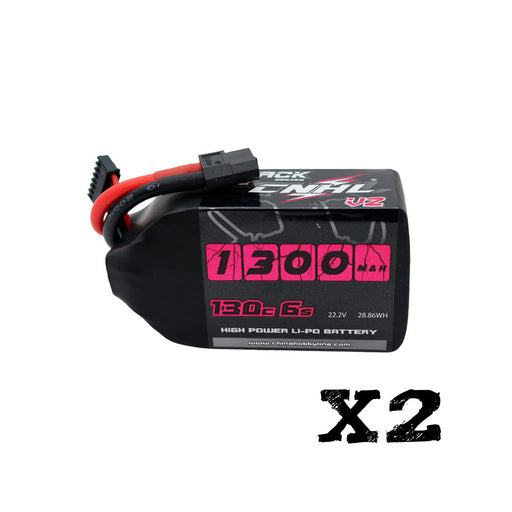
בדיקת התאמה מהירה ה2 Packs CNHL Black Series V2.0 1300mAh 22.2V 6S 130C LiPo Battery with XT60 Plug מתאים היטב למטיסי FPV שרוצים סוללת 6S 1300mAh X...
הצג פרטים מלאיםחלקי חילוף ותמיכה לטווח ארוך אנו יודעים שעבור טייסי RC, תמיכה אמינה בחלקי חילוף היא חלק חשוב בשמירה על מטוס כשיר לטיסה במשך שנים. לכן CNHL מת...
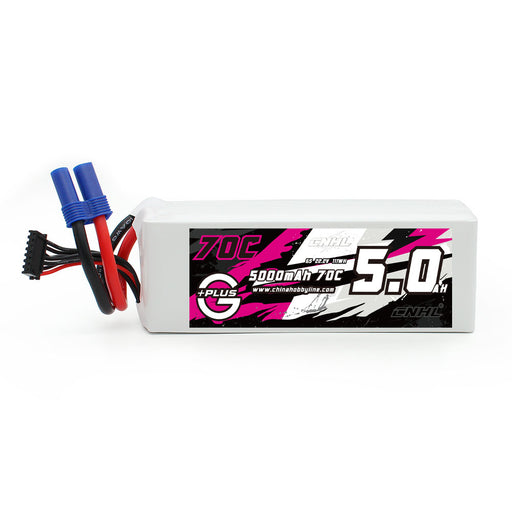
הצג פרטים מלאיםמפרטים: מספר מלאי: 500706EC5 קיבולת: 5000mAh מתח: 22.2V / 6 תאים / 6S1P קצב פריקה: 70C רציף / 140C פיצוץ קצב טעינה: 5C מקסימום גודל (הבדל של 1-5 ...
הצג פרטים מלאים
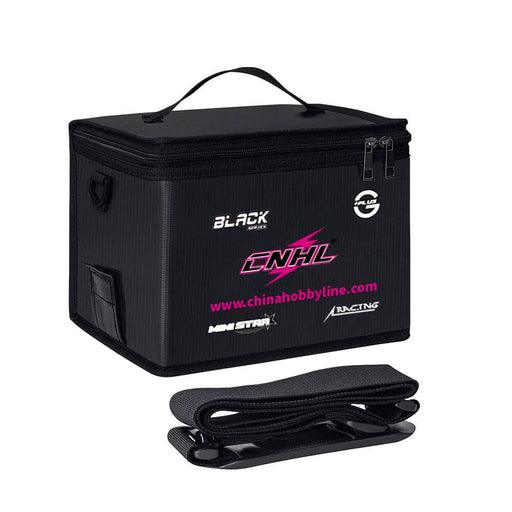
תיק סוללות LiPo של CNHL מיועד לטעינה, הובלה ואחסון בטוחים יותר של סוללות LiPo בבית או בשדה. הוא מוסיף שכבת הגנה פרקטית על ידי סיוע במניעת התפשטות ח...
הצג פרטים מלאיםבדיקת התאמה מהירה חבילת 2 CNHL Speedy Pizza Series Pro 1350mAh 6S 150C LiPo עם תקע XT60 מיועדת לטייסי FPV בגודל 5 אינץ' שרוצים מערכת 6S חופשית ...
הצג פרטים מלאים

The CNHL Long Range Series BAK 65E 6350mAh 21700 Li-ion battery cell is built around one clear priority: maximum stored energy from a lightweight c...
הצג פרטים מלאים

The CNHL Long Range Series BAK 50D 5000mAh 21700 Li-ion battery cell is designed for custom high-energy battery packs that need a strong balance be...
הצג פרטים מלאים

The ISDT C4 EVO is a versatile smart battery charger built for AA, AAA and cylindrical rechargeable cells from compact 10440 batteries all the way ...
הצג פרטים מלאים

The CNHL Long Range Series 6350mAh 21.6V 6S1P 21700 Li-ion battery combines six BAK 65E high-energy cells into a 137.16Wh pack designed for ultra-e...
הצג פרטים מלאים

The CNHL Long Range Series 5000mAh 21.6V 6S1P 21700 Li-ion battery combines six BAK 50D cells into a compact 108Wh pack designed around long-range ...
הצג פרטים מלאים




Leave a comment