
סוללות CNHL ליפו
CNHL שואפת לספק סוללות Li-Po באיכות גבוהה ומוצרי RC לכל חובבי התחביב עם שירות לקוחות מצוין ומחירים תחרותיים
The HPI Stage D24 takes a proper rear-wheel-drive drift layout and compresses it into a genuinely useful 1:24-scale package. It is not simply a tiny RC car wearing hard tyres. The chassis was designed around RWD drifting, with a rear-mounted transmission, spool rear end, large steering angle, gyro assistance and enough adjustment to change wheelbase, track width and front-end setup.
That matters because small-scale drifting solves a problem that larger drift cars cannot: space. A Stage D24 can turn a workshop floor, spare room, basement or compact home track into a usable practice area. You do not need to recreate a full 1/10 drift venue before the car starts making sense.
At the same time, small size does not make RWD drifting automatic. Surface grip, gyro gain, throttle control and basic chassis setup still have a major effect on how smoothly the car transitions from one drift to the next. That combination of accessibility and tunability is what makes the Stage D24 interesting.
Quick verdict: The Stage D24 is a strong entry point into small-scale RWD drifting because it combines a complete RTR package with real drift geometry and meaningful chassis adjustment. It can be enjoyed almost immediately, but the car becomes noticeably better when gyro, surface and steering setup are matched to each other.

The HPI Stage D24 is a 1:24-scale, rear-wheel-drive RTR drift car built around an all-new compact chassis. It follows the larger Stage D10 into HPI's drift range, but the D24 is more than a miniature copy.
At the rear, a three-gear transmission sends power through a spool so both rear wheels remain locked together. Steel CVD driveshafts transfer power to the wheels, while the entire rear drivetrain works with a T-bar suspension layout rather than a conventional independent suspension system.
The front uses independent suspension, adjustable steering links and a very large steering range. HPI specifies up to 67.5 degrees of steering angle, giving the front wheels the counter-steer needed to catch the car at larger drift angles.
This is the key difference between the Stage D24 and many inexpensive mini “drift” cars. The D24 is designed around rear-wheel-drive drifting from the chassis outward rather than relying on an AWD layout and low-grip tyres to create a sliding effect.
The biggest advantage of the Stage D24 is not simply that it is easier to store. Its small size changes how often and where the car can actually be driven.
A 1/10 RWD drift car works best when there is enough room for long transitions, clipping points and wider corners. For many drivers, that means travelling to a club track or setting aside a substantial garage or workshop area.
The Stage D24 needs far less. A small section of smooth flooring can become a practice area. Chairs, boxes, cones, tape lines or other simple objects can create a basic layout. A dedicated micro drift course can fit behind a workbench or in an area that would never accommodate a meaningful 1/10 track.
Small scale can therefore increase actual driving time. A larger car may be more dramatic, but a D24 sitting ready in the house or workshop is much easier to use for ten or twenty minutes whenever there is free time.

If the Stage D24 already appeals to you because of its compact size, there is an even smaller direction to explore. The CNHL WNF Mitsubishi Evo 9 1:64 RC drift car takes indoor RC driving down another level in size, making it an interesting option for desktops, very small rooms and anyone who simply enjoys ultra-compact scale RC cars.
The Stage D24 launches with an officially licensed 2024 Toyota GR Supra hardbody in Prominence Red or Metallic Dawn Blue.
Instead of using a thin polycarbonate shell, HPI built the Supra as a detailed multi-piece hardbody with clear windows, separate light components, mirrors, windshield wipers, badging, grille detailing and front and rear LEDs.
The body mounting system is equally well suited to a scale car. The front is located magnetically while a rear tongue slides into the chassis mount. There are no conventional body posts sticking through the shell, so the exterior remains much closer to a static model.
HPI also includes additional drift-style decals, so the car can be kept relatively clean or given a more aggressive drift-inspired appearance.
Before the first run: because the body contains small separate pieces and internal mounting components, it is worth checking mirrors, magnets and internal mounts after shipping before putting the car on track.

The Stage D24 may be small, but the chassis is not locked into one fixed configuration.
| Adjustment | What It Changes |
|---|---|
| Wheelbase | Allows the chassis length to move away from the stock 102mm setting for tuning or alternative bodies. |
| Front Track Width | Changes stance, body fitment and front geometry. |
| Rear Track Width | Allows rear width to be matched more closely to different body or handling requirements. |
| Front Steering Links | Allows toe and steering geometry to be tuned. |
| Gyro Gain | Lets the amount of steering correction be matched to the surface and driver. |
Adjustable wheelbase is particularly interesting because it immediately opens the door to different body projects. Track-width adjustment adds another useful dimension when matching wheel position to a shell.
That does not mean every 1/24 body will fit, but it does mean the chassis has been designed with more flexibility than a fixed RTR layout would require.
The standard Stage D24 uses a 37T brushed motor. At this scale, outright power is not the difficult part. The hard drift tyres can already be broken loose without requiring a large brushless power system.
The compact SRL-805 integrates the main control functions required by the car, including speed control, receiver, steering gyro and LED management. Steering is handled by the MS-01WR micro servo.
The most useful electronics feature is the transmitter-adjustable gyro gain. Channel 5 on the TF-805 radio allows the amount of steering correction to be changed without opening the car or connecting a programming device.
That matters because the correct gyro setting is not universal. A high-grip surface, slick tile and dedicated drift course can each require a different amount of correction.

The Stage D24 is accessible, but it still behaves like a rear-wheel-drive drift car. It can spin if throttle, steering and gyro correction are not working together.
A useful starting point is to keep gyro gain moderate rather than immediately turning it up. Too much gain can cause fast steering corrections and visible wobble. Too little assistance makes it easier for the rear to rotate beyond the point where the driver can recover it.
Front toe also affects how the car settles into a transition. If the front end feels reluctant to flow from one direction to the other, a small move toward toe-out can be worth testing. Likewise, a tiny amount of additional rear weight can increase rear grip and make the car feel less nervous without fundamentally changing the chassis.
These are small adjustments, but that is exactly why the D24 is interesting. The chassis responds to setup rather than forcing the driver to accept one fixed behaviour.
Good first exercise: start with slow figure eights. They make it much easier to learn how throttle position, counter-steer and gyro correction interact before trying to link long high-angle corners.
Surface choice may be more important on the Stage D24 than many buyers expect.
A surface with too much grip can make the car reluctant to slide smoothly and can make transitions feel abrupt. That is especially noticeable when the car is being driven faster on a compact track.
At the other extreme, an extremely slick floor can reduce rear grip to the point where very small throttle changes produce large rotations.
The sweet spot is a consistent surface that allows the hard tyres to slide without making the car feel completely detached from the floor. Dedicated micro drift tracks work well because the surface can be tuned. On some synthetic track materials, a small amount of drift wax can reduce grip enough to make long transitions smoother and easier to hold.
More grip is not automatically better for RWD drifting. The goal is predictable slip, not maximum traction.
The RTR package makes the Stage D24 easy to enter, but RWD drift technique still needs to be learned.
The car arrives assembled with the radio system, 2S LiPo battery and USB balance charger included. Add AA batteries to the transmitter, charge the drive pack and there is very little additional equipment required to begin.
The gyro lowers the difficulty considerably because it automatically counter-steers when the rear of the car rotates. It does not, however, control throttle or choose the line for you. The driver still needs to learn how much throttle maintains a slide and when to reduce power before the car over-rotates.
A better description is therefore beginner-accessible rather than effortless. The D24 gives a new driver the tools needed to learn RWD drifting without removing the learning process itself.
For normal RTR use, the stock brushed motor is enough.
The Stage D24 does not need huge power to spin its hard tyres. The 37T brushed motor can create and maintain a drift while keeping the drivetrain simple and the entry price under control.
Where a more advanced driver may eventually want improvement is low-speed throttle resolution. RWD drifting often relies on a very narrow throttle range, and a smoother response close to neutral can make fine line control easier.
A brushless conversion could also offer efficiency and more tuning flexibility, but that does not automatically make it the first upgrade the car needs.
For a new Stage D24 owner, learning tyre grip, gyro gain and chassis setup will usually produce more useful information than replacing the motor immediately.
A Kyosho Mini-Z body should not be treated as a direct Stage D24 fit.
The overall dimensions can look close enough to make the idea tempting, but body fitment depends on more than wheelbase. Wheel openings, tyre diameter, track width and body mounting all need to line up.
The D24's drift tyres can be too large for some Mini-Z wheel openings, and its rear locating tongue also creates a different mounting requirement.
That does not make alternative bodies impossible. The adjustable wheelbase and track width make the Stage D24 a promising base for custom 1/24 or 1/25 projects, especially when 3D-printed mounts or modified model-kit bodies are part of the build.
The important distinction is custom-fit potential versus direct compatibility.
With launch pricing around $120, the Stage D24 sits in an interesting part of the small-scale drift market.
It is not trying to replace a high-end competition micro drift chassis. Those platforms can use more sophisticated electronics, motors and tuning parts and can quickly cost several times as much once fully built.
The D24 instead provides a complete entry package:
That makes the Stage D24 particularly attractive to someone who wants to start RWD drifting without first assembling a separate chassis, radio, gyro, electronics package and body.
The correct Stage D24 battery is a compact 7.4V 2S 360mAh LiPo.
Some HPI promotional copy has referenced 600mAh, but the production battery and HPI replacement-battery specification are 360mAh. For replacement-battery selection, 360mAh is therefore the useful capacity reference.
Because the D24 is such a small chassis, simply choosing a larger 2S pack is not automatically an upgrade. Dimensions, connector type and installed weight become much more important than chasing the largest possible capacity.
| Specification | HPI Factory Battery | CNHL MiniStar |
|---|---|---|
| Voltage | 7.4V / 2S | 7.4V / 2S |
| Capacity | 360mAh | 350mAh actual capacity |
| Discharge Rate | 10C | 30C |
| Dimensions | Approx. 45 × 20 × 11mm | 44 × 19 × 15mm |
| Output Connector | JST BEC | JST |
| Weight | — | Approx. 22g |
The compact CNHL MiniStar used for this application has an actual capacity of 350mAh, putting it only 10mAh below the HPI 360mAh pack.
It retains the correct 7.4V 2S configuration, uses a JST connector and measures 44 × 19 × 15mm. The pack is a confirmed Stage D24 fit, so the recommendation is based on actual fitment rather than voltage alone.
The 30C discharge rating also provides more than enough output for the factory 37T brushed system without moving to a larger battery format.
The CNHL option is supplied as a 3-pack, which suits a micro drift car particularly well. Drift practice often involves repeated short sessions while gyro, toe and surface setup are being adjusted, so rotating several batteries is more useful than increasing battery size and changing the weight balance of the car.
See the full HPI Stage D24 battery collection for fitment details, or view the CNHL MiniStar 2S JST 3-pack.

The Stage D10 and Stage D24 both approach drifting as dedicated RWD applications, but they solve very different problems.
| Use Case | HPI Stage D24 | HPI Stage D10 |
|---|---|---|
| Scale | 1:24 | 1:10 |
| Space Requirement | Very low | Much larger |
| Indoor Home Practice | One of its strongest advantages | Requires substantial space |
| Driving Style | Compact, technical and highly surface-sensitive | Larger-scale drift experience with more room for speed and long transitions |
| Best Reason to Choose It | You want to practise and drift in much smaller spaces | You want the scale, presence and track experience of 1/10 drifting |
For someone without easy access to a large drift venue, the D24 may actually be the more useful car rather than simply the cheaper one.
The Stage D24 is particularly well suited to drivers who:
It is less likely to satisfy someone already running a high-end competition-focused 1/24 drift build and looking for maximum electronics tuning straight out of the box. That is not really the market the Stage D24 is trying to serve.
Even if the Stage D24 is not the exact RC car you are looking for, the same interest in compact drift cars, scale bodies and indoor driving often overlaps with other RC platforms. You can browse our RC cars collection to explore more drift cars, crawlers and small-scale RC models.
Yes. The Stage D24 is a dedicated RWD drift chassis with a rear-mounted three-gear transmission and spool rear end.
HPI lists the Stage D24 as a 1:24-scale drift car. The standard wheelbase is 102mm and the chassis provides additional wheelbase adjustment.
It is a good entry point into RWD drifting because the car is RTR and includes adjustable gyro assistance. Beginners should still expect to spend time learning throttle control, counter-steer and gyro setup.
The correct battery is a compact 7.4V 2S 360mAh LiPo. CNHL offers a confirmed-fit 350mAh 2S 30C JST option for the Stage D24.
The correct production and replacement-battery specification is 360mAh. The 600mAh figure that appears in some promotional material should not be used for Stage D24 replacement-battery selection.
Do not assume a direct fit. Wheel openings, tyre diameter and the Stage D24 body mounting system can prevent a Mini-Z shell from dropping straight onto the chassis. Custom installation may still be possible.
Some 1/24 or 1/25 bodies may be useful candidates because the D24 has adjustable wheelbase and track width, but each shell still needs to be checked individually for wheel openings, width, chassis clearance and mounting.
Not for normal RTR drifting. The stock 37T brushed motor has enough power to keep the tyres sliding. Brushless electronics may become attractive later for drivers who want finer low-speed response or greater tuning flexibility.
A smooth and consistent low-grip surface is a good starting point. Too much grip can make transitions abrupt, while an extremely slick surface can make the rear difficult to control. Gyro gain should be adjusted whenever the surface changes significantly.
The most important thing about the HPI Stage D24 is not that HPI built a miniature Toyota Supra. It is that the chassis treats 1:24 drifting as a proper hobby category.
Rear-wheel drive, a spool, large steering angle, transmitter-adjustable gyro, adjustable wheelbase and adjustable track width are all features that give the D24 room to be driven, tuned and modified rather than simply displayed.
The car also does something much more practical: it lowers the amount of space required to practise RWD drifting. For someone who cannot regularly reach a 1/10 drift track, that may be the feature that matters most.
It still rewards patience. Surface choice matters, gyro gain matters, and small changes to front toe or rear grip can noticeably change the way the car transitions. That is not a weakness. It is part of what makes the Stage D24 feel like a real adjustable drift chassis rather than a novelty micro RC.
For replacement packs and additional practice batteries, see the CNHL HPI Stage D24 battery collection.
For batteries across other drift cars, touring cars, crawlers, trucks and RC platforms, browse the CNHL RC car battery collection.
You can also explore the complete CNHL 2S LiPo battery range for other compact 7.4V RC applications.
CNHL שואפת לספק סוללות Li-Po באיכות גבוהה ומוצרי RC לכל חובבי התחביב עם שירות לקוחות מצוין ומחירים תחרותיים

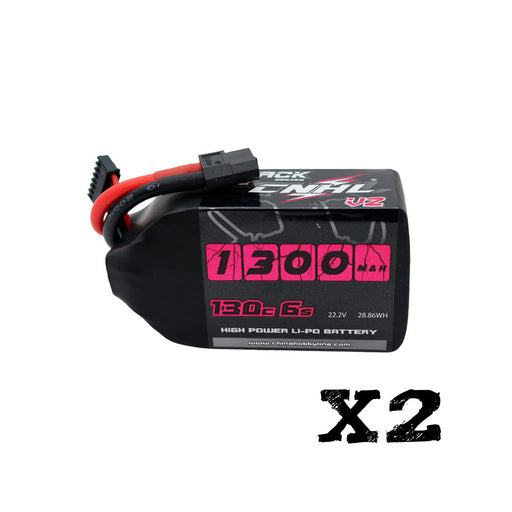
בדיקת התאמה מהירה ה2 Packs CNHL Black Series V2.0 1300mAh 22.2V 6S 130C LiPo Battery with XT60 Plug מתאים היטב למטיסי FPV שרוצים סוללת 6S 1300mAh X...
הצג פרטים מלאיםחלקי חילוף ותמיכה לטווח ארוך אנו יודעים שעבור טייסי RC, תמיכה אמינה בחלקי חילוף היא חלק חשוב בשמירה על מטוס כשיר לטיסה במשך שנים. לכן CNHL מת...
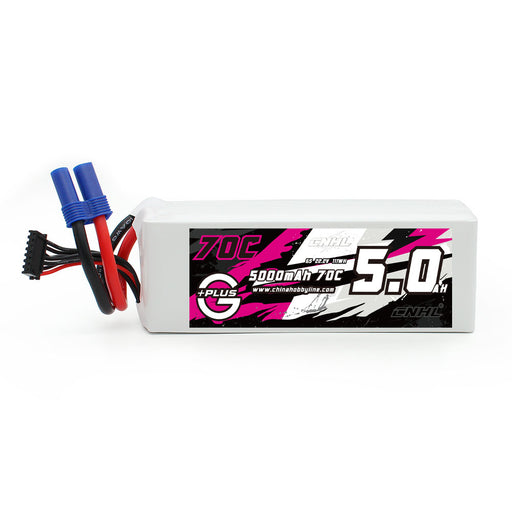
הצג פרטים מלאיםמפרטים: מספר מלאי: 500706EC5 קיבולת: 5000mAh מתח: 22.2V / 6 תאים / 6S1P קצב פריקה: 70C רציף / 140C פיצוץ קצב טעינה: 5C מקסימום גודל (הבדל של 1-5 ...
הצג פרטים מלאים
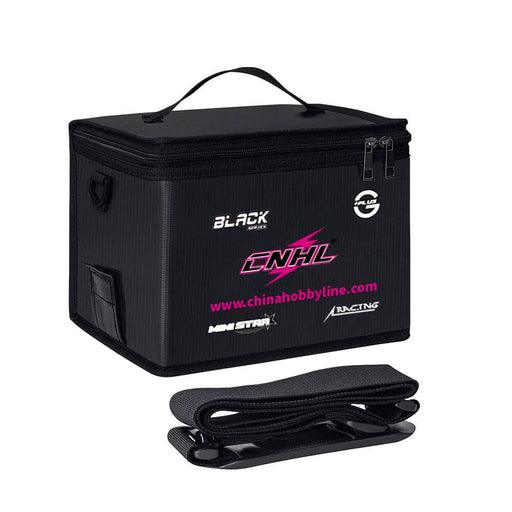
תיק סוללות LiPo של CNHL מיועד לטעינה, הובלה ואחסון בטוחים יותר של סוללות LiPo בבית או בשדה. הוא מוסיף שכבת הגנה פרקטית על ידי סיוע במניעת התפשטות ח...
הצג פרטים מלאים

בדיקת התאמה מהירה חבילת 2 CNHL Speedy Pizza Series Pro 1350mAh 6S 150C LiPo עם תקע XT60 מיועדת לטייסי FPV בגודל 5 אינץ' שרוצים מערכת 6S חופשית ...
הצג פרטים מלאים

Quick Fit Check The CNHL Speedy Pizza Series 2200mAh 22.2V 6S 120C LiPo Battery with XT60 Plug combines the familiar 2200mAh 6S format with a ligh...
הצג פרטים מלאים

Quick Fit Check The CNHL Speedy Pizza Series 2200mAh 14.8V 4S 120C LiPo Battery with XT60 Plug combines a widely used 2200mAh 4S format with a sli...
הצג פרטים מלאים

Quick Fit Check The CNHL Speedy Pizza Series 2200mAh 11.1V 3S 120C LiPo Battery with XT60 Plug takes the familiar 3S 2200mAh aircraft battery form...
הצג פרטים מלאים

The CNHL Long Range Series BAK 50D 5000mAh 21700 Li-ion battery cell is designed for custom high-energy battery packs that need a strong balance be...
הצג פרטים מלאים

The ISDT C4 EVO is a versatile smart battery charger built for AA, AAA and cylindrical rechargeable cells from compact 10440 batteries all the way ...
הצג פרטים מלאים


Leave a comment