

CNHL Lipo Batteries
CNHL aim at providing high-quality Li-Po batteries and RC products to all hobby enthusiasts with excellent customer services and competitive prices
If you're into high-performance hobbies like RC cars or FPV drones, you’ve probably heard people talking about a battery’s “IR,” but what does that actually mean? The internal resistance of a LiPo battery is one of the most important—and most overlooked—indicators of its health. Think of it as the battery's internal bottleneck. It’s a measure of how much the battery itself resists letting its own power flow out. A low IR number is good; a high IR number is bad. Understanding this simple number can tell you a lot about your battery’s condition and how it's going to perform.
If you already understand why internal resistance affects battery feel and now want to check it yourself, this page explains the practical measurement side. For the broader framework first, start with the LiPo C Rating and Battery Performance Guide and How Internal Resistance Affects LiPo Performance.
For clarity, the discussion here mainly refers to multi-cell LiPo packs used in RC models, especially 2S and above.

So, why should you care about this number? It might seem like a technical detail for engineers, but measuring the internal resistance of a LiPo battery is like taking its pulse. It gives you a clear and honest look at its health, how it will handle being pushed hard, and how much life it really has left in it.
A battery with a low internal resistance (IR) can dump a lot of power quickly without breaking a sweat. In the real world, this translates to more "punch" off the line for your RC car or less voltage sag during a high-throttle climb with your drone. On the flip side, a battery with high IR will struggle to deliver that power. This shows up as a noticeable drop in performance, a battery that gets unusually hot during use, and shorter runtimes. Tracking the IR over the life of a pack is the best way to know when it’s getting tired and needs to be retired for safety reasons.
If your main question is why one pack feels obviously flatter than another even though the printed specs look similar, continue into Why Some LiPo Batteries Feel Weak Despite Similar Specs.
If the symptom you notice most is early softness under throttle rather than the IR number itself, the next useful read is What Is Voltage Sag? Causes, Effects, and How to Reduce It.

The great news is you don’t need a bunch of expensive lab equipment to measure IR. Most modern hobby-grade chargers have this function built right in, making it super easy to do.
Here’s what you’ll need:

Measuring the IR is a straightforward process, but if you want to get useful, consistent results that you can track over time, you should try to do it the same way every time.
For the most reliable and consistent readings, it's best to measure your batteries under the same conditions each time. A great habit to get into is to measure them when they are fully charged (4.2V per cell) and have cooled down to room temperature. A hot battery right off the charger or a partially discharged battery will give you a different reading, so consistency is key.
Securely plug both the main power lead and the balance lead of your LiPo battery into the correct ports on your charger. The charger needs both of these connections to be able to perform the test and give you a reading for each individual cell.
Navigate through your charger’s menu system to find the internal resistance function. This might be labeled as "Battery Resistance," "IR," or something similar. Once you find it, select that option and let the charger do its thing. The process is usually very quick and only takes a few seconds.
The charger will then display the IR value for each cell in your battery pack, as well as an overall value for the whole pack. The numbers will be shown in milliohms (mΩ). It’s a fantastic idea to write these numbers down, maybe on a small sticker you put on the battery or in a logbook. This way, you can easily see how the IR changes as the battery gets older.
If you measure the same battery on two different days and get slightly different numbers, don't panic. The IR reading isn’t a fixed number; it can be influenced by several factors. This is why doing your measurements under the same conditions every time is so important for getting data you can actually compare.
If you want the temperature side explained more fully, continue into LiPo Batteries in Cold Weather: Performance Loss, Voltage Sag, and What to Do.
This is the golden question everyone asks, and the honest answer is, "it depends." However, there are some really good general guidelines you can follow to judge the health of your packs. The numbers below refer to the internal resistance per individual cell.
A fresh, top-tier LiPo should have an IR below 10mΩ per cell, with many high-performance packs coming in as low as 2-5mΩ per cell when they are brand new. The cells should also be very closely matched, ideally within 1-2mΩ of each other.
As you use a battery, the IR will slowly start to climb. A pack with an IR between 10-20mΩ per cell is still in great shape and should provide solid performance.
Once the IR starts to creep above 20mΩ per cell, it's a sign that the battery is getting tired. It will likely show a noticeable drop in performance and may get warmer during use. While it might still be usable for less demanding, low-power applications, its life as a high-performance pack is nearing the end.
If a cell's IR shoots up dramatically, or if one cell is much higher than the others (for example, one cell is at 40mΩ while the others are at 15mΩ), that is a huge red flag that the cell is failing. The battery should be retired immediately for safety reasons.
Remember, a battery with a higher capacity should generally have a lower resistance. A large 6000mAh pack with 15mΩ of resistance is in much worse shape than a small 1300mAh pack with the same reading. Context matters!
You can't stop a battery from getting old, but you can definitely slow down the aging process and keep the internal resistance of your LiPo battery as low as possible for as long as possible by taking good care of it.

Checking the internal resistance of a LiPo battery is like giving it a regular health check-up. It’s a quick, simple way to monitor its condition, know what kind of performance to expect from it, and most importantly, identify when it’s time to safely retire an old pack. By getting in the habit of checking your batteries regularly, you can ensure you get the best performance and the longest possible lifespan out of every single one. It’s a simple step that every serious hobbyist should make part of their routine.
CNHL aim at providing high-quality Li-Po batteries and RC products to all hobby enthusiasts with excellent customer services and competitive prices

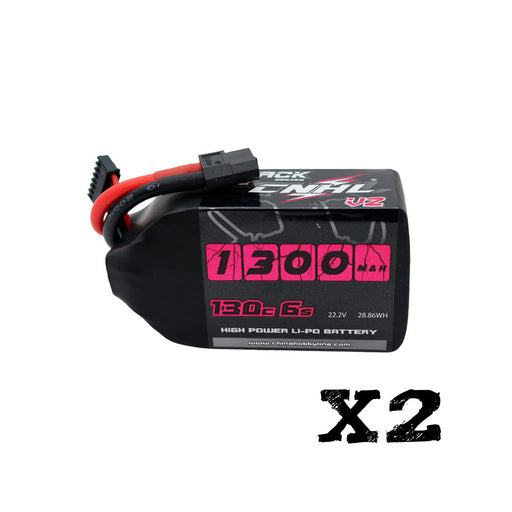
Quick Fit Check The 2 Packs CNHL Black Series V2.0 1300mAh 22.2V 6S 130C LiPo Battery with XT60 Plug is a strong fit for FPV pilots who want a prov...
View full detailsSpare Parts & Long-Term Support We know that for RC pilots, reliable spare parts support is an important part of keeping an aircraft fl...
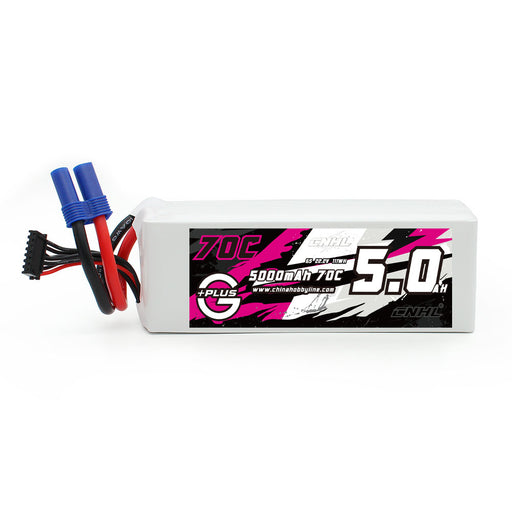
View full detailsSpecifications: Stock Number: 500706EC5 Capacity: 5000mAh Voltage: 22.2V / 6-Cell / 6S1P Discharge Rate: 70C Continual / 140C Burst Charge Rate: ...
View full details
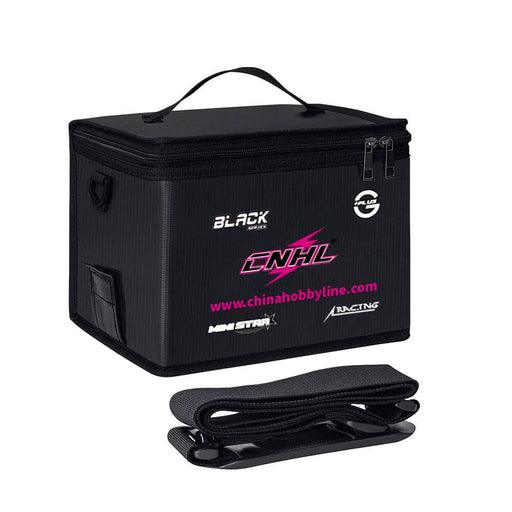
The CNHL LiPo Battery Bag is designed for safer LiPo charging, transport, and storage at home or at the field. It adds a practical layer of protect...
View full detailsQuick Fit Check The 2 Packs CNHL Speedy Pizza Series Pro 1350mAh 6S 150C LiPo Battery with XT60 Plug is built for 5-inch FPV pilots who want a ...
View full details

The CNHL Long Range Series BAK 65E 6350mAh 21700 Li-ion battery cell is built around one clear priority: maximum stored energy from a lightweight c...
View full details

The CNHL Long Range Series BAK 50D 5000mAh 21700 Li-ion battery cell is designed for custom high-energy battery packs that need a strong balance be...
View full details

The ISDT C4 EVO is a versatile smart battery charger built for AA, AAA and cylindrical rechargeable cells from compact 10440 batteries all the way ...
View full details

The CNHL Long Range Series 6350mAh 21.6V 6S1P 21700 Li-ion battery combines six BAK 65E high-energy cells into a 137.16Wh pack designed for ultra-e...
View full details

The CNHL Long Range Series 5000mAh 21.6V 6S1P 21700 Li-ion battery combines six BAK 50D cells into a compact 108Wh pack designed around long-range ...
View full details




Comments
Leave a comment