
סוללות CNHL ליפו
CNHL שואפת לספק סוללות Li-Po באיכות גבוהה ומוצרי RC לכל חובבי התחביב עם שירות לקוחות מצוין ומחירים תחרותיים
Short answer: ProWing International 2026 was the first time CNHL clearly showed itself not just as a LiPo battery brand, but as a brand actively stepping into the RC airplane space. After announcing its move into the RC plane field in 2025, this event became a real-world demonstration of how CNHL connects batteries, aircraft, and its growing RC airplane direction into one system.
For anyone walking through the ProWing flightline or exhibition tents, the CNHL booth did not feel like a typical battery stand. It felt more like a working setup area — a place where aircraft, power systems, and real-world installation logic were all visible at the same time.

In 2025, CNHL officially stated that it was stepping into the RC airplane field. For most pilots, that kind of announcement does not mean much on its own. In this hobby, everything depends on what actually appears at the field.
ProWing International 2026 changed that.
This event is not just another indoor hobby exhibition. It sits much closer to real flying conditions. Aircraft are not only displayed — they are prepared, flown, adjusted, and discussed. That environment makes it one of the most honest places to show whether a product or a direction actually makes sense.
There is also a timing factor that shaped this year’s event. ProWing came only about one week after Intermodellbau. For many manufacturers, that created a real logistical challenge: pack up one show, move everything, rebuild, and still present something meaningful. That pressure tends to remove anything that is not worth showing.
Which is exactly why the CNHL booth stood out more clearly. What was brought here was intentional.
Before this shift, CNHL was known primarily for one thing: LiPo batteries.
Reliable packs, strong price-performance, consistent output — that reputation was built over years.
But batteries, in reality, are not standalone products. They are part of an aircraft system. And once you start looking at them that way, the question changes:
Not “which battery is good?” but “which battery fits this aircraft?”
That is the direction CNHL is moving toward.
ProWing 2026 was one of the first times that direction became visible in a physical space. Batteries were no longer presented as isolated SKUs. They were shown next to aircraft, inside fuselages, and within real setups, which made the whole display feel closer to a real RC airplane batteries decision rather than a simple product lineup.
That difference is subtle on paper, but obvious in person.


The booth was structured in a way that made it readable within seconds.
Instead of mixing everything together, the battery lines were clearly separated:
This kind of layout matters at ProWing. Visitors are not standing there reading long descriptions. They scan quickly. If the structure is not clear, the message is lost.
Here, the structure matched how pilots think. G Plus helped represent the more practical everyday side of the display, while the CNHL Lightning LiHV battery series made the higher-voltage performance story much easier to understand in a real aircraft context.
Note: Some of the aircraft shown at ProWing International 2026 are part of CNHL’s developing RC airplane lineup and are not all officially released at the same time.
That is an important part of the story. Visitors were not only looking at current products. They were also seeing an early preview of where CNHL is heading as its aircraft direction continues to develop.


The Zirolli 1/5 AT-6 Texan defined the serious end of the booth.
This is a large-scale aircraft — around 2m wingspan and ~14kg flying weight. At this level, battery choice is no longer about convenience. It directly affects how the aircraft behaves in the air.
The setup used:
In practice, this kind of setup influences:
Seeing the battery installed inside the aircraft made a difference. It showed that this was not a recommendation — it was a working configuration.


Odyssey represented a different direction: high-performance setups.
Configuration:
This is where LiHV starts to matter in a noticeable way.
Compared to standard LiPo setups, higher voltage allows:
In real use, many pilots describe it as “less stressed” and more consistent under load. That is not something you understand from a spec sheet — but you can see it when the aircraft and battery are presented together.


The Ho-229 stood out for a completely different reason.
It is smaller, lighter, and simpler than the other aircraft. But its flying wing shape makes it visually unique. At a crowded event, that matters.
Key characteristics:
It attracted attention not because of size or power, but because it looked different — and because people could imagine flying it themselves.

Seeing it in a pilot’s hands before flight made it real. That moment connects the booth to the flightline — which is exactly what ProWing is about. It also gave visitors an early look at the broader CNHL aircraft lineup beyond batteries alone.
One of the most repeated questions at the booth was about LiHV.
Many pilots still charge at 4.2V per cell. LiHV introduces a slightly higher voltage ceiling, which changes how the aircraft feels in the air.
Benefits include:
But it also requires awareness:
That is also why charger choice matters. If a pilot wants to get the full benefit from a LiHV setup, a proper LiPo battery charger is just as important as the battery itself.

People did not just pass by.
They stopped, looked, compared, and asked questions.
Some focused on large aircraft. Others on small EDF models. Some asked about runtime, others about performance.
This behavior shows that the booth created multiple entry points — exactly what a good setup display should do.
Some of the aircraft shown at ProWing 2026 are part of CNHL’s upcoming release pipeline.
If you want first-hand updates on:
Please subscribe to CNHL’s EDM and follow CNHL’s official social media channels for the latest news. And if you want to explore the battery side of that direction in more detail, you can also shop batteries for RC airplanes here.
ProWing International 2026 was not just another event for CNHL.
It was the first clear field-level demonstration of a shift — from a LiPo battery brand into a brand showing both battery strength and a growing RC airplane direction at the same time.
The AT-6 Texan showed serious large-scale 12S application logic. Odyssey showed where higher-voltage LiHV setups start to make more sense in a performance aircraft. Ho-229 connected compact EDF flying with real field presence. Super Tucano V2 reinforced the value of stability, realism, and a more complete fixed-wing lineup.
Together, they showed something simple but important:
Batteries only make sense when they are connected to the aircraft they power.
That is what CNHL brought to ProWing 2026 — not just products, but a more complete aircraft-and-power story.
CNHL שואפת לספק סוללות Li-Po באיכות גבוהה ומוצרי RC לכל חובבי התחביב עם שירות לקוחות מצוין ומחירים תחרותיים
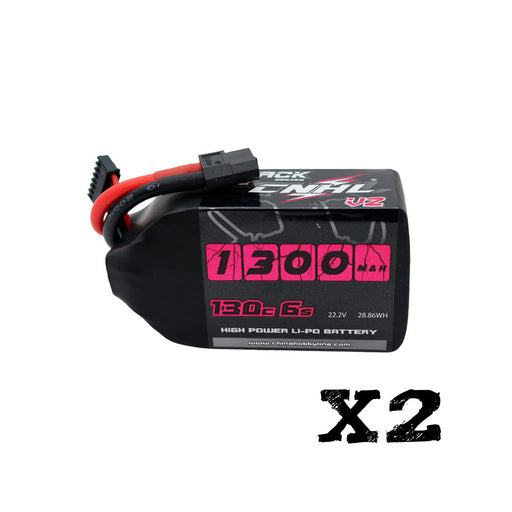
בדיקת התאמה מהירה ה2 Packs CNHL Black Series V2.0 1300mAh 22.2V 6S 130C LiPo Battery with XT60 Plug מתאים היטב למטיסי FPV שרוצים סוללת 6S 1300mAh X...
הצג פרטים מלאיםחלקי חילוף ותמיכה לטווח ארוך אנו יודעים שעבור טייסי RC, תמיכה אמינה בחלקי חילוף היא חלק חשוב בשמירה על מטוס כשיר לטיסה במשך שנים. לכן CNHL מת...
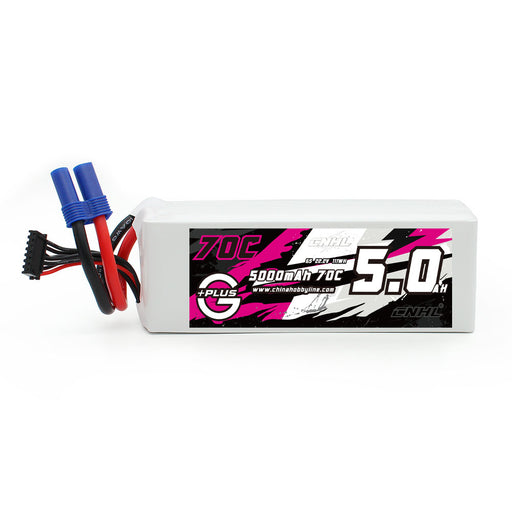
הצג פרטים מלאיםמפרטים: מספר מלאי: 500706EC5 קיבולת: 5000mAh מתח: 22.2V / 6 תאים / 6S1P קצב פריקה: 70C רציף / 140C פיצוץ קצב טעינה: 5C מקסימום גודל (הבדל של 1-5 ...
הצג פרטים מלאים
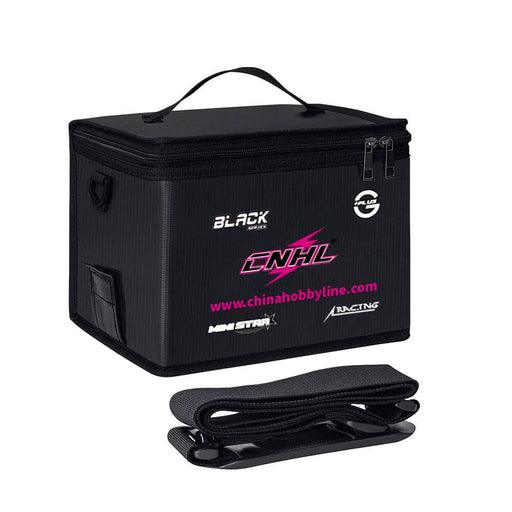
תיק סוללות LiPo של CNHL מיועד לטעינה, הובלה ואחסון בטוחים יותר של סוללות LiPo בבית או בשדה. הוא מוסיף שכבת הגנה פרקטית על ידי סיוע במניעת התפשטות ח...
הצג פרטים מלאיםבדיקת התאמה מהירה חבילת 2 CNHL Speedy Pizza Series Pro 1350mAh 6S 150C LiPo עם תקע XT60 מיועדת לטייסי FPV בגודל 5 אינץ' שרוצים מערכת 6S חופשית ...
הצג פרטים מלאים

The CNHL Long Range Series BAK 65E 6350mAh 21700 Li-ion battery cell is built around one clear priority: maximum stored energy from a lightweight c...
הצג פרטים מלאים

The CNHL Long Range Series BAK 50D 5000mAh 21700 Li-ion battery cell is designed for custom high-energy battery packs that need a strong balance be...
הצג פרטים מלאים

The ISDT C4 EVO is a versatile smart battery charger built for AA, AAA and cylindrical rechargeable cells from compact 10440 batteries all the way ...
הצג פרטים מלאים

The CNHL Long Range Series 6350mAh 21.6V 6S1P 21700 Li-ion battery combines six BAK 65E high-energy cells into a 137.16Wh pack designed for ultra-e...
הצג פרטים מלאים

The CNHL Long Range Series 5000mAh 21.6V 6S1P 21700 Li-ion battery combines six BAK 50D cells into a compact 108Wh pack designed around long-range ...
הצג פרטים מלאים




Leave a comment