
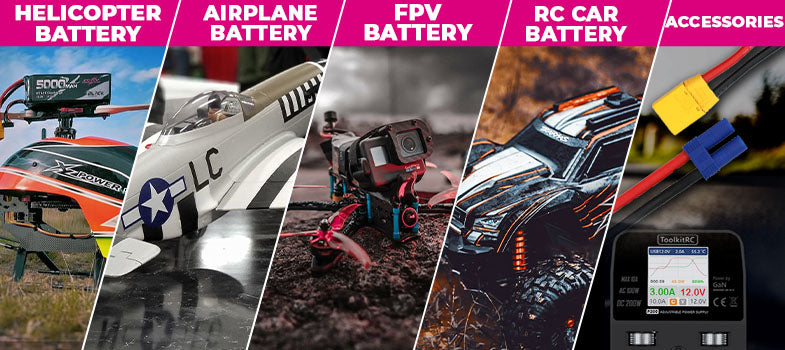
סוללות CNHL ליפו
CNHL שואפת לספק סוללות Li-Po באיכות גבוהה ומוצרי RC לכל חובבי התחביב עם שירות לקוחות מצוין ומחירים תחרותיים
The Freewing F-35C Lightning II 110mm is one of the most ambitious electric jets Freewing has produced. It combines a 110mm 12-blade EDF, 12S power, a roughly 6.7–7.0kg flying weight, scale retracts, thrust reversing, a factory-installed EG01 gyro, quick-release wings and a detailed lighting package in a 1/9.8-scale airframe.
What makes the model interesting is not simply its size. The broad F-35C carrier wing gives it a noticeably different character from many high-wing-loading EDF jets: it carries energy well, glides surprisingly cleanly with the throttle reduced and can be set up for a composed landing approach rather than being flown as a full-power-only machine.
It is not perfect. Nearly seven kilograms of flying mass deserves respect, electronic wheel brakes are not standard, the factory gyro setup should still be evaluated rather than blindly trusted, and scale-focused pilots may notice that some aerodynamic surfaces have been optimized for RC flight rather than copied at exact full-scale proportions. But as a complete large EDF package, the F-35C offers considerably more than a bigger fan and a larger foam airframe.

| Model | Freewing F-35C Lightning II 110mm EDF – FJ50111PG |
| Scale | 1/9.8 |
| Wingspan | 1340mm / 52.8in |
| Length | 1618mm / 63.7in |
| Flying Weight | Approx. 6700–7000g |
| EDF | 110mm 12-blade |
| Motor | 4678-680KV brushless inrunner |
| ESC | 130A High Voltage ESC with 10A UBEC |
| Battery | 2 × matching 6S packs for 12S operation |
| Published Capacity | 5000–6000mAh per 6S pack |
| Connector | EC5 |
| CG | 133–140mm from the leading edge where the removable wing panel meets the fuselage |
| Gyro | Freewing EG01 6-axis gyro |
For an experienced EDF pilot looking to move beyond the usual 80–90mm class, the F-35C makes a strong case for itself. Its best qualities are not limited to raw power. The model combines a large, visually convincing airframe with surprisingly manageable flight characteristics, elaborate landing gear, useful field-assembly features and a dual-6S power system that is easier to live with than a dedicated single 12S battery format.
The biggest attraction is the way the model balances scale presence with actual flyability. A large EDF that only looks impressive on the ground is not enough; the F-35C also needs to approach predictably, retain energy through turns and glide without immediately falling out of the sky when the throttle comes back. This airframe does those things better than its near-7kg weight might suggest.
The trade-off is that it remains a serious aircraft. CG, gyro response, battery matching, landing technique and runway quality matter more here than on a smaller sport EDF. It is not difficult simply because it is large, but the consequences of a poor setup are larger too.
The F-35C is the U.S. Navy carrier version of the Lightning II, and its broader wing is one of the first things that separates it visually from the F-35A. On an RC model, that shape is not just cosmetic. More wing area is useful during slower portions of the flight and gives the aircraft a noticeably different silhouette in the air.
The twin-wheel nose gear and carrier-style undercarriage also suit a model of this size. The F-35C looks substantial sitting on its gear, and the landing configuration reinforces the sense that this is a naval fighter rather than simply another gray EDF jet.
The C-model wing is also one of the reasons the aircraft does not feel like a seven-kilogram brick once the power comes back. The jet carries energy through long, relatively flat glides and does not need to be flown at maximum throttle throughout the entire circuit.

Despite being sold as a PNP model, the F-35C is not a zero-assembly aircraft. The final setup includes fitting the rudders, elevator halves and wings, installing the receiver, applying the desired squadron markings and deciding whether to fit the small forward scale antennas.
The good news is that the assembly method is sensible for a model this size. The rudders slide onto their spars and connect through dedicated servo and lighting plugs. The elevator halves attach to the tail structure with screws, while the wings use a quick-release system rather than requiring repeated field assembly with conventional wing bolts.
The magnetic nose cone makes transport easier, and the small forward antennas are optional. Pilots who want maximum scale appearance can install them; pilots who transport the model frequently may prefer to leave them off to reduce the chance of damage.
Most of the airframe presents the level of finish expected from a high-end Freewing PNP, although one early production aircraft drew attention for a rough fuselage joint. Another aircraft from the same owner did not have the problem, so there is not enough evidence to treat that as a systematic production issue.

At the center of the F-35C is a 110mm 12-blade EDF driven by a 4678-680KV inrunner and controlled by a 130A high-voltage ESC. The system runs on 12S using two 6S batteries.
The clean inlet arrangement is also worth noting. The underside does not rely on an obvious auxiliary cheater opening, which helps preserve the F-35C's scale profile. On a model with such a distinctive stealth-style fuselage, keeping the underside visually clean matters.
In the air, the system provides enough thrust for strong vertical maneuvers and fast passes without forcing the aircraft into a narrow full-throttle flight style. Power is clearly available when needed, but the airframe's glide means the throttle can also be reduced for significant portions of the circuit.
Sound is more subjective. The large 12-blade fan produces a deeper and more substantial EDF note than many smaller jets, particularly during high-speed passes, but whether that sounds convincingly “turbine-like” will depend on the listener. It is better described as an authoritative large-EDF sound than as a guaranteed turbine imitation.
The F-35C is a heavy EDF, but it does not look underpowered on departure. The 12S system gives the aircraft enough acceleration to get the large airframe moving positively, while the broad wing helps convert that speed into lift without requiring an excessively abrupt rotation.
Runway surface still matters. A smooth hard surface gives the aircraft the easiest start, while maintained short grass is within the intended operating envelope. Rough grass is a different question and should not be treated as equivalent.
The F-35C looks especially convincing in low, fast passes because its size keeps the model visually readable at distance. The large airframe also gives the flight line more presence than a smaller EDF without requiring the aircraft to be flown extremely close just to look impressive.
A verified official top-speed figure should be separated from viewer estimates, so a specific maximum speed is less useful than the broader conclusion: the stock power system has enough performance for convincing fast passes and vertical maneuvers while retaining enough throttle range for slower sections of the flight.
Vertical performance is strong enough that the jet does not feel constrained by its weight. Full-power climbs can be used confidently as part of normal aerobatic flying rather than being reserved only for a short burst after a dive.
The glide is one of the most interesting characteristics of the model. With the throttle reduced, the F-35C continues to carry speed through a long, relatively flat path rather than dropping rapidly as soon as thrust disappears.
That matters for more than efficiency. A good glide gives the pilot more freedom when setting up the downwind leg, adjusting spacing for other aircraft and positioning for final approach. It also helps reduce power consumption during a flight instead of forcing every circuit to remain throttle-heavy.

A nearly seven-kilogram EDF can sound intimidating when the discussion turns to landing, but the F-35C's approach behavior is one of the more reassuring parts of the design.
With flaps deployed and the aircraft properly balanced, the broad wing allows the jet to maintain a controlled pitch attitude on approach rather than requiring a very fast, flat landing. The glide also lets the pilot manage energy gradually instead of relying on a large burst of power throughout final.
This does not make the F-35C a beginner-friendly landing aircraft. Its weight still means that a poorly timed flare or hard arrival can put substantial loads into the retracts. But the model gives the pilot a useful amount of aerodynamic help rather than forcing a high-speed touchdown every time.
The landing sequence also looks excellent in the air. Gear deployment, sequenced doors and the twin-wheel nose gear make the final approach one of the most convincing parts of the aircraft visually.
The F-35C uses CNC-machined aluminum, shock-absorbing retractable landing gear with sequenced gear doors. On the ground, the setup is a major part of the model's scale presence. In the air, it has the more difficult job of repeatedly handling a model that can approach seven kilograms.
The twin-wheel nose gear is especially distinctive and matches the visual character of the carrier variant. The main gear structure is substantial, while external scale details help the assembly look more realistic than a simple exposed wire-leg retract system.
As with any heavy EDF, smooth touchdowns remain important. The landing gear should be treated as a shock-absorbing system rather than an excuse to force the aircraft onto the runway.

Maintained grass is an intended runway surface for the F-35C, but rough grass should not automatically be treated the same way.
Short, firm and relatively smooth grass gives the wheels a much easier job than long, soft or uneven turf. The aircraft's weight increases rolling resistance and also raises the loads placed on the nose gear if the field contains holes or abrupt surface changes.
If your flying field is marginal even for smaller 90mm EDF jets, the F-35C should not be expected to solve that problem simply because the landing gear looks strong. Surface quality and available takeoff distance remain important.
The stock 130A ESC includes thrust reversing, which can help reduce rollout distance after touchdown. Dedicated electronic wheel brakes, however, are not standard equipment.
| Feature | Freewing F-35C 110mm |
|---|---|
| Electronic Wheel Brakes | Not standard |
| Thrust Reverse | Yes |
| Main Purpose | Reduce rollout after touchdown |
Wheel brakes and reverse thrust solve the same basic runway problem in different ways. Wheel brakes can be applied directly through the wheels during rollout, while reverse thrust requires the pilot to command reverse after touchdown.
For many pilots, reverse thrust will be completely adequate. Pilots operating from shorter paved runways may still wish the aircraft included dedicated wheel brakes, especially on a model of this size and weight.
The PNP version includes a pre-installed Freewing EG01 6-axis gyro. That is a useful feature on a large jet, but the existence of a gyro should not replace proper mechanical setup or CG verification.
Factory programming is a sensible starting point, yet one fixed gain cannot be expected to feel identical on every aircraft. Battery weight, CG, control throws, wind and individual pilot preference can all change the way stabilization feels.
At least one privately flown aircraft was considered under-damped in roll with its initial gyro gain, while its pitch behavior during landing was considered good. That is not enough to label the stock gyro setup as a problem, but it is enough to show why pilots should evaluate the aircraft rather than assuming that every factory setting is untouchable.
Before changing gain, verify gyro direction, control direction, control throws and CG. Roll instability should not automatically be blamed on the gyro alone.
Freewing specifies a CG range of 133–140mm, measured from the leading edge at the point where the removable wing panel meets the fuselage.
That measurement is more important than copying a battery position from another pilot. Different batteries can vary in length, weight and internal mass distribution even when all of them physically fit the aircraft.
Install both flight packs exactly as they will be flown, secure them, and then measure the aircraft. Move the pair forward or rearward until the finished model falls within the desired part of the published CG range.

Battery choice is important, but it does not need to dominate the setup. For most pilots, the useful starting range is 5000–6200mAh per 6S pack.
| Capacity | Best Fit |
|---|---|
| 5000–5200mAh | Lighter setup and close to the lower end of Freewing's intended range |
| 6000mAh | Best all-round starting point |
| 6200mAh | More available energy without a large increase over the 6000mAh class |
CNHL also has higher-capacity LiPo and Lightning LiHV packs with suitable dimensions and weight for the F-35C, so pilots are not limited to only these three capacities.
For the full confirmed-fit list, see our Freewing F-35C 110mm battery collection.
Flight time depends heavily on throttle use. A large 110mm EDF consumes far more energy during repeated full-power passes and vertical climbs than it does when the pilot uses reduced throttle and takes advantage of the airframe's glide.
With 5000mAh packs, setting a timer around 3.5 minutes as a cue to begin preparing for landing is a sensible conservative starting point. Total time around four minutes is a useful reference rather than a hard limit.
A 6200mAh setup has also completed a 5 minute 35 second session including taxi with approximately 3.81V per cell remaining afterward. That does not mean every 6200mAh setup will deliver the same duration, but it shows how significantly flight style and throttle management can change the result.
The safest approach is to begin conservatively, check both packs after each flight and gradually establish a timer that matches your own flying style.
Scale-focused pilots have paid particular attention to the F-35C's vertical stabilizers. They appear prominent on the model, and the discussion highlights a broader truth about large foam scale jets: exact geometric scaling is not always the same thing as good RC aerodynamics.
The full-size F-35C already differs from the A and B variants through its carrier-oriented wing and control surfaces. The RC model also uses aerodynamic compromises intended to preserve stability and handling at model scale.
For that reason, trimming the vertical stabilizers simply to make the silhouette look more scale is not a modification we would recommend. A change that looks small on the bench can have a much larger effect on low-speed yaw stability and overall handling.
The F-35C's lighting package is unusually complete for a PNP EDF. Navigation lights, formation lighting and the nose-gear landing light are integrated into the airframe, while the afterburner LED is already installed at the factory.
With enough radio channels, the formation lights can be assigned to transmitter control. Reverse thrust and gyro-mode selection also require additional channels, so pilots who want every function available independently should plan their receiver and switch assignments before installation.
The aircraft is offered in VFA-147 Argonauts, VMFA-251 Thunderbolts and VFA-101 Grim Reapers markings. The low-visibility finishes look excellent on the ground, although pilots should remember that gray camouflage can reduce orientation contrast against an overcast sky.

| What Stands Out | What Could Be Better |
|---|---|
|
|
The F-35C makes the most sense for pilots who already have experience with medium-to-large EDF jets. Someone comfortable with 80mm and 90mm models will recognize the basic flying and setup principles, while the larger size adds more presence, more inertia and more responsibility.
It is particularly attractive to pilots who already own multiple 6S packs, prefer scale jets, want something larger than the typical 90mm class and are not yet interested in the cost and complexity of turbine operation.
It is less suitable as a first EDF, for very rough flying fields, for pilots who cannot transport a 1.6m-long aircraft comfortably, or for anyone unwilling to spend time checking CG, gyro direction, control throws and radio setup before flying.
It uses two matching 6S batteries together as a 12S system. Freewing specifies 5000–6000mAh LiPo packs with EC5 connectors, while additional confirmed-fit capacities are also available.
The published range is 133–140mm from the leading edge where the removable wing panel meets the fuselage. Measure the aircraft with both flight batteries installed.
Yes, maintained grass is an intended runway surface. Long, rough, soft or uneven grass should be treated more cautiously because the model is heavy and runway resistance can increase quickly.
No dedicated electronic wheel brakes are standard. The 130A ESC includes thrust reversing to help reduce rollout after touchdown.
Yes. The PNP version includes a Freewing EG01 6-axis gyro. Verify gyro direction, CG and control setup before adjusting gain.
Around four minutes is a useful reference for a 5000mAh setup when a conservative landing timer is used. Larger packs can provide more margin, but throttle use has a major effect on actual flight time.
Yes. Suitable 6S LiHV packs can be used as a matching pair with the high-voltage power system. Charge them only with a LiHV-compatible charger and do not exceed 4.35V per cell.
Yes. The afterburner LED system is factory installed.
No. It is better suited to pilots with previous EDF experience, particularly those already comfortable with larger retract-equipped jets.
For confirmed-fit LiPo and LiHV options, browse the Freewing F-35C 110mm battery collection.
For other electric jets, compare our full range of LiPo batteries for EDF jets.
For sport planes, warbirds and other fixed-wing models, explore the complete range of CNHL airplane batteries.
The Freewing F-35C 110mm is not compelling simply because it is large. Its strongest quality is that the size is supported by a surprisingly complete airframe: useful glide, strong 12S performance, composed approaches, impressive retracts, convenient wing removal, integrated lighting and a practical dual-6S battery architecture.
There are compromises. No dedicated wheel brakes will disappoint some large-jet pilots, the near-7kg weight demands good runway management, and the tail proportions may not satisfy every scale purist. The factory gyro also deserves to be treated as part of the setup rather than as a substitute for correct CG and mechanical preparation.
For experienced EDF pilots looking for something substantially beyond the normal 90mm category, though, the F-35C succeeds where it matters most: it looks large, flies like a properly developed RC aircraft and gives the pilot enough setup flexibility to make the model practical rather than merely impressive.
CNHL שואפת לספק סוללות Li-Po באיכות גבוהה ומוצרי RC לכל חובבי התחביב עם שירות לקוחות מצוין ומחירים תחרותיים
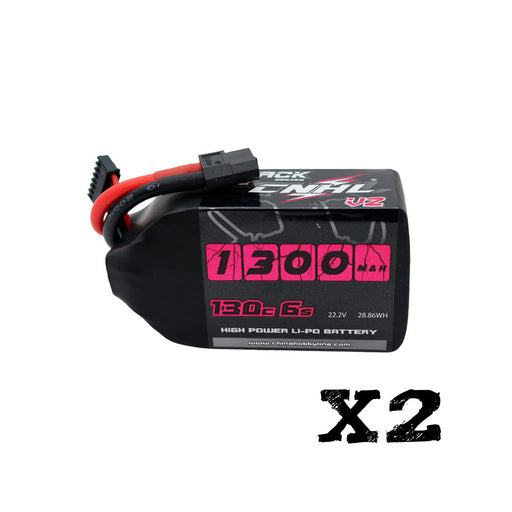
בדיקת התאמה מהירה ה2 Packs CNHL Black Series V2.0 1300mAh 22.2V 6S 130C LiPo Battery with XT60 Plug מתאים היטב למטיסי FPV שרוצים סוללת 6S 1300mAh X...
הצג פרטים מלאיםחלקי חילוף ותמיכה לטווח ארוך אנו יודעים שעבור טייסי RC, תמיכה אמינה בחלקי חילוף היא חלק חשוב בשמירה על מטוס כשיר לטיסה במשך שנים. לכן CNHL מת...
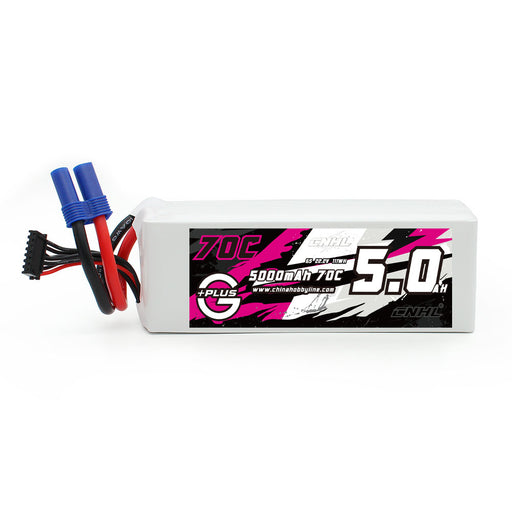
הצג פרטים מלאיםמפרטים: מספר מלאי: 500706EC5 קיבולת: 5000mAh מתח: 22.2V / 6 תאים / 6S1P קצב פריקה: 70C רציף / 140C פיצוץ קצב טעינה: 5C מקסימום גודל (הבדל של 1-5 ...
הצג פרטים מלאים
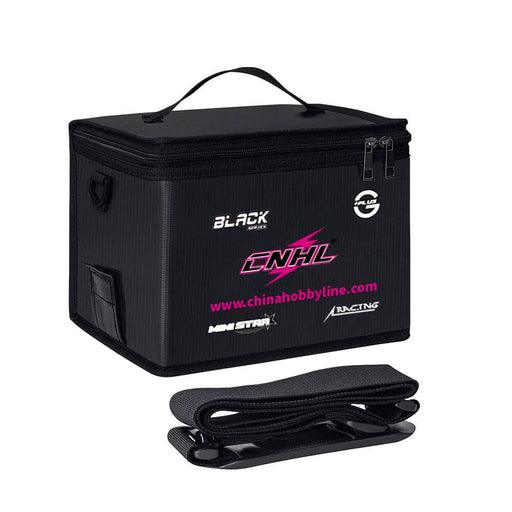
תיק סוללות LiPo של CNHL מיועד לטעינה, הובלה ואחסון בטוחים יותר של סוללות LiPo בבית או בשדה. הוא מוסיף שכבת הגנה פרקטית על ידי סיוע במניעת התפשטות ח...
הצג פרטים מלאיםבדיקת התאמה מהירה חבילת 2 CNHL Speedy Pizza Series Pro 1350mAh 6S 150C LiPo עם תקע XT60 מיועדת לטייסי FPV בגודל 5 אינץ' שרוצים מערכת 6S חופשית ...
הצג פרטים מלאים

The CNHL Long Range Series BAK 65E 6350mAh 21700 Li-ion battery cell is built around one clear priority: maximum stored energy from a lightweight c...
הצג פרטים מלאים

The CNHL Long Range Series BAK 50D 5000mAh 21700 Li-ion battery cell is designed for custom high-energy battery packs that need a strong balance be...
הצג פרטים מלאים

The ISDT C4 EVO is a versatile smart battery charger built for AA, AAA and cylindrical rechargeable cells from compact 10440 batteries all the way ...
הצג פרטים מלאים

The CNHL Long Range Series 6350mAh 21.6V 6S1P 21700 Li-ion battery combines six BAK 65E high-energy cells into a 137.16Wh pack designed for ultra-e...
הצג פרטים מלאים

The CNHL Long Range Series 5000mAh 21.6V 6S1P 21700 Li-ion battery combines six BAK 50D cells into a compact 108Wh pack designed around long-range ...
הצג פרטים מלאים




Leave a comment