
סוללות CNHL ליפו
CNHL שואפת לספק סוללות Li-Po באיכות גבוהה ומוצרי RC לכל חובבי התחביב עם שירות לקוחות מצוין ומחירים תחרותיים

The Skynetic P-12E 1100mm stands out before it even leaves the ground. Instead of revisiting another familiar WWII fighter or trainer, Skynetic has chosen a much less common early American pursuit biplane, combining bright prewar colors, stacked wings and radial-engine styling with a practical modern 4S brushless power system.
The result is not simply a slow scale cruiser. The P-12E can be flown gently, but its 3636-900Kv motor and 4S setup also give it enough performance for loops, rolls, stall turns, inverted passes, spins, snaps and even knife-edge flight. That makes its flying personality considerably broader than its Golden Age appearance might suggest.
Setup still matters, especially around battery weight and center of gravity. Skynetic specifies a 4S 2200–3000mAh LiPo with XT60, while factory flight guidance shows that the battery's actual weight and fore-aft position can be just as important as its capacity. This review covers the aircraft itself, its assembly, flight behavior and practical setup without turning the discussion into a battery catalog.
| Specification | Skynetic P-12E |
| Product Number | SKY1071-001 |
| Configuration | PNP |
| Scale | 1/8.3 |
| Wingspan | 1100mm / 43.3" |
| Length | 748mm / 29.4" |
| Motor | 3636-900Kv Brushless |
| ESC | 40A Brushless with 5V / 3A BEC |
| Propeller | 11 × 6 Two-Blade |
| Battery | 4S 14.8V 2200–3000mAh LiPo, XT60 |
| Flying Weight | Approx. 1420–1530g including battery |
| CG | 75mm behind the leading edge of the top wing at the wing root |
| Material | EPO Foam |
| Skill Level | Intermediate |
| Flaps | No |
| Lights | Integrated LED Lighting |
Part of the appeal of the Skynetic P-12E is simply that the subject feels fresh. The full-size Boeing P-12E was an early-1930s U.S. Army Air Corps pursuit biplane, giving this 1100mm RC model a very different silhouette and character from the WWII fighters more commonly seen at the flying field.
That immediately gives the RC model a different visual identity from the camouflage-heavy WWII fighters that dominate many warbird lineups. The yellow upper wing, green accents and 6th Pursuit Squadron-inspired markings make the aircraft easy to recognize both on the ground and at distance in the air.

The P-12E fills a less crowded niche in today's foam RC market. Its prewar pursuit-biplane layout, exposed radial-engine styling and bright military markings give it a character that is immediately different from the more familiar WWII fighters and trainer-style biplanes. For pilots who want a scale aircraft that does not look like another variation of an already common subject, that distinction is a major part of the appeal.
The P-12E does not rely on paint alone for its scale character. Molded panel and surface detail, visible rib treatment on the upper wing, rivet-style detailing, a dummy radial engine, pilot figure and windscreen give the model plenty to look at up close.

Integrated LED lighting adds another layer of presence without changing the basic character of the aircraft. The fixed main landing gear and steerable tail wheel also suit the period appearance better than a modernized retract system would.
At 1100mm wingspan, the P-12E is large enough for the biplane proportions and markings to remain visually effective, yet still compact enough to be far easier to transport than a large-scale Golden Age model.
The P-12E is a PNP aircraft rather than an almost-ready-to-fly kit, so most of the electronics are already installed. Assembly mainly involves installing and securing the airframe components, connecting the controls and lighting, fitting your receiver and completing the radio setup.
The main landing gear is installed from underneath the fuselage, followed by its supporting struts. The elevator and rudder assembly then keys into the tail, with the tail-wheel linkage requiring correct alignment as the rudder is fitted.
The lower wing bolts into position first. The central cabane struts then locate into prepared points on the fuselage, after which the top wing drops into position and slides slightly rearward to lock into place before its upper fasteners are tightened.
One worthwhile assembly detail is not to overtighten the upper wing mounting points. The airframe is foam, so excessive screw pressure can compress the surrounding material rather than making the structure meaningfully more secure.
Each wing side carries wiring for both the aileron and lighting system. These leads are routed down the rear section of the cabane structure and secured with the supplied zip ties. Clean routing matters because the canopy area is designed with clearance for the wires to sit without preventing a flush fit.
One setup point deserves particular attention: when the elevator is adjusted correctly, it may appear from the side to have a small amount of down elevator relative to what a pilot might expect visually. That appearance is intentional. Set the control surface according to the manual rather than assuming that visually aligning everything flat must be correct.
The P-12E's strongest quality is that it can be flown in two very different ways. At lower power it looks completely at home making relaxed circuits, gentle banked turns and broad “dawn patrol” passes. The biplane silhouette and bright upper wing make that kind of scale-style flying particularly effective visually.
Push the throttle and control inputs harder, however, and the airplane reveals considerably more sport capability than its vintage appearance suggests.

For scale-style flying, the P-12E can be carried around the circuit at moderate speed without looking rushed. Rudder can be blended into turns, which suits a biplane and helps maintain the smooth, coordinated look that works so well with this airframe.
The aircraft is also capable of turning surprisingly tightly when commanded. That does not mean every circuit should be flown aggressively, but it gives the P12E useful maneuverability in a relatively compact piece of sky.
The factory 3636-900Kv motor, 40A ESC and 11×6 propeller run on a 4S flight battery. In practical flying, the system has enough thrust for strong climbs and a useful range of conventional aerobatics rather than limiting the airplane to flat circuits.

The available 4S power and control authority support loops, rolls, stall turns, inverted passes, snaps, spins and knife-edge flight, giving the P-12E considerably more range than simple scale circuits.
That should not be confused with calling the P-12E a 3D airplane. It is still a scale biplane with the drag and aerodynamic character that come with two wings, fixed landing gear and substantial frontal area. Its strength is that it offers enough excess performance to keep an experienced sport pilot entertained without losing its scale identity.
Like most scale biplanes, the P-12E presents more side area to the wind than a typical low-wing sport model. In a crosswind, expect to use active rudder correction during takeoff and landing rather than relying on aileron input alone.
A gyro can help smooth the aircraft in gusty or quartering wind, but electronic stabilization is not included as part of the standard PNP configuration. Pilots who choose to add a gyro should still set up the model correctly and use it as an aid rather than a substitute for proper wind correction.
The P-12E is not limited to calm-weather flying, but its biplane layout rewards good rudder coordination and sensible runway alignment when the wind is across the field. Keeping the approach controlled and avoiding excessive speed changes will make takeoffs and landings more predictable.
The P-12E uses a 4S 14.8V LiPo with an XT60 connector, with 2200–3000mAh covering the standard battery range. Capacity is only part of the decision, however. Battery weight and fore-aft position can have just as much influence on how the aircraft balances.
The target CG is approximately 75mm behind the leading edge of the upper wing at the wing root. Because the battery can be moved forward or backward inside the bay, pack position becomes one of the main tools for fine-tuning the balance before flight.
A slightly heavier 2200mAh pack can make the CG easier to reach without adding separate nose weight. With a lighter pack, more forward battery placement may be needed, and an especially light setup can reduce its practical weight advantage if ballast has to be added later.
Moving toward a 3000mAh pack changes both available capacity and installed mass, so the better question is not simply whether one battery is lighter or larger. The useful comparison is whether the pack fits securely, can be positioned correctly and allows the complete aircraft to reach the target CG without unnecessary ballast.
For a detailed comparison of 2200mAh, higher-capacity and LiHV options by actual weight, dimensions and voltage considerations, see our battery guide for the Skynetic P-12E 1100mm.
The P-12E uses an easy-access battery hatch, with enough fore-aft adjustment in the battery bay to move the flight pack as part of the CG setup. This makes battery position especially useful when changing between packs with different weights.
Exact usable battery-bay dimensions are not currently available, so voltage, capacity and connector type alone are not enough to guarantee physical fit. Battery length, width and thickness should all be checked with the actual pack.
A suitable setup should allow the battery to sit securely without forcing the hatch closed or placing unnecessary pressure on the pack. Also leave enough room for the XT60 power lead and balance lead, then recheck the final CG with the battery secured in its flight position.
A useful starting expectation is approximately six to eight minutes, depending on battery capacity, throttle use, wind and flying style. With a 2200mAh setup, around six minutes is a sensible initial timer.
Relaxed cruising and broad scale passes generally demand less energy than repeated full-power climbs, loops, rolls and other aerobatics, so two pilots using the same battery can still see noticeably different flight times.
Start conservatively, check the battery after landing, and then adjust the timer according to the remaining capacity and your normal flying style. That is more useful than treating any published flight-time figure as a fixed limit.
The P-12E is listed at an Intermediate skill level, and that is the most sensible way to view it. It is not presented as an unstable or unusually difficult aircraft, but it does expect the pilot to already understand normal four-channel control, tail-wheel ground handling, basic trim and CG setup.
It also has no flaps and no factory-listed gyro, so it does not rely on additional systems to disguise poor setup or compensate for limited flying experience.
Pilots who are already comfortable taking off, landing and flying a four-channel sport or warbird-style model should find the P-12E much more approachable than its unusual double-wing appearance might initially suggest.
The strongest audience is probably not simply “anyone who wants another warbird.” The P-12E makes the most sense for pilots who specifically value a less common aircraft subject and want something visually distinct from the usual RC field lineup.
That combination of unusual subject matter and broad flying capability is arguably the P-12E's biggest advantage. It does not force the owner to choose between an attractive scale model and something enjoyable to fly more aggressively.
It is based on the Boeing P-12E, an early-1930s U.S. Army Air Corps pursuit biplane. The Skynetic model uses period-style 6th Pursuit Squadron markings and the characteristic stacked-wing, radial-engine appearance of the original aircraft.
Yes. “P12E” is simply an informal no-hyphen spelling commonly used when typing model names. The official product designation uses P-12E.
The published recommendation is a 4S 14.8V 2200–3000mAh LiPo with an XT60 connector. Battery weight and position also affect the aircraft's CG, so choose and balance the exact pack rather than relying on capacity alone.
Yes. A 3000mAh 4S pack is within the published battery range and has been flown comfortably in the aircraft. Physical fit and final CG should still be checked with the specific battery.
The published balance point is approximately 75mm behind the leading edge of the upper wing at the wing root. Balance the complete aircraft with the flight battery installed.
Approximately six to eight minutes is a useful general expectation from factory flight guidance, with around six minutes suggested as a starting timer for a 2200mAh setup. Actual endurance depends heavily on throttle use and flying style.
No gyro is listed as part of the standard aircraft.
No. The Skynetic P-12E uses aileron, elevator and rudder control but does not include flaps.
It is better suited to an intermediate pilot than a first-time flyer. A pilot should already be comfortable with four-channel control, tail-wheel takeoffs and landings, trimming and basic CG setup.
The strongest argument for the Skynetic P-12E is that it offers something genuinely different without requiring the pilot to accept a narrow flying envelope. Its Boeing P-12E-inspired Golden Age appearance gives it the character of a specialist scale subject, while the 4S power system provides enough performance for far more than gentle circuits.
Assembly is relatively straightforward for a strut-braced biplane, the 1100mm size remains practical, and the scale details are strong enough to reward a closer look. The main setup point is simply to take battery weight and CG seriously rather than assuming that the lightest pack will always be the best one.
For pilots who want a Golden Age RC biplane that can cruise convincingly and still perform conventional sport aerobatics on 4S, the P-12E fills a niche that has been underserved by the usual RC warbird lineup—and that difference is probably its greatest strength.
CNHL שואפת לספק סוללות Li-Po באיכות גבוהה ומוצרי RC לכל חובבי התחביב עם שירות לקוחות מצוין ומחירים תחרותיים
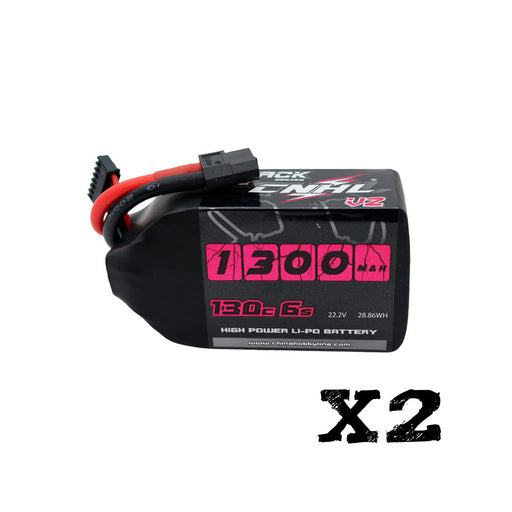
בדיקת התאמה מהירה ה2 Packs CNHL Black Series V2.0 1300mAh 22.2V 6S 130C LiPo Battery with XT60 Plug מתאים היטב למטיסי FPV שרוצים סוללת 6S 1300mAh X...
הצג פרטים מלאיםחלקי חילוף ותמיכה לטווח ארוך אנו יודעים שעבור טייסי RC, תמיכה אמינה בחלקי חילוף היא חלק חשוב בשמירה על מטוס כשיר לטיסה במשך שנים. לכן CNHL מת...
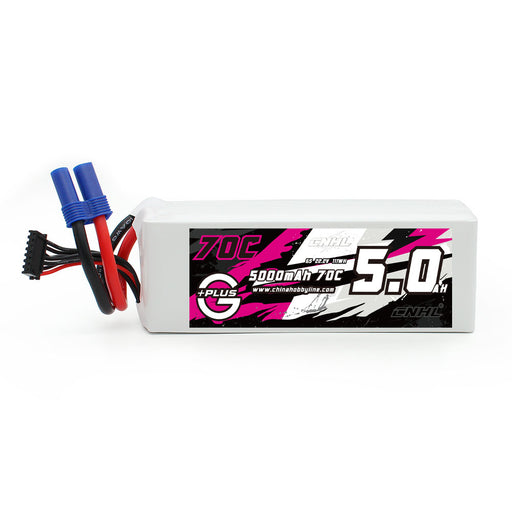
הצג פרטים מלאיםמפרטים: מספר מלאי: 500706EC5 קיבולת: 5000mAh מתח: 22.2V / 6 תאים / 6S1P קצב פריקה: 70C רציף / 140C פיצוץ קצב טעינה: 5C מקסימום גודל (הבדל של 1-5 ...
הצג פרטים מלאים
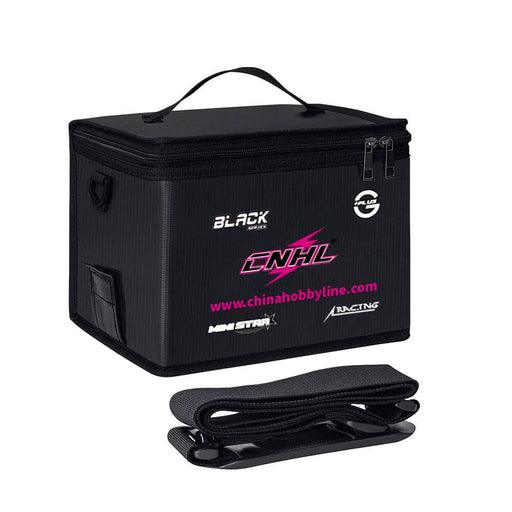
תיק סוללות LiPo של CNHL מיועד לטעינה, הובלה ואחסון בטוחים יותר של סוללות LiPo בבית או בשדה. הוא מוסיף שכבת הגנה פרקטית על ידי סיוע במניעת התפשטות ח...
הצג פרטים מלאיםבדיקת התאמה מהירה חבילת 2 CNHL Speedy Pizza Series Pro 1350mAh 6S 150C LiPo עם תקע XT60 מיועדת לטייסי FPV בגודל 5 אינץ' שרוצים מערכת 6S חופשית ...
הצג פרטים מלאים

The CNHL Long Range Series BAK 65E 6350mAh 21700 Li-ion battery cell is built around one clear priority: maximum stored energy from a lightweight c...
הצג פרטים מלאים

The CNHL Long Range Series BAK 50D 5000mAh 21700 Li-ion battery cell is designed for custom high-energy battery packs that need a strong balance be...
הצג פרטים מלאים

The ISDT C4 EVO is a versatile smart battery charger built for AA, AAA and cylindrical rechargeable cells from compact 10440 batteries all the way ...
הצג פרטים מלאים

The CNHL Long Range Series 6350mAh 21.6V 6S1P 21700 Li-ion battery combines six BAK 65E high-energy cells into a 137.16Wh pack designed for ultra-e...
הצג פרטים מלאים

The CNHL Long Range Series 5000mAh 21.6V 6S1P 21700 Li-ion battery combines six BAK 50D cells into a compact 108Wh pack designed around long-range ...
הצג פרטים מלאים




Leave a comment