

סוללות CNHL ליפו
CNHL שואפת לספק סוללות Li-Po באיכות גבוהה ומוצרי RC לכל חובבי התחביב עם שירות לקוחות מצוין ומחירים תחרותיים
To charge a LiPo battery correctly, first confirm the battery chemistry, series cell count and capacity. Then choose a charger that supports the battery’s S count, provides enough current and wattage, and accepts the correct balance connection. For a conventional multi-cell RC LiPo, connect both the main lead and balance lead, select LiPo Balance Charge, set the correct S count, and use an appropriate current such as approximately 1C unless the battery specifies otherwise.
Quick answer: A 5000mAh LiPo charged at 1C uses approximately 5A. The charger power required depends on cell count: a 2S 5000mAh pack needs about 42W near full voltage, a 4S pack needs about 84W, and a 6S pack needs about 126W. Choose additional charger and input-power headroom rather than matching those numbers exactly.
Balance Charge should normally be the everyday default for conventional multi-cell LiPo batteries. It allows the charger to monitor individual cells while controlling the complete pack voltage. Fast Charge, Storage, Discharge and Parallel Charging serve different purposes and should not be treated as interchangeable modes.

| Battery Chemistry | Select standard LiPo only for a standard LiPo battery. LiHV, LiFe and Li-ion require their own correct programs. |
| Series Cell Count | Match the S count printed on the battery: 2S, 3S, 4S, 6S and so on. |
| Default Full-Charge Mode | LiPo Balance Charge for conventional multi-cell RC LiPo batteries. |
| Approximate 1C Current | Battery capacity in mAh divided by 1000. A 5000mAh pack uses approximately 5A at 1C. |
| Required Charger Power | Approximate full-charge voltage multiplied by charging current. |
| Main Lead | Carries most of the charging current. |
| Balance Lead | Allows the charger to read and correct individual cell-group voltages. |
| Normal Full Voltage | A standard LiPo normally finishes near 4.20V per cell. |
| Storage Voltage | Many chargers target approximately 3.8–3.85V per cell for standard LiPo storage. |
For the complete single-pack procedure, read How to Charge a LiPo Battery Safely.
The charger program must match the battery chemistry. Similar-looking lithium batteries may use different voltage limits.
| Battery Type | Typical Nominal Voltage | Typical Full Voltage |
|---|---|---|
| Standard LiPo | 3.7V per cell | Approximately 4.20V per cell |
| LiHV | Often marked 3.8V | Often up to approximately 4.35V per cell when specified |
| LiFe | Usually 3.2–3.3V per cell | Follow the battery manufacturer’s LiFe specification |
| Li-ion | Varies by cell type | Follow the specified Li-ion profile |
Do not select LiHV mode for a standard LiPo battery. A higher final-voltage setting does not represent a performance upgrade when the battery was not designed for it.
The S rating shows how many cells are connected in series. It determines the battery’s nominal and full-charge voltage.
| Pack | Nominal Voltage | Approx. Full Voltage |
|---|---|---|
| 1S | 3.7V | 4.20V |
| 2S | 7.4V | 8.40V |
| 3S | 11.1V | 12.60V |
| 4S | 14.8V | 16.80V |
| 5S | 18.5V | 21.00V |
| 6S | 22.2V | 25.20V |
| 8S | 29.6V | 33.60V |
The charger must explicitly support the selected S count. A charger with a 6S maximum does not automatically support every lower cell count, particularly 1S.
Charge current is based mainly on battery capacity and the selected charging C rate.
Capacity in Ah = capacity in mAh ÷ 1000
Charge current = capacity in Ah × charging C rate
At approximately 1C:
A battery may support a higher charge rate, but that must be confirmed from the battery specification. Do not use the discharge C rating as the charging C rate.
Read LiPo Charging Rates Explained: 1C, 2C, 5C, Amps, Watts, and Charge Time for the complete calculation.
Amp rating alone does not tell you whether a charger can maintain the selected current. Higher-S batteries require more watts at the same amperage.
Approximate battery-side charging power = full-charge voltage × charging current
| Battery | 1C Current | Ideal Output | Practical Charger Class |
|---|---|---|---|
| 2S 5000mAh | 5A | 42W | 60W+ per active channel |
| 3S 2200mAh | 2.2A | About 28W | 50W+ per active channel |
| 3S 5000mAh | 5A | 63W | 80W+ per active channel |
| 4S 5000mAh | 5A | 84W | 100W+ per active channel |
| 6S 1300mAh | 1.3A | About 33W | 50W+ with 6S support |
| 6S 5000mAh | 5A | 126W | 150W+ per active channel |
| 6S 7000mAh | 7A | About 176W | 200W+ per active channel |
For a complete power calculation, read How Many Watts Does My LiPo Charger Need?.
A suitable charger should support the battery collection you actually own rather than only one pack.
Check:
Do not select a charger only because it supports 6S or advertises a high amp number. A charger may support the voltage but lack the wattage required by a large-capacity battery.
Read How to Choose the Right LiPo Battery Charger for Your RC Batteries for the full selection method.
Small and medium 2S packs have moderate voltage requirements, but large-capacity RC car batteries can demand substantial current. A 2S 8000mAh pack at 1C needs 8A even though battery-side power is only about 67W.
A compact 3S 2200mAh airplane battery can be handled by a modest 50W charger. A 3S 5000mAh car or boat pack needs about 63W at 1C and is better matched to an 80–100W channel.
A 4S 5000mAh pack requires about 84W at 1C. For two independent 4S 5000mAh batteries, approximately 168W of ideal battery-side output is required.
A small 6S 1300mAh FPV pack only needs about 33W at 1C, while a 6S 5000mAh airplane or boat pack requires about 126W. Capacity matters as much as S count.
For model-specific examples, read How to Choose the Right Charger for 2S, 3S, 4S and 6S LiPo Batteries.
A conventional multi-cell LiPo normally uses two connections during Balance Charge:

Common main battery connectors include:
Many programmable chargers use an XT60-style output, so a correctly wired charge lead or adapter may be required.
For connector selection and compatibility, visit the RC Battery Connector Guide.
Balance Charge allows the charger to monitor total pack voltage and individual cell voltages at the same time.
For example, a 4S pack near completion may show:
If one cell reaches the upper limit first, the charger can reduce current and use its balance circuit while the lower cells catch up.
Balance Charge cannot repair a damaged or failing battery. It can only correct limited differences during charging.
For the complete operating procedure, read How to Balance Charge a LiPo Battery.
| Mode | Purpose | Typical Use |
|---|---|---|
| Balance Charge | Full charging with individual cell monitoring | Routine charging for conventional multi-cell LiPo batteries |
| Fast Charge | May shorten the final stage depending on the charger | Occasional faster turnaround with a healthy pack |
| Storage | Moves the battery toward a moderate resting voltage | When the battery will not be used soon |
| Discharge | Removes energy toward a selected cutoff | Testing or controlled voltage reduction |
| Parallel Charging | Connection method for several matched batteries | Batch charging compatible packs |
Read LiPo Charger Modes Explained for the complete comparison.
Balance Charge and Fast Charge are programs, not fixed charging speeds.
The selected current determines the charging C rate. The mode determines how the charger manages and finishes the cycle.
Fast Charge may save time by:
Balance Charge is normally the better everyday default. Fast Charge is better treated as a situational tool for a healthy, already well-balanced battery.
Read Balance Charging vs Fast Charging: Which Should You Use for LiPo Batteries?
An AC charger includes a built-in power supply and plugs directly into household power. It is usually the simplest option for routine home charging.
A DC charger requires an external power source but can offer high output in a compact package and greater flexibility for field or workbench use.
An AC/DC charger combines wall-power convenience with an external DC performance path. Its maximum output may be lower on AC than on a suitable DC supply.
| Charging Situation | Recommended Starting Point |
|---|---|
| Simple home charging | AC charger |
| Compact high-power system | DC charger plus suitable supply |
| Home and field use | AC/DC charger |
| Two large 6S packs | High-power AC/DC or DC system |
Read AC vs DC LiPo Chargers: Which One Should You Buy?
Best for one battery at a time. It can be compact and economical but requires sequential charging for several packs.
Allows two independent charging tasks. Each channel may use a different S count, current and charging mode where supported.
Useful for several independent battery tasks, mixed RC models and users who want to avoid combining batteries electrically.
Always check whether advertised power is:
A dual-channel charger keeps batteries independent. A parallel board combines several compatible batteries into one electrical group.
| Comparison | Independent Channels | Parallel Board |
|---|---|---|
| Different S counts | Possible | Not permitted in one group |
| Different starting voltages | Managed separately | Must already be closely matched |
| Battery monitoring | Each pack remains individually visible | Charger sees combined cell groups |
| Best use | Mixed battery collections | Several closely matched packs |
Read Dual-Channel Charger vs Parallel Charging Board for the complete decision guide.
Parallel charging combines several compatible batteries while retaining the original S count and adding the capacities.
Four 3S 1500mAh batteries become:
Before connection, every battery must have:
Do not connect batteries at significantly different voltages. Equalization current begins immediately when they are electrically joined.
Read How to Parallel Charge LiPo Batteries Safely before using a parallel board.
A 1S battery has only one cell, so there are no cells to balance against one another. It still requires the correct chemistry, current and final voltage.
Tiny Whoop users often need a different charging workflow because several small batteries may be rotated during one session.
A general programmable charger may charge one 1S pack when it explicitly supports 1S, provides sufficiently low current settings and uses the correct lead. A dedicated independent-port 1S charger is often more convenient for multiple PH2.0, BT2.0 or A30 batteries.
Read Is There an All-in-One Charger for 1S to 4S LiPo Batteries?
At approximately 1C, theoretical capacity replacement takes about one hour. A complete charge can take longer because of:
A battery that begins partially charged may finish sooner. A pack with one drifting cell may spend a long time in the final balance stage.
Do not assume that selecting 2C cuts total time exactly in half. The final constant-voltage and balancing stages still remain.
Balance charging often slows near the end because the charger must protect the highest cell while lower cells continue rising.
Common causes include:
Increasing the main charging current does not necessarily increase balance current.
If the same cell repeatedly remains lower or higher, the problem should be investigated rather than hidden with Fast Charge.
Read Why Is My LiPo Battery Taking So Long to Balance Charge?
A fully charged LiPo should not remain at maximum voltage for extended periods. If the battery will not be used soon, use Storage mode.
Many chargers target approximately 3.8–3.85V per cell for a standard LiPo, although the exact programmed voltage may vary.
Storage mode can:
Discharging to storage can take much longer than charging because many chargers have limited internal discharge power.
The manually selected S count does not match the battery voltage or balance connection. Stop and check the battery label, balance lead and individual cell readings.
The charger cannot read every cell. Inspect the balance plug, pins, wires, board and connector orientation.
A DC source may have fallen below the charger’s input threshold or may not support the requested load.
The charger may have reached its wattage, per-channel, total-power, input-power or thermal limit.
Check individual cell voltages, balance current, battery age, connection quality, selected current and charger power.
Remove a battery from normal use when it shows signs such as:
A charger can manage charging voltage. It cannot repair physical damage or internal chemical degradation.
| User Type | Recommended Charging System | Reason |
|---|---|---|
| Beginner with one or two batteries | AC balance charger | Simple wall-power setup |
| Mixed RC battery collection | Dual-channel AC/DC charger | Independent settings and flexible power |
| Large 6S batteries | High-power AC/DC or DC system | Higher wattage and input-power requirements |
| Several different batteries | Dual- or quad-channel charger | Independent monitoring and completion |
| Several identical matched packs | High-power charger plus parallel board | Efficient batch charging for experienced users |
| Tiny Whoop pilot | Independent multi-port 1S charger | Fast small-pack rotation |
The ToolkitRC M6D represents a compact dual-channel DC format for users who already have a suitable external power source.
The ToolkitRC M6DAC V2 combines direct wall-power operation with a higher-output DC path.
The ToolkitRC Q6AC represents a multi-channel format for users preparing several independent battery tasks.
The ToolkitRC ADP200 is suited to moderate charging loads when matched to a compatible DC charger.
The ToolkitRC ADP750 provides more total output for compatible chargers and multi-device workbench setups.
Confirm current product specifications, input-voltage compatibility, AC and DC limits, per-channel output and connector requirements before selecting a charging system.
| Question | Read This Guide |
|---|---|
| Which charger should I buy? | How to Choose the Right LiPo Battery Charger |
| How do I charge one battery safely? | How to Charge a LiPo Battery Safely |
| What do 1C, 2C and 5C mean? | LiPo Charging Rates Explained |
| What do the charger modes do? | LiPo Charger Modes Explained |
| How do I parallel charge batteries? | How to Parallel Charge LiPo Batteries Safely |
| Can one charger handle 1S–4S? | Is There an All-in-One Charger for 1S to 4S LiPo Batteries? |
| Balance Charge or Fast Charge? | Balance Charging vs Fast Charging |
| Which charger for 2S, 3S, 4S or 6S? | Charger for 2S, 3S, 4S and 6S LiPo Batteries |
| How do I use Balance Charge? | How to Balance Charge a LiPo Battery |
| How many watts do I need? | How Many Watts Does My LiPo Charger Need? |
| Should I buy AC or DC? | AC vs DC LiPo Chargers |
| Dual channels or parallel board? | Dual-Channel Charger vs Parallel Charging Board |
| Why is balancing taking so long? | Why Is My LiPo Battery Taking So Long to Balance Charge? |
Browse the CNHL LiPo battery charger collection for balance chargers, dual-channel chargers, multi-channel systems and compatible charging equipment.
For ToolkitRC chargers and external power supplies, visit the ToolkitRC collection.
Before ordering, confirm:
Inspect the battery, confirm chemistry and S count, use the correct current, connect both the main and balance leads, select Balance Charge and remain present throughout the cycle.
Approximately 1C is a conservative general starting point unless the battery specifies another rate. A 5000mAh battery uses about 5A at 1C.
Balance Charge should normally be the default for conventional multi-cell LiPo batteries because it monitors individual cells while charging the complete pack.
No. A 1S battery has only one cell, so there are no cells to balance against each other. It still needs the correct chemistry, current and final voltage.
At approximately 1C, theoretical capacity replacement takes about one hour. Constant-voltage tapering, balancing and power limitations can extend the complete cycle.
Yes, when the battery explicitly permits it and the charger, input source, leads and connectors support the required current and watts.
At approximately 1C, it requires about 84W near full voltage. A charger with about 100W or more available to the active channel provides practical headroom.
At approximately 1C, it requires about 126W near full voltage. A charger with approximately 150W or more per active channel is a practical starting point.
Yes, but it cannot maintain a full 5A near 25.2V. The theoretical maximum is about 4A before charger losses.
The charger enters the constant-voltage and balancing stages. It reduces current to prevent the highest cell from exceeding its intended voltage while lower cells catch up.
No. Fast Charge is a charger program. The C rate is determined by the selected current relative to battery capacity.
Yes, with independent charger channels that support each battery. Do not combine different S counts or chemistries on one parallel board.
Some controlled setups may permit it, but chemistry, S count, voltage, charge-rating and battery-condition requirements still apply. Closely matched packs are easier to manage.
Choose AC for simple home charging, DC for compact modular or high-output setups, and AC/DC when you need both convenience and expansion.
The cell may have higher internal resistance, reduced capacity, previous damage or a balance-connection problem. Track whether the pattern repeats and worsens.
No. It can correct limited cell-voltage differences during charging but cannot reverse physical damage, high internal resistance or chemical degradation.
Use Storage mode to move the battery toward a moderate resting voltage rather than leaving it fully charged for an extended period.
Safe and efficient LiPo charging depends on the complete system rather than one charger specification. Battery chemistry determines the charging program, S count determines voltage, capacity and C rate determine current, and charger wattage determines whether that current can be maintained.
For most conventional multi-cell LiPo batteries, Balance Charge remains the correct everyday starting point. Choose a charger with enough per-channel output and input-power headroom, connect both leads correctly, verify every setting and treat repeated cell imbalance as information rather than an inconvenience.
CNHL שואפת לספק סוללות Li-Po באיכות גבוהה ומוצרי RC לכל חובבי התחביב עם שירות לקוחות מצוין ומחירים תחרותיים
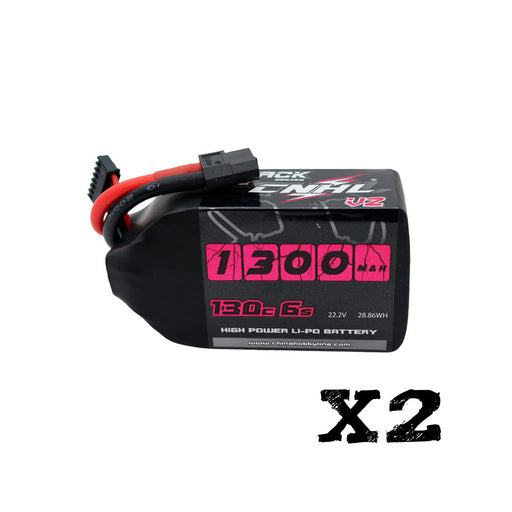
בדיקת התאמה מהירה ה2 Packs CNHL Black Series V2.0 1300mAh 22.2V 6S 130C LiPo Battery with XT60 Plug מתאים היטב למטיסי FPV שרוצים סוללת 6S 1300mAh X...
הצג פרטים מלאיםHstar D43-01Q 911 Style היא מכונית דריפט RC מיני בקנה מידה 1/43 עשויה סגסוגת, המיועדת לכיף שולחני פנימי ודריפטינג ריאליסטי. היא כוללת מצערת והיגו...
הצג פרטים מלאים

חלקי חילוף ותמיכה לטווח ארוך אנו יודעים שעבור טייסי RC, תמיכה אמינה בחלקי חילוף היא חלק חשוב בשמירה על מטוס כשיר לטיסה במשך שנים. לכן CNHL מת...
הצג פרטים מלאים
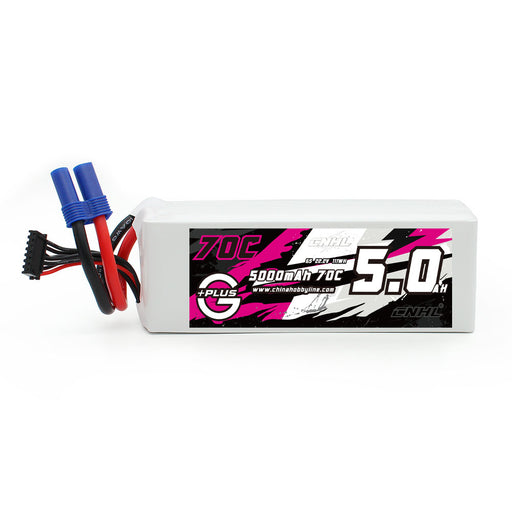
מפרטים: מספר מלאי: 500706EC5 קיבולת: 5000mAh מתח: 22.2V / 6 תאים / 6S1P קצב פריקה: 70C רציף / 140C פיצוץ קצב טעינה: 5C מקסימום גודל (הבדל של 1-5 ...
הצג פרטים מלאים
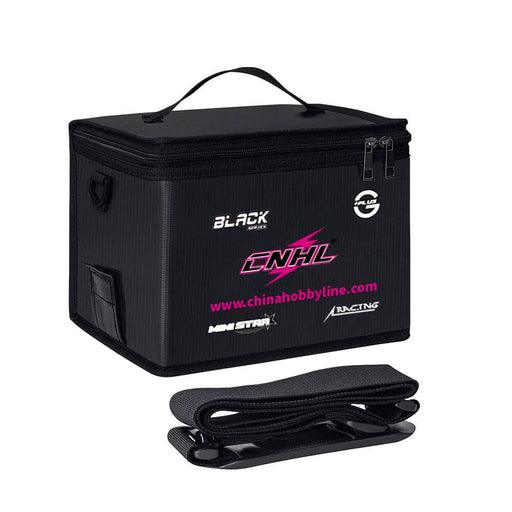
תיק סוללות LiPo של CNHL מיועד לטעינה, הובלה ואחסון בטוחים יותר של סוללות LiPo בבית או בשדה. הוא מוסיף שכבת הגנה פרקטית על ידי סיוע במניעת התפשטות ח...
הצג פרטים מלאים

The WNF Mitsubishi Lancer Evolution IX is an officially licensed Mitsubishi Motors 1:64 RC drift car that combines detailed Evo IX styling with rea...
הצג פרטים מלאים

The ISDT K4 is a high-power 8S LiPo smart dual charger built for demanding RC battery setups. It combines two independently controlled charging cha...
הצג פרטים מלאים

The ISDT PC-4860S is a compact four-port XT60 parallel charging board designed for experienced RC and FPV users who want to connect multiple co...
הצג פרטים מלאים

Quick Take: This officially licensed WNF 1:43 Land Rover Defender 110 Pick-Up RC crawler combines the proportions and detailing of the 1993 ...
הצג פרטים מלאים

Quick Fit Check Continuous / Peak Current: 20A / 30A peak Battery: 3-4S LiPo BEC: No Motor Connectors: 3.5mm gold female ...
הצג פרטים מלאים


Leave a comment