
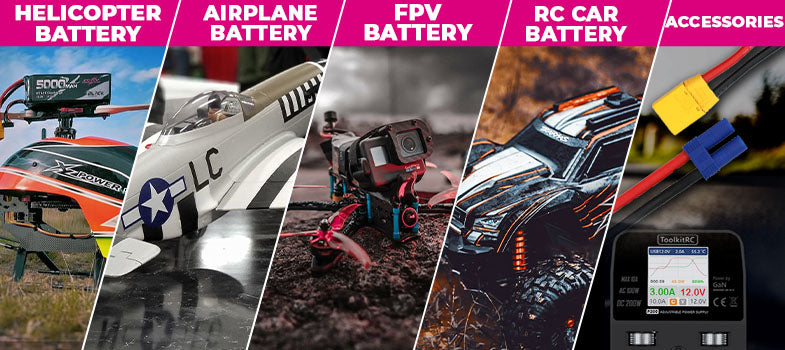
סוללות CNHL ליפו
CNHL שואפת לספק סוללות Li-Po באיכות גבוהה ומוצרי RC לכל חובבי התחביב עם שירות לקוחות מצוין ומחירים תחרותיים
Forty-eight years after the original Tamiya Lamborghini Cheetah appeared, one of the strangest machines from the earliest days of Tamiya R/C is back. The 2026 Tamiya Lamborghini Cheetah, Item 58754, is not a modern buggy wearing an old body. Tamiya has deliberately preserved the basic mechanical character that made the 1978 model so unusual: a duralumin U-shaped chassis, a longitudinal center battery, a rear-mounted motor, rear-wheel drive, double-wishbone suspension, torsion-bar springs and a hard styrene body packed with scale detail.
That decision is what makes this reissue genuinely interesting. Almost every important R/C technology around it has moved forward dramatically since 1978, yet Tamiya resisted the obvious temptation to replace the old architecture with a modern plastic tub chassis, oil-filled shocks and contemporary race-buggy geometry. Instead, the company improved selected weak points while keeping the experience recognizably Cheetah.
To understand why that matters, we need to go back not only to the original Tamiya 58007, but to the period when Tamiya itself was still working out what an electric off-road R/C car should be.

| Model | Tamiya Lamborghini Cheetah (2026) |
| Item Number | 58754 |
| Scale | 1/12 |
| Dimensions | 400 × 174 × 140mm |
| Drivetrain | Rear 2WD |
| Chassis | Duralumin U-shaped channel frame |
| Motor Position | Rear-mounted |
| Motor | Torque-Tuned 540-size brushed motor |
| Suspension | 4-wheel independent double wishbone |
| Spring System | 4 adjustable longitudinal metal torsion-bar springs |
| Body | Hard styrene body molded in Desert Yellow |
| Battery Direction | 7.2V–7.4V system / 2S LiPo direction |
The original Tamiya Lamborghini Cheetah carried Item No. 58007 and appeared in 1978. The number itself tells part of the story: this was a product from the very beginning of Tamiya's electric R/C era, when the company's identity as an R/C manufacturer was still being formed.
This was before the later generation of Tamiya off-road legends that would define the brand for millions of hobbyists. The Rough Rider, Sand Scorcher, Frog, Hotshot and Grasshopper belonged to the future. The Cheetah came from an earlier period when Tamiya's scale-model instincts were still heavily shaping the way it designed radio-controlled cars.
That helps explain why the original Cheetah feels so different from what we now think of as an off-road buggy. It was almost a moving scale model first and a performance R/C machine second.

Look underneath the body and the difference becomes obvious. Instead of a molded composite bathtub chassis, the Cheetah uses a rigid metal channel structure. Instead of oil-filled coilover shocks, suspension movement is controlled by longitudinal torsion bars. Instead of placing the battery across the chassis or beside the driveline, the pack sits lengthwise in the center.
The motor sits behind the battery near the rear axle, while the vehicle sends power only to the rear wheels. Electronic equipment is distributed around the rear section rather than concentrated in a modern molded electronics bay. The layout looks almost industrial by current standards, but that is precisely what gives the Cheetah its mechanical personality.
Seen today, the chassis provides a fascinating snapshot of how early R/C engineers solved packaging problems before many of the conventions we now take for granted had been established.

One of the most important parts of the Tamiya Cheetah story is its relationship with the XR311. Tamiya's 58004 XR311 arrived before the Cheetah and provided much of the mechanical foundation for the later Lamborghini model.
The Cheetah did not simply receive a different body. Its wheelbase was shortened by approximately 10mm, and the model received Cheetah-specific wheels, tires, bodywork and other details. The original Cheetah also developed the basic platform further rather than functioning as a simple body conversion.
This shared mechanical ancestry is especially interesting because the relationship between the real XR311 and Lamborghini Cheetah also forms part of the broader history surrounding the full-size vehicles. In the Tamiya world, those two names became mechanically connected once again.

The R/C model is unusual because the vehicle that inspired it was unusual. Lamborghini revealed the full-size Cheetah in 1977 as an off-road military prototype developed during a period when the company was exploring a completely different type of vehicle from its famous low-slung sports cars.
Its shape was open, angular and functional. The body sat over a tubular structure, and the powertrain layout placed a large V8 at the rear. That rear-engine configuration gave the project one of its most recognizable engineering characteristics, but it also introduced difficult weight-distribution compromises.
The Cheetah never became a production vehicle, yet the concept did not disappear. Lamborghini continued exploring high-performance off-road vehicles through later prototypes, eventually reaching the front-engined LM002 that entered production in the 1980s.
That makes the Cheetah one of the earliest roots of Lamborghini's off-road story—decades before the idea of a Lamborghini SUV became commercially normal.

There is an important difference between the real vehicle and Tamiya's interpretation. The full-size Lamborghini Cheetah was conceived as an all-wheel-drive off-road vehicle. Tamiya's 58007—and now the 58754 reissue—uses rear-wheel drive.
Today that may sound like a surprising compromise for a scale model, but it makes much more sense when viewed through late-1970s R/C engineering. Tamiya was using the XR311-derived platform as the mechanical base. The objective was not to reproduce every element of the real drivetrain. It was to capture the vehicle's appearance and character while creating a workable electric R/C model using the company's existing engineering knowledge.
That distinction tells us something important about early Tamiya R/C design: visual scale realism and mechanical scale realism were not always the same thing.
The body is arguably the clearest expression of the Cheetah's philosophy. Most modern R/C cars use thin vacuum-formed polycarbonate bodies because they are light, flexible and resistant to impacts. The Cheetah takes a completely different approach.
Its hard styrene body includes substantial three-dimensional detail. The dashboard, seats, fire extinguisher, rear mesh, driver figure and exterior equipment all contribute to a much more model-like appearance. Even the front and rear body mounting points are positioned internally so conventional exposed body posts do not spoil the silhouette.
This is one of the reasons the Cheetah still looks distinctive today. Tamiya's background in static scale models is visible throughout the car. Rather than simplifying the body to survive hard off-road use, the design prioritizes authenticity and visual presence.

This is the most important point in understanding the 2026 reissue.
Tamiya could easily have taken the Cheetah body concept and placed it over a newer chassis. That would have produced a faster, easier-driving and more durable model. It would also have erased much of what made the original important.
Instead, the 58754 retains the U-shaped duralumin channel chassis, longitudinal battery arrangement, rear motor, rear 2WD transmission, sealed gearbox, double-wishbone suspension and torsion-bar spring system. Even the semi-pneumatic tires and three-piece wheel construction retain the visual and mechanical spirit of the original.
This is why the 2026 Cheetah should not be judged as an alternative to a modern race buggy. The objective is completely different. It is designed to recreate an early Tamiya R/C experience while making selected components more practical for present-day hobbyists.
The suspension shows Tamiya's approach particularly well. Rather than replacing the original system with four conventional oil shocks, the 58754 continues to use longitudinal torsion bars.
The important change is material: the 2026 car uses four adjustable metal torsion-bar springs. Earlier versions of this architecture became known for the vulnerability of their torsion-bar components, so this is exactly the kind of improvement that makes sense for a faithful reissue.
Tamiya has changed the part most likely to benefit from greater durability without changing the fundamental way the suspension works. It is a small change visually, but conceptually it may be one of the most important updates on the entire model.

At the back of the chassis sits the included Torque-Tuned 540-size brushed motor and the rear drivetrain. The sealed gearbox helps keep dirt and small stones away from the gears, while the motor's rearward location gives the car a very different weight distribution from a centrally motored modern 2WD buggy.
This rear-biased architecture works together with the centrally mounted battery and side-mounted R/C equipment. The placement is part of the car's personality and also explains why battery weight should not be ignored when modern packs are considered.
Adding the largest and heaviest 2S pack that physically fits is not necessarily the most sensible way to improve this chassis. Maintaining reasonable mass and balance is more useful than treating the Cheetah like a modern high-power platform.

The specified battery direction is 7.2V–7.4V. For modern LiPo users, that points directly toward a 2S 7.4V LiPo battery.
But voltage is only the first part of the decision. The Cheetah uses a center-mounted battery installed lengthwise along the chassis, so physical dimensions and lead routing matter much more than they do on many open battery-tray designs.
Before buying a 2S LiPo, compare the candidate pack against the actual assembled battery area and check:
This is also not a vehicle that requires an extreme discharge rating simply because higher numbers are available. The stock brushed power system places much less emphasis on huge current delivery than a contemporary brushless racing platform. A well-sized, sensible 2S LiPo is a more useful upgrade than chasing the highest possible C-rating.
For more model-specific options, browse our LiPo batteries for Tamiya RC cars. You can also compare suitable voltage options in the CNHL 2S LiPo battery collection, or explore the wider CNHL RC car battery range. Final fit should always be checked against the assembled Cheetah before purchase.
Modern 2S RC batteries can offer capacities far beyond what builders in 1978 could have imagined. That does not mean the largest pack is automatically the best choice for this chassis.
Increasing capacity usually increases at least one of three things: physical volume, weight or both. On a rear-motor 2WD vehicle with a narrow central battery installation, excessive pack mass can alter steering response, suspension behavior and overall balance.
For the Cheetah, the strongest battery choice is therefore the one that combines useful runtime with clean installation and reasonable mass—not necessarily the pack with the largest capacity number printed on the label.
The tires are another example of Tamiya choosing continuity instead of modernization. The updated semi-pneumatic tires retain the distinctive flat chevron pattern associated with the Cheetah, while the wheels continue the unusual three-piece construction and five-screw mounting arrangement.
Visually, these parts are essential. Modern low-profile buggy tires or conventional one-piece race wheels might perform differently, but they would immediately change the stance and identity of the car. The large balloon-like tires are a major reason the Cheetah looks like a late-1970s experimental military vehicle rather than a conventional R/C buggy.
The new body is molded in Desert Yellow styrene and continues to reproduce the Cheetah's open-door body architecture, angular nose, upright windscreen and exposed rear equipment.
Look closely and the model contains the kind of details normally associated with a display model rather than a hard-driven off-road machine: dashboard, seats, driver, fire extinguisher, grille detail, lights, rear equipment rack and externally visible scale hardware.
That means owners may want to treat the finished body differently from an inexpensive polycarbonate buggy shell. The Cheetah can certainly be driven, but its visual value is a major part of the ownership experience.

If the only objective is maximum speed, suspension travel or durability per dollar, there are much newer R/C platforms that make more sense. That is not the point of the Cheetah.
The 58754 makes the most sense for builders who enjoy the mechanical experience of assembling an unusual chassis, collectors who appreciate early Tamiya history, Lamborghini enthusiasts interested in the company's forgotten off-road prototype, and hobbyists who value scale appearance more than outright performance.
It is also a model that rewards slower inspection. The metal chassis, torsion bars, body catches, three-piece wheels and rear electronics layout are not just technical necessities. They are part of the reason to own the car.
| Area | Original Character | 2026 Approach |
|---|---|---|
| Chassis | Duralumin channel architecture | Concept retained |
| Drivetrain | Rear motor / rear 2WD | Retained |
| Battery Layout | Center longitudinal pack | Retained |
| Suspension Concept | Double wishbone with torsion bars | Retained |
| Torsion Bar Material | Vintage arrangement | Updated metal springs |
| Body Concept | Detailed hard scale body | Retained |
| Power Control | Period mechanical control hardware | Modern ESC |
It is a 1/12 scale model. Some retailer databases may contain conflicting scale information, but the Cheetah itself is officially a 1/12 R/C kit.
No. The Tamiya model uses a rear-motor, rear-wheel-drive 2WD chassis. The full-size Lamborghini Cheetah prototype was an all-wheel-drive vehicle.
No. It retains the classic torsion-bar suspension concept and uses four adjustable longitudinal metal torsion-bar springs.
The kit includes a Torque-Tuned 540-size brushed motor together with an electronic speed controller.
The vehicle uses the 7.2V–7.4V battery range, making a 2S 7.4V LiPo the natural modern LiPo direction. Because the battery sits lengthwise in the center of the chassis, check actual pack dimensions, connector, lead clearance and installed weight before choosing a specific battery.
No. The essential mechanical concept and appearance have been preserved, but Tamiya has made practical updates, with the metal torsion-bar springs being one of the clearest examples.
The Cheetah is better understood as a scale-focused vintage R/C experience than as a modern basher. Its hard body, historic chassis architecture and detailed construction are major parts of its appeal.
Measured purely by speed, suspension sophistication or drivetrain efficiency, the original Cheetah belongs unmistakably to another era. That is also exactly why the 58754 is worth paying attention to.
The model preserves a period when Tamiya's R/C philosophy was still closely connected to its scale-model roots. The objective was not simply to build the fastest possible remote-controlled machine. It was to reproduce a fascinating real vehicle with enough mechanical ingenuity to make that model drive.
Forty-eight years later, Tamiya could have rewritten that answer using modern technology. Instead, the company chose to revisit it.
That is the real appeal of the Tamiya Lamborghini Cheetah 58754: it is not pretending to be a 1978 R/C car. Mechanically, visually and conceptually, it still wants you to experience one.

CNHL שואפת לספק סוללות Li-Po באיכות גבוהה ומוצרי RC לכל חובבי התחביב עם שירות לקוחות מצוין ומחירים תחרותיים
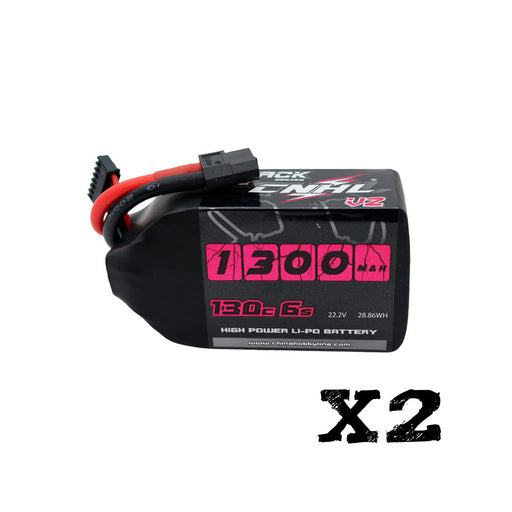
בדיקת התאמה מהירה ה2 Packs CNHL Black Series V2.0 1300mAh 22.2V 6S 130C LiPo Battery with XT60 Plug מתאים היטב למטיסי FPV שרוצים סוללת 6S 1300mAh X...
הצג פרטים מלאיםחלקי חילוף ותמיכה לטווח ארוך אנו יודעים שעבור טייסי RC, תמיכה אמינה בחלקי חילוף היא חלק חשוב בשמירה על מטוס כשיר לטיסה במשך שנים. לכן CNHL מת...
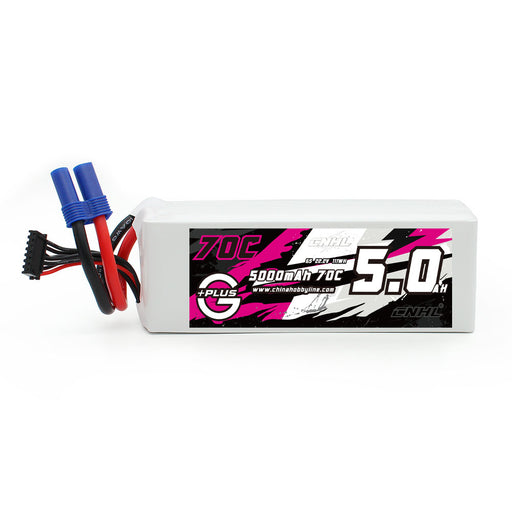
הצג פרטים מלאיםמפרטים: מספר מלאי: 500706EC5 קיבולת: 5000mAh מתח: 22.2V / 6 תאים / 6S1P קצב פריקה: 70C רציף / 140C פיצוץ קצב טעינה: 5C מקסימום גודל (הבדל של 1-5 ...
הצג פרטים מלאים
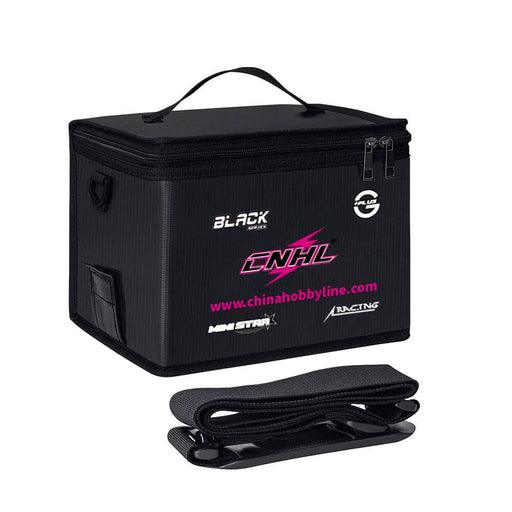
תיק סוללות LiPo של CNHL מיועד לטעינה, הובלה ואחסון בטוחים יותר של סוללות LiPo בבית או בשדה. הוא מוסיף שכבת הגנה פרקטית על ידי סיוע במניעת התפשטות ח...
הצג פרטים מלאיםבדיקת התאמה מהירה חבילת 2 CNHL Speedy Pizza Series Pro 1350mAh 6S 150C LiPo עם תקע XT60 מיועדת לטייסי FPV בגודל 5 אינץ' שרוצים מערכת 6S חופשית ...
הצג פרטים מלאים

The CNHL Long Range Series BAK 65E 6350mAh 21700 Li-ion battery cell is built around one clear priority: maximum stored energy from a lightweight c...
הצג פרטים מלאים

The CNHL Long Range Series BAK 50D 5000mAh 21700 Li-ion battery cell is designed for custom high-energy battery packs that need a strong balance be...
הצג פרטים מלאים

The ISDT C4 EVO is a versatile smart battery charger built for AA, AAA and cylindrical rechargeable cells from compact 10440 batteries all the way ...
הצג פרטים מלאים

The CNHL Long Range Series 6350mAh 21.6V 6S1P 21700 Li-ion battery combines six BAK 65E high-energy cells into a 137.16Wh pack designed for ultra-e...
הצג פרטים מלאים

The CNHL Long Range Series 5000mAh 21.6V 6S1P 21700 Li-ion battery combines six BAK 50D cells into a compact 108Wh pack designed around long-range ...
הצג פרטים מלאים




Leave a comment