
סוללות CNHL ליפו
CNHL שואפת לספק סוללות Li-Po באיכות גבוהה ומוצרי RC לכל חובבי התחביב עם שירות לקוחות מצוין ומחירים תחרותיים
The GEPRC TriPro6 O4 Pro is one of those FPV drones that makes more sense after you stop trying to force it into a traditional category. It is larger and more endurance-focused than a typical 5-inch freestyle quad, yet noticeably more compact and agile than the large 7-inch machines normally associated with serious long-range flying.
That middle ground is exactly what makes the TriPro6 interesting. Its 6-inch bi-blade propellers, efficient 2205E 1400KV motors, True-X layout, DJI O4 Air Unit Pro and 6S power system create a platform that can cruise efficiently across open terrain while still carrying enough speed and throttle authority to make the flight itself enjoyable.
Battery choice is a major part of that character. GEPRC positions the aircraft around both 2200mAh 6S LiPo and long-endurance Li-ion use, but for pilots who want a responsive all-round setup, the 2200mAh 6S LiPo remains the most natural starting point. That is also where the CNHL G+Plus 2200mAh 6S 70C XT60 becomes particularly relevant.

GEPRC TriPro6 O4 Pro with a CNHL G+Plus 2200mAh 6S 70C XT60 LiPo installed underneath the frame.
Answer first: The TriPro6 makes the most sense for pilots who want more endurance, cruising speed and wind authority than a smaller FPV platform without moving all the way to a heavy dedicated 7-inch long-range build. For a versatile setup, start around 2200mAh 6S LiPo with XT60; move toward carefully selected higher-capacity packs when endurance matters more than agility.
| Model | GEPRC TriPro-LR60 O4 Pro |
| Class | 6-inch Long-Range FPV Drone |
| Wheelbase | 265mm |
| Flight Controller / ESC | TAKER F722 45A 32-bit AIO |
| Motors | SPEEDX2 2205E 1400KV |
| Propellers | HQProp 6 × 4.3 |
| Video System | DJI O4 Air Unit Pro |
| GPS | GEP-M10 |
| Battery System | 6S |
| Battery Connector | XT60 |
| Published Weight | 383 ± 5g before selecting the flight battery |
Five-inch FPV quads dominate freestyle for good reason. They are compact, responsive and easy to throw through tight gaps. Seven-inch machines move in the opposite direction, giving pilots more propeller efficiency, payload capacity and long-distance capability at the expense of size and agility.
The TriPro6 occupies the space between them. Six-inch props provide more cruising efficiency and momentum than a conventional 5-inch platform, while the unusually minimalist frame keeps the aircraft from feeling like a scaled-down heavy long-range machine.
That difference becomes useful in mountain flying, coastal cruising, open countryside and cinematic chasing. More propeller area gives the aircraft useful authority in wind, while the relatively light airframe means it can still change direction without the heavy, committed feel associated with many larger long-range builds.

One of the first things you notice on the TriPro6 is the motor arrangement. The rear motors sit in the conventional orientation while the front motors are inverted beneath the arms. Combined with the True-X geometry, this gives the drone a distinctive half-pusher, half-puller appearance.
The layout allows GEPRC to keep the airframe compact while reducing the need for the stretched front geometry normally used to move propellers away from an FPV camera's field of view. It also works with the underslung battery to concentrate mass close to the center of the aircraft.
There is a tradeoff: the inverted front propellers sit relatively close to the ground. Flat takeoff surfaces matter more on this aircraft than they do on a conventional quad with all four motors above the arms.

Its natural character is long-range cruising, but it is not limited to slow flying. The efficient motor and propeller combination is designed to reduce current demand at cruise, yet the 6S system still gives the aircraft meaningful acceleration and speed when the throttle comes up.
Across different flight environments, the recurring theme is that the TriPro6 is happiest making long sweeping lines, maintaining momentum and exploring terrain. It can perform flips, dives and freestyle-style maneuvers, but it does not change direction with the same sharp, nervous feel as a dedicated 5-inch freestyle platform.
That is not really a weakness. It is the result of a different design goal. The TriPro6 is at its best when a flight might include a fast climb, a long valley crossing, a cinematic pass, a dive and a few playful maneuvers rather than repeated hard transitions through a small freestyle course.
This is where the TriPro6 becomes especially interesting. GEPRC deliberately gives pilots two very different battery directions: a higher-output 6S LiPo route and an endurance-oriented Li-ion route.
A LiPo keeps the drone responsive. It gives the pilot more reserve current for quick climbs, faster acceleration and mixed flying. Li-ion places more emphasis on stored energy and relaxed cruising, with lower discharge capability making aggressive throttle use less attractive.
For most pilots who are buying a TriPro6 because they want both exploration and enjoyable handling, 2200mAh 6S LiPo is the best place to understand the aircraft first.
The CNHL G+Plus 2200mAh 22.2V 6S 70C LiPo with XT60, Stock 220706, is more than a specification match. The same CNHL battery has been flown on the TriPro6, giving it a much stronger application basis than a battery selected only because the voltage and connector appear correct on paper.
The combination works particularly well because 2200mAh sits directly in the capacity range around which the TriPro6's LiPo setup was developed. It carries substantially more energy than a typical small freestyle pack without moving so far into battery weight that the aircraft loses the throttle response that makes the 6-inch platform enjoyable.
In demanding mountain conditions with strong wind, the 2200mAh 6S LiPo setup still retained good control authority and responsive handling. The flight included normal cruising rather than an artificially optimized endurance run and finished at roughly the 12-minute level. That does not create a guaranteed flight-time figure, but it is a useful demonstration of why 2200mAh works so well as an everyday TriPro6 capacity.
Pilots interested in the currently selected battery options can browse the CNHL batteries for GEPRC TriPro6.
| Battery | Flight Character | Why It Is Here |
|---|---|---|
| G+Plus 2200mAh 6S 70C XT60 | Best all-round balance | Primary recommendation with actual TriPro6 flight use behind it. |
| Black Series 2200mAh 6S 40C XT60 | General cruising | Same core capacity and 6S XT60 configuration with a more moderate discharge rating. |
| Lightning LiHV 2400mAh 6S 120C Shorty XT60 | Lightweight high-energy setup | Selected because the compact dimensions and low installed weight make the extra capacity practical. |
| Lightning LiHV 3200mAh 6S 120C XT60 | Higher-capacity LiHV cruising | A capacity-focused option retained because its dimensions and weight remain suitable for this application. |
The 2-pack versions of the 2200mAh G+Plus and Black Series provide two separate flight packs. The TriPro6 still uses one 6S battery at a time.
It is easy to make the wrong assumption when choosing a bigger FPV battery: more capacity usually means more weight, and more weight can erase the efficiency gain the additional capacity was supposed to provide.
That is why the Lightning 2400mAh and 3200mAh LiHV packs were not added to the TriPro6 collection simply because they carry larger capacity numbers. They were chosen after considering the actual pack dimensions and weight.
The 2400mAh Shorty is especially interesting when the goal is to gain energy capacity without making the aircraft feel unnecessarily heavy. The 3200mAh option moves further toward endurance while still remaining within a practical installation envelope.
For a long-range airframe, that energy-to-weight relationship matters more than capacity alone.
A 6S LiHV battery has a higher fully charged cell voltage than a standard 6S LiPo. That difference also needs to be understood by Betaflight's battery detection logic.
When running a fully charged 6S LiHV setup, the Maximum Cell Voltage value in Betaflight should be configured high enough to recognize the pack correctly. A setting around 4.4V prevents the flight controller from misinterpreting a fully charged 6S LiHV pack and displaying incorrect battery or cell-count warnings.
This setting only affects battery detection and telemetry. It does not determine the charger's voltage limit. LiHV batteries must still be charged with a charger that supports LiHV mode, and each cell must not exceed 4.35V.
Whenever changing battery chemistry or maximum charged voltage, verify the complete power-system setup before committing to a long-range flight.

The TriPro6 carries its battery underneath the carbon frame. From a flight-dynamics perspective, the idea is easy to understand: the battery mass sits low and near the middle of the True-X frame, helping keep the center of gravity balanced rather than placing a large pack high above the airframe.
The downside appears before and after the flight. Installing an underside pack is slightly more awkward than dropping a battery onto the top plate of a conventional FPV quad, and the front inverted props leave relatively little ground clearance.
GEPRC therefore includes a carbon battery landing plate. It helps protect the pack and keeps the aircraft level enough to prevent the front propellers from touching the ground during takeoff and landing.
A flat launch pad is strongly preferable to tall grass, loose vegetation or uneven ground. Battery wires and the balance lead must also be routed securely away from both the propellers and the ground.

The unusual front-motor arrangement is intended to reduce propellers in the camera view, but in practice this is not a completely binary yes-or-no question.
Camera angle, field of view and stabilization crop all matter. At a lower camera angle, parts of the propellers can enter a very wide raw view under some conditions. Raising the camera angle reduces that effect, and stabilization can crop the outer portion of the frame further.
For faster cruising this is unlikely to be the biggest concern because pilots naturally run more camera angle. Pilots who want very slow cinematic cruising with a low camera angle should pay more attention to framing before committing to an important shot.
The TriPro6 uses GEPRC's suspended camera module concept, allowing the O4 assembly to be moved between compatible models. The six-point damping system also helps isolate the relatively sensitive O4 gyro from frame vibration.
The idea is attractive if you already own compatible GEPRC models because the video system is one of the most expensive parts of a modern digital FPV build. Sharing the camera module can reduce the need to install a separate O4 Pro in every aircraft.
The compromise is weight and complexity. The module still needs screws and connections to be moved, so “modular” should not be confused with an instant tool-free hot swap. On a 6-inch aircraft the extra mass is less significant than it would be on a small cinewhoop, but it is still part of the overall design tradeoff.
The GEP-M10 GPS is not just a specification-box feature. A drone intended to cruise farther across mountains, countryside or coastline benefits enormously from a correctly configured rescue system.
Before a long-range flight, wait for a proper satellite fix rather than treating a partial GPS lock as “good enough.” Confirm the home position and verify rescue behavior in a safe, open area before relying on it farther away.
GPS rescue should be treated as an additional layer of protection, not as permission to ignore radio link quality, video link quality, battery reserve or terrain between the aircraft and the pilot.
GEPRC lists the TriPro6 at approximately 383 ± 5g, but this figure should not be interpreted as the ready-to-fly weight with a typical long-range battery installed.
A 6-inch long-range aircraft carrying a 2200mAh 6S pack will naturally be much heavier once ready to fly. This distinction matters when comparing the TriPro6 with ultralight FPV platforms or when estimating how different battery capacities will affect handling.
The more useful comparison is not simply “which battery has the most capacity?” but how much usable energy is being added for each gram of additional installed weight.
| Characteristic | TriPro6 | Typical 5-Inch Freestyle |
|---|---|---|
| Main Goal | Cruising, exploration, cinematic FPV | Freestyle, tight lines, fast direction changes |
| Prop Size | 6 inch | 5 inch |
| Battery Capacity | Comfortable with larger energy-focused packs | Usually optimized around lighter packs |
| Cruising Efficiency | A major design priority | Secondary to response and agility |
| Freestyle Feel | Capable but carries more momentum | Sharper and more immediate |
| Best Environment | Mountains, coast, countryside, open terrain | Bando, freestyle field, compact courses |
The strongest part of the TriPro6 is versatility within the long-range category. It can cover ground efficiently without feeling like a large, slow aerial truck. Six-inch props provide useful wind authority and cruising speed, while the 6S LiPo option keeps enough throttle response available for climbing, chasing and occasional freestyle.
The True-X layout and underslung battery keep the center of gravity well positioned, and DJI O4 Pro gives the aircraft a modern digital video system without requiring a separate action camera for many cinematic flights.
It also gives pilots much more freedom in battery strategy than a tightly packaged small FPV quad. That makes it particularly interesting for experimenting with the balance between weight, capacity and flight style.
The front inverted propellers demand more care during takeoff and landing. The underside battery installation is less convenient than a top-mounted pack. The modular camera assembly adds weight and is not a completely tool-free quick-swap system.
Battery fit also deserves more thought than simply matching 6S and XT60. Pack dimensions, final installed weight, strap security, wire routing and center of gravity all matter.
Those are manageable compromises, but they are worth understanding before buying the aircraft specifically for maximum endurance or very large batteries.
The TriPro6 is particularly attractive for pilots who look at an interesting mountain, coastline, valley, road or ridgeline and want enough endurance to explore it without flying something that feels oversized for the rest of the day.
It also makes sense for pilots who find a conventional 5-inch too endurance-limited but do not want to build their entire FPV experience around a 7-inch long-range platform.
If almost every flight is tight freestyle, a dedicated 5-inch still makes more sense. If maximum distance and maximum energy storage are the only priorities, a larger long-range frame may offer more space. The TriPro6 earns its place by being able to do a useful amount of both.
The TriPro6 uses a 6S power system with an XT60 connector. GEPRC lists both a 2200mAh 6S LiPo and a 3000mAh-class Li-ion route, reflecting the aircraft's ability to prioritize either response or endurance.
Our primary recommendation is the CNHL G+Plus 2200mAh 22.2V 6S 70C LiPo with XT60, Stock 220706. It matches the TriPro6's main LiPo capacity class and has actual TriPro6 flight use behind the recommendation.
Yes, it can under suitable conditions. Flight time varies substantially with throttle use, wind, altitude, speed, battery condition and landing voltage. A CNHL 2200mAh 6S 70C setup has demonstrated roughly 12-minute-level mixed flight in challenging mountain conditions, but this should be treated as a reference rather than a guaranteed figure.
Yes. The CNHL Lightning 2400mAh and 3200mAh 6S LiHV packs selected for this application were included after considering their physical dimensions and installed weight, rather than capacity alone.
LiPo is the better direction when throttle response, climbing performance and mixed flying matter. Li-ion is designed around energy density and efficient cruising. Neither is universally better; they create different versions of the same aircraft.
It can perform freestyle-style maneuvers and has enough thrust to be entertaining, particularly on LiPo. However, it carries more momentum and is designed primarily as an efficient 6-inch cruiser rather than as a dedicated tight-gap freestyle machine.
The TriPro6 is designed around 6-inch propellers. We do not recommend assuming 7-inch prop compatibility without verified physical clearance, motor-load and tuning data.
Short, flat grass may be workable, but the inverted front propellers sit close to the ground. A level FPV landing pad or other flat surface is the safer and more consistent choice, particularly when using a larger underside battery.
The GEPRC TriPro6 O4 Pro does not replace a dedicated 5-inch freestyle quad or a maximum-range 7-inch build. Its appeal comes from not needing to.
It delivers useful long-range efficiency, meaningful wind authority, enough speed to make open-terrain flying exciting and enough maneuverability to keep the aircraft from feeling like a one-purpose endurance platform. The unusual motor layout and underslung battery introduce a few practical compromises, but they are closely tied to the characteristics that make the aircraft different in the first place.
Battery choice completes the picture. For the strongest balance of endurance and response, the CNHL G+Plus 2200mAh 6S 70C XT60 is the logical starting point. The Black Series 2200mAh provides another conventional LiPo route, while the lightweight Lightning 2400mAh and higher-capacity 3200mAh LiHV packs expand the setup for pilots who want to explore different energy-to-weight combinations.
Compare the currently selected options in the GEPRC TriPro6 battery collection, browse additional CNHL 6S LiPo batteries, or explore CNHL Li-ion FPV batteries when endurance-focused chemistry is the priority.
CNHL שואפת לספק סוללות Li-Po באיכות גבוהה ומוצרי RC לכל חובבי התחביב עם שירות לקוחות מצוין ומחירים תחרותיים
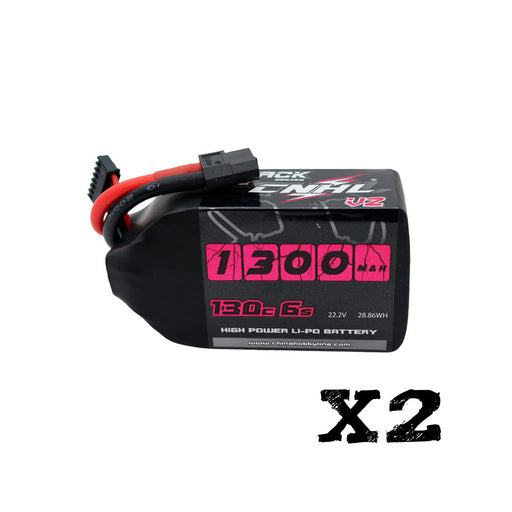
בדיקת התאמה מהירה ה2 Packs CNHL Black Series V2.0 1300mAh 22.2V 6S 130C LiPo Battery with XT60 Plug מתאים היטב למטיסי FPV שרוצים סוללת 6S 1300mAh X...
הצג פרטים מלאיםחלקי חילוף ותמיכה לטווח ארוך אנו יודעים שעבור טייסי RC, תמיכה אמינה בחלקי חילוף היא חלק חשוב בשמירה על מטוס כשיר לטיסה במשך שנים. לכן CNHL מת...
הצג פרטים מלאים
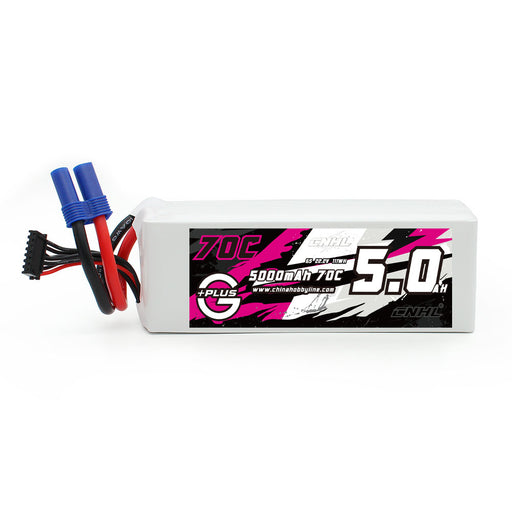
מפרטים: מספר מלאי: 500706EC5 קיבולת: 5000mAh מתח: 22.2V / 6 תאים / 6S1P קצב פריקה: 70C רציף / 140C פיצוץ קצב טעינה: 5C מקסימום גודל (הבדל של 1-5 ...
הצג פרטים מלאים
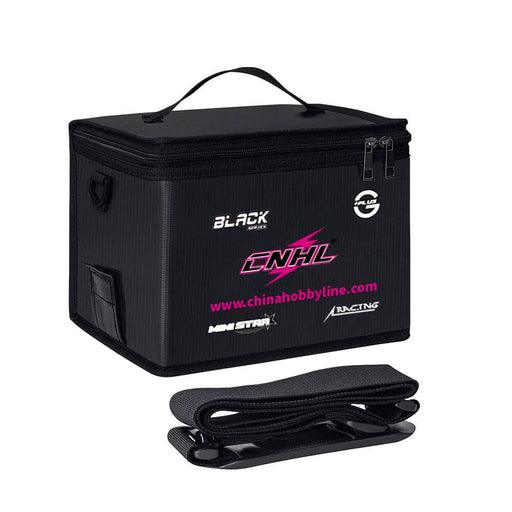
תיק סוללות LiPo של CNHL מיועד לטעינה, הובלה ואחסון בטוחים יותר של סוללות LiPo בבית או בשדה. הוא מוסיף שכבת הגנה פרקטית על ידי סיוע במניעת התפשטות ח...
הצג פרטים מלאים

בדיקת התאמה מהירה חבילת 2 CNHL Speedy Pizza Series Pro 1350mAh 6S 150C LiPo עם תקע XT60 מיועדת לטייסי FPV בגודל 5 אינץ' שרוצים מערכת 6S חופשית ...
הצג פרטים מלאים

Quick Fit Check The CNHL Speedy Pizza Series 2200mAh 22.2V 6S 120C LiPo Battery with XT60 Plug combines the familiar 2200mAh 6S format with a ligh...
הצג פרטים מלאים

Quick Fit Check The CNHL Speedy Pizza Series 2200mAh 14.8V 4S 120C LiPo Battery with XT60 Plug combines a widely used 2200mAh 4S format with a sli...
הצג פרטים מלאים

Quick Fit Check The CNHL Speedy Pizza Series 2200mAh 11.1V 3S 120C LiPo Battery with XT60 Plug takes the familiar 3S 2200mAh aircraft battery form...
הצג פרטים מלאים

The CNHL Long Range Series BAK 65E 6350mAh 21700 Li-ion battery cell is built around one clear priority: maximum stored energy from a lightweight c...
הצג פרטים מלאים

The CNHL Long Range Series BAK 50D 5000mAh 21700 Li-ion battery cell is designed for custom high-energy battery packs that need a strong balance be...
הצג פרטים מלאים


Leave a comment