
סוללות CNHL ליפו
CNHL שואפת לספק סוללות Li-Po באיכות גבוהה ומוצרי RC לכל חובבי התחביב עם שירות לקוחות מצוין ומחירים תחרותיים
The CNHL AviNationRC Super Tucano V2 1600mm is not simply the original aircraft wearing a different camouflage scheme. The V2 keeps the large 1600mm format, 6S power system and distinctive five-blade propeller that define the platform, but changes several of the areas that matter most in everyday ownership: landing gear, control linkages, battery access, airframe durability, assembly and transport.

Inspired by the full-scale A-29 Super Tucano / EMB-314 Super Tucano, this new version combines scale presence with a number of practical revisions developed around the way a large RC aircraft is actually assembled, transported, adjusted and flown.
Answer first: the Super Tucano V2 is a genuine mechanical and structural update, not a cosmetic V1 refresh. The biggest changes include a new silver all-metal retract system, a servo-operated nose gear door, reinforced elevator surfaces, ball-link controls, a more open battery compartment, reinforced five-blade propeller system and a more transport-friendly screw-assisted airframe assembly.
The most obvious visual change is the new Ecuadorian Air Force digital camouflage. It gives the V2 a completely different identity from the earlier Super Tucano and moves away from the aggressive shark-mouth appearance associated with some previous aircraft.
The camouflage will naturally come down to personal taste, but the important point is that the changes go much deeper than paint. Underneath the new scheme, the V2 includes revised landing gear, new control-link hardware, structural reinforcement, a redesigned battery compartment and a revised assembly system.
| Area | V1 | V2 |
|---|---|---|
| Livery | Earlier paint schemes | High-contrast Ecuadorian Air Force digital camo |
| Retracts | Earlier retract system | New silver all-metal electronic retract system |
| Nose Gear Door | Earlier arrangement | Dedicated servo-operated door |
| Elevator | Earlier foam structure | Reinforced control surface structure |
| Control Links | Traditional clevis-style linkage | Ball-link control system |
| Battery Bay | More restricted rearward battery movement | Longer, more open layout for easier CG adjustment |
| Airframe Assembly | More permanent assembly approach | Revised screw-assisted wing and fuselage joining |
| Propeller | 13×8 five-blade | 13×8 five-blade with strengthened design |

A large 1600mm scale aircraft places significant demands on its landing gear. The V2 therefore receives one of its most important mechanical changes in the form of a new silver all-metal electronic retract system.
The tricycle landing-gear arrangement consists of a steerable nose gear and two main landing-gear units. Large wheels and aluminum suspension components continue to make the aircraft practical for grass operations, while the revised retract hardware gives the V2 a more substantial undercarriage system.

This is the kind of upgrade that matters far more than a cosmetic revision. Takeoffs, landings, taxiing and everyday transport all put stress into the gear, especially on a model with a flying weight of roughly 4.1kg.
The V2 also introduces a servo-operated nose landing gear door. Rather than treating the nose door as a simple fixed cosmetic panel, the mechanism can be sequenced with the retract system for a more scale-like gear cycle.
The door servo can be assigned and mixed through the radio system, giving the pilot control over the timing. A slower closing movement is particularly useful because it allows the nose gear to clear the door before the panel finishes closing.

This is also an important setup point: the nose gear door is not just a decorative extra. Correct servo travel, linkage geometry and sequencing should be checked carefully before flight so the door and retract do not interfere with one another.
The elevator area receives structural reinforcement on the V2. The earlier aircraft could be more vulnerable to damage in the thinner foam sections of the elevator, particularly during handling and transport.
The revised V2 structure adds reinforcement through the more vulnerable section of the control surface. It is a relatively small visual change, but it directly addresses the durability of a component that is frequently exposed during storage, assembly and transportation.
Another important mechanical change is the move to a ball-link control system across the flight-control surfaces.
Ball-link connections create a secure articulated joint between the servo linkage and the control horn. Compared with a looser linkage arrangement, they can reduce unwanted play while allowing the rod to move freely through the changing angle of the control surface.

For a large sport-scale aircraft, that makes the linkage system feel more deliberate and better suited to precise setup. It is especially useful on a model that combines ailerons, elevator, rudder and flaps across six primary flight-control servos.
The battery compartment is one of the most practical V2 improvements. The earlier layout could restrict how far rearward the battery could be moved, and some V1 setups required more compromise when balancing different battery sizes and weights.
The V2 uses a longer and more open battery bay, with less foam blocking the rear section. This allows the pack to move farther fore and aft, making it much easier to tune the center of gravity without modifying the surrounding foam structure.

That extra adjustment range matters because the Super Tucano V2 supports a broad 6S 4000–6700mAh battery range, with recommended pack weight around 600–900g. Different battery capacities and constructions can shift the balance point significantly even when they are all electrically suitable.
The initial CG reference is 80mm behind the wing leading edge, measured with the aircraft inverted and the landing gear retracted. Final battery placement should always be adjusted around the actual pack being used rather than copied from another setup.
A 1600mm wingspan aircraft with a fuselage length of 1617mm is not difficult to appreciate at the field, but it can be much harder to fit into a vehicle, workshop or storage area.
The V2 introduces a revised screw-assisted joining system for major airframe sections. The intention is to reduce the dependence on permanent glued assembly and make it more practical to separate major components again when required for transport or storage.
That does not mean the aircraft becomes a completely tool-free field model. Electrical connections still need to be managed during assembly, and pilots who frequently remove the wings may still wish for an even more integrated quick-connect solution.
Even so, the move toward removable screw-based joining is a meaningful improvement for a model of this size because it gives owners more flexibility after the initial build.
The V2 keeps the proven 6S formula rather than changing the aircraft into a completely different power platform.
| Wingspan | 1600mm |
| Length | 1617mm |
| Flying Weight | Approx. 4100g |
| Motor | 5052-525KV |
| ESC | 100A RVS |
| Propeller | 13×8 5-Blade |
| Battery | 6S 22.2V, 4000–6700mAh, 40–120C |
| Typical Flight Time | Around 7 minutes with mixed throttle |
| Initial CG | 80mm behind wing leading edge, inverted with gear retracted |
The 13×8 five-blade propeller remains central to the aircraft's appearance and sound, but the V2 propeller system has been strengthened to improve durability.
The 100A RVS ESC also retains reverse thrust. With an appropriate transmitter setup, reverse thrust can be assigned to a switch and used after touchdown to help slow the aircraft during the landing rollout.
The V2 uses six 13g metal-gear flight-control servos for the ailerons, elevator, rudder and flaps, together with a dedicated nose-steering servo and a separate nose-door servo.
For pilots who want access to the full feature set, a radio system with seven or more channels provides the most useful flexibility. Additional channel capacity makes it easier to manage retracts, flap positions, reverse thrust and the independent nose-door sequence without forcing too many functions into shared channels.
Programmable flap speed is also useful on a large scale aircraft like this. Slowing the flap deployment and retraction creates a smoother appearance and avoids abrupt configuration changes during approach.
The Super Tucano platform is not limited to one style of flying. The V2 is comfortable being presented as a large scale aircraft, but it still has enough power and control authority for more energetic passes.
Slow passes, low-level fly-bys, banking turns, knife-edge passes and gear-down scale passes all suit the aircraft's character. The retract sequence is visually quick and clean, while the large airframe gives the model strong presence even when it is not being flown aggressively.

That balance between scale appearance and sport flying is one of the reasons the 1600mm Super Tucano format remains attractive. The V2 does not try to turn the aircraft into something completely different; it focuses on improving the parts of the platform that owners interact with most often.
A good V2 does not need to replace everything that already worked. Several of the core Super Tucano characteristics remain familiar:
The V2 therefore feels like an evolution of the existing Super Tucano concept rather than a completely unrelated aircraft carrying the same name.
The CNHL AviNationRC Super Tucano V2 1600mm is scheduled for its official release on October 8, 2026.
The first production batch will be limited. European inventory is planned to be available from stock at launch, while the United States will initially open on a pre-order basis. U.S. pre-orders are expected to begin shipping around late October.
A limited introductory promotion is also planned for the first release. During the launch period, a limited number of first-batch orders will include one CNHL Lightning LiHV 4500mAh 6S battery at no additional charge. The battery offer will be available only while the allocated promotional stock lasts.
Stay tuned for the official October 8 launch. Follow the CNHL RC planes collection for upcoming aircraft releases and availability updates.
The most important thing about the V2 is that its changes are concentrated in practical areas rather than simply adding more decoration.
The new retract system addresses one of the most stressed parts of a large RC aircraft. The reinforced elevator improves durability. Ball links improve the control linkage arrangement. The redesigned battery bay makes CG adjustment easier. The screw-assisted joining system makes the airframe more manageable away from the flying field. The servo-operated nose gear door adds another layer of scale detail.
That combination makes the Super Tucano V2 1600mm a much more substantial update than the new camouflage alone suggests. Pilots who already know the original aircraft should recognize the underlying character immediately, but the areas surrounding that familiar platform have been revised in ways that should make the V2 easier to own, set up and maintain.
Major V2 changes include the silver all-metal retract system, servo-operated nose gear door, reinforced elevator surfaces, ball-link control system, redesigned battery bay, strengthened five-blade propeller system, revised airframe assembly and new Ecuadorian Air Force digital camouflage.
No. The digital camouflage is the most visible change, but the V2 also includes significant mechanical, structural and usability revisions throughout the aircraft.
The official release is scheduled for October 8, 2026.
Europe is planned to have stock available at launch. The United States will initially operate on a pre-order basis, with U.S. orders expected to begin shipping around late October. First-batch quantities will be limited.
A limited number of launch-period orders are planned to include one CNHL 4500mAh 6S battery at no additional charge. The offer is limited to the allocated promotional battery stock.
The aircraft is designed around a 6S 22.2V battery system and supports approximately 4000–6700mAh packs with a recommended battery weight of roughly 600–900g.
Yes. The V2 introduces a new silver all-metal electronic retract landing-gear system together with a dedicated servo-operated nose gear door.
Yes. The 100A RVS ESC supports reverse thrust, which can be assigned through a suitable transmitter setup and used to help reduce rollout distance after landing.
A seven-channel-or-higher radio system is the preferred direction for pilots who want flexibility with flaps, retracts, the independent nose gear door and reverse thrust. Additional channels make the full feature set easier to configure.
No. The Super Tucano V2 discussed here is a CNHL / AviNationRC product. Avios and HobbyKing names may appear in Super Tucano RC searches because of earlier products in the market, but they should not be treated as the brand or manufacturer of this V2 aircraft.
The aircraft is inspired by the Embraer EMB-314 / A-29 Super Tucano, the turboprop light-attack and advanced-training aircraft that gives the RC model its distinctive proportions and scale identity.
European stock is planned to be available from launch, subject to first-batch availability. U.S. customers will initially be able to place pre-orders, with shipping expected to begin around late October.
CNHL שואפת לספק סוללות Li-Po באיכות גבוהה ומוצרי RC לכל חובבי התחביב עם שירות לקוחות מצוין ומחירים תחרותיים

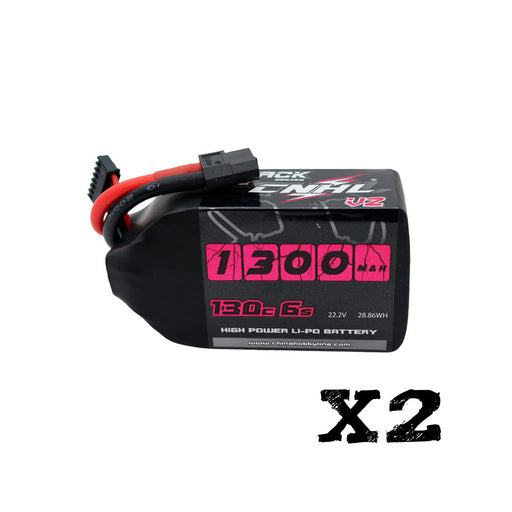
בדיקת התאמה מהירה ה2 Packs CNHL Black Series V2.0 1300mAh 22.2V 6S 130C LiPo Battery with XT60 Plug מתאים היטב למטיסי FPV שרוצים סוללת 6S 1300mAh X...
הצג פרטים מלאיםחלקי חילוף ותמיכה לטווח ארוך אנו יודעים שעבור טייסי RC, תמיכה אמינה בחלקי חילוף היא חלק חשוב בשמירה על מטוס כשיר לטיסה במשך שנים. לכן CNHL מת...
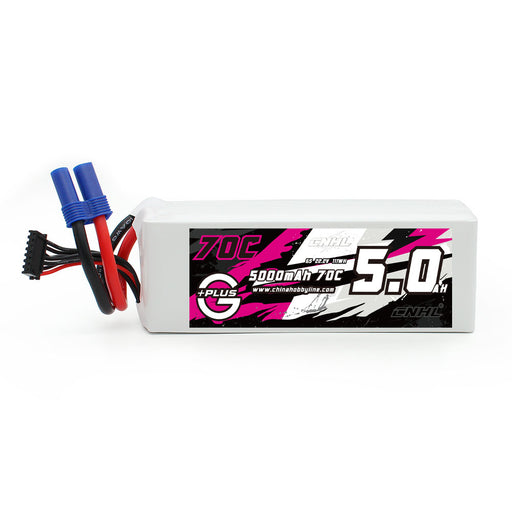
הצג פרטים מלאיםמפרטים: מספר מלאי: 500706EC5 קיבולת: 5000mAh מתח: 22.2V / 6 תאים / 6S1P קצב פריקה: 70C רציף / 140C פיצוץ קצב טעינה: 5C מקסימום גודל (הבדל של 1-5 ...
הצג פרטים מלאים
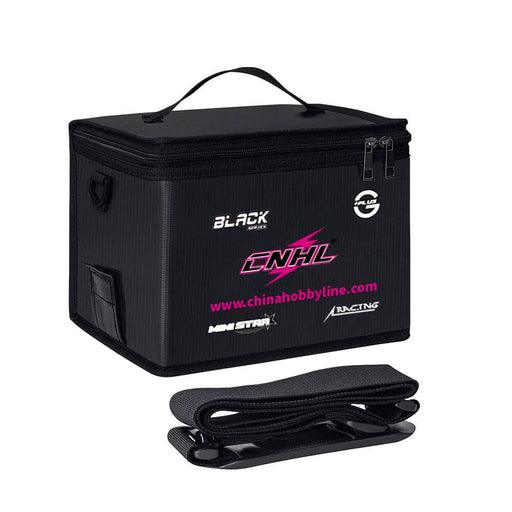
תיק סוללות LiPo של CNHL מיועד לטעינה, הובלה ואחסון בטוחים יותר של סוללות LiPo בבית או בשדה. הוא מוסיף שכבת הגנה פרקטית על ידי סיוע במניעת התפשטות ח...
הצג פרטים מלאים

בדיקת התאמה מהירה חבילת 2 CNHL Speedy Pizza Series Pro 1350mAh 6S 150C LiPo עם תקע XT60 מיועדת לטייסי FPV בגודל 5 אינץ' שרוצים מערכת 6S חופשית ...
הצג פרטים מלאים

Quick Fit Check The CNHL Speedy Pizza Series 2200mAh 22.2V 6S 120C LiPo Battery with XT60 Plug combines the familiar 2200mAh 6S format with a ligh...
הצג פרטים מלאים

Quick Fit Check The CNHL Speedy Pizza Series 2200mAh 14.8V 4S 120C LiPo Battery with XT60 Plug combines a widely used 2200mAh 4S format with a sli...
הצג פרטים מלאים

Quick Fit Check The CNHL Speedy Pizza Series 2200mAh 11.1V 3S 120C LiPo Battery with XT60 Plug takes the familiar 3S 2200mAh aircraft battery form...
הצג פרטים מלאיםThe CNHL Long Range Series BAK 65E 6350mAh 21700 Li-ion battery cell is built around one clear priority: maximum stored energy from a lightweight c...
הצג פרטים מלאים

The CNHL Long Range Series BAK 50D 5000mAh 21700 Li-ion battery cell is designed for custom high-energy battery packs that need a strong balance be...
הצג פרטים מלאים




Comments
Leave a comment