
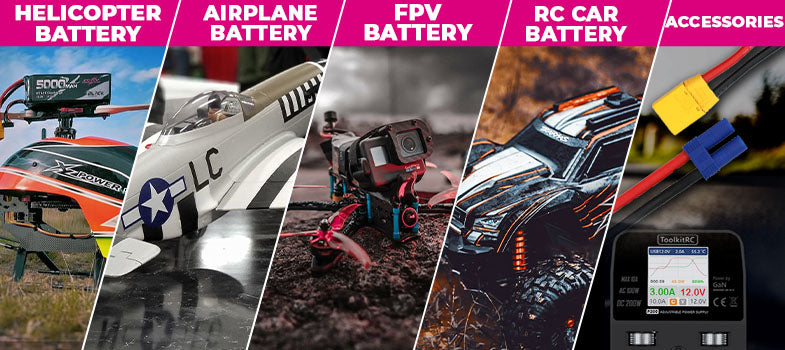
CNHL Lipo Batteries
CNHL aim at providing high-quality Li-Po batteries and RC products to all hobby enthusiasts with excellent customer services and competitive prices
To charge a LiPo battery safely, first inspect the pack, confirm that it is a standard LiPo rather than LiHV, identify its cell count and capacity, connect the correct main charge lead and balance plug, select LiPo Balance Charge, and set an appropriate current. For a standard LiPo, the charger should normally stop at approximately 4.20V per cell.
Quick answer: For a healthy multi-cell RC LiPo battery, use a compatible balance charger, select the correct LiPo program and S count, and begin around 1C unless the battery manufacturer specifies a different charging limit. A 5000mAh pack charges at 5A at 1C, while a 2200mAh pack charges at 2.2A. Stay present, monitor the charger and battery, and stop immediately if the pack swells, becomes unusually hot, leaks, smells abnormal or produces smoke.
Never rely only on automatic detection. Before pressing Start, compare the battery label with the chemistry, cell count, current and voltage displayed by the charger. A charger can provide useful warnings, but the user remains responsible for confirming that the selected settings match the connected battery.

| Battery Type | Select standard LiPo only for a standard LiPo pack. Do not use LiHV, LiFe, Li-ion or NiMH mode by mistake. |
| Cell Count | Match the S count printed on the battery: 2S, 3S, 4S, 6S and so on. |
| Charge Mode | Use Balance Charge as the normal charging mode for multi-cell LiPo packs. |
| Charge Current | Around 1C is a conservative general starting point unless the battery label or manufacturer permits another rate. |
| Full Voltage | A standard LiPo normally reaches approximately 4.20V per cell when fully charged. |
| Connections | Connect the main power lead and, for conventional multi-cell packs, the balance lead. |
| Supervision | Remain nearby and able to stop the process. Do not leave a charging LiPo unattended. |
Do not connect the battery immediately. A short inspection can identify conditions that should stop the process before energy begins flowing into the pack.
Look for swelling, punctures, crushed corners, split wrapping, exposed cells, leaking material, damaged wires, loose connector contacts and displaced balance-lead pins. A battery that has suffered a hard crash, water intrusion, reverse polarity or a severe short circuit also deserves closer inspection before reuse.
Do not charge a battery that is visibly damaged, actively swelling, leaking, smoking or producing an unusual chemical smell. Moving a questionable pack directly onto a charger is not a diagnostic shortcut.
The main connector should fit securely without melted plastic, heavy discoloration, loose terminals or exposed conductor. Inspect the balance plug for bent pins, recessed contacts and broken wires. A damaged balance lead can prevent the charger from reading one or more cells correctly.
Adapters and charge leads must have the correct polarity and enough current capacity for the selected charge rate. Avoid stacking several adapters together, because each additional connection adds another contact point that can loosen, heat up or be wired incorrectly.
For help identifying battery plugs and charge adapters, use the CNHL RC battery connector guide.
Place the charger and battery on a stable, heat-resistant and non-flammable surface away from fuel, paper, carpet, curtains, direct sunlight and other batteries. Keep the area ventilated and uncluttered so the pack can be disconnected without reaching through cables or flammable material.
A LiPo safety bag or purpose-built charging container can add containment, but it does not replace correct settings, supervision or battery inspection. Do not seal equipment in a way that blocks the charger's required cooling airflow.
Read the battery label before choosing a charger program. Similar-looking RC battery packs can require different voltage limits.
| Battery Type | Typical Nominal Voltage | Typical Full Voltage |
|---|---|---|
| Standard LiPo | 3.7V per cell | 4.20V per cell |
| LiHV | Often marked 3.8V | Commonly up to 4.35V per cell when specified |
| LiFe | Usually 3.2–3.3V per cell | Use the LiFe-specific limit stated by the battery manufacturer |
| Li-ion | Varies by cell type | Use the cell manufacturer's specified voltage and charger mode |
This article covers conventional RC LiPo batteries. Select LiPo, not LiHV, LiFe, Li-ion, NiMH or another program. A standard LiPo must never be charged to the higher LiHV voltage simply to gain more runtime.
For a chemistry comparison, see LiPo vs LiHV vs Li-ion vs LiFe batteries explained.
The S rating tells you how many cells are connected in series. A 3S pack contains three series cells, while a 6S pack contains six. Cell count determines the pack's nominal voltage and full-charge voltage.
| LiPo Pack | Nominal Voltage | Approx. Full Voltage |
|---|---|---|
| 1S | 3.7V | 4.20V |
| 2S | 7.4V | 8.40V |
| 3S | 11.1V | 12.60V |
| 4S | 14.8V | 16.80V |
| 5S | 18.5V | 21.00V |
| 6S | 22.2V | 25.20V |
| 8S | 29.6V | 33.60V |
Use several checks rather than relying on one clue:
For example, a conventional 4S pack normally has a five-wire balance lead. However, proprietary smart battery systems may route balancing differently, so the battery and charger manuals remain the final reference.
Never accept a cell-count warning without investigating it. A mismatch may indicate the wrong manual setting, an unusually discharged cell, a damaged balance wire or a charger connection problem.
Charge current is commonly expressed as a C rate relative to battery capacity. The basic calculation is:
1C charge current in amps = battery capacity in mAh ÷ 1000
| Battery Capacity | 1C Current | Example Setting |
|---|---|---|
| 450mAh | 0.45A | 0.4A or 0.45A where supported |
| 850mAh | 0.85A | 0.8A or 0.9A where supported |
| 1300mAh | 1.3A | 1.3A |
| 2200mAh | 2.2A | 2.2A |
| 5000mAh | 5.0A | 5.0A |
| 6200mAh | 6.2A | 6.2A |
Approximately 1C is a practical conservative default when no different instruction is available. Some batteries are rated to accept higher charge rates, but a higher printed maximum is permission rather than a requirement. Slower charging is also possible when time allows.
Before selecting 2C, 3C or 5C, confirm all three limits:
A charger may allow a high amp setting but still reduce its output because it has reached its wattage, input-power or temperature limit. For a full explanation, read LiPo charging rates explained: 1C, 2C, 5C, amps, watts and charge time.
Follow the charger manufacturer's connection sequence. A common setup for a conventional multi-cell LiPo includes:

The main lead carries the charging current. The balance lead allows the charger to monitor the voltage of individual cells and make small corrections while charging.
Do not pull a connector apart by its wires. Grip the insulated connector body. If a plug requires excessive force, stop and confirm that the connector type, polarity and orientation are correct.
Some smart battery systems combine charging and balancing through a proprietary main connector and may not use a conventional external balance lead. Follow the instructions for that specific charger and battery combination rather than forcing a separate balance connection.
For a conventional multi-cell pack, Balance Charge should normally be the default mode. It charges the pack while monitoring individual cell voltages through the balance connection.
Do not confuse these charger modes:
| Mode | Purpose | Use for a Normal Full Charge? |
|---|---|---|
| Balance Charge | Charges while monitoring and correcting individual cell voltage | Yes, normally preferred for multi-cell LiPo packs |
| Charge | Standard charging behavior varies by charger and connection method | Use only when you understand the charger's operation |
| Fast Charge | May reduce the time spent in the final charging or balancing stage | Not the preferred everyday default |
| Storage | Charges or discharges toward a storage state | No |
| Discharge | Removes energy from the battery | No |
For deeper mode comparisons, see the LiPo charger modes guide and Balance Charging vs Fast Charging.
Pause at the final confirmation screen. Compare the charger display with the battery label one item at a time:
Final pre-start check
If the charger reports an S-count mismatch, reverse polarity, connection break, balance-port error or abnormal cell voltage, cancel the process and investigate. Do not repeatedly bypass a warning merely because the charger offers a confirmation button.
A useful charger should make these checks visible. Our guide to choosing the right LiPo battery charger explains how cell-count support, power, channels, balance capability and connector compatibility affect the complete charging setup.
Remain close enough to observe the charger and battery throughout the process. Check the display periodically rather than assuming that an automatic charger removes the need for supervision.
Watch for:
The charger will generally reduce current as the pack approaches its voltage limit. This final constant-voltage and balancing stage is why the last portion can take longer than the earlier part of the charge.
A slightly warm pack does not automatically prove a fault, but a LiPo becoming distinctly hot during routine charging requires attention. Stop the process if the temperature, swelling or smell changes unexpectedly.
Connector heat also matters. A hot plug may indicate resistance from a loose contact, damaged terminal, poor solder joint, undersized adapter or excessive current. See why RC battery connectors get hot for a structured diagnosis.
When the charger reports completion, review the final readings before disconnecting the pack. A standard LiPo should normally finish close to 4.20V per cell, with the cells reasonably close to one another.
The display may also show:
- individual cell voltages - total pack voltage - charged capacity - elapsed time - final current - internal resistance estimatesDo not judge battery capacity solely by the number of milliamp-hours added during one charge. The starting state of charge, charger termination, balance time, temperature and pack condition all affect the recorded value.
Disconnect the battery according to the charger manufacturer's instructions. Grip connector housings rather than wires, reinstall protective caps where applicable, and inspect the pack once more for swelling or heat before returning it to use.
For a healthy standard LiPo pack, individual cells should normally finish close to 4.20V and close to one another. Small differences can occur because of charger resolution and balancing behavior, but a persistent outlier deserves attention.
| Example Reading | General Interpretation | Next Step |
|---|---|---|
| 4.19 / 4.20 / 4.20V | Closely balanced | Normal post-charge inspection |
| 4.17 / 4.20 / 4.20V | One cell is lagging slightly | Observe whether the difference repeats or increases |
| One cell repeatedly far below the others | Possible imbalance, weak cell or balance-connection problem | Stop routine use until the pack and wiring are assessed |
| Any standard LiPo cell above the intended limit | Incorrect mode, charger fault or measurement issue | Stop and investigate immediately |
If the charger spends an unusually long time near completion, do not automatically increase settings or switch modes. Read why a LiPo battery may take so long to balance charge.
| Battery | Charger Setting | Approx. 1C Current | Approx. Full Pack Voltage |
|---|---|---|---|
| 2S 850mAh standard LiPo | LiPo Balance, 2S | 0.85A | 8.40V |
| 3S 2200mAh standard LiPo | LiPo Balance, 3S | 2.2A | 12.60V |
| 4S 5000mAh standard LiPo | LiPo Balance, 4S | 5.0A | 16.80V |
| 6S 1300mAh standard LiPo | LiPo Balance, 6S | 1.3A | 25.20V |
| 6S 5000mAh standard LiPo | LiPo Balance, 6S | 5.0A | 25.20V |
These are baseline examples rather than universal instructions. Always defer to the battery label, battery manufacturer and charger manual when they specify a lower or otherwise different limit.
Stop the charging process when any of the following occurs:
Use the charger's Stop command when possible, disconnect the power source safely and follow an appropriate battery-isolation procedure. Do not touch a smoking, leaking or actively failing battery with bare hands.
Do not repeatedly charge a LiPo to full voltage and then leave it unused for extended periods. Use the charger's Storage program when the battery will not be used soon. Storage mode moves the pack toward a moderate cell voltage rather than leaving it fully charged or deeply discharged.
The precise storage target and procedure belong to long-term battery care rather than the basic full-charge process. For detailed guidance, follow the relevant CNHL LiPo storage and maintenance instructions.
This guide covers one battery connected to one independent charger channel. Parallel charging is different: several packs are electrically joined and presented to the charger as a larger combined battery.
Parallel charging requires additional checks involving:
- matching chemistry - identical cell count - sufficiently close pack voltage - total combined capacity - total charge current - parallel-board wiring and protection - battery conditionDo not apply a single-pack current calculation to a group of parallel-connected batteries without recalculating for their combined capacity. Read how to parallel charge LiPo batteries safely before using a parallel board.
A suitable charger should support your battery chemistry and full S-count range, display individual cell voltages clearly, allow precise current adjustment and provide enough output wattage for the largest pack you use.
Users charging several batteries may benefit from independent dual- or quad-channel models. Separate channels can charge batteries with different capacities, cell counts and settings without electrically combining them on one parallel board.
Browse the CNHL LiPo battery charger collection for balance chargers, dual-channel chargers and multi-channel charging options.
For ToolkitRC chargers and compatible power supplies, visit the ToolkitRC collection.
A standard LiPo is normally charged to approximately 4.20V per cell. That equals about 8.40V for 2S, 12.60V for 3S, 16.80V for 4S and 25.20V for 6S.
Around 1C is a conservative general starting point unless the battery manufacturer specifies another rate. Divide the capacity in mAh by 1000: 2200mAh becomes 2.2A, while 5000mAh becomes 5.0A.
Balance Charge should normally be used for conventional multi-cell LiPo packs because it allows the charger to monitor individual cells. A 1S battery has only one cell and therefore does not require cell-to-cell balancing.
For most conventional multi-cell RC LiPo batteries, yes. The main connection carries charging current, while the balance lead gives the charger access to individual cell voltages. Proprietary smart systems may combine these functions differently.
Some chargers and battery systems operate differently, but a conventional multi-cell LiPo should normally be balance charged with its balance connection. Do not bypass a damaged or missing balance lead simply to complete the charge.
A LiHV battery may accept a lower final voltage when charged under a standard LiPo program, but it will not reach its higher specified LiHV full-charge voltage. Confirm the pack manufacturer's instructions. Never use LiHV mode on a standard LiPo.
The manually selected S count may not match the detected pack voltage, or the charger may be receiving incomplete information through a damaged balance lead. Stop and compare the battery label, total voltage, individual cell readings and balance connection.
No. A charging LiPo should remain supervised and should not be left running while you are asleep or away from the charging area.
A LiPo charger reduces current as the pack approaches its voltage limit. It may also spend additional time correcting differences between cells. This is normal unless the process becomes unusually long or one cell consistently behaves differently.
Do not treat a visibly swollen battery as a normal charging candidate. Remove it from routine service and follow an appropriate assessment, isolation and disposal process.
Safe LiPo charging is a verification process, not a single button press. The chemistry, voltage, cell count, current, connections and battery condition must all agree before charging begins. Once these checks become routine, charging a 2S car pack, 3S airplane battery, 4S boat pack or 6S FPV and EDF battery follows the same basic logic.
For the wider charging system—including charger selection, power requirements, charging rates and operating modes—visit the CNHL LiPo Battery Charging Guide.
CNHL aim at providing high-quality Li-Po batteries and RC products to all hobby enthusiasts with excellent customer services and competitive prices
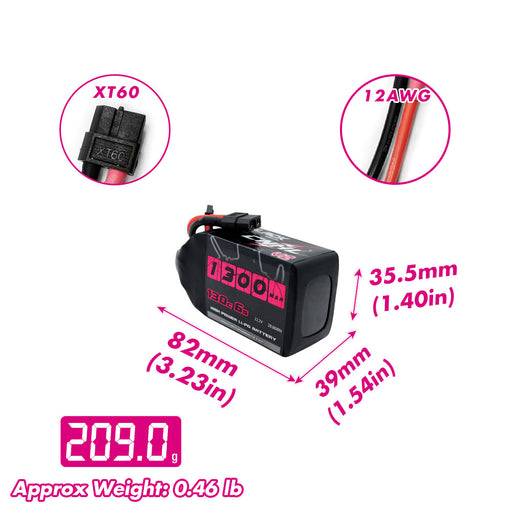
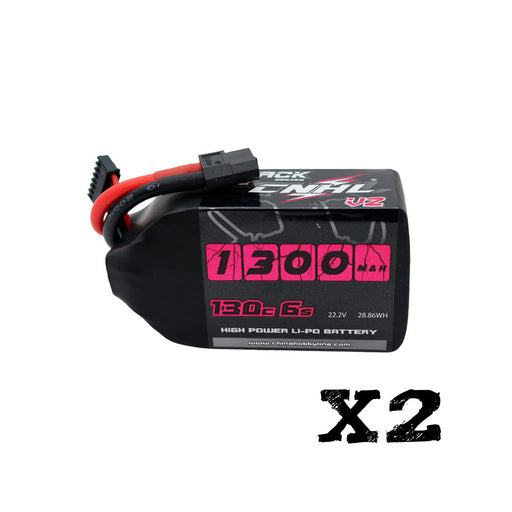
Quick Fit Check The 2 Packs CNHL Black Series V2.0 1300mAh 22.2V 6S 130C LiPo Battery with XT60 Plug is a strong fit for FPV pilots who want a prov...
View full details

Hstar D43-01Q 911 Style is a mini 1/43 alloy drift RC car designed for indoor tabletop fun and realistic drifting. It features full proportional ...
View full details

Spare Parts Availability We know that for RC pilots, reliable spare parts support often determines how long an aircraft can actually stay in...
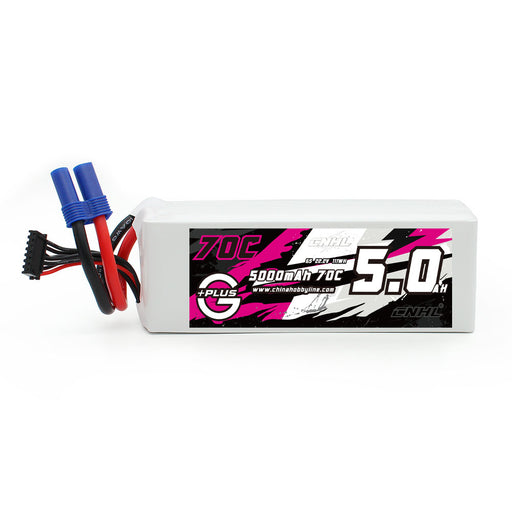
View full detailsSpecifications: Stock Number: 500706EC5 Capacity: 5000mAh Voltage: 22.2V / 6-Cell / 6S1P Discharge Rate: 70C Continual / 140C Burst Charge Rate: ...
View full details
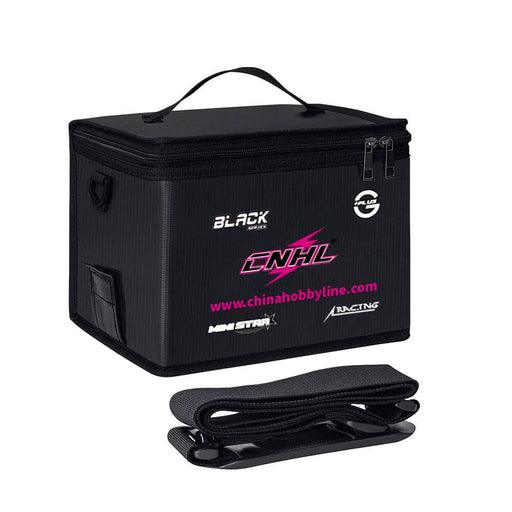
The CNHL LiPo Battery Bag is designed for safer LiPo charging, transport, and storage at home or at the field. It adds a practical layer of protect...
View full details

Quick Fit Check The CNHL Racing Series 6000mAh 15.2V 4S2P 130C LiHV Shorty Hardcase LiPo Battery with 5mm Bullet Sockets is a true 4S shorty LiPo b...
View full details

The CNHL 2 Pairs 5mm Heatsink Bullet Plug Grips with Bullet Connectors are designed for RC racers who need a clean, secure and easy-to-handle conne...
View full details

The Hobbywing Multifunction LCD Program Box PRO G3 is an advanced ESC programming device for compatible Hobbywing brushless ESCs. Compared with a...
View full details

The Scania S730 Official Licensed 1/64 Mini Drift RC Tractor Trailer brings scale truck collecting and RC driving into one compact desktop model...
View full details

Quick Fit Check The 2 Packs CNHL Black Series V2.0 1500mAh 8S 130C LiPo Battery with XT60 Plug is aimed at advanced FPV pilots who want a higher-ca...
View full details
Leave a comment