
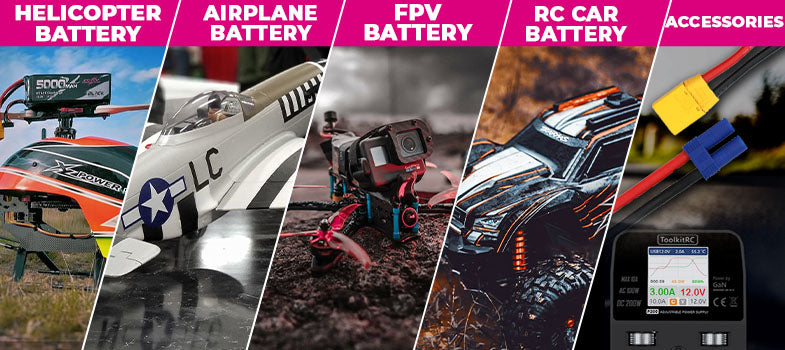
CNHL Lipo Batteries
CNHL aim at providing high-quality Li-Po batteries and RC products to all hobby enthusiasts with excellent customer services and competitive prices
The GEPRC Vapor 8S O4 Pro is a compelling five-inch FPV drone, but the move from 6S to 8S is more nuanced than simply adding two battery cells and expecting a dramatic increase in speed. Its stronger frame, dedicated high-voltage electronics, 1570KV motors, and redesigned DJI O4 Pro camera mounting make it a capable platform for freestyle and cinematic FPV. However, higher battery costs, increased weight, and a surprisingly familiar flight character mean the upgrade will not make equal sense for every pilot.
If you already own a Vapor 6S that flies exactly how you want, the 8S version is not an automatic must-have. If you enjoy experimenting with higher-voltage systems, want a heavily reinforced five-inch quad, or are building a new FPV setup from scratch, the Vapor 8S deserves serious attention.
This review looks beyond headline voltage and promotional claims. We examine the D5 and X5 airframes, the real implications of the 8S power system, battery sag, flight endurance, camera stabilization, 6S compatibility, ownership costs, and the best battery options for different flying styles.

The Vapor 8S gets many of the important things right. Its reinforced construction inspires confidence, the dedicated 8S drivetrain provides plenty of usable throttle, and the five-inch platform retains the smooth, responsive character that makes the Vapor family appealing.
There is a particularly enjoyable balance between controlled low-throttle flying and aggressive acceleration. The quad does not need to be flown at full power to feel precise, yet there is enough performance available to make rapid climbs and freestyle transitions exciting.
Where expectations need adjusting is the jump from 6S. The 8S version is not necessarily a dramatic leap in outright speed. Its motor KV has been reduced relative to the earlier 6S model, and its stronger structure and larger battery increase the weight that the propulsion system must carry.
That makes the Vapor 8S an interesting engineering compromise: more voltage and a tougher aircraft, without abandoning familiar five-inch handling.
Our verdict: It is a strong choice for pilots who want a purpose-built 8S freestyle platform. For existing 6S owners who are satisfied with their current performance, the cost and practical benefits deserve careful comparison before upgrading.
The Vapor 8S is not just a voltage update. GEPRC has strengthened the frame and revised key electronics to suit its new power configuration.
One of the most visible changes is the move to 7mm-thick carbon fiber arms. The earlier Vapor 6S frame uses 5mm arms, so the 8S version has a noticeably more substantial structure.
Greater arm thickness can improve stiffness and impact resistance, although the actual outcome of a crash still depends on the impact angle, carbon construction, and which components absorb the force.
For freestyle pilots who occasionally clip branches, misjudge a gap, or practice demanding maneuvers, the additional structural margin is appealing. The downside is extra mass. A tougher frame can survive more abuse, but that weight also affects acceleration, braking, and the energy required to change direction.
The redesigned aluminum camera-protection structure and front lip help shield the expensive O4 Pro camera. Protective side panels and replaceable components further support the aircraft's practical freestyle role.
The Vapor 8S uses the GEPRC TAKER F722 8S flight controller and TAKER H65 8S 32-bit 65A 4-in-1 ESC. These are intended for the higher-voltage power system, rather than asking the older 6S electronics to operate beyond their design specification.
Its SPEEDX2 2207 1570KV motors drive GEMFAN 51477 five-inch propellers. The lower motor KV is a particularly important detail, because it explains why increased voltage does not automatically translate into an enormous increase in maximum propeller RPM.
| Specification | Vapor D5 8S | Vapor X5 8S |
|---|---|---|
| Frame Layout | Deadcat | Symmetrical X |
| Wheelbase | 238mm | 230mm |
| Arm Thickness | 7mm | 7mm |
| Flight Controller | TAKER F722 8S | TAKER F722 8S |
| ESC | 65A 32-bit 4-in-1 | 65A 32-bit 4-in-1 |
| Motors | SPEEDX2 2207 1570KV | SPEEDX2 2207 1570KV |
| Propellers | GEMFAN 51477 | GEMFAN 51477 |
| Camera / VTX | DJI O4 Air Unit Pro | DJI O4 Air Unit Pro |
| Published PNP Weight | 511g ±5g | 504g ±5g |
| Recommended Battery | 8S 1300–1800mAh LiPo | 8S 1300–1800mAh LiPo |
| Battery Connector | XT60 | XT60 |
| GEPRC Flight-Time Figure | 12 minutes | 12 minutes |

The D5 and X5 offer different advantages, but neither design is automatically superior for every type of flight.
The Vapor D5 Deadcat uses a front-arm layout intended to keep propellers out of the forward camera image. For cinematic FPV, this is useful because clean framing reduces the need to crop out propeller tips. It is particularly attractive when filming mountain scenery, sweeping turns, or smooth lines close to the ground.
The Vapor X5 uses a symmetrical layout with a more uniform arrangement of the motors around the center of the frame. Many freestyle pilots appreciate this geometry for consistent rotational behavior and predictable response during rolls, flips, and complex transitions.
However, a Deadcat drone is not limited to gentle cinematic flying. Flight-controller tuning, motor performance, center of gravity, and pilot preference matter far more than a simple division between "cinematic" and "freestyle."
The practical decision is therefore straightforward: choose D5 when an unobstructed forward camera view is important; choose X5 when symmetrical frame geometry is your priority. The electrical battery requirements remain the same.
The most interesting characteristic of the Vapor 8S is not simply its maximum power. It is the combination of controlled lower-throttle behavior and substantial power available when you ask for more.
Despite its reinforced frame and powerful drivetrain, the Vapor 8S can be flown smoothly at modest throttle. This matters more than it might initially appear. A drone that maintains a consistent line without requiring constant corrections is enjoyable not only for cinematic flying but also for developing better freestyle technique.
The 1570KV motors help shape that response. Motor KV influences theoretical unloaded RPM per volt, but throttle feel also depends on flight-controller tuning, propellers, total mass, and transmitter rates.
One advantage of a power system with adequate thrust reserve is that normal cruising does not require operating continuously near its maximum output. However, the exact hover-throttle percentage changes with battery voltage, propeller efficiency, and aircraft weight. It should not be treated as a fixed specification.
Open the throttle and the Vapor 8S has the character of a serious performance drone. Rapid climbs and punch-outs are very much part of its intended flying style.
But outright top speed is a different question. A higher-voltage battery does not guarantee a dramatic increase in maximum speed when the motor KV and propeller system have also changed.
In fact, the Vapor 8S's combination of higher voltage and lower-KV motors is one reason its performance can feel more familiar than expected to an experienced 6S pilot. The difference is not necessarily the kind of overwhelming leap many pilots remember from moving from 4S to 6S years ago.
For pilots seeking maximum straight-line speed above all else, the Vapor 8S should not be purchased solely on the assumption that eight cells automatically make it the fastest option. Propeller pitch, motor characteristics, aerodynamic drag, voltage under load, and electronic settings all influence the result.
Additional frame material and higher-capacity power components increase structural robustness, but they also add mass. That becomes important during rapid braking and direction changes because the motors must overcome greater inertia.
The same relationship applies to battery choice. A heavier battery can carry more energy, yet the extra weight may make the aircraft feel more planted and less immediately responsive. Neither sensation is universally good or bad; different pilots prefer different handling characteristics.
For freestyle, the useful question is not simply how many grams the quad weighs. It is whether the propulsion system, center of gravity, and battery choice produce the control response you want.
A standard 6S LiPo has a nominal voltage of 22.2V. A standard 8S LiPo has a nominal voltage of 29.6V, an increase of one-third.
At the same delivered electrical power, the higher-voltage system can use less current. Lower current can reduce resistive losses in suitable wiring and electrical components, but it does not automatically improve the efficiency of the complete aircraft.
The relationship between battery voltage and motor speed helps explain why.
| Power System | Vapor 6S | Vapor 8S |
|---|---|---|
| Nominal Battery Voltage | 22.2V | 29.6V |
| Motor KV | 1960KV | 1570KV |
| Theoretical No-Load RPM at Nominal Voltage | Approx. 43,512 | Approx. 46,472 |
| Arm Thickness | 5mm | 7mm |
| Battery Ecosystem | More established | More specialized |
These RPM values are simple voltage-times-KV calculations, not measured RPM or guaranteed speed. Motor RPM under propeller load will differ, and the 6S and 8S versions also use different stock propeller specifications.
The important point is that the nominal voltage increase is substantially offset by the motor KV change. The theoretical no-load motor-speed difference is only about 6.8%, even though the battery voltage is 33.3% higher.
This does not mean the two power systems are identical. Their current behavior, battery energy, throttle headroom, propeller loading, and available power can still differ significantly. It does explain why judging an FPV drone purely by battery cell count is misleading.
An 8S platform can appeal to pilots who want to explore higher-voltage electrical efficiency, have enough room for suitable batteries, and are comfortable tuning around a more specialized power system.
It can also be appealing when buying a new aircraft rather than upgrading an existing one. The decision is easier if you are not already carrying a large inventory of compatible 6S batteries and chargers.
If your existing Vapor 6S already meets your freestyle and cinematic needs, moving to 8S introduces practical costs without guaranteeing a transformative improvement in flight performance.
Those costs include additional batteries, a suitable 8S charger, more battery weight, and potentially different spares or accessories. The stronger frame is attractive, but durability alone may not justify replacing a perfectly good 6S setup.
The best reason to choose the Vapor 8S is that its complete package fits your intended flying style—not simply that eight cells sound more powerful than six.

GEPRC lists a flight-time figure of 12 minutes for the Vapor 8S. That is a useful manufacturer reference, but it should not be interpreted as a guaranteed duration for aggressive freestyle, every compatible battery, or every weather condition.
A five-inch FPV drone can have dramatically different average power consumption depending on how it is flown. Hovering, smooth cruising, repeated high-throttle climbs, and fast freestyle maneuvers impose very different electrical loads.
Capacity is normally expressed in milliamp-hours, but the more informative figure for comparing batteries of different voltages is watt-hours.
For example, a 1500mAh standard 8S LiPo stores approximately 44.4Wh of nominal energy. A 1500mAh standard 6S LiPo stores approximately 33.3Wh.
That makes the 8S battery's nominal energy one-third higher at the same mAh rating, but it also contains more cells and generally weighs more. Flight time depends on how much of that energy the aircraft uses per minute, not simply how much energy the pack stores.
For the Vapor 8S, battery weight, flight-controller tuning, propeller efficiency, throttle demand, and accessory load all affect the energy consumed during flight.
Hard punch-outs place substantial current demand on a LiPo battery. Under load, battery voltage drops temporarily because of internal resistance. This is known as voltage sag.
A battery can therefore display a low-voltage warning during an aggressive climb even when its resting voltage indicates some remaining charge.
Cold weather makes battery behavior even more important. Reduced cell temperature can increase internal resistance, potentially producing deeper voltage drops under the same load.
To manage this properly, avoid judging battery performance from a single loaded-voltage reading. Pay attention to cell condition, flying temperature, consumed capacity, and the voltage that recovers after reducing throttle.
It is also sensible to build a conservative landing reserve rather than trying to reach an advertised maximum flight time every session.
Not necessarily. A larger battery carries more nominal energy but also increases takeoff weight. At some point, the additional energy is partly offset by the extra power required to carry that mass.
For the Vapor 8S, GEPRC's 1300–1800mAh recommendation provides a practical capacity window. Inside that range, the best choice depends on whether you favor responsive freestyle or more energy for mixed flying sessions.
The redesigned O4 Pro camera mount is one of the more interesting changes to the Vapor 8S. High-frequency vibration can interfere with stabilization and affect the quality of recorded FPV footage, particularly when the camera's gyro data is involved.
GEPRC's softer mounting arrangement helps isolate the camera from vibrations transmitted through the frame. In principle, this can improve the quality of gyro data and give electronic stabilization a cleaner starting point.
However, making a camera mount softer introduces another challenge. The camera can move relative to the aircraft during abrupt rolls, acceleration, or deceleration. This lower-frequency movement can become visible in the live image even if the final stabilized recording looks smoother.
It is a mechanical balance rather than a simple case of softer being better.
Make sure the camera mounting hardware is properly secured, the rubber isolation elements are in good condition, and the camera angle can be adjusted without straining the supports.
Also check for unwanted oscillation during initial low-risk flights. If the live FPV image visibly moves or vibrates, assess the mount and overall setup rather than relying entirely on post-processing stabilization.
For pilots using the D5 specifically for cinematic work, good mechanical camera support is every bit as important as having a clear propeller-free view.

Although GEPRC recommends 8S LiPo batteries, an 8S-rated power system can operate at a lower input voltage in a suitable configuration. The important distinction is between electrical operation and delivering the aircraft's intended full performance.
With 6S, the 1570KV motors have lower potential unloaded RPM. More throttle may be needed to maintain the same lift, and less power reserve may remain for rapid climbs or recovery from steep dives.
For smooth cruising, a properly evaluated lower-voltage setup may still have enough available thrust. For aggressive freestyle, reduced power headroom is a more significant limitation.
Battery capacity, discharge capability, power-system settings, and the drone's total weight must all be assessed. A 6S battery should not be treated as a direct equivalent to the recommended 8S pack simply because it uses an XT60 connector.
The Vapor 8S is primarily a freestyle-oriented five-inch quad, but that does not prevent it from being used for controlled scenic cruising or carefully planned endurance-oriented flights.
For this kind of flying, high maximum thrust is less important than maintaining an efficient cruising condition while preserving enough power for maneuvering and a safe return.
Battery chemistry becomes important here. High-discharge LiPo batteries suit the Vapor's native performance role, while high-capacity Li-ion packs may be considered for selected lower-current cruising configurations.
Li-ion is not automatically better for every long-range flight. A larger pack may add substantial weight, and its maximum discharge capability may be insufficient for aggressive recovery maneuvers. Motor speed, usable thrust, loaded voltage, and aircraft balance must be evaluated together.
For pilots whose main priority is flight endurance, a dedicated long-range quad may be a more efficient choice than a reinforced freestyle platform.
For broader battery options intended for endurance-focused flying, explore the CNHL Long-Range FPV Drone Batteries collection. Not every battery in that collection is intended for the Vapor 8S, so compatibility must be checked individually.
Once you have decided that the Vapor 8S suits your flying style, battery selection becomes the next important decision. GEPRC recommends 8S LiPo batteries between 1300mAh and 1800mAh, with an XT60 power connector.
Within that range, CNHL offers two Black Series V2.0 130C options designed for high-voltage FPV applications: a 1300mAh pack for pilots who prioritize lower weight and a 1500mAh pack for those who want additional nominal energy.
Both are available in the dedicated GEPRC Vapor 8S Batteries collection, where you can compare their specifications and choose the most suitable option for your build.
For a mixture of freestyle and cinematic cruising, the CNHL Black Series V2.0 1500mAh 8S 130C LiPo Battery is our preferred starting point.
It provides 44.4Wh of nominal energy, weighs approximately 316g, and measures 82 × 39 × 54mm. The pack uses an XT60 connector and carries a published continuous discharge rating of 130C.
Compared with the 1300mAh version, it provides approximately 15.4% more nominal energy. That additional capacity can be useful for pilots who enjoy both energetic flying and more measured scenic sessions, although actual flight duration depends on the complete aircraft setup.
The CNHL Black Series V2.0 1300mAh 8S 130C LiPo Battery is worth considering when minimizing battery weight is more important than maximizing stored energy.
It weighs approximately 275g, measures 82 × 39 × 46mm, and contains 38.48Wh of nominal energy. At around 41g lighter than the 1500mAh alternative, it reduces the mass carried by the aircraft without changing the recommended 8S voltage.
That makes it an attractive option for pilots who want to keep their freestyle setup relatively light while remaining within GEPRC's published capacity range.
| Specification | CNHL 1300mAh 8S | CNHL 1500mAh 8S |
|---|---|---|
| Nominal Voltage | 29.6V | 29.6V |
| Nominal Energy | 38.48Wh | 44.4Wh |
| Discharge Rating | 130C / 260C Burst | 130C / 260C Burst |
| Dimensions | 82 × 39 × 46mm | 82 × 39 × 54mm |
| Approx. Weight | 275g | 316g |
| Connector | XT60 | XT60 |
| Primary Priority | Lower weight | Additional energy |
Both products are sold as two-pack bundles, with each individual battery carrying the listed capacity. Their electrical specifications match GEPRC's recommended voltage, capacity range, and connector type. Physical fit, cable clearance, secure mounting, and aircraft balance should be checked before use.
One of the biggest obstacles to adopting an 8S FPV drone is not the aircraft itself. It is the supporting equipment.
Many FPV pilots already own several 6S batteries and chargers. Moving to 8S may require buying additional packs, a charger capable of balancing eight cells, and checking whether existing battery tools support the higher cell count.
That makes the upgrade different from purchasing another aircraft within an established 6S setup. The actual cost should be evaluated across the complete power system.
A standard 8S LiPo battery has a nominal voltage of 29.6V and reaches 33.6V when fully charged. A charger rated only for 6S cannot directly balance-charge a complete eight-cell pack.
For frequent flying, dual-channel charging can be particularly convenient. It allows two separate batteries to be prepared independently when the charger and its available input power support the required charging conditions.
CNHL offers suitable models in its 8S LiPo Battery Chargers collection, including the ISDT K2 ZIP, K4, and P20.
Check each charger's supported cell count, AC or DC input requirements, available output power, and balance connections. The CNHL Black Series V2.0 batteries discussed here are standard LiPo packs, so they must be charged using the correct standard LiPo program rather than a higher-voltage LiHV setting.
A powerful five-inch quad deserves careful setup before its first flight, particularly when changing battery voltage or receiver configuration.
First, confirm that your receiver is bound correctly and that the flight controller responds to the transmitter as intended. Check the receiver's UART assignment, Betaflight configuration, arming conditions, and failsafe settings rather than assuming every factory configuration matches your equipment.
GPS is another consideration. Availability depends on the version and accessories installed. If your build includes GPS, verify that satellite acquisition, rescue settings, and recovery procedures are appropriate for your flying environment.
The battery itself should be secured with suitable straps and anti-slip material. Keep the XT60 power lead and balance connector clear of the propellers. Recheck cable routing after changing battery sizes or installing an external camera.
For a heavier, high-powered FPV drone, a prearm configuration can also help reduce the risk of accidental motor activation. Regardless of the settings used, keep propellers removed during bench configuration and carry out flight checks in a suitable open area away from bystanders.
| Strengths | Trade-Offs |
|---|---|
| Dedicated 8S power system with substantial throttle capability | Speed improvement over 6S may be less dramatic than expected |
| Reinforced 7mm arms and protective frame construction | Additional airframe weight and inertia |
| D5 and X5 configurations for different flying preferences | Battery and charging equipment add to ownership costs |
| DJI O4 Pro integration and vibration-isolating camera mount | Soft mounting can introduce visible camera movement if not properly controlled |
| Useful for freestyle and controlled scenic cruising | Not optimized as a dedicated lightweight long-range platform |
The GEPRC Vapor 8S O4 Pro is an impressive high-voltage FPV platform, but its strongest selling point is the complete package rather than battery voltage alone.
For experienced freestyle pilots, the reinforced frame and substantial available power make it attractive as a durable, performance-oriented five-inch drone. For cinematic pilots, the D5 layout and DJI O4 Pro system offer useful advantages, although camera mounting and vibration behavior deserve attention.
For long-range enthusiasts, the Vapor 8S can support carefully configured scenic cruising, but its weight and freestyle-oriented design mean it should not automatically replace a dedicated endurance aircraft.
And for owners of the original Vapor 6S, the decision is especially personal. If the current aircraft already meets your needs, an 8S upgrade may deliver a smaller practical improvement than its cell count suggests. If you are ready to explore higher-voltage FPV and understand the additional battery and charging requirements, the Vapor 8S is a compelling option.
Our recommendation: Choose the Vapor 8S for its reinforced structure, complete high-voltage drivetrain, and versatile flying character—not because you expect every flight to be dramatically faster or longer than 6S.
The Vapor 8S offers a purpose-built higher-voltage system and reinforced frame. However, the actual improvement in speed, efficiency, and handling depends on the complete setup. Pilots already satisfied with their Vapor 6S may not need to upgrade.
GEPRC recommends 1300–1800mAh 8S LiPo batteries. A 1500mAh pack provides more energy for mixed flying, while a 1300mAh pack reduces carried weight. Check the battery's physical fit, discharge capability, and XT60 connection.
Lower-voltage operation is possible in suitable configurations, but available motor-speed headroom and thrust differ from native 8S use. GEPRC officially recommends 8S LiPo for this model, so 6S should not be treated as a direct equivalent.
GEPRC publishes a 12-minute flight-time figure. Actual endurance varies with battery energy, flying style, temperature, aircraft weight, and throttle demand. Aggressive freestyle generally consumes more energy than gentle cruising.
Choose the D5 if keeping propellers out of the forward camera view is important. Consider the symmetrical X5 if your main priority is freestyle frame geometry. Both share the same published 8S battery requirements.
Yes, if your existing charger does not support 8S LiPo. You need a balance charger explicitly rated for standard eight-cell LiPo packs and suitable for the battery's charging requirements.
It can be used for controlled scenic cruising, particularly with the D5 configuration. Extended endurance depends on battery selection, weight, propulsion efficiency, reliable control and video links, and sufficient return-flight reserves. It is not a dedicated lightweight long-range platform.
Whether you choose the Deadcat D5 or symmetrical X5, the right battery should match the drone's electrical requirements and your preferred balance of weight, energy, and flight performance.
Explore our dedicated GEPRC Vapor 8S Batteries collection to compare the CNHL Black Series V2.0 1300mAh and 1500mAh 8S 130C packs.
If you fly other GEPRC models, browse our GEPRC FPV Drone Batteries. For endurance-oriented builds, explore Long-Range FPV Drone Batteries, or prepare for the high-voltage ecosystem with our 8S LiPo Battery Chargers.
Ready to power your Vapor 8S? Start with the CNHL 1500mAh 8S 130C LiPo for more nominal energy, or choose the CNHL 1300mAh 8S 130C LiPo when lower battery weight is your priority.
CNHL aim at providing high-quality Li-Po batteries and RC products to all hobby enthusiasts with excellent customer services and competitive prices

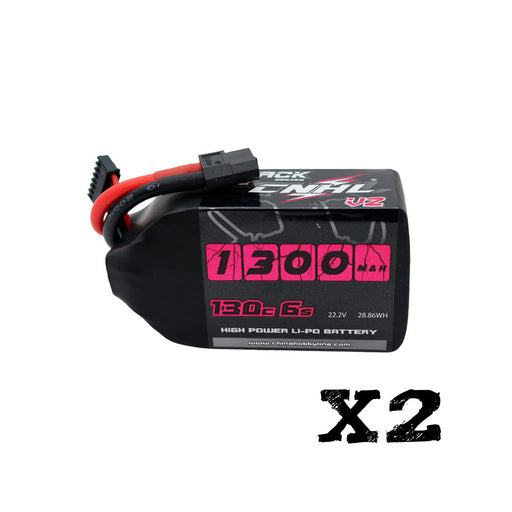
Quick Fit Check The 2 Packs CNHL Black Series V2.0 1300mAh 22.2V 6S 130C LiPo Battery with XT60 Plug is a strong fit for FPV pilots who want a prov...
View full detailsSpare Parts & Long-Term Support We know that for RC pilots, reliable spare parts support is an important part of keeping an aircraft fl...
View full details
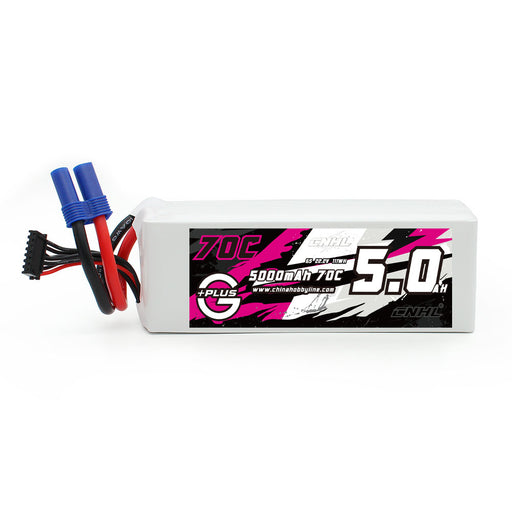
Specifications: Stock Number: 500706EC5 Capacity: 5000mAh Voltage: 22.2V / 6-Cell / 6S1P Discharge Rate: 70C Continual / 140C Burst Charge Rate: ...
View full details
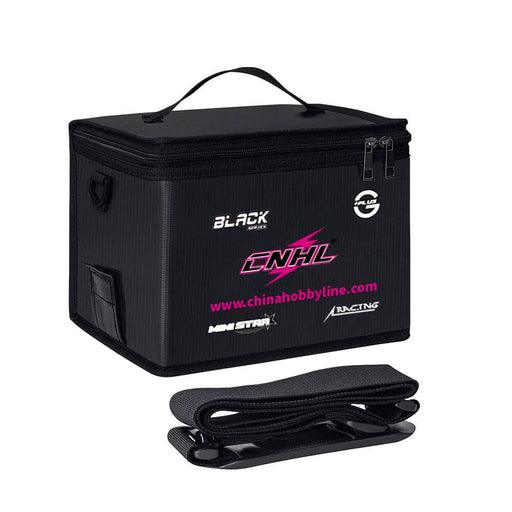
The CNHL LiPo Battery Bag is designed for safer LiPo charging, transport, and storage at home or at the field. It adds a practical layer of protect...
View full details

Quick Fit Check The 2 Packs CNHL Speedy Pizza Series Pro 1350mAh 6S 150C LiPo Battery with XT60 Plug is built for 5-inch FPV pilots who want a ...
View full details

Quick Fit Check The CNHL Speedy Pizza Series 2200mAh 22.2V 6S 120C LiPo Battery with XT60 Plug combines the familiar 2200mAh 6S format with a ligh...
View full details

Quick Fit Check The CNHL Speedy Pizza Series 2200mAh 14.8V 4S 120C LiPo Battery with XT60 Plug combines a widely used 2200mAh 4S format with a sli...
View full details

Quick Fit Check The CNHL Speedy Pizza Series 2200mAh 11.1V 3S 120C LiPo Battery with XT60 Plug takes the familiar 3S 2200mAh aircraft battery form...
View full detailsThe CNHL Long Range Series BAK 65E 6350mAh 21700 Li-ion battery cell is built around one clear priority: maximum stored energy from a lightweight c...
View full details

The CNHL Long Range Series BAK 50D 5000mAh 21700 Li-ion battery cell is designed for custom high-energy battery packs that need a strong balance be...
View full details


Leave a comment