
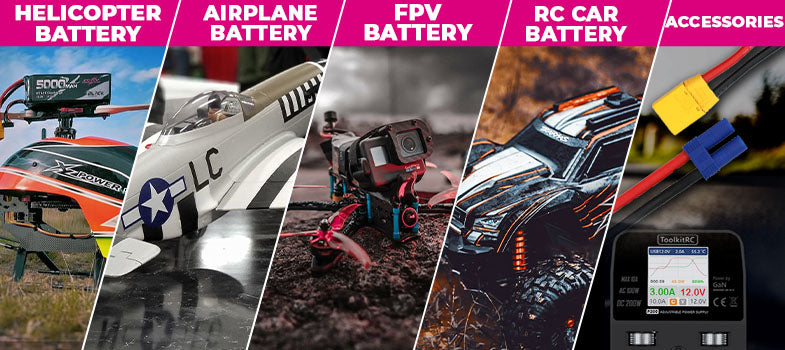
CNHL Lipo Batteries
CNHL aim at providing high-quality Li-Po batteries and RC products to all hobby enthusiasts with excellent customer services and competitive prices

The HPI Stage D10 is interesting for a simple reason: the Mustang body may be what gets people to stop and look, but the chassis underneath gives them a reason to keep driving it. This is not a touring car that has simply been given hard tires and a dramatic Formula Drift shell. HPI developed the Stage D10 as a purpose-built 1/10 rear-wheel-drive drift platform, with enough adjustment to suit a newcomer learning basic throttle control and countersteer while still leaving experienced drivers plenty of setup work to explore.
That combination matters because modern RWD drifting can be intimidating from the outside. Dedicated drift chassis often arrive with an entire vocabulary of Ackermann, roll center, weight bias, gyro gain, motor position and tire compounds attached to them. The Stage D10 does not remove those variables. Instead, it gives a new driver a factory setup that can be driven first and understood later.
The result is a car with two very different personalities. One owner may buy it because the Vaughn Gittin Jr., James Deane or Ben Hobson Mustang looks too good to leave on a shelf. Another may immediately start moving the battery, changing the steering rack position and experimenting with the rear gearbox. Both approaches make sense on this platform.
The HPI Stage D10 is a purpose-built 1/10 2WD RWD drift chassis offered as Brushed RTR, FLUX sensored brushless RTR and Creator Edition configurations. The RTR cars use a 255mm standard wheelbase, full drift steering geometry, adjustable suspension and weight placement, factory gyro control and officially licensed 2024 Ford Mustang RTR Spec-5 FD bodies. Both factory RTR power systems use 2S batteries with XT60 connections.
| Feature | HPI Stage D10 |
|---|---|
| Scale | 1/10 |
| Drivetrain | 2WD / rear-wheel drive |
| RTR Dimensions | 460 × 200 × 120mm |
| Standard Wheelbase | 255mm |
| Adjustable Wheelbase Range | 246–264mm |
| Battery Direction | 2S with XT60; shorty battery positions available |
| RTR Body | 2024 Ford Mustang RTR Spec-5 FD |
| Body Mounting | Factory magnetic system plus conventional mounting options |

HPI could have launched its new drift chassis under a generic clear shell. Instead, the first RTR Stage D10 cars arrive wearing three different officially licensed versions of the 2024 Ford Mustang RTR Spec-5 FD associated with Vaughn Gittin Jr., James Deane and Ben Hobson.
The body treatment goes well beyond a printed polycarbonate shell. The five-piece construction uses molded elements for areas such as the grille, vents, mirrors and light buckets, while the Aero-5 replica wheels are matched to the individual liveries. Headlights, grille lighting, taillights and brake lights are integrated from the factory.
That level of presentation helps explain why the Stage D10 has attracted interest beyond established drift drivers. A Mustang enthusiast can want the car before understanding anything about Ackermann or rear weight bias. A general RC owner who has never owned a RWD drifter can be pulled toward the platform by the scale appearance first and discover the chassis underneath later.
That may ultimately be one of the Stage D10's most important roles. It does not require someone to already be deeply invested in RC drifting before the car makes sense.
The Mustang shell does not have conventional posts sticking through the body. HPI uses N52-grade magnets with steel ball mounts to locate and retain the shell, giving the car a cleaner scale appearance while making body removal much quicker.
In practice, the system is one of the Stage D10's most immediately noticeable features. The front mounts locate cleanly, although the rear section may need a little alignment rather than simply dropping the body from several centimeters above the chassis and expecting everything to snap perfectly into place.
There is another small compromise: the LED system still uses a wiring harness between the body and chassis, so removing the shell completely means unplugging the lighting connection. Magnetic mounting therefore eliminates the body clips, but not every physical connection between chassis and shell.
HPI also includes conventional body-mounting options. That is important because the Stage D10 is not permanently locked to the Mustang. Its adjustable wheelbase and body mounting positions allow the chassis to support a much wider range of 1/10 touring-style bodies as a build develops.

Calling a chassis “adjustable” is easy. The Stage D10 backs the word up with several systems that can meaningfully change how the car behaves.
The wheelbase can be moved from 246mm to 264mm. Front and rear camber links are adjustable. Toe block choices are included. Roll center and camber gain positions can be changed. The threaded oil-filled shocks offer ride-height and preload adjustment, with alternative pistons supplied for deeper tuning.
The steering system is equally important. Ackermann can be moved forward and backward as well as up and down, while the servo itself has several mounting positions. Wheel hex spacing can be altered by 1mm or 2mm through the brake-disc spacer system.
For a new driver, none of those adjustments need to be touched on day one. That is arguably the correct way to approach the car. Establishing a consistent baseline first makes it much easier to understand what actually changed after moving one part of the setup.
For an experienced drift driver, however, those adjustment points are not decorative. They provide a real path from factory RTR setup toward a much more individualized chassis.

One of HPI's biggest Stage D10 headlines is the availability of more than 100 rear motor positions. It sounds excessive until the purpose is considered.
The motor is a large piece of movable mass in a lightweight RWD drift chassis. Moving it higher, lower, forward or rearward changes where that mass acts on the car. HPI combines those mounting choices with a transmission that can be configured with three or four gears and can also reverse motor direction.
The goal is not to encourage owners to try every possible position in a weekend. The value is that the rear of the chassis is not designed around one fixed weight layout. Motor position, gearbox configuration and battery location can all be used together to influence rear weight distribution.
That makes the Stage D10 much more interesting than a car where tuning ends after changing camber and shock preload.
The Stage D10 RTR range is split into two electronics levels, and this is where some early discussion around the car can become misleading. The existence of a brushed version does not mean HPI designed the entire Stage D10 around old-school brushed power. It means HPI created a lower-complexity entry point and a more advanced sensored alternative on the same chassis.
| Equipment | Stage D10 Brushed RTR | Stage D10 FLUX RTR |
|---|---|---|
| Motor | 20T brushed 540 | 10.5T sensored brushless |
| ESC | SC-3SWP2 60A | FLX-D10 80A sensored |
| Servo | SD-07WR 7kg servo | SX-12MGLP 12kg low-profile brushless metal-geared servo |
| Gyro | D-Box3 Lite | D-Box3 Pro |
| Battery | 2S, XT60 | 2S, XT60 |
The Brushed RTR makes sense for a driver who wants to learn RWD drift without immediately adding more electronic tuning variables. Real-world parking-lot running also shows why outright power should not be confused with usability: maintaining a drift often required surprisingly little throttle, and the brushed system already provided enough output for learning transitions and throttle control.
The FLUX version is the more serious factory package. Its sensored 10.5T motor and 80A ESC provide smoother low-speed response, while the ESC adds programmable punch, braking, Boost Timing, Turbo Timing and Turbo Delay. That makes considerably more sense for a driver who expects to progress toward dedicated drift-track use.
On a basher, brushless power is often discussed mainly in terms of speed. Drifting changes the priority.
A sensored motor and ESC can provide more predictable low-speed rotor position feedback, which helps the system deliver smoother response as the driver rolls into or out of the throttle. That matters when maintaining angle through a slow corner, balancing wheel speed against rear traction or transitioning without suddenly shocking the chassis.
The FLUX setup therefore should not be viewed simply as “the faster Stage D10.” Its more relevant advantage is the additional control and tuning available around the way power is delivered.
The 80A FLX-D10 ESC also deserves attention because it is not just a generic car ESC hidden under the shell. HPI lists drift-oriented Boost and Turbo timing controls alongside punch, braking and running-mode adjustments. For owners who enjoy electronics tuning, those settings provide another layer beyond the chassis itself.
Both RTR versions allow gyro gain adjustment from Channel 4 of the TF-51 transmitter. That sounds like a small convenience until the car is actually being tuned.
Without transmitter-based control, gyro changes often mean stopping the car, removing the body and making a physical adjustment before returning to the track. The Stage D10 lets the driver alter assistance from the radio in small increments and immediately feel the difference.
More gain is not automatically better. Too much assistance can make a car feel nervous or overly active, while too little may leave a new driver fighting to catch the rear. The useful part is having enough adjustment range to find the response that matches the surface, steering setup and driver's inputs.

Yes, but the surface matters more than the word “parking lot.”
The Stage D10 has already shown that it can be enjoyable outside a dedicated P-tile drift facility. On smooth painted pavement, the car can maintain angle, run simple loops around cones and give a new driver meaningful practice without requiring access to a club track.
The limitation is consistency. Parking lots are normally designed for drainage rather than RC drifting. Camber, seams, rough aggregate, tar repairs and debris can all disturb a low drift chassis running hard plastic tires. One section may feel predictable while the next suddenly changes grip.
A smooth basketball court, tennis court or clean painted concrete area may therefore provide a better casual surface than a rough road-style parking lot. Dedicated indoor drift tracks remain preferable when available because the surface and layout are more consistent, but the Stage D10 does not become useless simply because the nearest P-tile facility is hours away.
Tire choice should follow the surface. HPI specifically positions its harder HDPE T-Drift compound toward hard indoor surfaces such as P-tile, while other compounds can make more sense on outdoor concrete. Treat drift tires as part of the setup rather than assuming one compound will behave the same everywhere.

The Stage D10 uses rotating brake-disc-style wheel hex adaptors and scale calipers behind the wheels. They add visual detail and also form part of the adjustable wheel-spacing system.
When fitting aftermarket drift wheels, however, check the inside clearance rather than assuming every wheel with the correct hex will clear every decorative component. Track testing with a different wheel and tire combination showed front-wheel interference with the scale calipers, requiring the calipers to be removed.
HPI designed those calipers to be removable, so this is not a major limitation, but it is worth knowing before building a wheel collection around the car.
The HPI Stage D10 factory RTR cars use a 2S battery system with an XT60 connector. HPI recommends a conventional 5300mAh 2S pack, but the chassis also includes dedicated shorty battery arrangements that can place the pack in mid or rear positions.
That makes battery selection more interesting than simply finding something that fits. Battery mass becomes another weight-distribution tool.
A shorter and lighter pack reduces installed mass and gives the driver more freedom to experiment with positioning. A higher-capacity shorty adds runtime but also adds weight. Neither direction is universally better because drift setup depends on the rest of the chassis, the surface and the driver's preferred balance.
For Stage D10 owners looking specifically for compact CNHL options, see the HPI Stage D10 battery collection.
Two CNHL 2S LiHV hardcase shorty packs create very different setup directions while sharing the same 96mm length and XT60 connection.
| CNHL Battery | Dimensions | Approx. Weight | Setup Direction |
|---|---|---|---|
| CNHL Ultra-Thin Racing LiHV 4600mAh 2S 130C | 96 × 46 × 18mm | Approx. 167.5g | Lighter drift-focused setup |
| CNHL Racing LiHV 6400mAh 2S 130C | 96 × 46 × 24mm | Approx. 218g | Higher capacity and longer sessions |
The CNHL Ultra-Thin Racing Series LiHV 4600mAh 2S Shorty is approximately 50g lighter than the 6400mAh version. That is enough of a difference to matter on a 1/10 RWD drift chassis, particularly when battery location is already one of the Stage D10's tuning variables.
The CNHL Racing Series LiHV 6400mAh 2S Shorty keeps the 96mm shorty footprint but increases capacity and weight. It is the more attractive direction for longer sessions where frequent battery changes are less desirable.
For these selected Stage D10 LiHV applications, use a charger with a dedicated LiHV mode and follow the confirmed battery and vehicle setup. A fully charged LiHV cell must not exceed 4.35V per cell. If the Stage D10 has been converted to different electronics, re-check the new ESC's maximum input voltage rather than assuming the same battery configuration remains appropriate.
The Creator Edition strips away the RTR body, wheels, tires and electronics but retains the same fully assembled Stage D10 chassis specification. That makes it the logical version for an owner who already knows which servo, gyro, radio and power system they want to use.
HPI's own suggested electronics path closely mirrors the RTR lineup: brushed power for a straightforward build or the FLX-D10 10.5T sensored motor and 80A sensored ESC for a more serious drift setup.
The important battery distinction is that a Creator Edition owner can install different electronics. Once the factory recommended system is changed, battery compatibility must follow the actual ESC and motor limits installed in that individual car. “Stage D10” by itself is no longer enough information to determine safe voltage.
The Stage D10 should not be mistaken for a premium carbon-fiber competition chassis simply because it offers extensive adjustment. The main chassis construction is composite, and some experienced drift buyers will still prefer a more exotic material package from a dedicated competition build.
The magnetic body system also requires a small amount of final setup after unboxing, and the LED harness remains a physical connection when removing the shell. One early FLUX example also showed minor inconsistency in the orientation of several adjustable turnbuckles. None of these observations erase the chassis' strengths, but they are useful reminders that “RTR” still involves production compromises.
What matters is where the money and design effort appear to have gone: adjustable geometry, usable steering angle, multiple weight-placement options, gyro control, scale body hardware and, on the FLUX version, a proper sensored power system.
The most interesting thing about the HPI Stage D10 is not that it has more than 100 motor positions or that the Mustang has working lights. It is how those two sides of the car work together.
The exterior makes RWD drifting approachable. The chassis gives the owner somewhere to go once the novelty of the body wears off.
That is especially important for HPI. Long-time RC enthusiasts may remember the brand through RS4 touring cars and other earlier platforms, but nostalgia alone does not make a modern drift car competitive. The Stage D10 has to stand on its current design, not its history.
On that basis, the platform is much more interesting. It offers a usable factory setup for someone buying a first drift car, a FLUX version with electronics capable of supporting more advanced driving, and a Creator Edition for owners who already know what they want.
It may attract existing drift enthusiasts, but perhaps the larger opportunity is the driver who previously had no intention of buying a drift car at all. A detailed Mustang body gets that person interested; a capable and adjustable RWD chassis gives them room to become a drift driver afterward.
Yes. The Stage D10 is a purpose-built 2WD rear-wheel-drive drift chassis rather than an AWD touring chassis converted for drifting.
The factory Brushed and FLUX RTR versions use a 2S battery system with an XT60 connector. HPI recommends a 2S 5300mAh pack, while the chassis also provides shorty battery mounting positions for drivers who want to experiment with weight placement.
Yes. Shorty battery support is built into the chassis, with mid and rear mounting positions that allow battery weight to become part of the drift setup.
Yes. The FLUX RTR uses a 10.5T sensored brushless motor with the FLX-D10 80A sensored ESC. The ESC also provides programmable Boost Timing, Turbo Timing and other drift-oriented settings.
The brushed version is deliberately positioned as the easier entry point rather than the highest-performance Stage D10. It has enough usable power for learning RWD drift technique, while drivers wanting smoother sensored response and more electronics tuning can choose the FLUX version.
Yes, provided the surface is reasonably smooth and clean. Painted concrete, smooth parking areas, basketball courts and similar surfaces can work, although rough asphalt, drainage slopes and debris make consistent drifting more difficult.
Yes. The chassis has adjustable body mounting options and a wheelbase range from 246mm to 264mm. Body width, wheel offset and actual mounting clearance still need to be checked for each shell.
The Brushed RTR provides the simplest entry into the platform, while the FLUX RTR gives a new driver a more advanced sensored system that may reduce the need for an early electronics upgrade. The better choice depends on budget and how quickly the driver expects to move into deeper drift tuning.
The HPI Stage D10 succeeds because it does not force the buyer to choose between scale appeal and chassis depth. The Ford Mustang RTR Spec-5 FD bodies, working lights and magnetic mounts make the car immediately desirable, while the steering geometry, adjustable wheelbase, battery positioning and rear gearbox give owners something meaningful to learn after the first few runs.
The Brushed RTR keeps the entry point straightforward. The FLUX version adds the sensored throttle response and electronics tuning that a dedicated drift driver is more likely to appreciate. The Creator Edition opens the same chassis to a fully custom build.
For battery selection, the key points remain simple: the factory RTR platform is built around 2S power and XT60, while shorty packs can add another useful layer of weight-distribution tuning. Drivers looking for compact options can compare the dedicated CNHL HPI Stage D10 batteries, or browse more CNHL shorty LiPo batteries and RC car batteries for other builds.
For drivers who have been curious about RWD drifting but never found the right reason to start, the Stage D10 may be more significant than another new Mustang RTR. It gives that first purchase somewhere to grow.
CNHL aim at providing high-quality Li-Po batteries and RC products to all hobby enthusiasts with excellent customer services and competitive prices

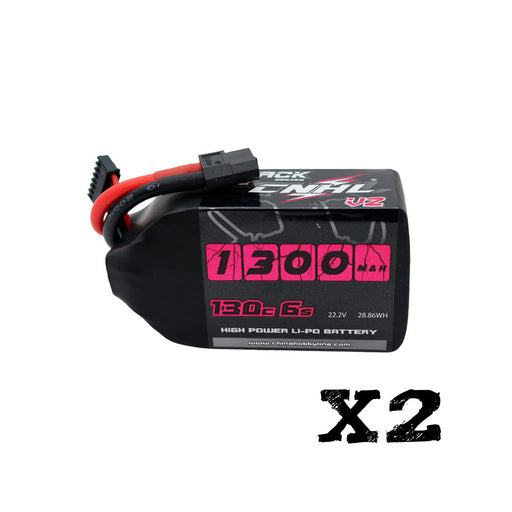
Quick Fit Check The 2 Packs CNHL Black Series V2.0 1300mAh 22.2V 6S 130C LiPo Battery with XT60 Plug is a strong fit for FPV pilots who want a prov...
View full detailsSpare Parts & Long-Term Support We know that for RC pilots, reliable spare parts support is an important part of keeping an aircraft fl...
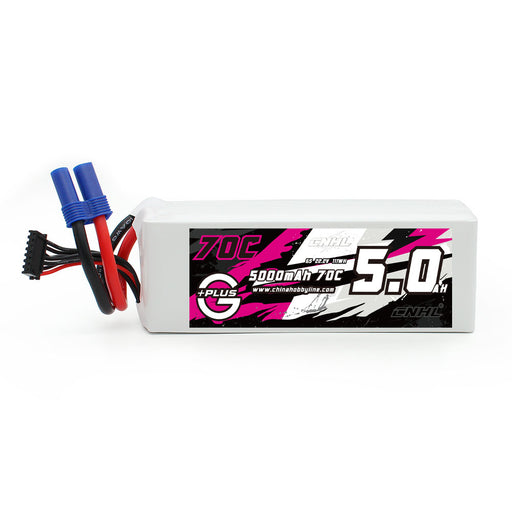
View full detailsSpecifications: Stock Number: 500706EC5 Capacity: 5000mAh Voltage: 22.2V / 6-Cell / 6S1P Discharge Rate: 70C Continual / 140C Burst Charge Rate: ...
View full details
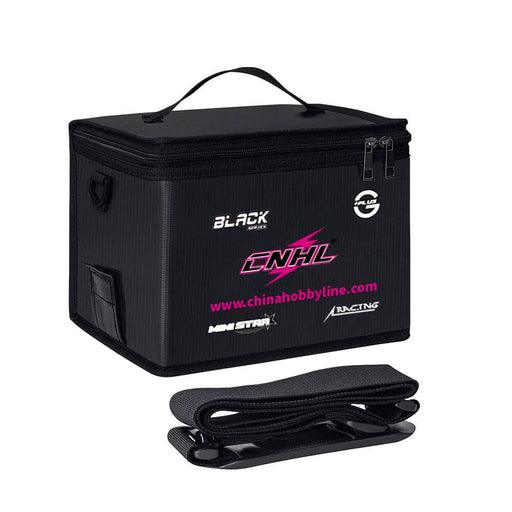
The CNHL LiPo Battery Bag is designed for safer LiPo charging, transport, and storage at home or at the field. It adds a practical layer of protect...
View full details

Quick Fit Check The 2 Packs CNHL Speedy Pizza Series Pro 1350mAh 6S 150C LiPo Battery with XT60 Plug is built for 5-inch FPV pilots who want a ...
View full details

Quick Fit Check The CNHL Speedy Pizza Series 2200mAh 22.2V 6S 120C LiPo Battery with XT60 Plug combines the familiar 2200mAh 6S format with a ligh...
View full details

Quick Fit Check The CNHL Speedy Pizza Series 2200mAh 14.8V 4S 120C LiPo Battery with XT60 Plug combines a widely used 2200mAh 4S format with a sli...
View full details

Quick Fit Check The CNHL Speedy Pizza Series 2200mAh 11.1V 3S 120C LiPo Battery with XT60 Plug takes the familiar 3S 2200mAh aircraft battery form...
View full detailsThe CNHL Long Range Series BAK 65E 6350mAh 21700 Li-ion battery cell is built around one clear priority: maximum stored energy from a lightweight c...
View full details

The CNHL Long Range Series BAK 50D 5000mAh 21700 Li-ion battery cell is designed for custom high-energy battery packs that need a strong balance be...
View full details




Leave a comment